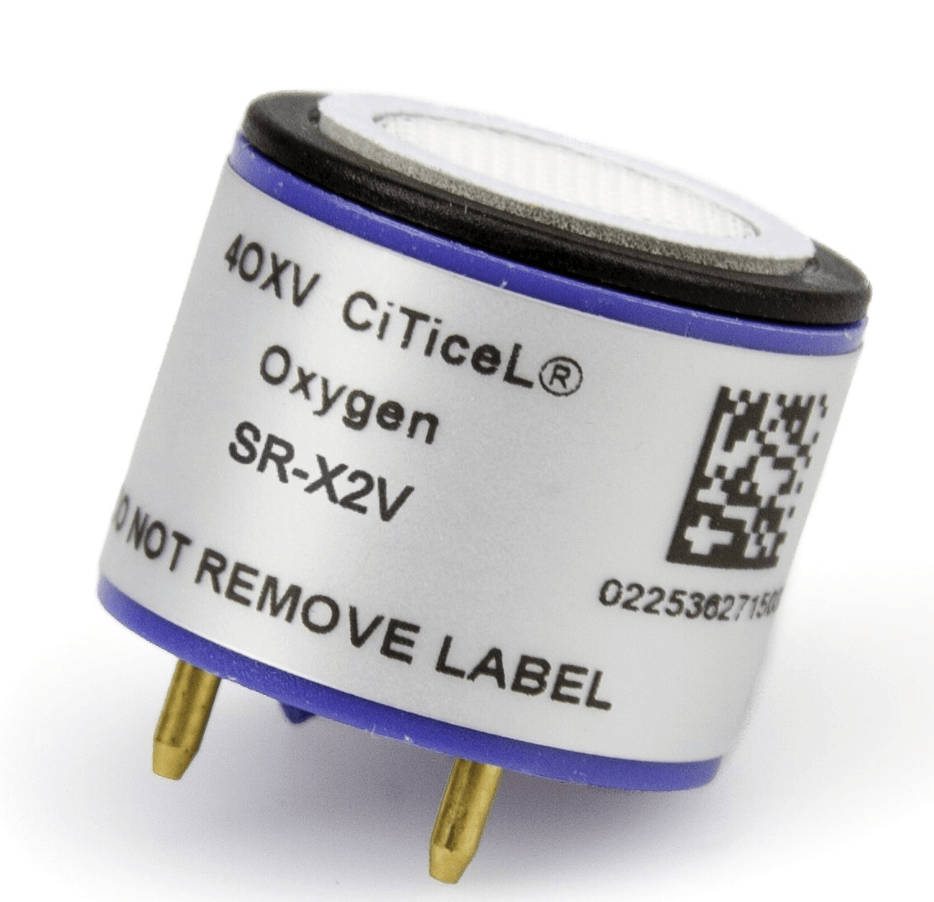
If you strip a standard 4-gas monitor down to its most essential component, it isn’t the combustible gas sensor or the H₂S sensor most people worry about.
It’s the oxygen sensor in gas detectors that quietly does two life-saving jobs at once: it tells you whether the atmosphere can sustain you and whether it can sustain your other sensors.
After more than a decade working with gas and flame detection systems in industrial environments, I can tell you that oxygen readings are the first number I look at on any monitor before LEL, before toxics, before anything else.
In this guide, I’ll explain exactly why O₂ sensors are so important, how they work, what the safe oxygen range actually is, and how to keep your sensor reliable when your life depends on it.
Why Are O₂ Sensors Important?
There are two reasons every portable multi-gas monitor includes an oxygen sensor, and one of them surprises even experienced technicians.
Your Combustible Gas Sensor Needs Oxygen to Work
It is important to know that you cannot rely on catalytic bead combustible sensor readings if the oxygen concentration in your environment is less than 10% v/v.
Catalytic bead (pellistor) sensors detect flammable gas by literally burning it on a heated catalytic surface, and combustion requires oxygen. No oxygen, no catalytic oxidation, no accurate LEL reading.
This creates one of the most dangerous scenarios in gas detection: an oxygen-deficient atmosphere that is loaded with flammable gas, while your LEL sensor reads low or zero.
The atmosphere looks safe on the display. It isn’t. The moment fresh air is introduced, say, when you open a hatch or start ventilation, that atmosphere can swing straight into the explosive range.
This is exactly why portable safety gas monitors with a catalytic bead sensor must include an oxygen sensor.
The O₂ reading validates the LEL reading. If oxygen is below roughly 10% v/v, treat your combustible gas readings as unreliable and withdraw.
This is also one of the strongest arguments for infrared LEL sensors in inerted or low-oxygen environments; more on that in our guide to LEL gas detectors.
Humans Need a Narrow Oxygen Window to Survive
The second reason is more obvious but just as critical: there has to be a healthy range of oxygen for someone to work in an environment without supplied-air respiratory protection.
Normal air contains 20.9% oxygen by volume. The margin around that number is tighter than most people realize:
| Oxygen Level (% v/v) | Condition | Effect |
|---|---|---|
| 23.5% and above | Oxygen-enriched | Severe fire and explosion hazard; materials ignite easily and burn violently |
| 20.9% | Normal air | Baseline reading for a properly calibrated sensor |
| 19.5% | OSHA minimum | Below this, the atmosphere is legally oxygen deficient |
| 16–19.5% | Deficient | Impaired judgment, increased heart rate, reduced coordination |
| 12–16% | Dangerous | Poor judgment, rapid fatigue, faulty coordination |
| 10–12% | Severe | Nausea, vomiting, inability to move freely |
| 6–10% | Critical | Loss of consciousness within minutes |
| Below 6% | Fatal | Convulsions, respiratory arrest, death in minutes |
OSHA defines an oxygen-deficient atmosphere as anything below 19.5% and an oxygen-enriched atmosphere as anything above 23.5%, which is why virtually every gas monitor ships with default O₂ alarm setpoints at those two values.
Notice that oxygen sensors are unique among your monitor’s sensors: they alarm on both a low and a high reading.
The high alarm matters more than people think. Oxygen enrichment, often caused by a leaking oxy-fuel cutting torch or an oxygen cylinder left cracked open in a confined space, turns ordinary materials like clothing and grease into fast-burning fuel.
A Brief History: Where the O₂ Sensor Came From
The electronic device used to measure the amount of oxygen in a liquid or a gas was invented in the late 1960s by Dr.
Günter Bauman, working with Robert Bosch GmbH. The original application was automotive: the lambda sensor that manages your car’s air-fuel ratio, but the underlying electrochemical principles were adapted into the compact, low-power oxygen sensors used in portable gas detection today.
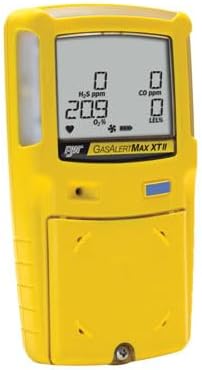
Modern O2 sensors for portable monitors are small cylindrical cells, typically around 20 mm in diameter, that screw or slot into the sensor bay of instruments like the Honeywell BW Solo or a standard 4-gas monitor.
How Does an Oxygen Sensor in a Gas Detector Work?
Nearly all portable gas detectors use electrochemical oxygen sensors. There are two main generations you’ll encounter in the field:
Lead-Based (Consumption-Type) O₂ Sensors
The classic design is a galvanic cell: oxygen diffuses through a membrane into the sensor, where it is reduced at a cathode while a lead anode is oxidized. The resulting current is proportional to the oxygen concentration.
The key limitation is that the lead anode is consumed. The sensor is essentially a battery that dies whether you use the instrument or not.
Typical lifespan is 1 to 2 years, and the sensor degrades faster in high-temperature, high-humidity, or oxygen-enriched environments. RoHS environmental regulations have also pushed manufacturers away from lead.
Lead-Free (Oxygen Pump) O₂ Sensors
Newer sensors use an oxygen-pump design based on a non-consumptive electrochemical reaction. Because nothing inside the cell is permanently consumed, these sensors routinely last 5 years or more, hold calibration better, and are less sensitive to pressure transients (the false alarms you sometimes get when a monitor is squeezed or a door slams in a small room).
| Feature | Lead-Based O₂ Sensor | Lead-Free (Pump-Type) O₂ Sensor |
|---|---|---|
| Typical lifespan | 1–2 years | 5+ years |
| Consumed over time | Yes, even in storage | No |
| Pressure transient false alarms | More common | Reduced |
| RoHS compliant | No (lead content) | Yes |
| Cost | Lower upfront | Higher upfront, lower lifetime cost |
| Found in | Older/legacy monitors | Current-generation monitors |
If you’re buying a new instrument in 2026, prioritize models with lead-free O2 sensors; the total cost of ownership is significantly lower once you factor in sensor replacements and instrument downtime.
See our roundup of the best gas detectors for confined spaces for current recommendations.
What Causes Oxygen Deficiency in the First Place?
Oxygen doesn’t just vanish; it gets displaced, consumed, or absorbed. In confined spaces and industrial environments, the usual culprits are:
Displacement by other gases
Nitrogen purging, argon from welding, CO₂ from fire suppression systems or fermentation, and methane accumulation all push breathable air out of a space.
This is the most common mechanism, and it’s why inerted vessels are treated as immediately dangerous to life or health (IDLH) by default.
Consumption by chemical reactions
Rusting steel inside a closed tank consumes oxygen surprisingly fast. Bacterial activity in sewers, decomposing organic material in silos, and curing coatings or adhesives all do the same.
Combustion
Any burning process, engine, heater, or hot work consumes oxygen while producing carbon monoxide, a double hazard. (Our guide to carbon monoxide detection covers this in detail.)
Absorption
Fresh concrete, grain, soil, and activated carbon can absorb oxygen from the surrounding air in enclosed spaces.
This is why confined space gas testing protocols require you to test for oxygen first, at multiple levels top, middle, and bottom of the space because displacing gases stratify depending on whether they are lighter or heavier than air.
Maintaining Your O₂ Sensor: Bump Testing and Calibration
An oxygen sensor you can’t trust is worse than no sensor at all, because it manufactures false confidence. Two practices keep it honest.
Daily bump test
Before each day’s use, expose the monitor to a known concentration of test gas and confirm the O₂ sensor responds and alarms.
A bump test verifies function, not accuracy. If your instrument fails a bump, it goes out of service until it passes a full calibration. We cover the full procedure in our bump testing guide.
Regular calibration
A full calibration adjusts the sensor’s response to match a certified gas concentration. Most manufacturers recommend calibrating at least every 6 months, though many safety programs calibrate monthly or every 30 days of use.
O₂ sensors are typically calibrated using fresh air (20.9%) for span and a nitrogen-based mixture for the zero or low point. Follow the schedule in our gas detector calibration guide.
Watch for drift and environmental stress
O₂ sensors are sensitive to temperature swings, low humidity (they can dry out), and barometric pressure changes.
A monitor that reads 20.4% in fresh air isn’t “close enough”; it’s telling you the sensor is drifting and needs attention.
Choosing a Gas Monitor: What to Look For in the O₂ Sensor
When evaluating a portable multi-gas monitor, ask these questions about the oxygen sensor specifically:
Is it lead-free?
A 5-year pump-type sensor beats a 2-year lead-based sensor on lifetime cost and reliability.
What’s the measurement range and resolution?
Look for 0–25% or 0–30% v/v with 0.1% resolution.
Are the default alarms set to 19.5% and 23.5%?
They should match OSHA thresholds out of the box, with the ability to adjust for local regulations.
What’s the response time (T90)?
Under 15 seconds is standard for modern electrochemical O₂ sensors; faster is better when you’re lowering a monitor into a confined space on a probe line.
Warranty coverage
Leading manufacturers now warranty lead-free O₂ sensors for the life of the sensor spec hold them to it.
Frequently Asked Questions
What does the oxygen sensor in a gas detector do?
It continuously measures the concentration of oxygen in the air as a percentage by volume, alarming if levels fall below 19.5% (oxygen deficiency) or rise above 23.5% (oxygen enrichment).
It also validates the readings of catalytic bead combustible sensors, which require at least ~10% oxygen to function correctly.
What is a normal oxygen reading on a gas monitor?
Normal fresh air is 20.9% oxygen by volume. A properly calibrated monitor should display 20.9% in clean outdoor air.
Consistent readings above or below that in fresh air indicate the sensor needs calibration or replacement.
How long does an O₂ sensor last in a gas detector?
Traditional lead-based oxygen sensors last 1–2 years because their lead anode is consumed continuously, even in storage. Modern lead-free oxygen-pump sensors last 5 years or more.
Why does my gas monitor alarm for high oxygen?
Oxygen above 23.5% creates a severe fire hazard; materials ignite more easily and burn far more violently in enriched atmospheres.
Common causes include leaking oxy-fuel torch equipment and open oxygen cylinders in enclosed areas.
Can I trust my LEL reading if oxygen is low?
No. Catalytic bead LEL sensors need at least approximately 10% v/v oxygen to oxidize combustible gas and produce an accurate reading.
In oxygen-deficient atmospheres, an LEL reading of zero may conceal a dangerously flammable gas concentration. Use an infrared LEL sensor for inerted or low-oxygen environments.
Do oxygen sensors need bump testing?
Yes. Like every sensor on your monitor, the O₂ sensor should be bump tested before each day’s use and fully calibrated on the manufacturer’s recommended schedule, typically at least every 6 months.
Final Thoughts
The oxygen sensor in gas detectors is the sensor that watches over all the others and over you. It’s the difference between knowing an atmosphere is safe and merely assuming it is.
Whether you’re entering a confined space, working around inert gas systems, or just carrying a 4-gas monitor on your daily rounds, make the O₂ reading the first number you check and the last sensor you neglect.