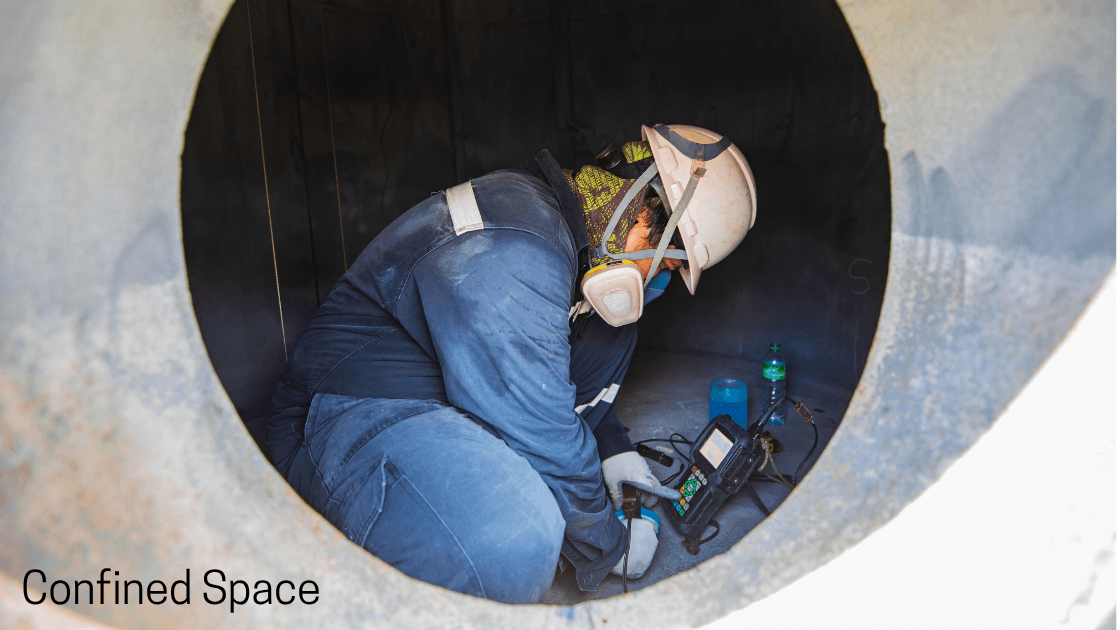
I’ve spent enough years around industrial safety systems to know that confined spaces don’t kill people because the hazards are exotic.
They kill people because the testing was rushed, done in the wrong order, or skipped entirely. A tank, a vault, a sewer, a storage bin.
They look quiet and harmless right up until someone climbs in and discovers the air won’t keep them alive.
Confined space gas testing is the procedure that separates a routine job from a fatality. In this guide, I’ll walk you through exactly how to do it: the order you test in, the gases you’re looking for, the equipment you need, and the mistakes I see people make over and over.
This is the practical, field-level version, not a wall of regulation citations, though the regulations are here too.
What Counts as a Confined Space
Before you test anything, you need to know whether the space even qualifies. A confined space has three defining features: it’s large enough for a worker to enter and perform work, it has limited or restricted means of entry and exit, and it isn’t designed for continuous occupancy.
A permit-required confined space goes a step further. It has one or more of these added hazards: a hazardous atmosphere (or the potential for one), a material that could engulf a worker, walls that converge inward or a floor that slopes down to a smaller cross-section, or any other recognized serious safety hazard.
Gas testing matters most in permit-required spaces, but the principle applies anywhere the atmosphere is uncertain.
Common examples include storage tanks, process vessels, silos, manholes, pits, sewers, boilers, ductwork, and pipelines.
If you can climb in, can’t easily climb out, and nobody lives in there, treat it as confined until proven otherwise.
Why the Atmosphere Is the Biggest Killer
Atmospheric hazards account for the majority of confined space fatalities, and the cruel part is that many of those deaths are of would-be rescuers who rushed in to help. The air inside a confined space can fail you in four basic ways:
Oxygen deficiency
Normal air is 20.9% oxygen. Below 19.5%, it’s considered oxygen-deficient. Rust, fermentation, decomposition, and inert gas purging all quietly consume or displace oxygen. You feel fine, and then you don’t.
Oxygen enrichment
Above 23.5%, the atmosphere becomes a fire and explosion accelerant. A leaking oxygen line or an over-purge can saturate the space so that any spark becomes catastrophic.
Flammable atmosphere
Methane, solvent vapors, residual fuels, and anything that can reach its lower explosive limit (LEL) turn the space into a bomb waiting for ignition.
Toxic atmosphere
Hydrogen sulfide, carbon monoxide, and other toxic gases can incapacitate or kill at concentrations you can’t see or, in some cases, smell.
Hydrogen sulfide in particular paralyzes your sense of smell at higher concentrations, which is exactly when it’s most dangerous.
The Equipment You Need
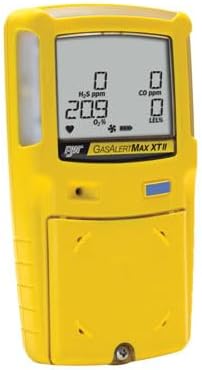
The workhorse for confined space entry is a multi-gas monitor, usually a 4-gas monitor that simultaneously reads oxygen, combustible gases (LEL), carbon monoxide, and hydrogen sulfide.
For specific industries or known contaminants, you may add sensors for gases like ammonia, chlorine, sulfur dioxide, or volatile organic compounds via a PID sensor.
A few non-negotiables for the instrument itself:
- It must be calibrated and within its calibration interval.
- It must be bump tested before each day’s use to confirm sensors respond to gas and alarms activate.
- For testing before entry, it needs a sampling pump and probe so you can draw air from inside the space without entering it.
- It must be intrinsically safe, rated for use in hazardous atmospheres.
If your monitor hasn’t been bump tested that day, you don’t have a reliable monitor. You have a paperweight with a screen.
The Correct Testing Order: O₂, Then LEL, Then Toxics
This is the single most important technical point in the entire procedure, and it’s the one people get wrong. You must test the atmosphere in this specific order:
Oxygen first
Combustible gas sensors (catalytic bead LEL sensors) need oxygen to work correctly. If you test for flammable gas in an oxygen-deficient atmosphere, the reading will be falsely low, and you’ll trust an atmosphere that’s actually explosive. Oxygen also tells you immediately whether the space can support life.
Combustible gases (LEL) second
Once you’ve confirmed adequate oxygen, check for flammable vapors. A flammable atmosphere is an immediate stop condition.
Toxic gases third
Finally, check carbon monoxide, hydrogen sulfide, and any other toxics relevant to the space.
A good 4-gas monitor displays all readings at once, but the sensor logic and your interpretation still follow this hierarchy. Oxygen validates the LEL reading; never reverse them.
Step-by-Step Confined Space Gas Testing Procedure
Here is the full sequence, start to finish.
Step 1: Review the Permit and hazard assessment
Before you touch the monitor, know what you’re walking into. Review the entry permit, the contents the space previously held, adjacent processes that could leak in, and any historical incidents. The space’s history tells you which gases to expect.
Step 2: Bump Test and Verify the Monitor
Confirm the monitor is calibrated, bump test it with a known gas concentration, and verify all alarms (audible, visual, and vibrating) activate. Check the battery and confirm the sampling pump pulls air without leaks. Record it.
Step 3: Test From Outside
Attach the sampling probe and draw air from the space without entering it and without putting your head over the opening.
Leaning in to “take a quick whiff” or lower a monitor by hand has killed people. The probe and pump exist precisely so your body stays in clean air.
Step 4: Test at Multiple Levels
Gases stratify by density. Heavier-than-air gases like hydrogen sulfide and many solvent vapors pool at the bottom. Lighter gases like methane rise to the top.
Test the top, middle, and bottom of the space and remember to allow enough time at each level for the pump to draw a full sample through the hose (a common rule is roughly two seconds of draw time per foot of sample tubing, plus sensor response time).
Step 5: Interpret the Readings Against Acceptable Limits
Compare each reading to acceptable entry conditions:
- Oxygen: 19.5% to 23.5%
- Combustible gas (LEL): below 10% of LEL (many sites use a stricter limit for hot work)
- Carbon monoxide: below the applicable exposure limit (commonly 35 ppm as an 8-hour reference, with action well before that)
- Hydrogen sulfide: below the applicable exposure limit (commonly 10 ppm as a reference)
If any reading is outside acceptable limits, do not enter. Ventilate and retest.
Step 6: Ventilate If Needed, Then Retest
If the atmosphere fails, mechanically ventilate the space and purge the contaminant. Never use pure oxygen to “freshen” the air; it creates an oxygen-enriched explosion hazard. After ventilating, retest fully before reconsidering entry.
Step 7: Document and Authorize Entry
Record all readings on the permit, note the time, and have the entry supervisor authorize entry. The permit is a legal record and a communication tool for everyone on the job.
Step 8: Monitor Continuously During Entry
Testing before entry is not a one-time pass. Conditions change: work activities generate gases, surrounding processes shift, and ventilation falters.
Keep a monitor inside the space throughout occupancy, ideally on the entrant, and respond immediately to any alarm with evacuation, not investigation.
OSHA and Regulatory Requirements
In the United States, confined space work in general industry is governed by OSHA standard 29 CFR 1910.146 (Permit-Required Confined Spaces), with a separate standard, 29 CFR 1926 Subpart AA, covering construction.
These standards require atmospheric testing before entry, testing in the correct order, continuous or periodic monitoring as conditions warrant, and a documented permit system.
The core regulatory expectations track closely with the procedure above: test before entry, test oxygen first, keep readings within acceptable limits, ventilate rather than “wait it out,” and monitor throughout the entry.
If you’re outside the U.S., your jurisdiction’s equivalent standard will mirror most of these principles, but always work to your local regulations.
Common Mistakes That Get People Killed
After all the procedures, these are the failures I see most often, and every one of them has a body count behind it somewhere:
- Skipping the bump test because the monitor “worked fine yesterday.”
- Testing in the wrong order and trusting a falsely low LEL reading in low-oxygen air.
- Testing only one level and missing a layer of heavy gas pooled at the bottom.
- Leaning into the opening to test or look and getting overcome at the lip of the space.
- Treating the pre-entry test as final and not monitoring continuously.
- Using oxygen to ventilate, turning a stale space into an explosive one.
- Rushing rescue. When an entrant goes down, the instinct to dive in unprotected is what turns one fatality into two or three. Rescue is a planned, equipped operation, never a reflex.
Frequently Asked Questions
What order do you test the atmosphere in a confined space?
Always oxygen first, then combustible gases (LEL), then toxic gases. Oxygen is tested first because combustible gas sensors need adequate oxygen to read accurately, and the oxygen level also tells you immediately whether the space can support life.
How often should a confined space be tested?
Test before entry, and then monitor continuously or periodically throughout the entire occupancy. Conditions inside a confined space change as work proceeds and surrounding processes shift, so a single pre-entry test is never sufficient on its own.
What gases does a 4-gas monitor detect?
A standard 4-gas monitor detects oxygen, combustible gases as a percentage of the lower explosive limit (LEL), carbon monoxide, and hydrogen sulfide.
Additional sensors can be added for site-specific hazards like ammonia, chlorine, or volatile organic compounds.
Can you enter a confined space if oxygen is above 23.5%?
No. An oxygen level above 23.5% is oxygen-enriched and dramatically increases fire and explosion risk. The space must be ventilated with fresh air, never pure oxygen, and retested before entry is considered.
Do I need to test multiple levels of a confined space?
Yes. Gases stratify by density, so heavier gases pool at the bottom and lighter gases rise to the top. Test the top, middle, and bottom to be sure you haven’t missed a dangerous layer.
Final Thoughts
Confined space gas testing isn’t complicated, but it is unforgiving. The procedure rewards discipline, bump tests, tests from outside, oxygen first, multiple levels, and continuous monitoring and punishes shortcuts with no second chances.
The most experienced people I’ve worked with are the ones who run the full procedure every single time, on the boring jobs as much as the obviously dangerous ones. That consistency is the whole point.
Get the equipment right, follow the order, document everything, and never let urgency override the sequence. The atmosphere doesn’t care how late you’re running.