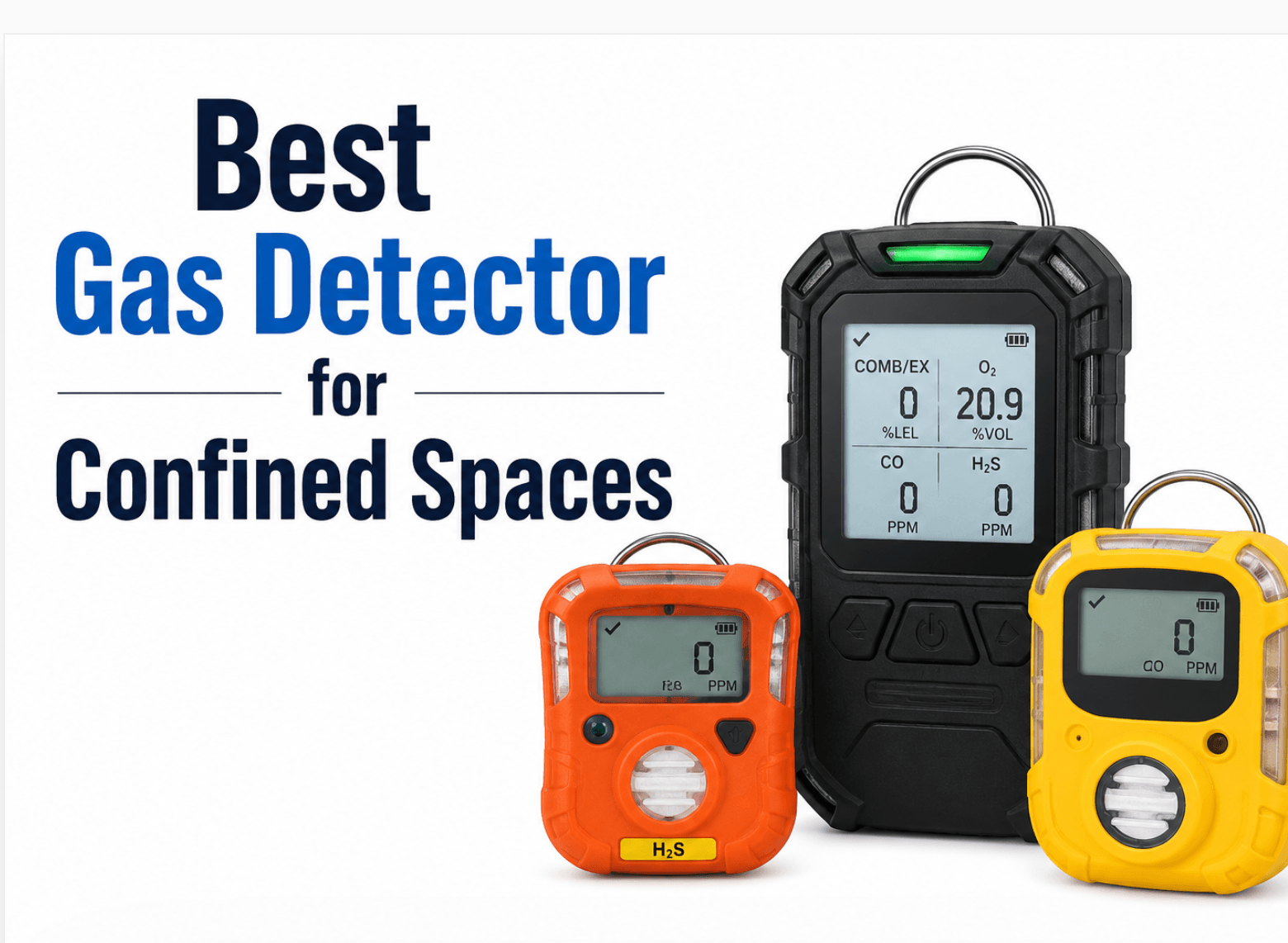
Confined spaces kill workers every year, not because of falls or equipment failures, but because of invisible atmospheric hazards.
Oxygen deficiency, toxic gas accumulation, and explosive vapors claim lives in tanks, silos, manholes, and vaults with little or no warning.
The right gas detector is not optional equipment. It is the difference between a worker walking out and one who does not.
With seven years of hands-on experience in industrial safety, specifying, commissioning, and auditing gas detection systems across manufacturing and process industries, I have evaluated dozens of portable gas monitors in real-world confined space scenarios.
This guide covers everything you need to know: the hazards, the regulations, the technology, and the specific units I recommend based on performance, reliability, and value.
What Is the Best Gas Detector for Confined Spaces?
The best gas detector for confined spaces is a 4-gas portable monitor that simultaneously measures oxygen (O₂), combustible gases (LEL), carbon monoxide (CO), and hydrogen sulfide (H₂S).
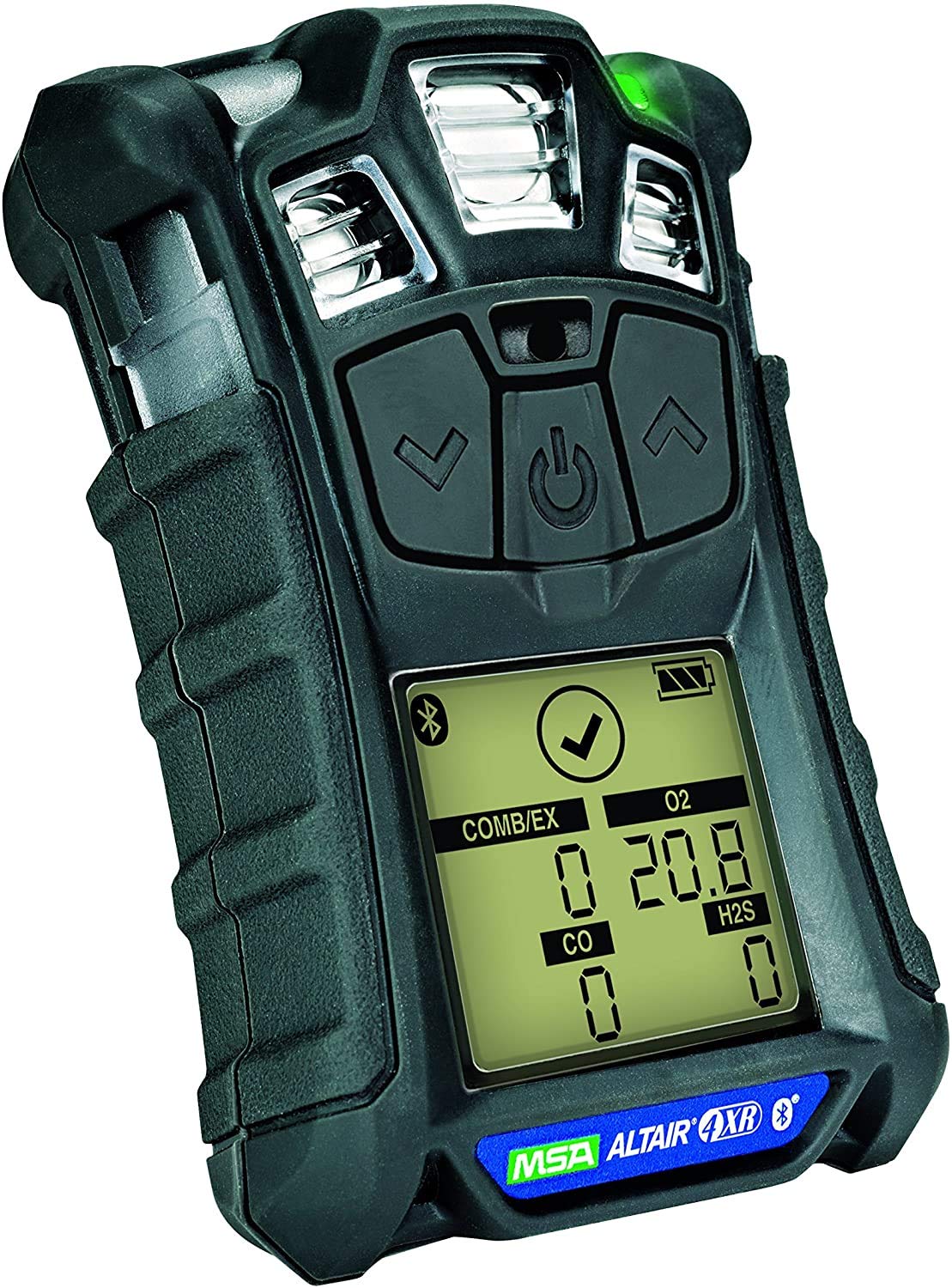
For most industrial applications, the MSA ALTAIR 4XR is the top overall choice due to its IP68 waterproofing, 24-hour battery, XCell® rapid-response sensors, and proven durability in the harshest field conditions.
For teams with complex multi-gas requirements, the Industrial Scientific Ventis Pro5 is the superior option.
Why Confined Space Gas Monitoring Is Non-Negotiable
A confined space is any enclosed area large enough for a worker to enter and perform work; has limited means of entry or exit, and is not designed for continuous occupancy. Tanks, silos, vaults, sewers, hoppers, utility tunnels, and large pipes all qualify.
What makes these spaces deadly is that atmospheric hazards are often invisible, odorless, and fast-acting.
A worker can lose consciousness from oxygen deficiency within seconds and be unable to self-rescue.
Even experienced workers have died because they could not smell hydrogen sulfide at high concentrations. The gas paralyzes the olfactory nerve, giving a false sense of safety.
Gas detection is not just a best practice. Under OSHA’s Permit-Required Confined Spaces standard (29 CFR 1910.146), it is a legal requirement for any permit space with atmospheric hazards.
Failure to comply has resulted in serious OSHA citations — and more importantly, in preventable deaths.
OSHA Requirements for Confined Space Gas Monitoring
Understanding the regulatory baseline helps you make a defensible equipment choice. Here is what 29 CFR 1910.146 requires.
Pre-entry atmospheric testing
The permit space atmosphere must be tested before any worker enters. OSHA specifies the testing order: oxygen first, then combustible gases, then toxic gases.
Continuous monitoring
Atmospheric conditions must be monitored throughout the entry operation, not just at the start. OSHA guidelines recommend atmospheric monitoring at least every 15 minutes during active work inside the space.
Acceptable entry conditions
OSHA defines the threshold that triggers evacuation as oxygen below 19.5% or above 23.5% by volume, combustible gas at or above 10% of the Lower Explosive Limit (LEL), and hydrogen sulfide at or above 10 ppm as an 8-hour TWA.
Calibrated equipment
The monitoring equipment must be calibrated in accordance with the manufacturer’s specifications.
Bump testing before each use is considered industry best practice and is required by many safety programs.
Your gas detector must be capable of measuring all three categories, oxygen, combustibles, and toxic gases, to satisfy these requirements in a single instrument. This is why a 4-gas monitor is the standard for confined space entry.
The Four Gases Every Confined Space Detector Must Monitor
Oxygen (O₂)
Normal atmospheric oxygen concentration is 20.9%. Below 19.5%, a space is classified as oxygen-deficient and poses an immediate risk of impaired judgment, unconsciousness, and death.
Above 23.5%, the atmosphere becomes oxygen-enriched, dramatically increasing the risk of fire and explosion.
Oxygen depletion in confined spaces is commonly caused by rust, biological decomposition, or displacement from inert gases like nitrogen or carbon dioxide.
Combustible Gases / LEL
The lower explosive limit (LEL) is the minimum concentration of a combustible gas in air at which ignition can occur.
Gas detectors display readings as a percentage of LEL. OSHA requires evacuation at 10% LEL or above.
Methane, propane, hydrogen, and solvent vapors are among the most common combustibles found in industrial confined spaces.
Carbon Monoxide (CO)
Carbon monoxide is produced by incomplete combustion from engines, generators, welding equipment, and heating systems.
It is colorless and odorless, making detection impossible without instrumentation. OSHA’s permissible exposure limit (PEL) is 50 ppm as an 8-hour TWA, and confined space detectors typically alarm at both low-level (25–35 ppm) and high-level (100–200 ppm) thresholds.
Hydrogen Sulfide (H₂S)
Hydrogen sulfide is produced by the decomposition of organic material and is extremely common in wastewater, oil and gas, and agricultural confined spaces.
At low concentrations, it smells like rotten eggs, but at high concentrations, it deadens the sense of smell entirely.
OSHA’s PEL is 20 ppm ceiling, and H₂S is immediately dangerous to life or health (IDLH) at just 100 ppm. Many 4-gas detectors offer alarm set points at 10 ppm (low) and 20 ppm (high).
Buying Guide: 8 Factors That Determine the Best Gas Detector for Confined Spaces
Before we get to the individual reviews, here is a structured breakdown of the criteria that matter most in a confined space gas monitor.
| Factor | What to Look For | Why It Matters |
|---|---|---|
| Gases Detected | At minimum: LEL, O₂, CO, H₂S | It covers the 4 most common confined space killers |
| Sensor Technology | Electrochemical for toxic gases; catalytic bead or IR for LEL | Affects accuracy, response time, and maintenance needs |
| Battery Life | Minimum 12 hours; 24 hours preferred | Must last a full shift without recharging |
| IP Rating | IP65 minimum; IP67/IP68 for wet environments | Protects against dust, moisture, and washdowns |
| Alarm Systems | Audible (>85 dB), visual LEDs, and vibration | Multi-sense alerts critical in noisy, dark spaces |
| Connectivity | Bluetooth/cloud for fleet operations; optional for solo use | Enables real-time supervisor visibility of worker safety |
| Calibration | Easy bump-test process; docking station compatible | Compliance requires regular calibration records |
| Certifications | ATEX, IECEx, or CSA for the local classification | Mandatory for use in explosive atmospheres |
Reviews: The 6 Best Gas Detectors for Confined Spaces in 2026
These are the instruments I have personally evaluated or extensively researched based on manufacturer specifications, field reports, safety distributor data, and user feedback from industrial practitioners.
MSA ALTAIR 4XR: Best Overall Gas Detector for Confined Spaces
Best for: Industrial teams, fleet deployment, permit-required confined space entry programs
Gases monitored: LEL, O₂, CO, H₂S (additional toxic options: SO₂, NO₂, CO/H₂-resistant, H₂S-LC)
Battery life: 24 hours rechargeable
IP rating: IP68 (submersion in 2 m of water for up to 1 hour)
Certifications: ATEX, IECEx, CSA, UL
The MSA ALTAIR 4XR earns the top spot on this list for several reasons that go beyond marketing claims.
Its XCell® sensor technology delivers response times up to twice as fast as industry-average detectors, a critical advantage when every second matters in a permit-required space.
It is rated IP68, meaning it handles complete submersion, not just rain or splashing. Workers have field-tested units by dropping them over 25 feet onto concrete, and the instruments continued functioning.
The MotionAlert feature is particularly valuable for confined space entry: if a worker becomes immobile for 30 seconds, a sign of incapacitation, the device activates an escalating alarm automatically.
The companion InstantAlert button lets a worker manually trigger an emergency notification with a single press.
These are not gimmicks; they are life-saving redundancies when the attendant outside the space needs to know something has gone wrong inside.
Calibration is significantly more efficient than most competitors. The 4XR is compatible with the MSA GALAXY® GX2 automated docking station system, allowing bump tests and calibration at a specified time of day, with logs automatically stored for compliance reporting.
For fleet operations running multiple units across multiple permits, this capability alone justifies the investment.
What I like: IP68 rating, fastest sensor response time in class, MotionAlert life-safety feature, 24-hour battery, excellent calibration ecosystem, 4-year sensor life.
What to consider: Higher upfront cost than budget options; Bluetooth connectivity requires the optional 4XR model variant.
Industrial Scientific Ventis Pro5: Best for Complex Multi-Gas Environments
Best for: Chemical plants, oil refineries, multi-hazard environments requiring more than 4 gases
Gases monitored: Up to 5 simultaneously: LEL, O₂, CO, H₂S, plus one additional (SO₂, NH₃, Cl₂, NO₂, HCN, PH₃, and others)
Battery life: 20 hours
IP rating: IP65
The Ventis Pro5 is the go-to instrument when a fourth toxic gas must be monitored alongside the standard four-gas package.
In chemical processing environments, ammonia (NH₃), chlorine (Cl₂), or hydrogen cyanide (HCN) may be present alongside LEL, CO, O₂, and H₂S, and monitoring all five simultaneously prevents the need to carry two separate instruments into a confined space.
Industrial Scientific’s iNet® cloud platform provides real-time visibility of instrument status, alarm events, and compliance data across an entire fleet.
For large safety programs, this level of data management is invaluable. The device is also exceptionally compact for a 5-gas instrument, and its man-down alarm activates when the unit senses no motion for 30 seconds, comparable to MSA’s MotionAlert.
What I like: 5-gas capability in a compact body, strong connectivity platform, configurable sensor slots, and solid man-down alarm.
What to consider: IP65 only (less water-resistant than the ALTAIR 4XR); higher cost per unit for the additional sensor configurations.
BW Honeywell GasAlert Max XT II: Best Value for Confined Space Teams
Best for: Teams needing reliable 4-gas monitoring on a tighter budget
Gases monitored: LEL, O₂, CO, H₂S
Battery life: 13 hours
IP rating: IP66/67
The GasAlert Max XT II is arguably the most widely deployed 4-gas monitor in the world, and for good reason.
Honeywell (formerly BW Technologies) has built an instrument that balances reliable sensor performance, a concussion-proof housing rated IP66/67, and a price point accessible to smaller contractors and maintenance teams.
The unit’s audible alarm reaches 95 dB, the display is easy to read in low light, and its three-button interface reduces operator error in stressful situations.
The Auto-Calibration feature and compatibility with the Intellidox docking station simplify fleet calibration management. At 13 hours of battery life, it covers a standard shift with margin.
What I like: Proven reliability, wide industry adoption, concussion-proof housing, competitive price point, strong calibration station ecosystem.
What to consider: Shorter battery life than premium options; less advanced connectivity features compared to the ALTAIR 4XR or Ventis Pro5.
Blackline Safety G7c: Best for Lone Workers and Remote Site Monitoring
Best for: Lone workers, remote operations, sites requiring real-time two-way communication, and location tracking
Gases monitored: LEL, O₂, CO, H₂S (configurable)
Battery life: 24 hours
IP rating: IP67
The Blackline G7c is a fundamentally different kind of gas detector. Yes, it monitors the standard four gases, but its defining capability is always-on cellular connectivity: GPS location tracking, two-way voice calling, and live safety monitoring through Blackline’s cloud platform.
When a lone worker enters a confined space in a remote location with no direct attendant supervision, the G7c becomes a critical safety system rather than just an instrument.
In jurisdictions where lone worker regulations require remote monitoring, the G7c is the most complete solution on the market.
The platform allows a safety monitoring center to see real-time gas readings, worker location, and alarm status across an entire fleet, with escalation protocols when a worker becomes unreachable.
What I like: Cellular connectivity, GPS tracking, two-way communication, a cloud monitoring platform, and a 24-hour battery.
What to consider: Requires an active cellular subscription; more expensive than traditional 4-gas monitors; dependent on cellular coverage in remote areas.
RKI Instruments GX-3R Pro: Best Compact 4-Gas Monitor for Daily Use
Best for: Individual workers who need a reliable, lightweight everyday 4-gas monitor
Gases monitored: LEL, O₂, CO, H₂S
Battery life: 16 hours rechargeable
IP rating: IP67
The RKI GX-3R Pro is one of the smallest 4-gas detectors on the market that does not compromise on core functionality.
It fits comfortably in a shirt pocket, weighs under 5 ounces, and delivers the same fundamental protection as instruments twice its size.
RKI’s sensors are well-regarded for accuracy and stability, and the IP67 rating handles most industrial environments comfortably.
The GX-3R Pro is particularly popular among maintenance technicians, utility workers, and contractors who need a personal 4-gas monitor that does not feel like a burden to carry all day.
Its alarm system, audible, visual, and vibrating, is compliant with OSHA requirements and easy to perceive in field conditions.
What I like: Extremely compact, IP67 rated, solid sensor quality, 16-hour battery, lightweight for all-day wear.
What to consider: Less advanced data logging than premium models; no wireless connectivity options.
Dräger X-am 2500: Best for Chemical and Hazmat Environments
Best for: chemical processing, pharmaceutical, and hazmat response applications
Gases monitored: Up to 4 gases; highly configurable sensor options for specialty gases
Battery life: 12 hours
IP rating: IP67
Dräger is one of the most trusted names in industrial safety instrumentation, and the X-am 2500 reflects the company’s engineering rigor.
Its real differentiator is the breadth of available sensor options: beyond the standard four-gas configuration, the X-am 2500 can be specified for phosphine (PH₃), ethylene oxide (EtO), ammonia, chlorine dioxide, and dozens of other specialty gases that appear in chemical and pharmaceutical confined space entries.
The instrument’s robust construction handles chemically aggressive environments better than most competitors, and its clear display with configurable alarm thresholds suits experienced safety professionals who need fine control over their monitoring parameters.
What I like: exceptional sensor configuration range, Dräger’s reliability reputation, suitable for the most chemically complex environments.
What to consider: Higher price; shorter battery life at 12 hours; the interface is less intuitive for non-specialist users.
Side-by-Side Comparison: Best Gas Detectors for Confined Spaces
| Detector | Gases Monitored | Battery Life | IP Rating | Best For |
|---|---|---|---|---|
| MSA ALTAIR 4XR | LEL, O₂, CO, H₂S | 24 hours | IP68 | Overall best / fleet use |
| Industrial Scientific Ventis Pro5 | Up to 5 gases | 20 hours | IP65 | Complex multi-gas sites |
| BW Honeywell GasAlert Max XT II | LEL, O₂, CO, H₂S | 13 hours | IP66/67 | Budget-conscious teams |
| Blackline Safety G7c | LEL, O₂, CO, H₂S | 24 hours | IP67 | Remote / lone worker |
| RKI Instruments GX-3R Pro | LEL, O₂, CO, H₂S | 16 hours | IP67 | Compact everyday use |
| Dräger X-am 2500 | Up to 4 gases | 12 hours | IP67 | Chemical / harsh environments |
Sensor Technology: What’s Inside Your Gas Detector
Understanding the sensor technology inside your gas detector helps you make a more informed buying decision and maintain the instrument correctly.
Electrochemical Sensors (Toxic Gases and O₂)
Electrochemical sensors are the standard for measuring CO, H₂S, oxygen, and most other toxic gases.
They work by passing target gas molecules through a permeable membrane to an electrolyte solution, generating a current proportional to the gas concentration.
They are accurate, relatively inexpensive, and have sensor lives of 2–4 years under normal conditions.
Key maintenance consideration: electrochemical sensors can be affected by very high humidity, extreme temperatures, and some cross-sensitizing chemicals.
Catalytic Bead (Pellistor) Sensors for LEL
The traditional technology for combustible gas detection. Two ceramic beads coated in a platinum catalyst, one active and one reference, measure the heat of combustion when a flammable gas contacts the active bead.
They are proven, reliable, and work with virtually all combustible gases. Important limitation: they require oxygen to function (cannot detect LEL in oxygen-deficient atmospheres), and they can be permanently damaged by silicone compounds, lead, and sulfur-bearing gases that poison the catalyst.
Infrared (IR) Sensors for LEL
Infrared sensors detect combustible gases by measuring the absorption of infrared light at specific wavelengths characteristic of each gas type.
They are immune to catalytic poisoning, continue to function in low-oxygen environments, and require less frequent calibration than catalytic bead sensors.
The MSA ALTAIR 4XR uses an optional IR sensor for LEL detection. Trade-off: IR sensors have a higher upfront cost and work best with hydrocarbon gases (methane, propane, butane); they are not ideal for hydrogen detection.
Which Gas Detector Is Right for Your Industry?
Wastewater and Municipal Utilities
The primary hazards are H₂S (from decomposing sewage), methane (from anaerobic digestion), CO (from nearby combustion sources), and oxygen displacement. Any 4-gas monitor from this list will serve these environments.
The MSA ALTAIR 4XR or BW GasAlert Max XT II are the most commonly specified units for water and wastewater utilities. An IP67 or IP68 rating is essential given the wet working conditions.
Oil and Gas
Highly variable gas profiles depending on the specific operation. Upstream wellsite entry may involve H⊂S at high concentrations, requiring detectors with H⊂S-LC (low concentration) sensors for more granular readings at trace levels.
Downstream refinery work may require SO₂ monitoring in addition to the standard four-gas package. The Ventis Pro5 or Dräger X-am 2500 is well-suited to complex hydrocarbon processing environments.
Chemical Manufacturing
Often requires gas-specific monitoring beyond the standard 4-gas package. Chlorine, ammonia, hydrogen cyanide, ethylene oxide, and other process chemicals may require dedicated sensor slots.
The Dräger X-am 2500 excels here due to its wide sensor library. In environments with hydrogen interference (which cross-sensitizes standard CO sensors), the CO/H₂-resistant sensor option on the MSA ALTAIR 4XR is a practical solution.
Construction and General Maintenance
Confined space entries in construction manholes, utility vaults, culverts, and storage tanks typically involve the standard four-gas hazard profile.
Budget is often more constrained on construction sites, making the BW Honeywell GasAlert Max XT II or RKI GX-3R Pro practical choices without sacrificing essential protection.
Gas Detector Calibration: What You Need to Know for Confined Space Compliance
Calibration is not optional. It is a regulatory requirement and a matter of life safety. Here is the terminology and what it means in practice:
Bump test (functional test)
A quick check that exposes the detector to a known concentration of gas to confirm that the sensors respond and alarms activate.
Should be performed before every confined space entry shift. Takes 30–60 seconds with a modern docking station.
Full calibration (span calibration)
A more thorough adjustment using certified calibration gas of known concentration to reset sensor response curves.
Frequency depends on the manufacturer’s recommendation, regulatory requirements, and site conditions, typically monthly for most industrial programs.
Calibration gas
Use certified gas cylinders with traceable accuracy. A standard 4-gas calibration mixture contains 2.5% methane (50% LEL), 18% O₂, 100 ppm CO, and 25 ppm H₂S in nitrogen. Verify the certificate of analysis before use.
Calibration records
OSHA 1910.146 requires that equipment used for atmospheric testing be calibrated per the manufacturer’s instructions. Maintain written calibration records for each unit, especially under permit-space programs.
Frequently Asked Questions
What is the best gas detector for confined spaces overall?
The MSA ALTAIR 4XR is the best overall gas detector for confined spaces for most industrial applications. It combines the fastest sensor response time in its class, IP68 waterproofing, a 24-hour battery, MotionAlert incapacitation detection, and a well-developed calibration management ecosystem.
For environments requiring more than 4 gases, the Industrial Scientific Ventis Pro5 is the top choice.
Do I need a 4-gas monitor for confined space entry?
Yes. A 4-gas monitor that measures LEL, O₂, CO, and H₂S simultaneously is the industry standard and the minimum recommended equipment for permit-required confined space entry under OSHA 29 CFR 1910.146.
Single-gas detectors are not sufficient because confined spaces present multiple simultaneous atmospheric hazards that cannot be predicted in advance.
How often should I calibrate my confined-space gas detector?
Industry best practice is to bump test before every shift and perform a full calibration at least monthly or more frequently if the instrument is used in harsh conditions.
Always follow the manufacturer’s specific calibration schedule, which is the legally defensible baseline under OSHA requirements.
What are the OSHA oxygen limits for confined space entry?
OSHA requires that oxygen concentration be between 19.5% and 23.5% by volume for safe confined space entry.
Below 19.5% is classified as oxygen-deficient; above 23.5% is oxygen-enriched. Both conditions require immediate evacuation.
Can I use a single-gas H₂S detector for confined space entry?
No. A single-gas H₂S detector alone does not satisfy confined space monitoring requirements. You must also monitor for oxygen, LEL, and CO. A 4-gas multi-gas detector is the appropriate instrument.
Single-gas monitors may be used as supplementary personal protection in specific scenarios, but never as the primary pre-entry or continuous monitoring instrument.
What is the difference between a gas detector and a gas monitor?
The terms are used interchangeably in most industrial safety contexts. Technically, a gas detector identifies the presence of gas, while a gas monitor provides a continuous quantitative reading.
All of the instruments reviewed in this article provide continuous quantitative monitoring and are certified for confined space atmospheric testing.
How long does a gas detector battery last in a confined space?
Battery life varies significantly by model. Budget-friendly units like the BW GasAlert Max XT II offer 13 hours, which covers a standard 8-hour shift with margin.
Premium units like the MSA ALTAIR 4XR and Blackline G7c offer 24 hours, covering extended shifts, overtime, or multi-entry days without recharging. Always verify battery status before a permit-space entry.
What IP rating do I need for confined space gas detectors?
For most industrial confined spaces, IP65 or higher is the minimum practical requirement. IP65 protects against water jets.
IP67 adds temporary immersion protection. IP68 (as found on the MSA ALTAIR 4XR) offers sustained submersion protection important for sewer, wastewater, and wet process environments where instruments may be dropped or submerged.
Final Verdict: Choosing the Best Gas Detector for Your Confined Space Application
The best gas detector for confined spaces is the one that matches your specific hazard profile, operational environment, regulatory requirements, and budget while providing reliable, calibrated protection for every worker who enters a permit-required space.
Based on seven years of industrial safety engineering experience, here is my final recommendation matrix:
- Best overall for industrial use: MSA ALTAIR 4XR
- Best for multi-gas chemical environments: Industrial Scientific Ventis Pro5
- Best value for budget-conscious teams: BW Honeywell GasAlert Max XT II
- Best for lone workers and remote sites: Blackline Safety G7c
- Best compact everyday monitor: RKI Instruments GX-3R Pro
- Best for chemical and hazmat applications: Dräger X-am 2500
Regardless of which unit you choose, establish a rigorous bump test and calibration protocol before it goes anywhere near a confined space.
The instrument is only as reliable as the maintenance program supporting it. A well-maintained budget detector is always safer than a poorly maintained premium one.
If you found this guide useful, explore our other resources on gas detection technology, sensor selection, and OSHA compliance at SafeguardSense.com. Stay safe.
1 thought on “Best Gas Detector for Confined Spaces in 2026: Expert Reviews and Complete Buying Guide”