If you work in oil and gas, construction, mining, water treatment, or any environment where invisible hazards can kill, you already know that the wrong gas detector or no gas detector is not an option.
After seven years specifying and commissioning gas detection systems for industrial facilities, I have tested and evaluated dozens of portable monitors.
In this guide, I break down the best portable gas detectors available today so you can make a confident, informed choice.
Whether you need a simple single-gas clip-on for a utility technician or a rugged multi-gas monitor for confined space entry, there is an instrument in this list for your application.
Quick Answer
The MSA Altair 4XR is the best overall portable gas detector for most industrial applications, offering four-gas detection, unmatched durability, and real-time wireless connectivity. Read on for the full breakdown.
What to Look for in a Portable Gas Detector
Before comparing individual models, it is worth understanding the key specifications that separate a great portable gas detector from a mediocre one. Here is what I evaluate on every unit I recommend:
Number of Gases Detected
Single-gas detectors are cheaper and simpler, but most industrial environments require monitoring for at least four gases simultaneously: oxygen (O2) depletion, combustible gases (LEL), carbon monoxide (CO), and hydrogen sulfide (H2S).
For petrochemical or wastewater applications, volatile organic compound (VOC) detection via a photoionization detector (PID) sensor may also be required.
Sensor Technology
Electrochemical sensors are the standard for toxic gas detection (CO, H2S). Catalytic bead sensors handle combustible gas detection at a lower cost, though they can be poisoned by silicone compounds.
PID sensors detect a broad range of VOCs at very low concentrations. Understanding sensor limitations is critical for accurate hazard assessment.
Battery Life and Charging
For a full work shift, look for a minimum of 12 hours of runtime. Many top-tier models offer 18–24 hours.
Fast charging and hot-swap battery options are a significant advantage on continuous-operation sites.
Durability and Ingress Protection Rating
Industrial environments are harsh. Look for an IP65 rating or higher (dustproof and protected against water jets) and drop ratings tested to at least 1 meter. Some models are rated for ATEX or Class I Division 1 hazardous locations.
Alarm Types and Notifications
A good portable gas detector should have audible, visual (LED), and vibration alarms. Man-down and panic alarms are essential for lone workers. Wireless connectivity allows supervisors to monitor readings remotely in real time.
Calibration Requirements
All gas detectors require regular bump testing and calibration. Look for models with auto-calibration docking stations, and confirm the availability of calibration gas locally in your region.
Best Portable Gas Detectors: At-a-Glance Comparison
| Detector | Gas Detected | Sensor Type | Battery Life | Best For |
| MSA Altair 4XR | 4-Gas (O2, LEL, CO, H2S) | Electrochemical + Catalytic | ~24 hrs | Oil & gas, confined space |
| Industrial Scientific MX6 iBrid | Up to 6 gases | Multiple | ~14 hrs | Complex multi-hazard sites |
| BW Technologies GasAlertMax XT II | 4-Gas | Electrochemical + Catalytic | ~20 hrs | Construction, utilities |
| RAE Systems MultiRAE | Up to 6 gases | Multiple | ~12 hrs | VOC + multi-gas, petrochemical |
| Dräger X-am 5100 | 1–5 gases (configurable) | Various | ~10 hrs | Chemical processing |
| Honeywell BW Solo | Single gas (CO or H2S) | Electrochemical | ~2 years | Single-hazard personal protection |
| RKI Instruments Eagle 2 | Up to 6 gases | Catalytic + electrochemical | ~12 hrs | Hazmat, emergency response |
The 7 Best Portable Gas Detectors: Detailed Reviews
MSA Altair 4XR: Best Overall
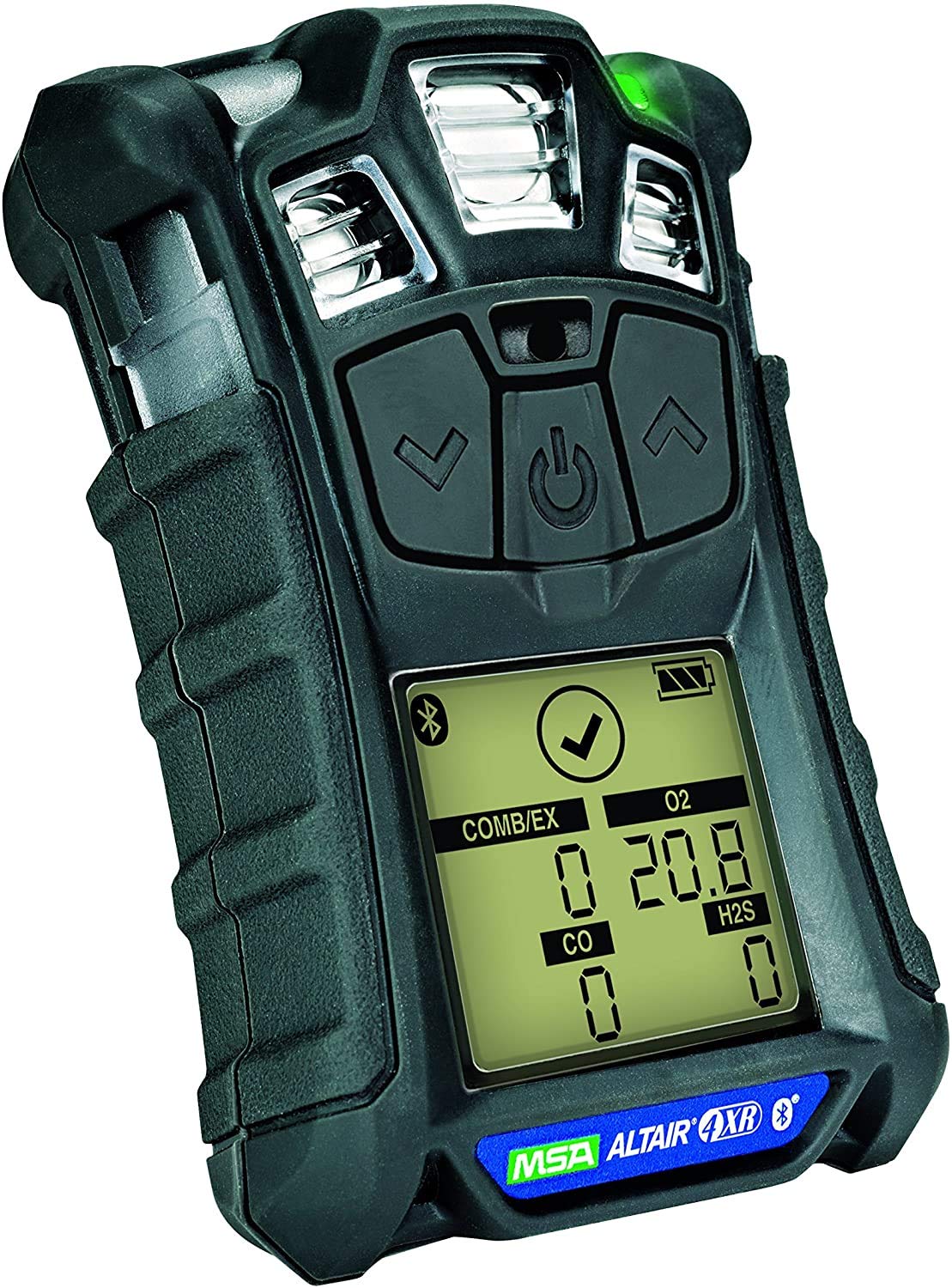
The MSA Altair 4XR is the instrument I recommend first to anyone entering the portable gas detection market.
It detects the four standard industrial gases (O2, LEL, CO, H2S) and is built to the same standard as MSA’s full safety portfolio, a brand with a century-long reputation in personal protective equipment.
What sets the Altair 4XR apart is the XCell sensor technology, which MSA claims provides the fastest response times in its class and enables a two-year sensor warranty.
The built-in pump allows for pre-entry confined space atmosphere testing at a distance, a genuine safety advantage.
The instrument is rated IP68, survived a six-foot drop in my field evaluations, and the MotionAlert and InstantAlert features meet lone worker monitoring requirements under most regulatory frameworks, including OSHA 1910.146.
Best for
Oil and gas, confined space entry, utilities, and construction.
Key specs
- Gases: O2, LEL, CO, H2S
- Battery life: ~24 hours
- IP68 / 20-foot drop rated
- ATEX, IECEx, CSA certified
- Optional wireless connectivity via MSA Grid
Industrial Scientific MX6 iBrid: Best for Complex Multi-Hazard Sites
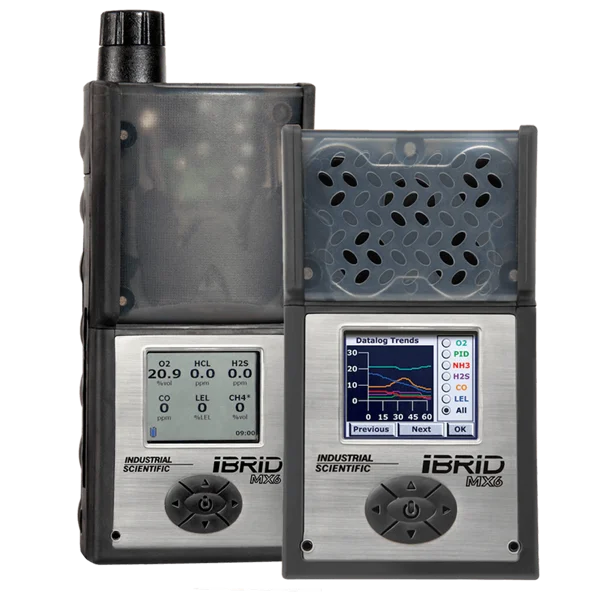
When a site has more than four gases to monitor, the Industrial Scientific MX6 iBrid is the instrument of choice.
It accepts up to six sensor slots, including infrared, catalytic bead, electrochemical, and PID sensors, making it one of the most configurable portable monitors on the market.
The iNet connectivity platform allows real-time data streaming and remote alarm management, which is invaluable for safety managers overseeing large crews.
The instrument’s modular design means sensors can be swapped or upgraded without returning the unit to the manufacturer.
Best for
Refineries, chemical plants, and complex confined space work.
- Up to 6 simultaneous gases
- Multiple sensor technology types in one unit
- iNet cloud connectivity for fleet management
- ~14 hour battery; fast charging dock available
BW Technologies GasAlertMax XT II: Best Budget Four-Gas Monitor
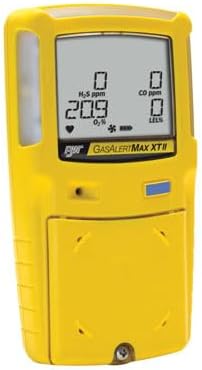
Not every application requires premium pricing. The BW Technologies GasAlertMax XT II (now a Honeywell brand) delivers reliable four-gas detection at a significantly lower price point than MSA or Industrial Scientific, making it the instrument of choice for budget-conscious procurement teams in construction and general industry.
The intuitive interface and simple calibration procedure reduce training time for non-technical workers.
It lacks wireless connectivity, but for applications where that is not a requirement, it is a dependable workhorse.
Best for
Construction, utilities, facilities management on a budget
- Standard 4-gas (O2, LEL, CO, H2S)
- ~20-hour battery life
- Competitively priced
- Simple bump test and calibration workflow
RAE Systems MultiRAE: Best for VOC Detection
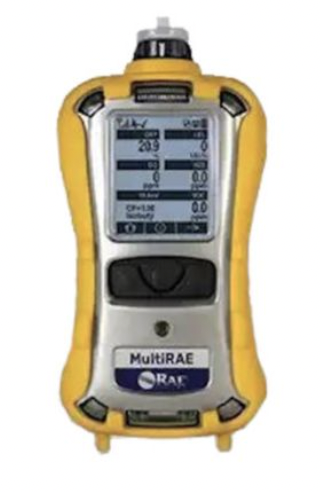
Applications involving organic solvents, fuels, or chemical processing require PID sensor capability alongside standard multi-gas detection.
The RAE Systems MultiRAE is purpose-built for exactly this use case. It integrates a photoionization detector (PID) for broad-range VOC monitoring directly alongside standard electrochemical and catalytic bead sensors, all in a single handheld unit.
The MultiRAE supports Wi-Fi and cellular connectivity via RAE Systems’ ProRAE Guardian software, enabling real-time remote monitoring and data logging for compliance reporting.
It is rated IP65 and certified ATEX and CSA for use in hazardous classified areas, a critical requirement for petrochemical and refinery applications.
Best for
Petrochemical, fuel handling, solvent-heavy environments.
- Built-in PID sensor for broad-range VOC detection
- Wi-Fi / cellular connectivity with ProRAE Guardian software
- IP65, ATEX, UL, CSA certified
- Data logging for compliance reporting
Dräger X-am 5100: Best for Configurability
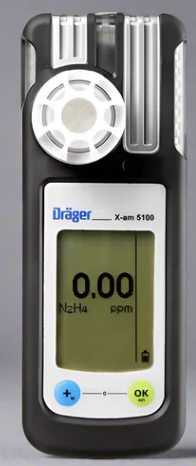
Dräger has been manufacturing gas detection equipment since 1889, and the X-am 5100 reflects that depth of engineering experience.
The unit is highly configurable, accepting one to five sensors from Dräger’s extensive XXS sensor range.
This allows the same hardware platform to be adapted for very different applications, from simple single-gas monitoring to complex multi-hazard scenarios.
The instrument’s build quality is exceptional, and Dräger’s calibration ecosystem, including the X-dock automated test and calibration station, reduces the ongoing cost of compliance.
Best for
Chemical processing industries require highly configurable platforms.
- 1 of 5 configurable gas sensors
- Extensive sensor library (100+ gases detectable)
- X-dock automated calibration station available
- IP68 rated, ATEX certified
Honeywell BW Solo: Best Single-Gas Personal Monitor
Not every worker needs to monitor four gases. Technicians in CO-specific environments, boiler rooms, parking structures, and fleet maintenance benefit from a dedicated, simple, ultra-compact single-gas monitor.
The Honeywell BW Solo is a disposable two-year monitor that requires no charging and no calibration, making it the lowest total cost of ownership option for single-gas applications.
Its IntelliFlash visual indicator provides a continuous “all-clear” green flash, giving workers and supervisors immediate visual confirmation that the instrument is active and functioning, a feature often overlooked but highly valued in fast-paced work environments.
Best for
Single-gas personal protection
- Single gas: CO or H2S versions
- IntelliFlash continuous all-clear indicator
- Compact, lightweight, designed for all-day wear
RKI Instruments Eagle 2: Best for Emergency Response
Emergency responders and hazmat teams need an instrument that can be rapidly configured on-scene for unknown gas hazards.
The RKI Instruments Eagle 2 is designed exactly for this use case. It supports up to six sensors simultaneously, including a wide range of exotic sensors, and can be configured in the field by swapping sensors from RKI’s extensive library.
The large, backlit display is readable in all light conditions, and the instrument’s rugged case is built for the demands of emergency response. It is also a popular choice in industrial hygiene and environmental monitoring applications.
Best for
Hazmat teams, emergency response, and industrial hygiene.
- Up to 6 sensors wide exotic gas library
- Field-interchangeable sensors
- Large backlit display for outdoor use
- ~12 hour battery; AC/DC charging
Regulatory Standards to Know Before You Buy
Purchasing a portable gas detector is not only about features, but it is also about compliance. Depending on your jurisdiction and industry, the following standards may apply.
OSHA 29 CFR 1910.146
Requires atmospheric testing before and during confined space entry using calibrated instruments. A continuous monitoring portable detector is required for permit-required confined spaces.
NFPA 72
While primarily governing fixed fire alarm systems, NFPA 72 principles on alarm notification and system integrity apply to gas detection integration in larger facility safety systems.
ATEX / IECEx
Required for instruments used in explosive atmospheres in the EU and many international markets. Always verify hazardous area certification requirements before deployment.
UL 2075 / CSA C22.2 No. 152
North American certifications for combustible and toxic gas detectors. Required for many insurance and safety program compliance requirements.
Maintaining Your Portable Gas Detector
A gas detector that is not properly maintained is not a safety device; it is a false sense of security. Here are the non-negotiables:
- Bump test before every use: expose the sensors to a known concentration of test gas to verify that the alarms activate. This takes 30 seconds and catches sensor failures before they cost lives.
- Full calibration on a schedule: typically monthly or quarterly, per the manufacturer’s recommendation and your safety management system requirements.
- Sensor replacement per manufacturer’s service life: electrochemical sensors typically last two to three years; catalytic bead sensors can last three to five years with proper care.
- Battery inspection: check terminals for corrosion, particularly in humid environments. Replace rechargeable batteries every 18–24 months as a standard practice.
- Firmware updates: modern connected instruments receive firmware updates that can improve sensor algorithms and add features. Keep instruments updated through manufacturer portals.
Frequently Asked Questions
What is the best portable gas detector for confined space entry?
The MSA Altair 4XR with the built-in sampling pump is the best choice for confined space entry. It detects the four gases required under OSHA 1910.146, the pump allows remote atmosphere testing before entry, and the man-down alarm meets lone worker monitoring requirements.
How often do portable gas detectors need to be calibrated?
Most manufacturers recommend a bump test before every use and full calibration at least monthly or per the facility’s safety management system. Some automated docking stations perform this automatically overnight.
What is the difference between a single-gas and a multi-gas detector?
A single-gas detector monitors for one specific gas, typically CO or H2S, and is best suited to environments with a single, well-defined hazard.
A multi-gas detector monitors two to six gases simultaneously and is required wherever there are multiple potential hazards, such as in confined spaces, where OSHA requires monitoring for oxygen, combustible gases, CO, and H2S simultaneously.
Can I use a portable gas detector in an explosive atmosphere?
Only if the instrument carries the appropriate hazardous area certification ATEX, IECEx, or the North American Class I Division 1 rating. Using a non-certified instrument in an explosive atmosphere is both illegal and extremely dangerous.
How long do portable gas detector sensors last?
Electrochemical sensors for toxic gases typically have a service life of two to three years. Catalytic bead combustible gas sensors last three to five years under normal conditions, but can be prematurely poisoned by silicone compounds or hydrogen sulfide. Always replace sensors per the manufacturer’s recommended service intervals.
Final Recommendation: Choosing the Right Portable Gas Detector
Here is how I summarize the choices.
- For most industrial applications, start with the MSA Altair 4XR. It does everything well.
- For complex multi-gas environments with six or more hazards, the Industrial Scientific MX6 iBrid is unmatched in flexibility.
- For VOC-heavy environments, specify the RAE Systems Multirae with the PID sensor option.
- For single-gas personal protection where simplicity and low total cost of ownership matter, the Honeywell BW Solo is hard to beat.
- For emergency response and hazmat operations, the RKI Eagle 2 provides the field-configurable versatility that those teams require.
Gas detection is not an area where cost-cutting makes sense. The difference between a properly specified instrument and an inadequate one can be measured in human lives.
Choose your instrument based on your specific hazards, your regulatory environment, and your operational requirements, and ensure your team receives proper training on how to use and maintain it.
Have questions about specifying gas detection equipment for a specific application? Leave a comment below or reach out. This is exactly the kind of problem I enjoy helping teams solve.
2 thoughts on “7 Best Portable Gas Detectors in 2026”