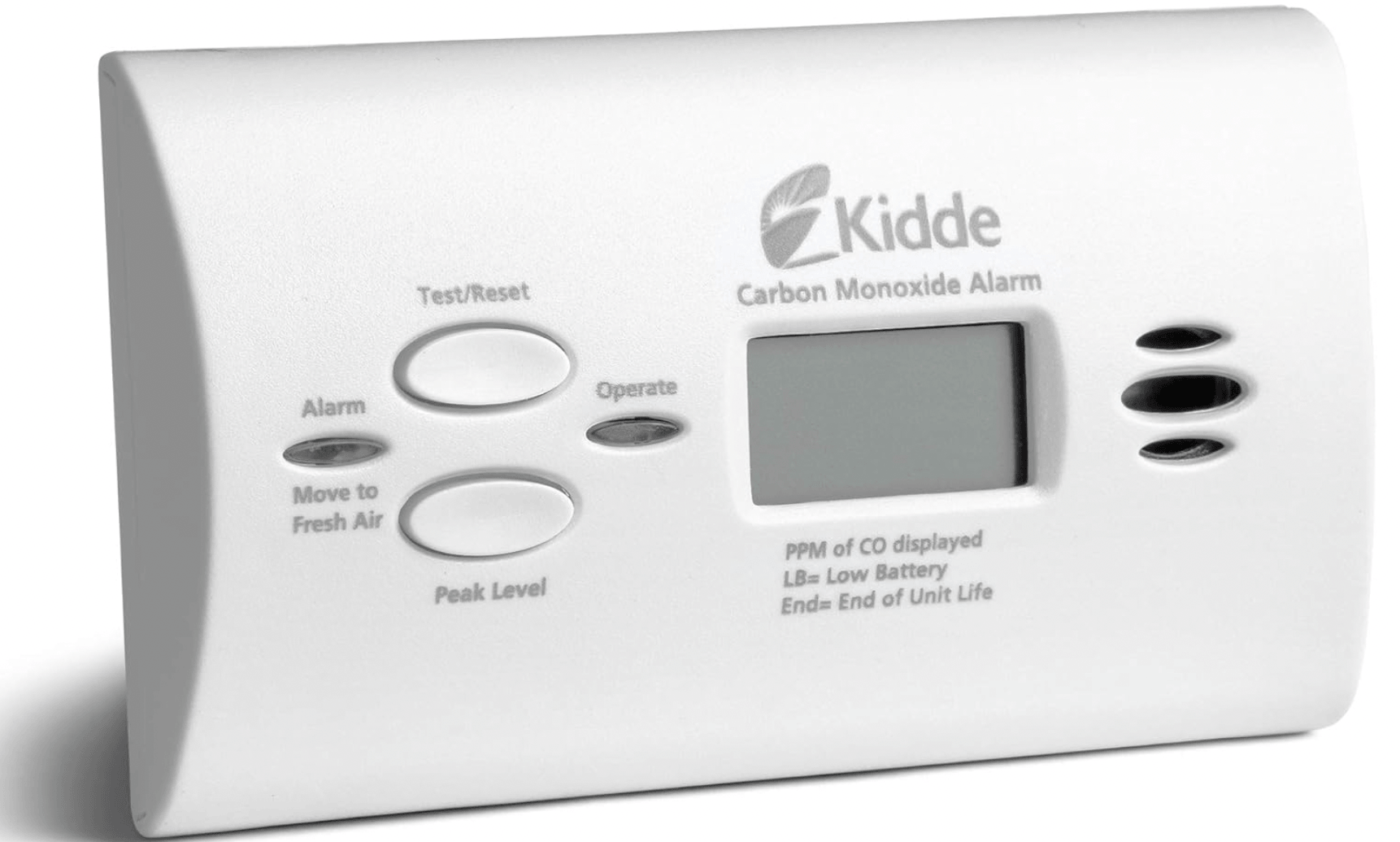
Carbon monoxide kills roughly 400 Americans every year and sends more than 100,000 to the emergency room, and most of those incidents happen inside the home.
What makes it so dangerous is exactly what makes it so hard to detect: you cannot see it, smell it, or taste it.
A carbon monoxide detector is the only reliable line of defense between your family and this silent killer.
Yet many homeowners either don’t have one, have one in the wrong place, or are using a detector that expired years ago without realizing it.
This guide covers everything you need to know about CO forms, how detectors work, where to place them, which type to buy, and how to maintain them so they actually protect you when it matters.
What Is Carbon Monoxide and Why Is It So Dangerous?
Carbon monoxide (CO) is a colorless, odorless gas produced when fuels such as natural gas, propane, wood, coal, gasoline, and kerosene burn incompletely.
Any combustion appliance in your home is a potential CO source if it malfunctions, is poorly maintained, or is used in an enclosed space.
Common household sources include:
- Gas furnaces and boilers
- Gas water heaters
- Fireplaces and wood-burning stoves
- Attached garages (running vehicles)
- Gas ranges and ovens
- Portable generators (a leading cause of fatal CO poisoning)
- Kerosene space heaters
The reason CO is so deadly is biochemical. When you inhale it, CO binds to hemoglobin in your red blood cells roughly 200 times more readily than oxygen does, forming carboxyhemoglobin.
Your cells are starved of oxygen even as your body keeps breathing normally. Because the early symptoms, headache, dizziness, nausea, and fatigue, resemble the flu, many victims don’t connect their symptoms to CO until it’s too late.
At higher concentrations, CO causes confusion, loss of consciousness, and death. Infants, elderly individuals, and people with heart or respiratory conditions are especially vulnerable, but no one is immune.
How Do Carbon Monoxide Detectors Work?
A carbon monoxide alarm doesn’t just flip a switch when CO appears. It measures accumulation over time, which is important because the danger threshold depends on both concentration and duration of exposure.
There are three main sensor technologies used in residential CO detectors.
Electrochemical Sensors
The most common and most accurate type found in modern home detectors. A chemical reaction between the CO gas and an electrolyte solution generates a small electric current proportional to the CO concentration.
The detector measures the current and triggers the alarm when a dangerous level is reached. Electrochemical sensors are highly sensitive and reliable, with a typical lifespan of five to seven years.
Metal Oxide (Semiconductor) Sensors
These use a metal oxide film, usually tin oxide, whose electrical resistance drops in the presence of CO.
They are durable and work well over a wide temperature range, but tend to be less precise than electrochemical sensors and can generate more false alarms. They are commonly found in lower-cost units.
Biomimetic Sensors
A gel that changes color when it absorbs CO, mimicking the binding reaction in human blood. A light sensor detects the color change and triggers the alarm.
These are less common in modern detectors but are used in some marine and specialty applications.
Alarm Thresholds
Detectors in the United States must meet UL 2034 standards, which require the alarm to trigger at the following exposure levels (at a minimum).
| CO Concentration (ppm) | Time to Alarm |
|---|---|
| 70 ppm | Within 1–4 hours |
| 150 ppm | Within 10–50 minutes |
| 400 ppm | Within 4–15 minutes |
This time-weighted design means a detector will not alarm immediately at low concentrations. It’s calibrated to reflect genuine biological risk, not instantaneous trace readings.
Where to Place Carbon Monoxide Detectors in Your Home
Placement is just as important as having a detector at all. CO mixes readily with air and doesn’t stratify the way some gases do, but there are still best-practice guidelines for placement.
General Rules
Install at least one detector on every level of your home
, including the basement. Carbon monoxide can accumulate anywhere, but a leak in the basement can take longer to reach upper floors, giving you valuable warning time if you have basement coverage.
Place one outside each sleeping area
CO poisoning is especially dangerous at night because victims may not wake up from the early symptoms.
A detector outside bedroom doors can alert occupants before CO concentrations become incapacitating.
Mount detectors at wall-outlet height or on a shelf
Unlike smoke, which rises and hugs the ceiling, CO is very close to the same density as air. The International Association of Fire Chiefs recommends placing CO detectors at knee-to-shoulder height on the wall or on a shelf, not on the ceiling.
Strategic Placement Tips
- Place a detector in or near the garage if your home has an attached garage. Running a car engine, even briefly, with the door open, can push CO into living spaces.
- Place one near any fuel-burning appliance: furnace room, utility room, boiler room.
- If you use a fireplace frequently, place a detector in that room.
- Avoid placing detectors directly next to fuel-burning appliances (within five feet) — this can cause nuisance alarms from minor combustion by-products.
- Keep detectors away from humid areas like bathrooms, which can interfere with electrochemical sensors.
How Many Do You Need?
For a typical two-story home with a basement, three detectors is a reasonable minimum: one on each floor and one in the basement.
Larger homes or homes with multiple sleeping areas may need more. Think of it like smoke detectors: one per floor is the floor, not the ceiling.
Types of Carbon Monoxide Detectors: Which One Should You Buy?
The market offers several formats, each with trade-offs in terms of convenience, reliability, and cost.
Plug-in CO Detectors
Plug directly into a standard wall outlet, usually with a battery backup for power outages. Easy to install, easy to move, and the battery backup is a critical safety feature.
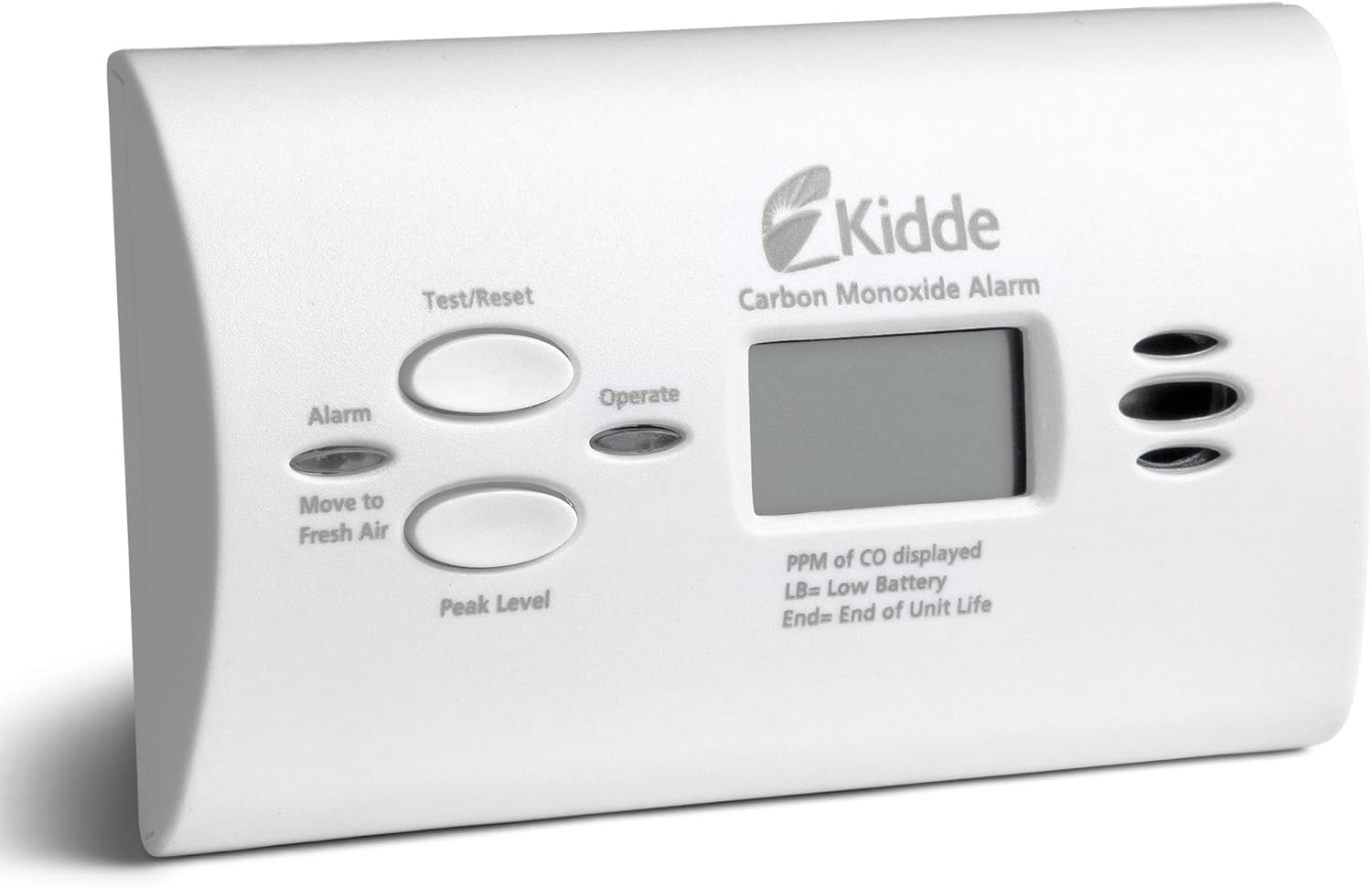
Look for models with a digital display showing current CO levels, useful for monitoring low-level buildup before it reaches alarm thresholds.
Best for
Most homeowners. Simple, reliable, and versatile.
Hardwired CO Detectors
Wired directly into your home’s electrical system, typically with battery backup. Often interconnected, meaning if one alarm triggers, all alarms in the house sound simultaneously.
This is a significant safety advantage in larger homes where a single detector might not be heard from all areas.
Best for
New construction, renovations, or homeowners who want a whole-home system.
Battery-Only CO Detectors
Entirely battery-powered, no outlet or wiring required. Flexible placement, including areas without nearby outlets.
The trade-off is the need to replace batteries regularly; many units chirp when the battery runs low, but this is easy to ignore.
Best for
Locations without a convenient outlet or as supplemental detectors.
Combination Smoke/CO Detectors
A single unit that detects both smoke and carbon monoxide. Convenient for reducing the number of devices on ceilings and walls.
The caveat: since smoke detectors belong on the ceiling and CO detectors work best at wall height, a combination unit is a compromise.
If you choose a combo unit, ceiling placement is still preferred since smoke detection is typically the higher priority.
Best for
Rentals, minimalists, or areas where a single device needs to cover both hazards.
Smart CO Detectors
Wi-Fi or Bluetooth-connected units that send alerts to your smartphone, log CO levels over time, and integrate with smart home systems.
Some models, like the Nest Protect, also perform regular self-tests and notify you of low batteries or end-of-life status.
Premium price, but the remote notification capability is genuinely useful if you travel or rent out your property.
Best for
Tech-savvy homeowners, landlords, and smart home enthusiasts.
What to Look for When Buying a Carbon Monoxide Detector
Not all detectors are created equal. Here are the key factors to evaluate.
UL 2034 Certification
The baseline standard for residential CO alarms in the US. Any detector you buy should carry this certification. Don’t settle for uncertified products.
Digital Display
A display showing current CO concentration in parts per million (ppm) tells you far more than a simple alarm.
You can monitor low-level accumulation and catch problems before they reach alarm thresholds.
Battery Backup
If your detector is hardwired or plug-in, battery backup is non-negotiable. Power outages often accompany the weather events and system failures that can also cause CO leaks.
Lifespan Indicator
Good detectors include an end-of-life signal, typically a different chirp pattern, to tell you when the unit needs replacing. Some have a clearly marked expiration date on the back.
Sensor Type
For home use, electrochemical sensors are the gold standard. Look for units that specify the sensor type in their product documentation.
Interconnectability
If you’re outfitting a larger home, choose a brand that offers interconnected units (either wired or wireless) so all alarms sound together.
Carbon Monoxide Detector Maintenance and Lifespan
Buying a detector is step one. Keeping it functional is step two, and this is where many homeowners fall short.
Test Your Detectors Monthly
Every CO detector has a test button. Press it monthly to confirm the alarm sounds and the unit is functioning. This takes five seconds and could save your life.
Replace Batteries at Least Annually
If your detector uses replaceable batteries, change them every year, even if they haven’t died. A convenient habit is to change them when you set the clocks back in the fall. Never ignore a low-battery chirp.
Know the Lifespan of Your Detector
This is the most commonly overlooked maintenance issue: CO detectors expire. The electrochemical sensors degrade over time, typically after five to seven years, and a detector that has passed its lifespan may not alarm even when CO is present.
Check the manufacturer’s date, usually on a label on the back or bottom of the unit, and replace the detector within the manufacturer’s recommended timeframe. If you don’t know how old your detector is, replace it.
Don’t Paint Over or Cover Detectors
Paint, stickers, or covers that block the sensing vents will impair the unit’s ability to detect CO. Keep the sensing area clear.
Respond Immediately to Any Alarm
If your CO detector alarms.
- Immediately move everyone (including pets) outside to fresh air.
- Call 911 from outside. Do not re-enter to make the call.
- Do not return inside until emergency services have cleared the building and identified the source.
- Seek medical attention if anyone feels unwell.
Do not assume the alarm is a false alarm. Investigate every CO alarm as if it were real.
Carbon Monoxide Laws and Requirements by State
Most US states now require CO detectors in residential properties, though the specifics vary. Requirements typically cover.
- Single-family homes
- Multi-family dwellings and apartments
- New construction vs. existing homes
- Rental properties (landlord obligations)
States with fuel-burning appliances in homes, attached garages, or both almost universally mandate CO alarms.
Check your state’s fire code or consult your local fire marshal’s office for the requirements in your area. If you are a landlord, compliance is typically your legal responsibility.
Even in states without a mandate, installation is basic common sense. The cost of a quality CO detector, typically $25 to $60, is trivially small compared to the risk.
Frequently Asked Questions
How long do carbon monoxide detectors last?
Most residential CO detectors have a lifespan of five to seven years. Check the manufacturer’s date on the back of your unit and replace it within the manufacturer’s recommended window. When in doubt, replace it.
Can a CO detector detect natural gas?
No. CO detectors are specifically calibrated for carbon monoxide. Natural gas (methane) requires a separate gas leak detector. Combination CO/natural gas detectors are available if you want both functions in one unit.
What does a CO alarm sound like?
The standard alert pattern under UL 2034 is four beeps, a pause, then four more beeps repeated continuously.
This distinguishes it from a smoke alarm (typically a continuous or three-beep pattern) and from a low-battery chirp (usually a single chirp every 30–60 seconds).
Can I put a CO detector in the garage?
The garage itself is not typically recommended as a primary installation location because CO concentrations there can be extremely high during normal vehicle operation, leading to nuisance alarms.
A better approach is to place a detector near the interior door connecting your garage to your living space.
Where should you not put a CO detector?
Avoid placing detectors within five feet of fuel-burning appliances, in high-humidity areas like bathrooms, in direct sunlight, near windows or air vents that could dilute readings, and in enclosed spaces like closets.
Final Thoughts
A carbon monoxide detector is one of the simplest and most effective safety investments a homeowner can make.
The technology is reliable, the cost is minimal, and the protection it provides is real. But it only works if you have the right number of detectors, they are properly placed, and they are not expired.
Take fifteen minutes to audit your home today
- Check the manufacturer’s date on every CO detector you own.
- Verify they are positioned at the right height, on every level, and outside every sleeping area.
- Test each unit with the test button.
- Replace any unit older than seven years or without a known manufacturer date.
If you’re starting from scratch, invest in detectors with digital displays and battery backup from a reputable brand carrying UL 2034 certification. Interconnected units are worth the upgrade in larger homes.
Carbon monoxide protection doesn’t require expertise or a large budget. It requires the right equipment, correctly placed, and properly maintained. That’s entirely within reach for any homeowner.