

A gas detector that won’t zero, or fails span during calibration, is one of the most common problems in the field. It is also one of the most misdiagnosed.
Technicians replace perfectly good sensors, and sometimes worse, they force a calibration through and put an unreliable instrument back into service.
This guide explains what zero and span actually do, why they fail, and how to troubleshoot zero and span issues in gas sensors in a logical order, whether you are working with electrochemical, catalytic bead (LEL), infrared (NDIR), or PID sensors.

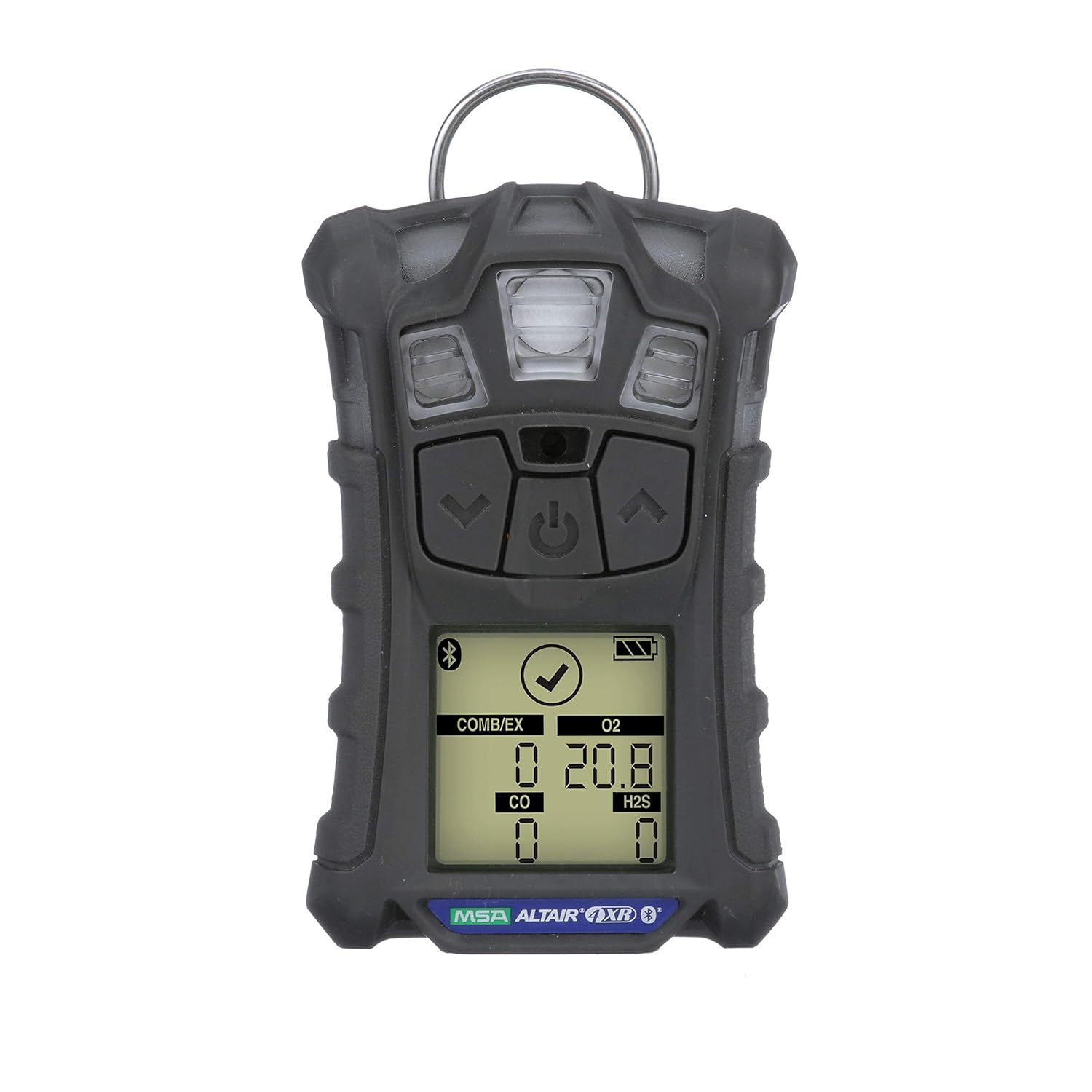
Why you have Zeroing and Span Issues?
Most zero and span failures come from the calibration setup (bad gas, wrong regulator, contaminated air, tubing losses) before they come from a failed sensor. Check the setup first, then the environment, then the sensor.
What Zero and Span Mean in Gas Detection
Every gas sensor produces a raw signal (current, voltage, or optical reading) that the instrument converts into a gas concentration. Calibration sets two reference points for that conversion:
- Zero is the reading when the target gas is absent. It defines the baseline. For most toxic and combustible sensors, the correct reading is 0 ppm or 0 %LEL. (Oxygen is the exception, covered below.)
- Span is the reading when a known concentration of test gas is applied. It defines the sensitivity, meaning how much signal the sensor produces per unit of gas.
If zero is wrong, every reading is offset. If span is wrong, every reading is scaled incorrectly. A detector can pass one and fail the other, and the two failures point to different causes, so treat them separately.
Bump Test vs. Calibration
These two are often confused, and confusing them leads to bad troubleshooting.
Bump test (functional check)
It exposes the detector to gas to confirm the sensors respond and the alarms activate. It does not adjust anything.
Many sites use a pass window such as within roughly 10 to 20 percent of the applied concentration, but follow your manufacturer’s instructions and site procedure.
What is bump test in gas detection?
Calibration
It adjusts the zero and span so the readings match the reference gas.
If an instrument fails a bump test, the standard response is to perform a full calibration and then retest. If it fails calibration, you are in troubleshooting territory, which is what this article covers.
What is calibration in gas detection?
Before You Troubleshoot: Check the Setup First
In my field experience, roughly half of “failed sensor” cases go away once the calibration setup is corrected. Run through this list before touching the sensor.
Check the calibration gas
- Is the cylinder within its expiry date? Reactive gases (H2S, Cl2, NH3, NO2, SO2) degrade faster than stable gases like methane or CO.
- Is the concentration the same as the value configured in the instrument or calibration station?
- Is the balance gas correct (air vs. nitrogen)? Catalytic sensors need oxygen to respond, so a nitrogen-balance cylinder gives false low readings on an LEL sensor.
- Is there enough pressure left in the cylinder?
Check the regulator and flow rate
- Use a fixed-flow regulator matched to the instrument. Most portable detectors expect a flow in the region of 0.5 L/min, but confirm this in the manual.
- Too little flow means the sensor never sees the full concentration. Too much flow can create back pressure or pressurize the sensor, which also distorts the reading.
Check tubing and fittings
- Use tubing compatible with the gas. Reactive and sticky gases (chlorine, ammonia, hydrogen sulfide, HCl) are adsorbed by some plastics and rubbers, which lowers the concentration reaching the sensor. PTFE is the usual recommendation for these.
- Keep the tubing short, and inspect for kinks, cracks, and loose connections.
- Confirm the calibration cap fits properly and seals over the sensor inlets.
Check the instrument itself
- Let the detector warm up and stabilize fully. Electrochemical sensors that have just been powered on, or stored without power, can take a long time to settle. Calibrating too early is a classic cause of unstable zero.
- Check that the filters and inlet fittings are clean and not blocked by dust, water, or oil.
- Check the battery. A low battery can cause erratic readings.
Check the environment
- Are you calibrating in a stable temperature? Large temperature swings shift sensor output.
- Is the air really clean? See the next section.
Troubleshooting Zero Problems
Symptom: The sensor will not zero
Contaminated ambient air
This is the most common cause. If you zero in “fresh air” that contains traces of the target gas, the instrument either refuses to zero or zeros to the wrong baseline.
Typical culprits are engine exhaust (CO), nearby process leaks, solvent vapors, cleaning products, and battery charging areas. Solution: zero with certified zero-air or nitrogen from a cylinder, or move to a confirmed clean area.
Sensor not stabilized
After power-up, a long storage period, or a sudden temperature change, the sensor baseline is still moving. Wait for the reading to settle and try again.
Cross-sensitivity
Many sensors respond to gases other than the one they are designed for. A CO sensor, for example, can respond to hydrogen, and an H2S sensor can respond to other reducing gases.
If a cross-interfering gas is present in the zeroing environment, the zero shifts. Check the sensor’s cross-sensitivity table.
Humidity or temperature transients
Moving an instrument from an air-conditioned room to a hot, humid area, or the reverse, causes temporary baseline shifts. Let it acclimatize.
Sensor degradation
If the zero offset is large, keeps drifting, or fails even with certified zero gas in a stable environment, the sensor may be at end of life.
Symptom: Zero drifts between calibrations
- Slow drift over weeks is normal aging, but a fast trend usually signals contamination, moisture damage, or a failing sensor.
- Sudden drift after a specific event (dropped instrument, water exposure, high gas exposure, cleaning chemicals) points to that event as the cause.
- Drift that follows temperature shows a temperature compensation issue or uneven operating conditions.
Zero specifics by sensor type
Electrochemical (toxic gases)
Zero in clean air or zero gas. Watch for cross-sensitive background gases, and allow full stabilization after power-up.
Oxygen sensors
Oxygen is different. In most instruments the fresh-air setting is the span point, at 20.9 %vol, while a true zero is checked with nitrogen if the manufacturer requires it.
An O2 sensor that will not calibrate in fresh air often signals a depleted sensor, since O2 cells are consumed over time. Also remember that altitude and barometric pressure influence the reading.
Catalytic bead (LEL)
Zero must be done in air that is free of combustible gas and contains normal oxygen. Zeroing in an oxygen-deficient or gas-contaminated atmosphere gives wrong results.
NDIR (infrared)
Zero using nitrogen or gas-free air. For CO2 sensors especially, ordinary ambient air already contains CO2 (roughly 400+ ppm outdoors, higher indoors), so zeroing in room air produces a wrong baseline. Use scrubbed air or nitrogen. Condensation on optics also shifts the baseline.
PID (photoionization)
Use zero air. Humidity, a dirty lamp window, and a contaminated sensor can all cause a noisy or shifting baseline.
Troubleshooting Span Problems
Symptom: The sensor fails span or reads low
Wrong or degraded gas
Confirm concentration, expiry, and balance gas. A cylinder reading lower than labeled will make a healthy sensor look weak.
Gas is not reaching the sensor
Check flow rate, tubing losses, adsorption, blocked inlets, a leaking or poorly seated calibration cap, and the exhaust path.
Wrong configuration
The instrument’s configured span concentration must match the cylinder. A 50 ppm cylinder applied to a device expecting 25 ppm will read 200 percent and fail span even though the sensor is healthy.
Insufficient exposure time
Some sensors, especially for reactive gases or with long tubing, need more time to reach a stable reading. Follow the manufacturer’s calibration duration.
Sensor sensitivity loss
Instruments usually calculate sensitivity during calibration and fail the sensor when it falls below a limit set by the manufacturer. Causes include:
- Age and wear (dried-out electrolyte, consumed cell, degraded catalyst)
- Contamination or poisoning (for catalytic sensors: silicones, sulfur compounds, halogenated compounds, and lead compounds are well-known poisons)
- Exposure to very high gas concentrations beyond range
- Water ingress or blocked filter
Optical contamination (NDIR/PID)
Dirt, condensation, or film on windows and lamps reduces signal and lowers span.
Symptom: Sensor reads high on span
- Cylinder concentration higher than configured
- Cross-sensitive contamination in the gas or setup
- Pressure effects from too high a flow rate or blocked exhaust
- Sensor baseline not stable, so the zero error is carried into span
Symptom: Span passes, but readings in the field are wrong
Wrong calibration gas for the target gas
Surrogate gases and correction factors matter. For example, calibrating an LEL sensor with methane and then measuring propane or hydrogen requires the proper correction factor. Use the calibration gas recommended for the gas you actually need to measure.
Zero not properly set first
Always zero before span.
Environmental conditions
In the field (temperature, humidity, pressure) differ greatly from the calibration environment.
Quick Reference: Symptom, Likely Cause, and Fix
| Symptom | Likely causes | What to do |
|---|---|---|
| Won’t zero | Contaminated air, not stabilized, cross-gas, end-of-life sensor | Use zero air or nitrogen, wait for stabilization, check cross-sensitivity, replace sensor if it persists |
| Zero drifts quickly | Temperature change, moisture, contamination, aging | Stabilize environment, inspect filters, review event history, trend drift |
| Fails span, reads low | Expired or wrong cylinder, low flow, tubing adsorption, poor cap seal, poisoned or aged sensor | Verify gas and setup first, retest, then evaluate sensor |
| Reads high on span | Configured concentration mismatch, wrong cylinder, pressure or flow issue | Check configuration and regulator |
| Span passes but readings are off in field | Wrong calibration gas or correction factor, zero skipped | Recalibrate with correct gas and order |
| Erratic or noisy readings | Low battery, liquid in sensor, loose connection, unstable environment | Charge, dry and clean, inspect, retest |
| O2 sensor won’t calibrate in fresh air | Depleted cell, pressure or altitude offset, contamination | Check ambient conditions, replace sensor if depleted |
| LEL sensor low response | Poisoning, oxygen-deficient calibration gas, wrong gas type | Use air-balance gas, check exposure history, replace if poisoned |
A Step-by-Step Troubleshooting Procedure
Stop and record
Note the instrument, sensor, error message, and last successful calibration date. Do not force the calibration.
Verify the calibration gas
Check expiry, concentration, and balance gas.
Verify flow and connections
Check regulator type, flow rate, tubing, and cap seal.
Let the instrument stabilize
Confirm battery level, temperature, and warm-up.
Check the air used for zero
Use certified zero air or nitrogen if there is any doubt.
Zero first, then span
Repeat the sequence once.
Inspect the sensor and inlets
Look for damage, moisture, and clogged filters. Replace filters where needed.
Review history
Check the trend in zero offset and sensitivity, plus any recent exposure or damage events.
Try with a known-good instrument or sensor to isolate whether the fault is the gas setup or the detector.
Replace the sensor if it still fails after the setup is confirmed good, and log the event.
When to Replace the Sensor Instead of Recalibrating
Replace the sensor when you see one of the following.
- It repeatedly fails zero or span with verified gas and a verified setup
- Its sensitivity has dropped below the manufacturer’s minimum
- It shows constant drift, noise, or slow response that a clean calibration does not fix
- It has been poisoned, flooded, or damaged
- It has passed its rated service life
Do not adjust the span or alarm thresholds to hide a weak sensor. A detector that is “made to pass” but has lost sensitivity may fail to alarm when it matters, and that is a safety risk, not just a maintenance issue.
Preventing Zero and Span Problems
- Bump test before each day’s use where your safety program requires it, and calibrate on the schedule set by the manufacturer and your site policy.
- Keep clean, in-date calibration gas stored per manufacturer instructions.
- Standardize your setup, the same regulator type, tubing material, and procedure across your team.
- Calibrate in a controlled, clean area rather than in the field wherever possible.
- Protect sensors from silicones, solvents, dust, and moisture. Use filters and correct storage.
- Trend your data. Track zero offset and sensitivity for each sensor over time. A gradual decline gives you a chance to replace sensors during planned maintenance instead of after a failure. This is where fleet management software earns its keep.
- Train technicians so they understand the difference between a setup fault and a sensor fault.
- Document everything, calibration date, gas lot, results, and corrective actions.
Frequently Asked Questions
What is the difference between zero and span calibration?
Zero sets the sensor’s baseline reading when no target gas is present. Span sets its sensitivity by exposing it to a known concentration of the target gas. Zero is normally done first, then span.
Why won’t my gas detector zero?
The most common reasons are contaminated air, a sensor that has not stabilized, cross-sensitivity to another gas, or a sensor near end of life. Try zeroing with certified zero air or nitrogen after allowing full warm-up.
Why does my gas sensor fail span calibration?
Check the calibration gas (concentration, expiry, balance gas), the regulator and flow rate, the tubing, and the calibration cap seal first.
If those are all correct, the sensor may have lost sensitivity due to age, poisoning, or damage.
Can I calibrate a gas detector in ordinary room air?
Only if you are sure the air is free of the target gas and any cross-interfering gases. For CO2 sensors, room air contains CO2, so it is not suitable as a zero. When in doubt, use certified zero air or nitrogen.
How often should I calibrate a gas detector?
Follow the manufacturer’s recommendation and your site’s safety program. Many programs pair a bump test before each use with periodic full calibration, but the interval depends on the instrument, the application, and local regulations.
Why does my catalytic LEL sensor read low even with the correct gas?
Possible causes are poisoning (silicones, sulfur, halogenated compounds, lead), a calibration gas balanced in nitrogen instead of air, wrong gas or correction factor, or simple sensor aging.
What is a good sensor sensitivity level?
Each manufacturer sets its own limits. Most instruments display or log a sensitivity value after calibration and flag the sensor when it falls below the set threshold. Refer to your instrument’s manual.
Is it acceptable to adjust the span to force a pass?
No. Forcing a calibration through hides a real loss in performance and can leave workers unprotected.
Final Thoughts
Troubleshooting zero and span in gas sensors comes down to discipline: verify the gas, verify the setup, verify the air, and only then question the sensor.
Treat zero and span as two separate problems, keep good records, and trend your sensor health over time.
Done properly, you will spend less on unnecessary sensor replacements and gain confidence that your detectors will respond when they are needed.
Always follow the instrument manufacturer’s instructions, applicable standards, and your site’s safety procedures. This article is general guidance and does not replace them.