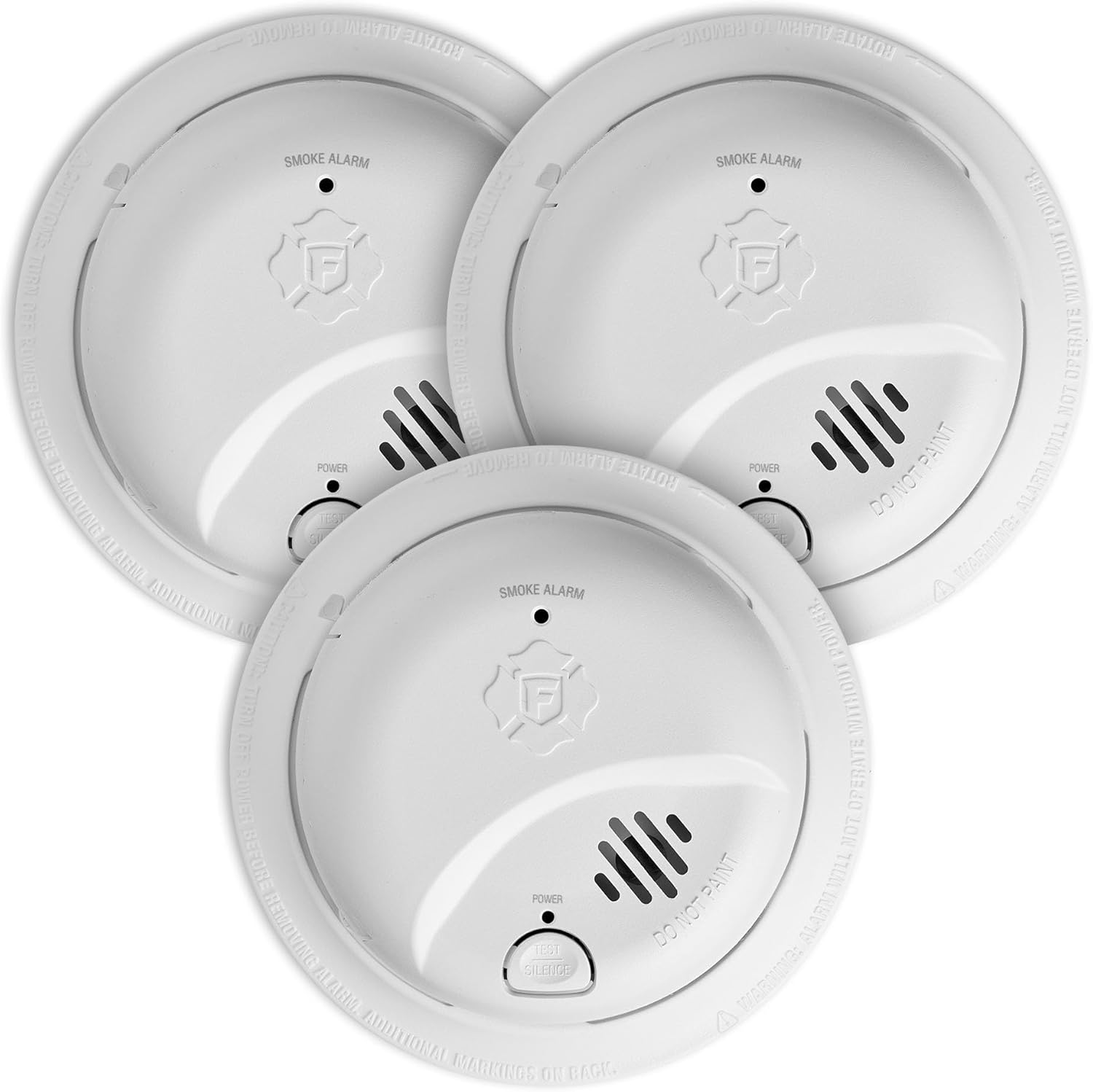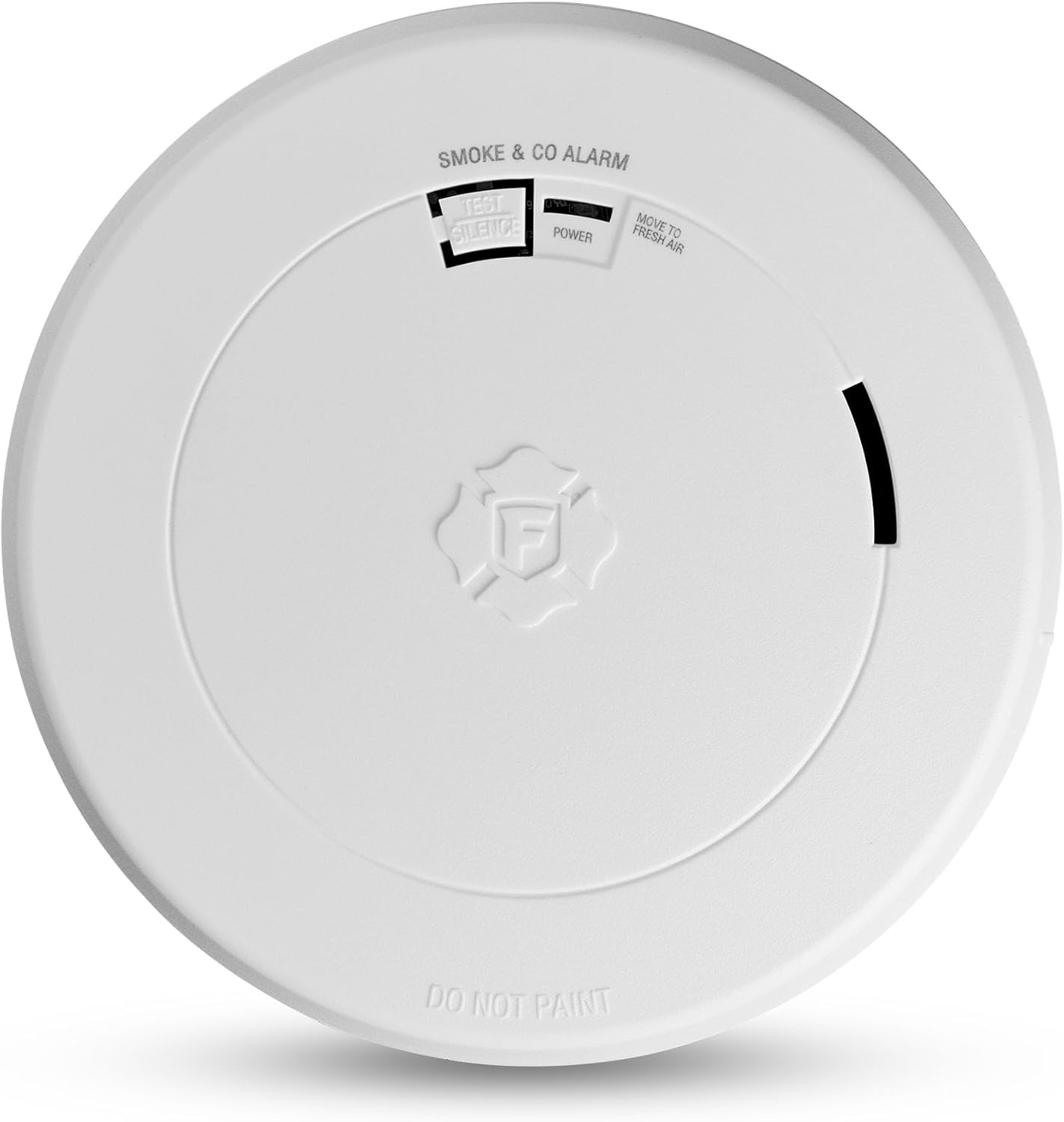
How to choose the right smoke detector

In today’s fast-paced world, ensuring the safety of our homes has never been more important. One of the most critical components of a robust home safety system is the smoke detector.

These devices serve as our first line of defense against fire, providing early warnings that can save lives and protect property. With myriad options on the market, choosing the right smoke detector can be daunting.

This article aims to simplify that process by offering a comprehensive comparison of the best smoke detectors currently available.

We’ll explore various models, highlighting their key features, pros, and cons, and providing real customer feedback to help you make an informed decision. 

Whether you’re looking for a basic model for a small apartment or a more advanced system for a large home, this guide will cover all the essential aspects you need to consider.

By the end of this article, you’ll have a clear understanding of what makes a smoke detector reliable and how to choose the best one for your specific needs. 

Let’s delve into the best smoke detectors and ensure your home is equipped with the best protection available.

What are the types of smoke detectors?

When it comes to safeguarding your home, understanding the different types of smoke detectors is essential.

Each type uses distinct technology to detect smoke and fire, and knowing the differences can help you choose the best one for your needs. Here’s a detailed look at ionization, photoelectric, and combination smoke detectors.

Ionization Smoke Detectors

Ionization smoke detectors are highly effective at detecting fast-flaming fires. They work by using a small amount of radioactive material placed between two electrically charged plates, which ionizes the air and creates a current between the plates.

When smoke enters the chamber, it disrupts the flow of ions, reducing the current and triggering the alarm.

These detectors are particularly sensitive to the smaller particles produced by fast-burning fires, such as those caused by paper or flammable liquids.

However, they are prone to false alarms from everyday activities like cooking or steam from showers.

Pros

  • Quick detection of fast-flaming fires
  • Generally less expensive than photoelectric detectors
  • Widely available and easy to install

Cons

  • More prone to false alarms from non-fire sources
  • Less effective at detecting smoldering fires

Photoelectric Smoke Detectors

Photoelectric smoke detectors are designed to detect smoldering fires more effectively. These fires typically produce larger smoke particles, which photoelectric detectors are particularly sensitive to. The device uses a light source and a light sensor placed at an angle in a sensing chamber.

When smoke enters the chamber, it scatters the light, which then hits the sensor and triggers the alarm. This technology makes photoelectric detectors less likely to give false alarms from cooking or steam.

Pros

  • Quick detection of smoldering fires
  • Less prone to false alarms from cooking or steam
  • Effective at detecting larger smoke particles

Cons

  • Generally, more expensive than ionization detectors
  • Might not detect fast-flaming fires as quickly

Combination Smoke Detectors

Combination smoke detectors, as the name suggests, use both ionization and photoelectric technologies to offer comprehensive protection.

By incorporating the strengths of both types, combination detectors can effectively detect both fast-flaming and smoldering fires.

These detectors are designed to reduce the number of false alarms while providing a broader range of fire detection capabilities.

They are ideal for homeowners who want the best of both worlds without having to install multiple units.

Pros

  • Comprehensive protection against both fast-flaming and smoldering fires
  • Reduced the number of false alarms
  • Convenient and cost-effective solution

Cons

  • More expensive than single-technology detectors
  • May require more maintenance due to the dual-sensing technology

Each type of smoke detector has its strengths and weaknesses, and the best choice for your home depends on your specific needs and circumstances.

Ionization detectors are great for detecting fast-flaming fires, while photoelectric detectors excel at catching smoldering fires.

Combination detectors provide the most comprehensive protection, though they come at a higher price point.

By understanding how each type works and its respective advantages, you can make an informed decision to ensure your home is well-protected against fire hazards.

Key Features to Consider When Selecting The Best Smoke Detector

When selecting a smoke detector, understanding its key features can make a significant difference in ensuring the safety of your home.

Here, we delve into four critical aspects: sensitivity, response time, battery life, and the false alarm rate.

These elements are essential in evaluating the overall effectiveness and reliability of a smoke detector.

Sensitivity

The sensitivity of a smoke detector refers to its ability to detect smoke particles in the air. A highly sensitive smoke detector will quickly pick up on the presence of smoke, even if it is minimal.

This feature is crucial for early detection, giving occupants more time to evacuate and reducing the risk of damage and injury.

Sensitivity levels can vary between different types of smoke detectors. Ionization models are generally more sensitive to fast-flaming fires, while photoelectric detectors are better at detecting smoldering fires with larger smoke particles.

When choosing a smoke detector, consider the environment in which it will be installed. For areas like kitchens or bathrooms, where smoke and steam are common, a less sensitive model might be preferable to reduce false alarms.

Response Time

Response time is the duration it takes for a smoke detector to react and sound an alarm once smoke is detected.

This feature is paramount because a faster response can mean the difference between a contained fire and a catastrophic one.

Ionization smoke detectors tend to have quicker response times to flaming fires, while photoelectric detectors respond more rapidly to smoldering fires.

Combination detectors aim to balance these response times, providing quick alerts for both types of fires.

A smoke detector’s response time is also influenced by its placement within a home. For instance, installing detectors in strategic locations, such as near bedrooms and on every level of a house, can ensure that an alarm is heard promptly.

Battery Life

Battery life is a critical factor in the reliability of smoke detectors. Smoke detectors typically use either replaceable batteries or long-life sealed lithium batteries.

Units with replaceable batteries require regular maintenance to ensure they remain operational, usually every six months to a year.

Long-life sealed lithium batteries can last up to ten years, aligning with the typical lifespan of the smoke detector itself.

Hardwired smoke detectors often have battery backups to maintain functionality during power outages.

Regularly testing your smoke detectors and replacing batteries as recommended is essential for consistent performance.

Opting for a smoke detector with a long-lasting battery can reduce maintenance efforts and ensure continuous protection.

False Alarm Rate

The false alarm rate refers to how often a smoke detector sounds an alarm without a genuine fire hazard.

Frequent false alarms can be a significant inconvenience, leading to the temptation to disable the alarm, which poses a safety risk.

Factors such as cooking, steam from showers, or even dust can trigger false alarms in some detectors.

Photoelectric smoke detectors are generally less prone to false alarms caused by cooking and steam, while ionization detectors might be more susceptible.

Many modern smoke detectors include features like hush buttons or smart technology that allows temporary silencing of false alarms.

When selecting a smoke detector, it’s crucial to consider the environment and choose a model with a low false alarm rate to ensure that any alarm is taken seriously.

Smoke Detectors Reviews and Comparisons

X-Sense 10-Year Battery Smoke Alarm with LED Indicator & Silence Button, Model SD2J0AX – B08LL1HRKW

If you’re in the market for a reliable smoke detector, look no further than the X-Sense Smoke Alarm, SD2J0AX.

This nifty device is designed with your safety and convenience in mind. Let’s talk about why this should be at the top of your list.

First off, this smoke alarm comes with a 10-year battery. Yes, you heard that right, an entire decade of uninterrupted protection without the hassle of frequent battery changes.

Imagine the peace of mind knowing your home is protected even during power outages. It’s powered by an energy-efficient lithium battery, which not only ensures maximum reliability but is also eco-friendly.

What makes this smoke alarm stand out is its sensitivity and accuracy. It features an advanced photoelectric sensor and an intelligent ST chipset, which means it can quickly and accurately detect dangerous smoke levels from smoldering fires.

This ensures you get the earliest possible warning. Plus, it has a dust-proof isolating plate inside, which keeps the detection sensitivity intact, so you won’t have to worry about false alarms.

Speaking of false alarms, this smoke detector comes with a Smart Auto-Check feature. It constantly monitors itself, and if anything goes wrong, be it a malfunction or a low battery, you’ll be notified immediately. This way, you can quickly resolve any issues and ensure your home remains protected.

Installation is a breeze with this model. Whether you prefer using the provided screws for a stable setup or the magnetic adhesive pads for a quick, wireless installation, it’s up to you. No need to deal with complicated wiring—just set it up and you’re good to go.

Now, let’s talk about its build. The X-Sense Smoke Alarm is made from premium ABS plastic

Key Features

10-Year Battery

Sensitive & Accurate

Smart Auto-Check

Easy Installation

Premium Quality

Pros

  1. Easy installation
  2. 10-year battery life
  3. No false alarms
  4. High quality design
  5. Effective in various environments

Cons

  1. Alarm volume could be louder
  2. Built-in battery is non-replaceable
  3. Alarm may not be heard in distant rooms

Customers’ Reviews

The reviews for the X-Sense Smoke Alarm, SD2J0AX, are largely positive, with users praising its ease of installation and long battery life.

Many reviewers appreciated the straightforward setup, noting that the instructions were clear and the process was hassle-free.

The 10-year battery life is frequently highlighted as a significant advantage, providing peace of mind and reducing the need for frequent battery replacements.

Several users commended the smoke alarm’s reliability, mentioning that it performed its intended function well without any false alarms, even when used in kitchens or other areas prone to smoke or steam.

The overall build quality and sturdy design also received positive feedback, suggesting that the product is durable and well-constructed.

On the downside, a few users pointed out that the alarm volume could be louder. This concern was raised by individuals who installed the alarm in larger or more distant areas, such as garages, and doubted whether the alarm would be audible from all parts of their home.

Another point of criticism was the non-replaceable battery, which, while lasting up to ten years, cannot be changed.

This means the entire unit needs to be replaced once the battery is depleted. A small number of reviews also mentioned that the alarm might not always trigger as expected, though these instances were rare.

Overall, the X-Sense Smoke Alarm, SD2J0AX, is well-regarded for its ease of use, long battery life, and reliable performance, though a few minor drawbacks, like alarm volume and battery replaceability, were noted by some users.

Kidde Smoke and Carbon Monoxide Detector with LED Indicators, AA Battery Powered, Single Pack – B0BZT85TLG

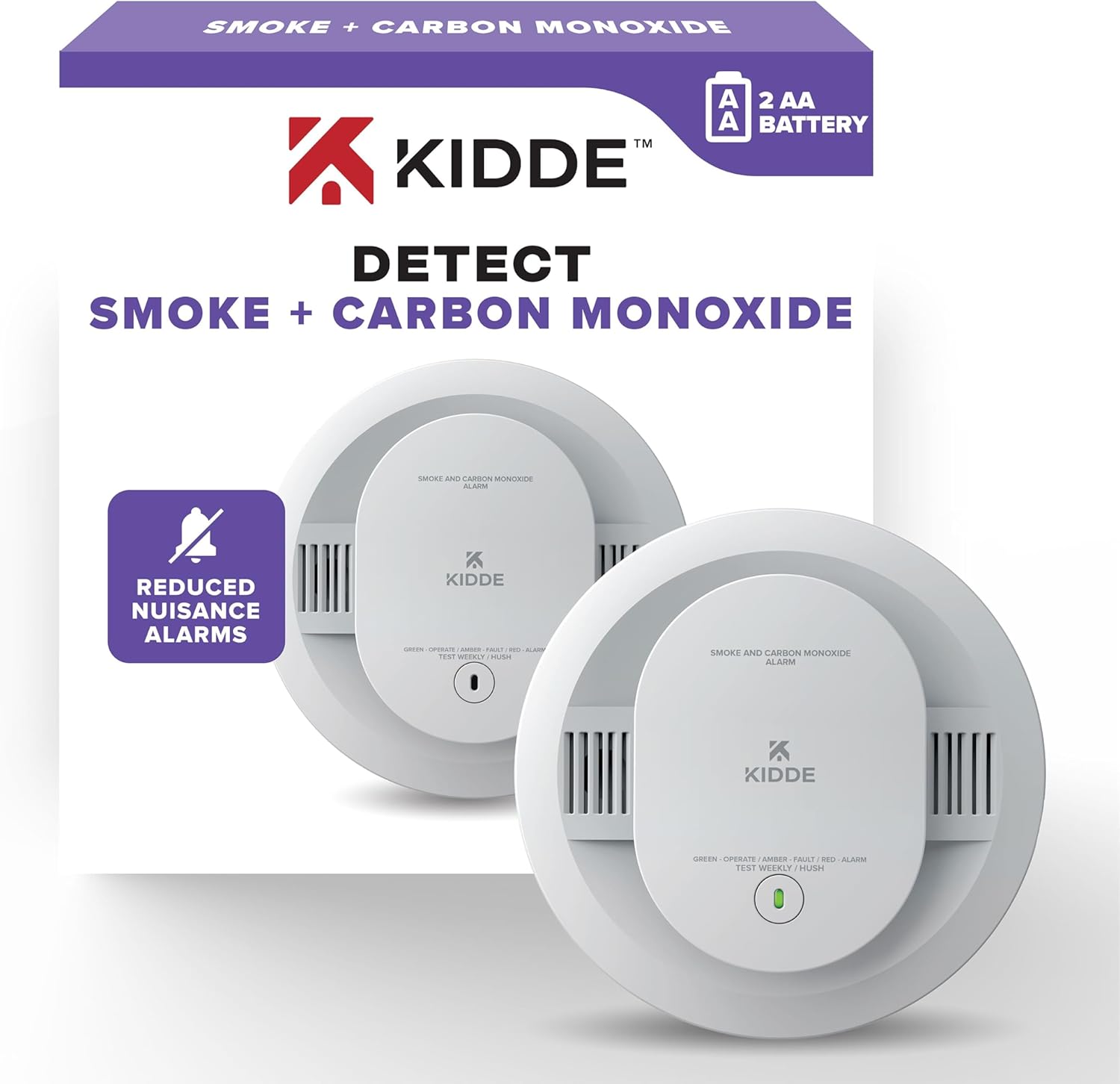
Introducing the Kidde Smoke & Carbon Monoxide Detector, Model 900-CUDR, your ultimate home safety device that combines cutting-edge smoke, fire, and carbon monoxide detection into one efficient unit.

Powered by two AA batteries (included), this detector ensures uninterrupted protection even during power failures, giving you peace of mind 24/7.

Equipped with advanced photoelectric sensing technology, this detector can accurately sense visible fire particles typically associated with smoldering fires.

Additionally, its electrochemical sensor effectively detects harmful levels of carbon monoxide, ensuring early warnings for both fire and gas hazards.

The device’s self-testing components continuously monitor its operation, so you always know it’s functioning correctly.

When danger is detected, the Kidde alarm alerts you with a powerful 85-decibel sound and flashing red LEDs, making it impossible to miss.

Three distinct LED indicators, green for normal operation, amber for faults, and red for smoke or carbon monoxide detection, provide clear, at-a-glance status updates. This thoughtful design ensures you’re always aware of your home’s safety status.

The Smart-Hush button feature is perfect for those everyday situations where false alarms might occur, such as during cooking or steamy showers.

This function temporarily silences the alarm for about 8 minutes, allowing you to address the situation without disabling the detector.

Designed for easy installation, this smoke and carbon monoxide detector should be placed on every level of your home and near sleeping areas to ensure comprehensive coverage.

With UL certification and a 10-year limited manufacturer’s warranty, you can trust in the quality and reliability of this Kidde product.

Key Features

  • 2-in-1 Detection
  • 24/7 Self-Testing
  • Easy Installation
  • Photoelectric Sensor
  • 85-Decibel Alarm
  • LED Warning Indicators
  • Battery-operated
  • UL Listed Warranty

Pros

  1. Reliable protection
  2. Easy installation
  3. Great quality
  4. Dual sensitivity
  5. Good value

Cons

  1. Chirps frequently
  2. Battery issues
  3. False alarms

Customers’ Reviews

Many users have expressed satisfaction with the Kidde Smoke & Carbon Monoxide Detector, highlighting its reliable protection and ease of installation.

They appreciate the clear voice alerts and the sleek design, which ensures it fits well into their home environments.

The inclusion of a battery backup is frequently mentioned as a significant benefit, providing peace of mind during power outages.

Customers also commend the device for its quality and certifications, which enhance their trust in the product’s safety capabilities.

The dual sensitivity for detecting both smoke and carbon monoxide, combined with its affordability and recommendation from trusted sources like Consumer Reports, adds to its appeal.

However, some users have reported issues with the detector chirping frequently, which they suspect might be due to dust or external factors.

This chirping often necessitates the use of compressed air to clear, which can be inconvenient.

Additionally, there are concerns about the built-in battery in some models, as they become non-functional once the battery is depleted, contrary to the promised lifespan.

False alarms, especially at night, have also been a point of frustration for some users, affecting their overall satisfaction with the product.

Overall, while the Kidde Smoke & Carbon Monoxide Detector is highly regarded for its safety features, ease of use, and reliability, a few users have experienced issues that could affect its long-term dependability.

Kidde Smoke Detector with 10-Year Battery and LED Warning Indicators – B0CX6PRPGY

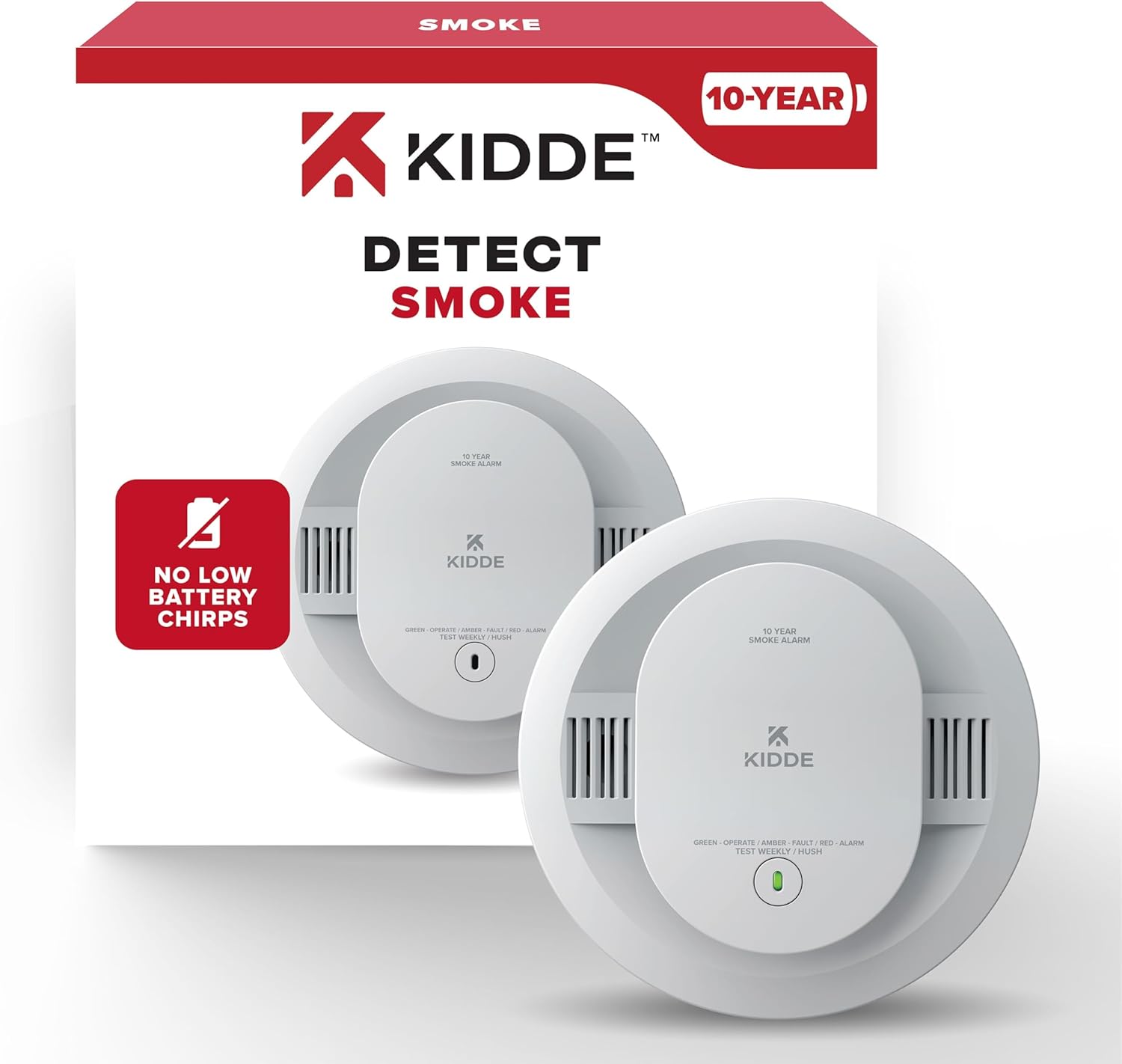
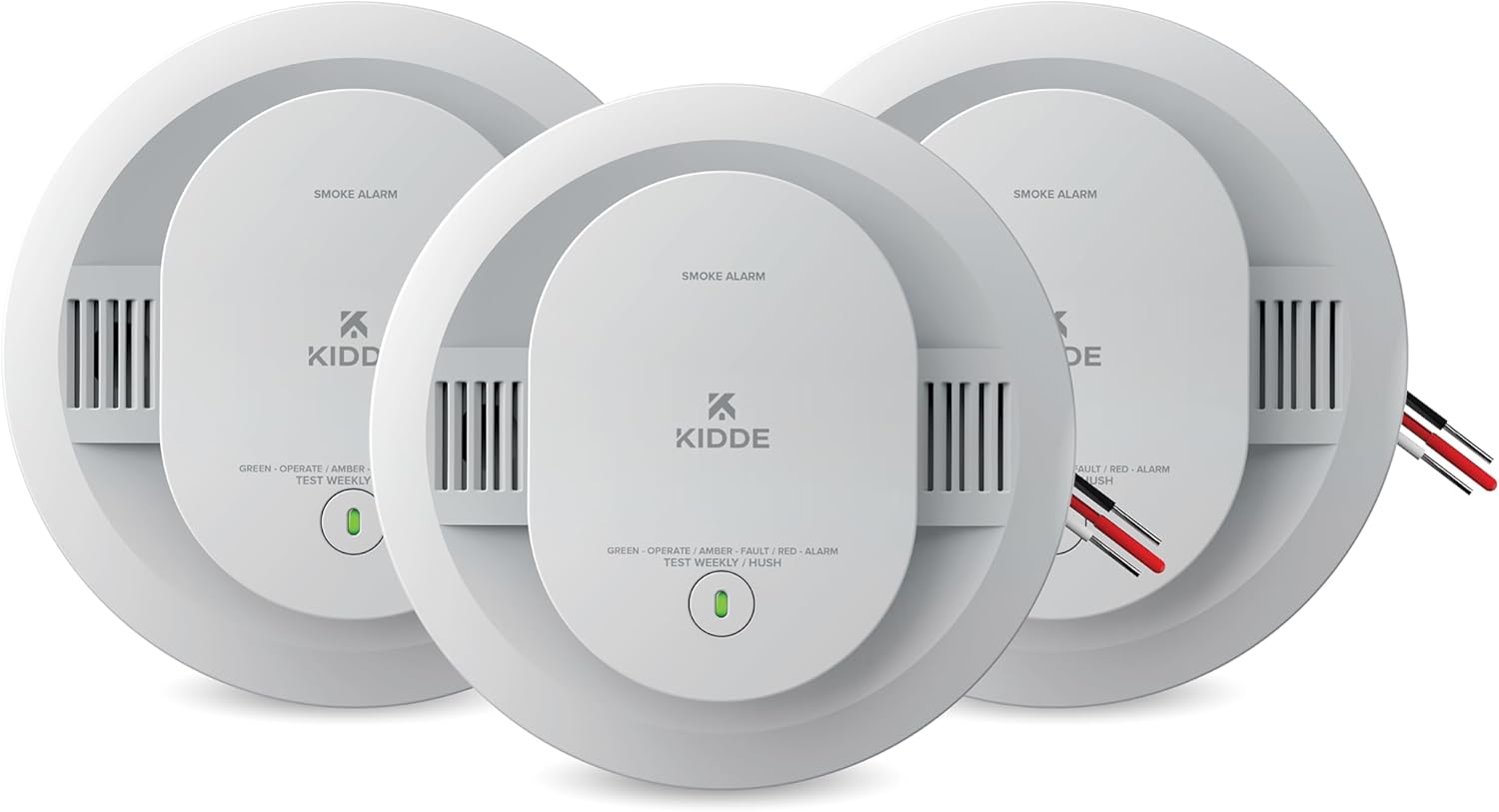
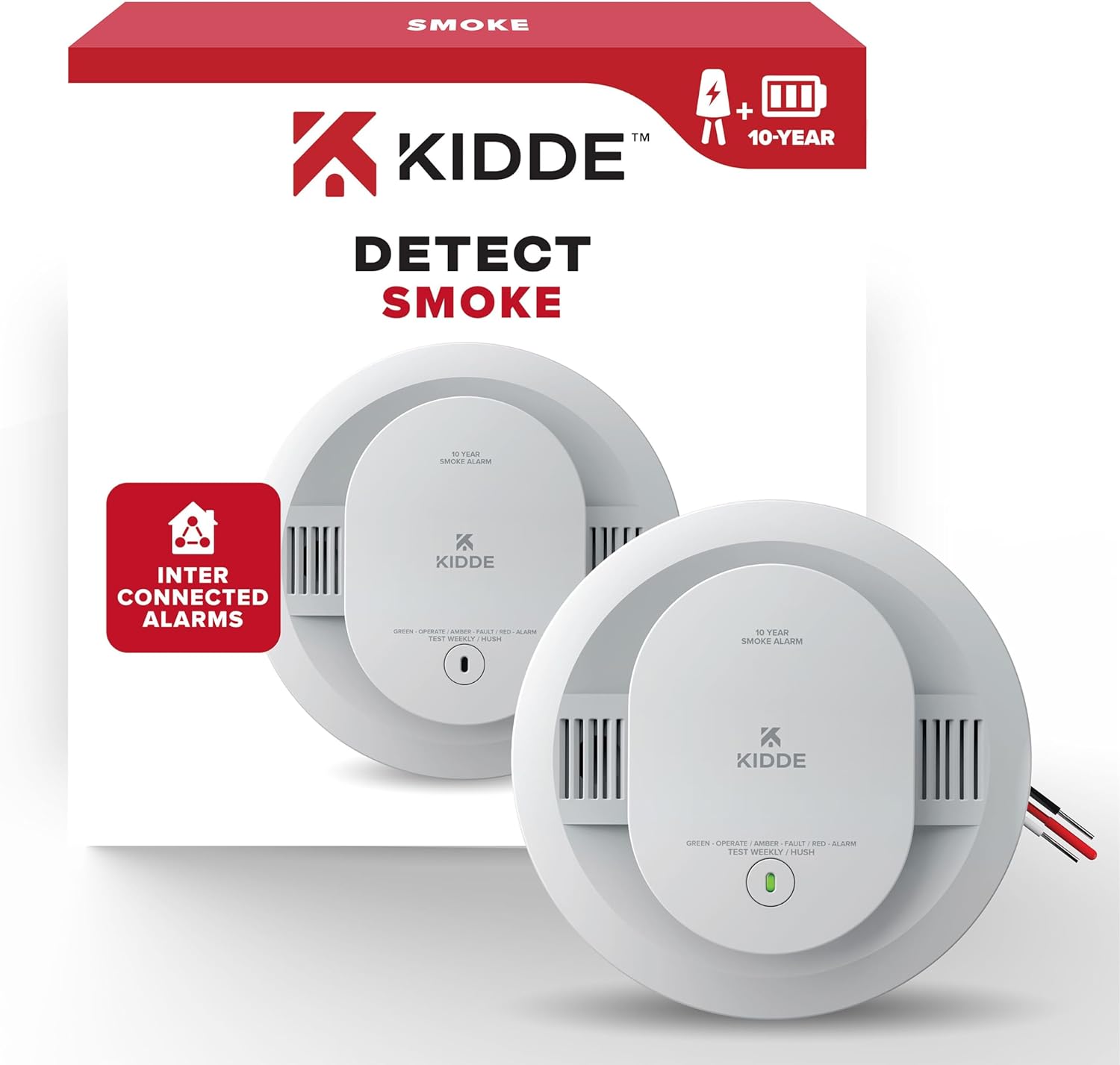
Step up your fire safety game with the Kidde Smoke Detector, Model 20SD10. This innovative device is designed to provide top-tier protection and peace of mind for your home.

Sporting a sleek and compact 5-inch design, this smoke detector seamlessly blends into any living space, from your living room to the kitchen, hallway, or bedroom.

What sets this smoke detector apart is its advanced sensing technology, specifically engineered to minimize false alarms caused by everyday activities like cooking.

It’s all about giving you those crucial extra moments to act in case of an emergency. The built-in 10-year lithium battery means you won’t need to worry about changing batteries for the entire lifespan of the detector, ensuring uninterrupted protection day and night.

This Kidde model is not only easy to install, thanks to its twist-and-click mounting bracket, but also self-testing.

It continuously monitors its own performance, alerting you if any issues arise, so you always know it’s ready to protect.

The LED warning light indicators provide clear, at-a-glance status updates, with green for normal operation, amber for any issues, and red for smoke or fire detection.

Additionally, the detector comes with an end-of-life alert system that beeps to remind you when it’s time to replace the unit, ensuring you are never left without protection.

Tested and certified to meet the latest UL standards for safety and reliability, as well as FCC and CSFM requirements, you can trust this device to keep your home safe.

Elevate your home safety with the Kidde Smoke Detector, Model 20SD10, a reliable, easy-to-use, and highly effective choice for any household.

Ensure your family’s safety with this state-of-the-art smoke detector that stands out in both performance and design.

Key Features

  • Detects Smoke
  • 10-Year Battery
  • Enhanced Sensing Technology
  • Self-Testing Alarm
  • 3 LED Notifications
  • Easy Installation
  • Test & Hush Button
  • 10-Year Limited Warranty

Pros

  1. Excellent and long-lasting
  2. Professional quality
  3. Easy to set up
  4. Reliable battery life
  5. High sensitivity

Cons

  1. Frequent chirping issues
  2. Mounting plate limitations
  3. Battery failure

Customers’ Reviews

The Kidde Smoke Detector has received a wealth of positive feedback from users, praising its excellent performance and longevity.

Many reviewers have noted its simple installation process and the reliable 10-year battery life. The detector has proven effective in diverse environments, such as workshops, without triggering false alarms, and users appreciate its sturdy construction and professional feel.

Some customers emphasize its reliability, pointing out that this detector gives them confidence in its ability to alert them in case of danger.

The inclusion of clear instructions and a permanent silencing switch at the end of its lifespan further enhances its user-friendly design.

However, a few users have faced issues with the mounting plate, finding it difficult to fit with certain types of electrical boxes.

Additionally, there have been occasional reports of the detector chirping after a few years, necessitating replacement or maintenance.

Despite these minor drawbacks, the overall consensus is that the Kidde Smoke Detector is a high-quality, reliable product that delivers on its promises, providing essential safety and peace of mind for its users.

4-Pack Photoelectric Smoke Alarms, 9V Battery Operated, Easy Installation with Light and Sound Warning, Test Button, and 9V Batteries Included (GS526A-4) – B0D9V3ZHMM

Discover LSHOME, your go-to solution for home safety and security. This cutting-edge brand offers top-tier alarms for smoke and carbon monoxide, ensuring comprehensive protection for your home.

Each LSHOME alarm combines advanced technology with a user-friendly design, making them both effective and easy to use.

LSHOME is dedicated to providing the best smart home products at unbeatable prices, ensuring you get the protection you need without breaking the bank.

These alarms are not just reliable; they are a trusted home security assistant that ensures the safety of your family.

With LSHOME, experience peace of mind knowing your home is safeguarded by innovative and dependable alarm systems, designed to keep you and your loved ones safe around the clock.

Key Features

  • Weekly Test Button
  • Easy Installation
  • Photoelectric Technology
  • Sound & LED Warning
  • Suitable for Multiple Places

Pros

  1. Highly sensitive and reliable
  2. Easy installation
  3. Compact and effective
  4. Loud alarm warnings
  5. Photoelectric sensor for quick alerts

Cons

  1. Potential defective units
  2. Batteries are not clearly stated in the packaging

Customers’ Reviews

Customers have given positive feedback on the LSHOME smoke detectors, appreciating their high sensitivity and reliability.

Many found the loud alarm and easy installation process reassuring, adding to their peace of mind.

The compact size and stick-on feature make them ideal for users who may not be skilled with tools.

Another highlight is the photoelectric sensor, which provides quick alerts for potential fires, and the included batteries, which add to the convenience.

Several users noted that the detectors are excellent for overall home safety, with robust performance and clear instructions making setup a breeze.

However, some customers mentioned that the packaging should clearly state that batteries are included to avoid unnecessary purchases.

There were a few reports of defective units straight out of the box, with two out of four not functioning as expected.

Despite these minor issues, most users found the detectors to be well-made, reliable, and a worthwhile investment for their home’s safety.

Ecoey Smoke Alarm, Battery Included, with Test Button and Low Battery Signal, Compact Fire Detector, 8-Pack (FJ136GB) – B08W3BDTQ7

The Ecoey smoke alarm offers exceptional accuracy and reliability in a compact design, making it a vital addition to any home.

Utilizing advanced photoelectric technology, it is highly sensitive to light smoke and slow smoldering fires, providing rapid warnings that help ensure your family’s safety around the clock.

Despite its small size, with a diameter of just 3.3 inches, this smoke detector is a powerhouse when it comes to detecting potential fire hazards.

A key feature of this smoke alarm is the test button, which allows you to verify its functionality each week by pressing the button for five seconds.

The alarm will alert you when the battery is low by chirping every 32 seconds and flashing a red LED light, reminding you to change the batteries promptly.

Installation is straightforward with the included mounting bracket, eliminating the need for hardwiring.

This flexibility means you can place the detector in any room, except high airflow areas like kitchens and bathrooms, ensuring it is at least three feet away from such locations.

In the event of detecting smoke or combustion particles, the alarm produces a loud 85 dB sound along with a rapidly flashing red LED, effectively alerting all household members to the potential danger. If the alarm encounters a fault, simply clean it with a fan to remove any dust or smoke particles.

Home fire safety is crucial, with incidents occurring every 38 seconds in the US. Early detection significantly increases the chances of safely evacuating your home.

The Ecoey Smoke Alarm reduces the risk of home fire fatalities by 50%, offering a reliable and effective solution for protecting your family.

With Ecoey, you are investing in a high-quality smoke detector designed to deliver optimal performance and peace of mind 24/7, ensuring your home is always safeguarded against potential fire hazards.

Key Features

  • High Accuracy Detection
  • Weekly Test Button
  • Easy Installation
  • Sound & LED Warning
  • Comprehensive Home Protection

Pros

  1. High-accuracy detection
  2. Easy installation
  3. Loud alarm warnings
  4. Compact size
  5. Included batteries

Cons

  1. Potential defective batteries
  2. Smaller than expected

Customers Reviews
Customers have praised these smoke alarms for their small size and ease of installation. Many found them to be a great value, especially with the inclusion of 9-volt batteries.

Users appreciated how easy they were to place and test, recommending them for their reliability and the loudness of the alarm, which ensures everyone in the house can be alerted in case of an emergency.

Some reviewers highlighted the convenience of the adhesive mount, which eliminates the need for screws and makes the installation process even simpler.

The high sensitivity of these alarms is also a common point of praise, as they can quickly alert residents to potential fires.

However, some users did encounter issues with the batteries included in the package, noting that a few of them were defective from the start and caused low-voltage warning beeps.

Despite this, most users found the smoke alarms to be a good value for their basic function, offering reliable performance at an affordable price.

Head-to-Head Comparison of Top Smoke Alarm Models

In the quest for home safety, choosing the right smoke alarm is paramount. We’ve examined five popular models to help you make an informed decision. Here’s a detailed comparison based on various key aspects.

Kidde Smoke & Carbon Monoxide Detector

Detection Technology

  • Dual Sensor: Combines ionization and photoelectric sensors for comprehensive detection.

Sensitivity and Accuracy

  • False Alarm Rate: Reduced false alarms due to advanced sensing technology.

Installation and Maintenance

  • Ease of Installation: Simple installation with a twist-and-click mounting bracket.
  • Battery Life: 10-year built-in lithium battery.

Features and Additional Functions

  • Test Button: Easy-to-use test button for weekly checks.
  • Low Battery Signal: Beeps and LED flashes when the battery is low.

Size and Design

  • Compact Design: Sleek 5-inch design fits well in any room.

Price and Value

  • Cost: Reasonably priced with high user satisfaction.
  • Warranty: 10-year limited warranty.

User Reviews and Ratings

  • Customer Feedback: High praise for reliability and ease of use.

Additional Safety Features

  • Carbon Monoxide Detection: Yes, detects both smoke and carbon monoxide.
  • Smart Features: None.

LSHOME 4-Pack Smoke Detector

Detection Technology

  • Photoelectric Sensor: Optimized to detect slow-smoldering fires.

Sensitivity and Accuracy

  • False Alarm Rate: Highly sensitive with minimal false alarms.

Installation and Maintenance

  • Ease of Installation: Easy installation with adhesive mount or screws.
  • Battery Life: Includes 9-volt batteries.

Features and Additional Functions

  • Test Button: Convenient test button for functionality checks.
  • Low Battery Signal: Clear chirping sound for low battery warnings.

Size and Design

  • Compact Size: Small and easy to place anywhere.

Price and Value

  • Cost: Affordable and great value for a pack of four.
  • Warranty: Limited warranty provided.

User Reviews and Ratings

  • Customer Feedback: Users appreciate the compact size and ease of installation.

Additional Safety Features

  • Carbon Monoxide Detection: No.
  • Smart Features: None.

Ecoey Photoelectric Smoke Alarm

Detection Technology

  • Photoelectric Sensor: Sensitive to light smoke and slow-smoldering fires.

Sensitivity and Accuracy

  • False Alarm Rate: Low false alarm rate.
  • Response Time: Quick response to smoke detection.

Installation and Maintenance

  • Ease of Installation: Simple with the included mounting bracket.
  • Battery Life: Comes with a battery and signals when low.

Features and Additional Functions

  • Test Button: Easily accessible for weekly tests.
  • Low Battery Signal: Chirping and LED flashing.

Size and Design

  • Compact Design: 3.3-inch diameter, small and discreet.

Price and Value

  • Cost: Affordable and offers high value.
  • Warranty: 10-year warranty.

User Reviews and Ratings

  • Customer Feedback: Praised for reliability and high sensitivity.

Additional Safety Features

  • Carbon Monoxide Detection: No.
  • Smart Features: None.

Kidde Smoke Detector with 10-Year Battery and LED Warning Indicators

Detection Technology

  • Photoelectric Sensor: Highly sensitive to slow-smoldering fires.

Sensitivity and Accuracy

  • False Alarm Rate: Minimal false alarms due to advanced technology.

Installation and Maintenance

  • Ease of Installation: Twist-and-click mounting bracket for easy installation.
  • Battery Life: 10-year built-in lithium battery.

Features and Additional Functions

  • Test Button: Easy to use for regular checks.
  • Low Battery Signal: Alerts with beeps and LED indicators.

Size and Design

  • Compact Design: 5-inch diameter fits seamlessly into any space.

Price and Value

  • Cost: Good value for its features.
  • Warranty: 10-year limited warranty.

User Reviews and Ratings

  • Customer Feedback: High marks for design and reliability.

Additional Safety Features:

  • Carbon Monoxide Detection: No.
  • Smart Features: None.

LSHOME Smoke Detector, Battery Included, with Test Button and Low Battery Signal

Detection Technology

  • Photoelectric Sensor: Optimized for early detection of slow-smoldering fires.

Sensitivity and Accuracy

  • False Alarm Rate: Low occurrence of false alarms.

Installation and Maintenance

  • Ease of Installation: Includes mounting bracket for easy setup.
  • Battery Life: Comes with included batteries; signals when replacement is needed.

Features and Additional Functions

  • Test Button: Simple to test weekly.
  • Low Battery Signal: Clear chirping for battery changes.

Size and Design

  • Compact Design: Small footprint, discreetly fits in any room.

Price and Value

  • Cost: Economical and offers great value.
  • Warranty: Limited warranty included.

User Reviews and Ratings

  • Customer Feedback: Appreciated for easy installation and reliability.

Additional Safety Features

  • Carbon Monoxide Detection: No.
  • Smart Features: None.

FAQs: How to choose the right smoke detector

What type of smoke detector is best?

The best type of smoke detector depends on the specific needs and environment of your home. There are three main types of smoke detectors: ionization, photoelectric, and dual-sensor.

Ionization Smoke Detectors

These are generally more responsive to fast-flaming fires but may be prone to false alarms from cooking smoke or steam.

Photoelectric Smoke Detectors

These are better at detecting slow-smoldering fires, which produce a lot of smoke before bursting into flames, and are less likely to cause false alarms.

Dual-Sensor Smoke Detectors

These combine both ionization and photoelectric sensors, providing comprehensive detection for both types of fires. For optimal safety, a dual-sensor model is often recommended.

What is the best recommended smoke alarm?

The Kidde Smoke & Carbon Monoxide Detector is highly recommended due to its dual detection capabilities, combining both smoke and carbon monoxide sensors.

It features advanced sensing technology to reduce false alarms and includes a 10-year built-in lithium battery for continuous protection.

The clear voice alerts and easy installation process add to its appeal, making it a top choice among users.

Which is better, First Alert or Kidde?

Both First Alert and Kidde are reputable brands in the smoke detector market, each with its own strengths.

First Alert

Known for its reliability and comprehensive range of models, First Alert smoke detectors often feature advanced technology and are highly rated for their durability and ease of use.

Kidde

Kidde smoke detectors are praised for their innovative features, such as voice alerts and dual smoke and carbon monoxide detection. They also tend to be user-friendly and come with long-lasting batteries.

Choosing between the two often comes down to specific preferences and needs, such as whether you prefer a voice alert system or a model with dual detection capabilities.

What is the best technology for smoke detectors?

The best technology for smoke detectors is often the dual-sensor technology, which incorporates both ionization and photoelectric sensors.

This ensures comprehensive detection of both fast-flaming and slow-smoldering fires, offering the highest level of safety.

Additionally, integrating carbon monoxide detection into a smoke alarm adds another layer of protection, especially in preventing carbon monoxide poisoning.

How often should smoke detectors be replaced?

Smoke detectors should generally be replaced every 10 years. Over time, the sensors can become less sensitive, reducing their effectiveness.

It’s important to check the manufacturer’s recommendations and ensure regular maintenance and testing to keep the detectors in optimal working condition.

Where should smoke detectors be installed?

Smoke detectors should be installed on every level of your home, including the basement and inside each bedroom.

They should also be placed outside sleeping areas and in hallways. It’s recommended to avoid installing them near kitchens or bathrooms to prevent false alarms caused by steam or cooking smoke.

For the best protection, refer to the guidelines provided by the National Fire Protection Association (NFPA) and your local building codes.

Conclusion

Each of these smoke alarms offers unique features suited to different needs and preferences. The Kidde Smoke & Carbon Monoxide Detector stands out with its dual sensor and comprehensive detection capabilities, while the LSHOME 4-Pack and Ecoey models excel in affordability and ease of installation.

For those prioritizing compact design and long battery life, the Kidde Smoke Detector with 10-Year Battery is an excellent choice.

Finally, the LSHOME Smoke Detector combines essential features with economical value, making it a reliable choice for any home.

When choosing a smoke alarm, consider the specific needs of your home environment, including the type of fires most likely to occur, ease of installation, and long-term maintenance. With this comprehensive comparison, you can confidently select the smoke alarm that best ensures the safety of your home and loved ones.

6 Best Ring Smoke Detectors

In today’s world, where safety is paramount, ensuring your home is equipped with the best smoke and carbon monoxide detectors is critical to home security.

Among the many brands vying for attention in this crucial market, Ring has steadily emerged as a reputable and trusted name, particularly known for its innovative home security solutions.

This review delves into the best Ring smoke detectors, examining their features, benefits, and overall performance to help you make an informed decision about your home’s safety.

Ring, originally known for its video doorbells and security cameras, has expanded its product line to include a comprehensive range of home security devices, including smoke detectors.

The integration of these detectors into the Ring ecosystem provides a seamless and cohesive approach to home safety.

With the ability to receive real-time notifications and alerts directly to your smartphone, Ring’s smoke detectors ensure that you are always aware of any potential dangers, no matter where you are.

One of the standout features of Ring smoke detectors is their compatibility with other smart home devices.

This interconnectivity allows for a more integrated and responsive home security system. For instance, in the event of smoke detection, not only will the alarm sound, but you will also receive an immediate notification on your phone.

Furthermore, if you have Ring’s security cameras installed, you can instantly access live footage to assess the situation.

This capability adds an extra layer of security and peace of mind, knowing that you can take swift action in case of an emergency.

Moreover, Ring smoke detectors are designed with ease of installation and use in mind. They are typically battery-powered, eliminating the need for hardwiring and making the installation process straightforward even for those who may not be particularly handy.

The battery life is designed to last for several years, reducing the frequency of maintenance required.

Additionally, Ring’s smoke detectors come with user-friendly features such as voice alerts, which can provide specific information about the type of danger and its location within the home.

This can be particularly useful in large homes or multi-story buildings where hearing the alarm might be challenging.

Another critical aspect of Ring smoke detectors is their adherence to high safety standards. These detectors are designed to meet stringent industry regulations, ensuring that they provide reliable and accurate detection of smoke and carbon monoxide. This commitment to quality and safety is reflected in the numerous positive reviews from satisfied customers who have experienced firsthand the benefits of Ring’s smoke detectors.

In this review, we will explore the top Ring smoke detectors, evaluating their unique features, pros, and cons.

By the end of this comprehensive analysis, you will have a clear understanding of which Ring smoke detector is best suited for your needs, ensuring that your home is protected by a device that is both reliable and effective.

Whether you are looking to upgrade your existing smoke detectors or are in the process of building a new home security system, Ring’s range of smoke detectors offers options that combine advanced technology, ease of use, and unparalleled safety.

Stay tuned as we dive into the specifics of each model, helping you make the best choice for your home and family.

Key Factors To Consider When Purchasing Ring Smoke Detectors

When it comes to protecting your home and loved ones, choosing the right smoke detector is essential.

Ring smoke detectors are known for their reliability, advanced technology, and seamless integration with smart home systems.

However, not all smoke detectors are created equal. Here are some key factors to consider when purchasing the best Ring smoke detector for your home:

Detection Technology 

Ring smoke detectors often feature dual-sensor technology, combining both photoelectric and ionization sensors.

Photoelectric sensors are more effective at detecting slow, smoldering fires, while ionization sensors are better at detecting fast, flaming fires. Look for models that incorporate both technologies for comprehensive protection.

Integration with Ring Ecosystem 

One of the standout features of Ring smoke detectors is their ability to integrate with other Ring devices.

Ensure that the smoke detector you choose can seamlessly connect with your existing Ring security system.

This integration allows for real-time notifications on your phone, access to live footage from security cameras, and the ability to take immediate action in case of an emergency.

Ease of Installation 

Consider the installation process of the smoke detector. Many Ring smoke detectors are battery-powered, which simplifies installation, as there is no need for hardwiring.

Make sure the model you choose comes with clear instructions and all necessary mounting hardware. Some models also feature quick-connect systems for even easier setup.

Battery Life and Backup 

Battery life is a crucial factor when selecting a smoke detector. Look for models that offer long-lasting batteries, such as 10-year sealed batteries, which eliminate the need for frequent replacements.

Additionally, consider models with a battery backup feature that ensures the detector remains operational during power outages.

Voice Alerts and Location 

Voice alerts can be more effective than traditional alarm sounds, especially in homes with children or elderly residents.

Some Ring smoke detectors come with voice alert features that provide clear information about the type of danger and its location within the home. This can help occupants respond quickly and appropriately.

Reliability and False Alarm Reduction 

A reliable smoke detector should provide accurate and timely alerts without being prone to false alarms.

Advanced models incorporate nuisance-free technology to reduce false alarms caused by cooking smoke or steam from showers.

This ensures that the alarm only sounds when there is a genuine threat, preventing unnecessary disruptions.

Compliance with Safety Standards 

Ensure that the smoke detector you choose meets all relevant safety standards and certifications, such as UL (Underwriters Laboratories) listings.

Compliance with these standards guarantees that the detector has been rigorously tested and meets high safety and performance requirements.

Smart Home Compatibility 

In addition to integrating with the Ring ecosystem, check if the smoke detector is compatible with other smart home systems, such as Amazon Alexa or Google Assistant.

This compatibility allows for voice control and further integration with other smart home devices, enhancing the overall functionality of your home security system.

Cost and Value for Money 

While price is an important consideration, it should not be the sole determining factor. Assess the overall value for money by considering the features, reliability, and longevity of the smoke detector.

Investing in a high-quality smoke detector can provide peace of mind and long-term safety benefits.

Customer Reviews and Ratings

Finally, take the time to read customer reviews and ratings. Feedback from other users can provide valuable insights into the performance, reliability, and ease of use of the smoke detector. Look for products with consistently high ratings and positive feedback.

Best Ring Smoke Detectors

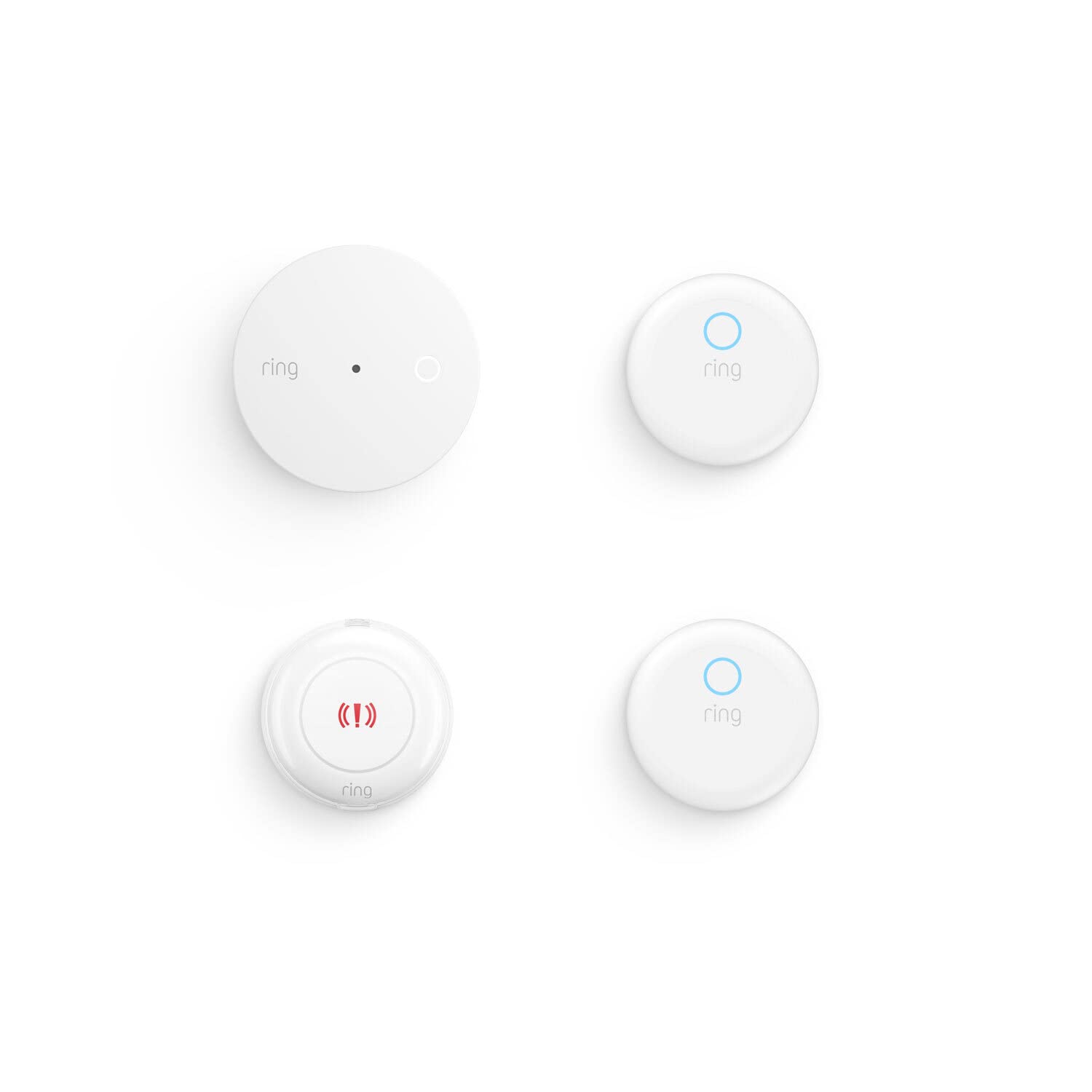
Ring Home Safety Alarm Accessories: Panic Button, Glass Break Sensor, Smoke & CO Listener, Flood & Freeze Sensor

Experience unparalleled home security with your Ring Alarm Accessories Bundle, a meticulously curated set designed to provide robust protection against a range of emergencies.

This all-in-one package features your alarm panic button (2nd gen), glass break sensor, smoke and CO listener, and flood and freeze sensor, each engineered to enhance the security of your home comprehensively.

Imagine this: you’re peacefully asleep, and suddenly, a noise like shattering glass echoes through your home.

Your Ring Alarm glass break sensor picks up on the distinct sound of breaking glass, instantly alerting you to a potential break-in.

It’s a perfect sentinel for rooms with large windows or glass doors, adding an extra layer of security to those vulnerable points.

Then there’s your Smoke and CO Listener. This clever device doesn’t replace your existing smoke and carbon monoxide alarms; instead, it enhances them.

It listens for the sound of your alarms going off and sends real-time alerts straight to your phone through the Ring app.

So, whether you’re at home, at work, or halfway around the world, you’ll know immediately if there’s smoke or a CO leak detected in your house.

One of my favorite features is your flood and freeze sensor. Think about the damage a burst pipe could cause in the middle of winter.

This sensor detects the presence of water and senses freezing temperatures, alerting you before a small problem turns into a costly disaster.

Place it in your basement, bathroom, or anywhere prone to leaks and freezing, and breathe easier knowing you’re covered.

And let’s not forget your Ring Alarm Panic Button (2nd gen). In an emergency, whether it’s an intruder or a medical crisis, you can quickly press this discreet button to sound the alarm and send an alert to emergency responders if you have the Ring Protect Pro subscription. It’s an invaluable tool for peace of mind, knowing help is just a button press away.

Integrating these accessories with your Ring Alarm or Ring Alarm Pro system means you get real-time alerts about emergencies right on your phone.

This integration is seamless and ensures that you’re always in the loop, regardless of where you are.

Additionally, if you subscribe to Ring Protect Pro, you can opt for 24/7 Professional Monitoring.

This service takes your home security to the next level by automatically requesting emergency responders when your panic button is pressed or when any of the sensors are triggered. It’s like having a security guard on duty at all times.

Currently, this highly rated bundle (5.0 out of 5 stars from 7 ratings) is unavailable, and there’s no specified restock date.

However, its value and effectiveness make it a worthwhile consideration for anyone looking to enhance their home security setup.

Shipping is available to the continental US and Canada, making it accessible for a wide range of customers. Just remember, all Ring Alarm accessories require the Ring Alarm or Ring Alarm Pro system to function.

Investing in your Ring Home Safety Alarm Accessories Bundle means fortifying your home with advanced, reliable protection against a multitude of threats, giving you the peace of mind that comes with knowing your home and loved ones are secure.

Key Features

Smoke and CO Listener

  • Power: Comes with a non-rechargeable 3V lithium battery included.
  • Battery Life: Lasts up to 3 years.
  • Setup Requirements: Needs an existing UL-listed smoke and/or carbon monoxide detector less than 10 years old and a Ring Alarm Security System. The listener should be placed within 6 inches of the existing detector.
  • Operating Conditions: Functions effectively in temperatures ranging from 32°F to 120°F (0°C to 49°C).
  • Dimensions: Compact size of 2.95” x 2.95” x 1.06” (75 mm x 75 mm x 27 mm).
  • Connectivity: Utilizes Z-Wave technology with a 250-foot range to the base station.
  • Warranty and Service: Includes a 1-year limited warranty and service.

Contact Sensor

  • Power: Powered by CR2032 coin cell batteries.
  • Battery Life: Approximately 3 years.
  • Max Distance Between Sensors: 1 inch, with a ½” space on the non-magnet side for battery access.
  • Operating Conditions: Designed for indoor use, operating in temperatures from 32°F to 120°F (0°C to 49°C).
  • Dimensions: Measures 1.56 in x 2.09 in x 0.55 in.
  • Installation: Easily mounts to doors and windows, requiring a Ring Alarm Kit.
  • Connectivity: Z-Wave technology with a 250-foot range to the base station in open air.
  • Warranty and Service: Comes with a 1-year limited warranty and service.

Ring Alarm Glass Break Sensor

  • Dimensions: Diameter of 3.78 inches (9.6 cm) and height of 0.96 inches (2.45 cm).
  • Weight: Lightweight at 5.8 oz (163g).
  • Operating Temperature: Works in temperatures from 32°F to 120°F (0°C to 49°C).
  • Power: Uses (3) AA alkaline batteries, included.
  • Battery Life: Up to 3 years, depending on device settings, usage, and environment.
  • Connectivity: Uses Z-Wave technology with a 250-foot range to the base station in open air.
  • Warranty: Includes a 1-year limited warranty.

Alarm Panic Button (2nd gen)

  • Dimensions: Measures 2.45 in. x .82 in. (6.24 cm. x 2.1 cm.).
  • Power: Powered by CR2032 3V lithium coin batteries (2 included).
  • Battery Life: Expected to last up to 3 years, depending on usage and environment.
  • Connectivity: Uses Z-Wave technology with a range of 250 feet (76 meters) to the base station in open air.
  • Setup Requirements: Should be placed or mounted within range of the Base Station. Avoid placing it near water or flame, and where it can be easily triggered by children or pets. Requires Ring Alarm or Ring Alarm Pro.
  • Operating Conditions: Operates in temperatures from 32°F to 120°F (0°C to 49°C).

Pros

  1. Comprehensive home protection with multiple sensors
  2. Easy and quick setup without professional installation
  3. Real-time alerts through the Ring App
  4. Long-lasting battery life (up to 3 years) for continuous monitoring
  5. Seamless integration with Ring Alarm or Ring Alarm Pro
  6. Advanced detection capabilities for smoke, CO, glass breaks, and water leaks
  7. Option for 24/7 professional monitoring with Ring Protect Pro subscription

Cons

  1. Initial setup issues can occur

Ring Alarm Smoke & Co Listener

Enhance your home’s safety with the innovative Ring Alarm Smoke and CO Listener. This smart device integrates seamlessly with your existing smoke and carbon monoxide detectors, providing real-time alerts directly to your smartphone.

By connecting through a Ring Protect subscription (sold separately), you’ll be instantly notified whenever your detectors sound their alarms, ensuring you can act quickly and decisively, no matter where you are.

The Ring Alarm Smoke and CO Listener itself does not detect fire, smoke, or carbon monoxide, but is designed to complement your existing safety devices.

For optimal performance, it is recommended to use detectors that are 10 years old or less and compliant with all applicable safety standards. This ensures the highest level of reliability and effectiveness in keeping your home safe.

One of the standout features of the Ring Alarm Smoke and CO Listener is its effortless setup. You can have it up and running within minutes, without the need for any tools or professional installation.

Simply place the listener within 6 inches of your current smoke and carbon monoxide detectors, pair it with your Ring Alarm Security System (sold separately), and you’re ready to go.

With a Ring Protect subscription, you can manage the Ring Alarm Smoke and CO Listener and all your other Ring products through the convenient Ring app.

This integrated approach allows for streamlined monitoring and control of your home’s safety features, all from the palm of your hand.

The device is powered by a 3V lithium battery, included for your convenience, with a maximum battery life of three years.

When the battery eventually runs low, it’s easily replaceable, ensuring continuous, long-term protection for your home.

Key Features

1. Power

  • Equipped with a non-rechargeable 3V lithium battery, included in the package.

2. Battery Life

  • Offers a maximum battery life of up to 3 years, ensuring long-term reliability.

3. Setup Requirements

  • Requires an existing Ring Alarm Security System and a compatible smoke and/or carbon monoxide detector that is 10 years old or less and meets all applicable safety standards.
  • The device needs to be placed within 6 inches of an existing smoke or carbon monoxide detector for optimal performance. Ensure placement does not interfere with the function of the detector, as per the manufacturer’s recommendations.
  • Note: The Listener itself does not detect fire, smoke, or carbon monoxide.

4. Operating Conditions

  • Designed to operate effectively in temperatures ranging from 32°F to 120°F (0°C to 49°C).

5. Dimensions

  • Compact design with dimensions of 2.95” x 2.95” x 1.06” (75mm x 75mm x 27mm), making it easy to fit in various locations within your home.

6. Connectivity

  • Utilizes Z-Wave technology, offering a 250-foot range to the base station, providing robust and reliable communication within your security system.

7. Warranty and Service

  • Comes with a 1-year limited warranty and service, providing peace of mind and support.

Pros

  1. Good design
  2. Easy installation
  3. Reliable performance
  4. Seamless integration with other Ring products
  5. Provides peace of mind, especially for frequent travelers
  6. Excellent connectivity
  7. Prompt and effective customer service

Cons

  1. Potential issues with initial setup
  2. Lack of immediate support can be frustrating

Ring Alarm Contact Sensor Riser (2nd gen)

Elevate the functionality of your Ring Alarm Contact Sensor with the Contact Sensor Riser (2nd Gen).

This essential accessory is designed to ensure your sensor and magnet are perfectly aligned, even on uneven doors, windows, or frames.

No more worrying about the 1-inch max detection gap; with this riser, you can achieve optimal sensor performance and maintain the security of your home.

The Ring Alarm Contact Sensor Riser is perfect for anyone experiencing issues with sensor alignment due to uneven door frames or window sills.

Adding the necessary height, it guarantees that your sensors function correctly, providing consistent security monitoring. Its easy installation means you can enhance your home security without the need for professional help.

This riser and magnet set ensures that your Ring Alarm system remains reliable, regardless of the structural quirks of your home. It’s a simple, effective solution that enhances the overall performance of your security setup, offering peace of mind that your home is well-protected.

Whether you’re upgrading your existing system or addressing specific installation challenges, the Ring Alarm Contact Sensor Riser (2nd Gen) is an invaluable addition to your home security arsenal.

Enjoy the seamless functionality and enhanced protection it provides, ensuring your sensors are always in the optimal position to detect any security breaches.

Key Features

  • Enhanced Alignment: The riser adds 10mm in height to your Contact Sensor and includes a separate sensor magnet that’s 10mm taller than the original. This ensures that your sensors are correctly aligned, providing reliable operation.
  • Versatile Installation: Specifically designed for indoor use, the riser mounts easily to doors, windows, or frames, making it adaptable to various home setups.
  • Compact and Lightweight: The Sensor Riser measures 2.09 inches (53 mm) in length, 1.12 inches (28.5 mm) in width, and 0.49 inches (12.5 mm) in height. The magnet dimensions are 2.09 inches (53mm) in length, 0.43 inches (11mm) in width, and 0.95 inches (24.1 mm) in height. Combined, they weigh only 0.78 oz. (22.2 g), ensuring they do not add bulk to your setup.
  • Seamless Integration: Designed to work exclusively with the Ring Alarm Contact Sensor 2nd Gen (sold separately), ensuring seamless integration and functionality within your existing Ring security system.

Pros

  1. Provides effective alignment for sensors on uneven surfaces
  2. Easy installation without the need for professional help
  3. Enhances the functionality of Ring Alarm Contact Sensors
  4. Compact and lightweight design
  5. Integrates seamlessly with existing Ring security systems
  6. Reliable performance in maintaining sensor alignment
  7. Versatile use for doors, windows, or frames

Cons

  1. The product might be considered expensive for a plastic adapter

Ring Alarm Smoke and CO Listener with Ring Alarm Flood and Freeze Sensor

The Ring Alarm Smoke and CO Listener, combined with the Flood and Freeze Sensor, offers a robust solution for comprehensive home protection.

From monitoring air quality and preventing water damage to alerting you about freezing conditions, this bundle ensures you are always one step ahead of potential threats.

Easy to install and maintain, these devices seamlessly integrate into your Ring security system, providing reliable protection and peace of mind.

This product is currently unavailable, with no specified restock date. However, its effectiveness and value make it a standout choice for enhancing your home security.

Shipping is available within the continental United States, including Alaska and Hawaii. Remember, all Ring Alarm accessories require a compatible Ring subscription for digital arming/disarming and certain in-app features.

Invest in the Ring Alarm Smoke and CO Listener with the Ring Alarm Flood and Freeze Sensor bundle to ensure your home is protected against a multitude of threats.

This comprehensive solution offers advanced, reliable protection, giving you the confidence that your home and loved ones are secure.

Key Features

  • Power: 3V lithium battery included for both devices
  • Battery Life: Up to 3 years
  • Setup Requirements: Requires existing UL-listed smoke and/or carbon monoxide detectors and a Ring Alarm Security System (sold separately)
  • Operating Conditions: Operates effectively in temperatures from 32°F to 120°F (0°C to 49°C)
  • Dimensions: Both devices measure 2.95” x 2.95” x 1.06” (75mm x 75mm x 27mm)
  • Connectivity: Utilizes Z-Wave technology with a 250-foot range to the Base Station
  • Warranty and Service: Includes a 1-year limited warranty and service

Pros

  1. Comprehensive home protection against multiple hazards
  2. Real-time alerts on your smartphone
  3. Easy setup without tools or professional installation
  4. Long battery life of up to 3 years
  5. Seamless integration with Ring Alarm Security System
  6. Z-Wave connectivity for reliable communication with the Base Station
  7. Proactive monitoring of smoke, CO, water leaks, and freezing temperatures

Cons

  1. Does not detect fire, smoke, or carbon monoxide itself
  2. Requires existing compatible smoke and CO detectors

Ring Home Safety Alarm Accessories: Panic Button, Glass Break Sensor, Smoke & CO Listener, Flood & Freeze Sensor

One of the best parts about this bundle is how it seamlessly integrates with your existing Ring Alarm or Ring Alarm Pro system.

With a Ring Protect subscription (sold separately), you can get real-time alerts from the Ring App about emergencies around your home. Whether it’s a shattered window or a flooding bathroom, you’ll be notified instantly, allowing you to take swift action.

Setting up these devices is incredibly easy and can be done in minutes without any tools or professional help.

The user-friendly design means you can enhance your home security quickly and efficiently. Each device in this bundle is powered by long-lasting batteries, with up to 3 years of life, so you won’t have to worry about frequent replacements.

Shipping is available to the continental US (excluding American Samoa, Guam, the Northern Mariana Islands, Puerto Rico, and the U.S. Virgin Islands) and Canada.

Currently, the bundle is unavailable, and there is no specified restock date. However, its effectiveness and value make it a must-consider for anyone looking to enhance their home security.

By investing in the Ring Home Safety Alarm Accessories Bundle, you’re taking a significant step towards ensuring the safety and peace of mind of your home.

This advanced, reliable protection against a multitude of threats means you can rest easy knowing that your home and loved ones are secure.

If you ever need more information or assistance with these products, the Ring support page is just a click away, offering detailed guidance and support. So, why wait? Elevate your home’s safety today with this comprehensive security solution!

Key Features

  • Ring Alarm Panic Button (2nd Gen): Instantly activates your Ring Alarm system and alerts emergency responders when pressed.
  • Alarm Glass Break Sensor: Detects the sound of breaking glass and triggers your Ring Alarm system to alert you.
  • Alarm Smoke and CO Listener: Enhances existing smoke and carbon monoxide detectors by sending real-time alerts to your smartphone.
  • Alarm Flood and Freeze Sensor: Detects water leaks and low temperatures, alerting you to prevent damage.
  • Easy Setup: All devices can be installed in minutes without tools or professional assistance.
  • Seamless Integration: Works with Ring Alarm or Ring Alarm Pro systems for comprehensive home security.
  • Real-Time Alerts: Provides immediate notifications via the Ring App for swift response to emergencies.
  • Long Battery Life: Each device features a battery life of up to 3 years for continuous monitoring.
  • Proactive Monitoring: With a Ring Protect subscription, you can access 24/7 professional monitoring and additional features.

Pros

  1. Instantly activates your Ring Alarm system with the Panic Button
  2. Detects breaking glass and alerts you immediately
  3. Enhances existing smoke and CO detectors by sending alerts to your phone
  4. Detects water leaks and low temperatures to prevent damage
  5. Easy and quick setup without the need for tools or professional help

Cons

  1. Does not detect fire, smoke, or carbon monoxide itself
  2. Requires existing compatible smoke and CO detectors

Ring Alarm Motion Detector – 2-Pack (White)

Enhance your home security with the Ring Alarm Motion Detector 2-Pack in White. This top-rated product, boasting an impressive 4.7 out of 5 stars from 10,736 ratings, ensures you are always aware of any movement within your home.

With this two-pack configuration, you can strategically place motion detectors in multiple locations, providing comprehensive coverage.

Receive instant mobile notifications when someone triggers the motion detector, opens a window or door, or sets off the siren (subscription required, sold separately).

The adjustable motion detection level helps you avoid false alarms from your pets, ensuring accurate and reliable monitoring.

The Ring Alarm Motion Detector is now smaller, allowing for increased placement options and making it easier to fit into various spaces around your home.

Installation is a breeze, requiring no tools, and the detectors can be mounted to room corners or flat walls effortlessly.

Each detector uses two AA batteries and requires the Ring Alarm Base Station to function. The detectors connect via Z-Wave technology, providing a reliable 250-foot range to the base station in open air.

With a Ring Home subscription (sold separately), you can record 24/7 on your eligible cameras, scroll back to review what you missed, and receive alerts for people and packages all from one simple dashboard.

Key features

  • Instant Mobile Notifications: Stay informed with real-time alerts when motion is detected.
  • Adjustable Motion Detection: Tailor the sensitivity to avoid false alarms from pets.
  • Easy Installation: Set up in minutes without the need for tools.
  • Compact Design: Smaller size for increased placement options.
  • Seamless Integration: Works with the Ring Alarm Base Station and other Ring devices.
  • Reliable Connectivity: Utilizes Z-Wave technology with a 250-foot range.
  • Long Battery Life: Powered by two AA batteries for extended use.

Pros

  1. Provides instant mobile notifications for motion detection
  2. Adjustable sensitivity to avoid false alarms from pets
  3. Easy and quick installation with no tools required
  4. Compact design for versatile placement options
  5. Seamless integration with Ring Alarm Base Station and other Ring devices
  6. Reliable connectivity with a 250-foot range using Z-Wave technology
  7. Long battery life powered by two AA batteries

Cons

  1. Requires a Ring Alarm Base Station to function
  2. Subscription required for digital notifications and advanced features

Ring Alarm Glass Break Sensor – Pack of 2

Ensure your home is well-protected with the Ring Alarm Glass Break Sensor, a top-tier security solution that comes in a convenient pack of two.

This product has earned a stellar 4.6 out of 5 stars from 2,107 ratings and is Amazon’s Choice for reliable security.

The Glass Break Sensor is designed to monitor windows and doors for any break-in attempts. When it detects the sound of glass shattering, it sends immediate mobile alerts to your phone.

You can also configure it to automatically trigger your Ring Alarm siren when armed in Home or Away mode.

What sets the Ring Alarm Glass Break Sensor apart is its use of advanced AI technology. This ensures it accurately identifies the specific sounds of different types of breaking glass, significantly reducing false alarms.

It seamlessly integrates with the Ring Alarm or Ring Alarm Pro systems, requiring one of these base systems to function.

For those who subscribe to the Ring Home subscription (sold separately), this sensor also allows you to record 24/7 on your eligible cameras, scroll back to review footage, and get alerts for people and packages, enhancing your overall security.

Key Features

  • Immediate Mobile Alerts: Receive real-time notifications when glass is detected breaking.
  • AI Technology: Reduces false alarms by accurately detecting the sounds of different types of glass breaking.
  • Automatic Siren Activation: Triggers your Ring Alarm siren in Home or Away mode upon detecting glass breakage.
  • Seamless Integration: Works with Ring Alarm and Ring Alarm Pro systems.
  • Reliable Connectivity: Uses Z-Wave technology with a range of up to 250 feet to the Base Station.
  • Battery Life: Comes with three AA alkaline batteries that provide up to 3 years of power.
  • Compact and Efficient Design: Small enough to be placed near any potential entry points without being obtrusive.

Pros

  1. Provides immediate mobile alerts for glass breakage
  2. Utilizes advanced AI technology to reduce false alarms
  3. Can automatically trigger the Ring Alarm siren
  4. Seamlessly integrates with Ring Alarm and Ring Alarm Pro systems
  5. Reliable connectivity with a 250-foot range using Z-Wave technology
  6. Long battery life of up to 3 years
  7. Compact and unobtrusive design

Cons

  1. Requires Ring Alarm or Ring Alarm Pro to function
  2. Subscription needed for full functionality and notifications

FAQs

Does Ring offer smoke detectors? 

Yes, Ring offers smoke detectors. They have the First Alert Z-Wave Plus Smoke/CO Alarm, which works with the Ring Alarm Security System.

This device provides real-time notifications and can automatically notify professional monitoring services if smoke or carbon monoxide is detected.

Does Ring offer fire protection? 

Yes, Ring offers fire protection through its Ring Alarm Security System. The system includes smoke and carbon monoxide detectors that can be professionally monitored.

When the alarm sounds, the monitoring center will attempt to contact you and, if necessary, dispatch the fire department.

Does Alexa have a smoke detector? 

Alexa itself does not have a built-in smoke detector, but it can work with smoke detectors. For example, the First Alert Onelink Safe & Sound is an Alexa-enabled smoke and carbon monoxide alarm.

Additionally, Alexa Guard can alert you if it detects the sound of a smoke alarm through your Echo devices.

Why does my Ring smoke alarm keep going off? 

There could be several reasons why your Ring smoke alarm keeps going off.

  1. Low Battery: A common cause is a low battery. Ensure the battery is fully charged or replace it if necessary.
  2. Dust or Debris: Dust or debris in the sensor can trigger false alarms. Clean the sensor regularly to prevent this.
  3. High Humidity: High humidity levels can sometimes cause false alarms. Try to reduce humidity in the area where the alarm is installed.
  4. Cooking: Cooking smoke or steam can set off the alarm. Make sure the alarm is not too close to the kitchen.
  5. Faulty Device: If none of the above apply, the device itself might be faulty and may need to be replaced.

Where should I place my Ring Alarm Glass Break Sensor? 

The ideal locations for your Ring Alarm Glass Break Sensor are rooms with large windows or glass doors, such as living rooms, dining rooms, and bedrooms.

Place the sensor within 25 feet of the windows or glass doors you want to monitor for optimal performance.

What is the battery life of the Ring Alarm Glass Break Sensor? 

The Ring Alarm Glass Break Sensor uses three AA alkaline batteries, which provide a battery life of up to three years, depending on the device settings, usage, and environment.

Conclusion

Investing in your home’s security is no longer a luxury but a necessity in today’s world. The Ring Home Safety Alarm Accessories Bundle offers a comprehensive, reliable, and user-friendly solution that ensures your peace of mind.

This bundle includes the Ring Alarm Panic Button (2nd gen), Alarm Glass Break Sensor, Alarm Smoke and CO Listener, and Alarm Flood and Freeze Sensor, each designed to work seamlessly with your Ring Alarm or Ring Alarm Pro system.

The Ring Alarm Panic Button provides immediate alerts in case of emergencies. One press activates your Ring Alarm, and with a Ring Protect Pro subscription, it can summon emergency responders, offering quick help when you need it most. This small yet powerful device can be a lifesaver in critical moments.

The Alarm Glass Break Sensor is another vital component, specifically designed to monitor the sound of glass breaking.

This sensor’s advanced AI technology ensures that it accurately identifies the sound of breaking glass, significantly reducing false alarms. This means you can rely on it to detect real threats and notify you instantly via mobile alerts.

Smoke and carbon monoxide detection is crucial for any home, and the Alarm Smoke and CO Listener enhances your existing detectors.

This device listens for the sound of smoke and CO alarms and sends real-time notifications to your smartphone.

While it does not detect these dangers on its own, it greatly enhances the functionality of your current alarms, ensuring you are always in the know about potential hazards.

Water damage and freezing temperatures can lead to significant property damage, but the Alarm Flood and Freeze Sensor helps you stay ahead of such issues.

This sensor detects the presence of water and low temperatures and alerts you immediately, allowing you to address problems before they escalate. Whether it’s a burst pipe or a small leak, this sensor ensures you can take timely action.

One of the standout features of this bundle is the ease of setup and integration. You can install these devices in minutes without the need for tools or professional help.

Their seamless integration with the Ring Alarm system means you get real-time alerts through the Ring app, allowing you to monitor and control your home security from anywhere.

The long battery life of up to three years for each device means you won’t have to worry about frequent replacements, ensuring continuous protection.

Additionally, subscribing to Ring Protect unlocks more features, including 24/7 professional monitoring, which takes your home security to the next level by automatically alerting emergency responders when necessary.

Although the bundle is currently unavailable and there is no specified restock date, its value and effectiveness make it a noteworthy investment for any homeowner looking to enhance their security.

It ships within the continental United States and Canada, making it accessible to a wide range of customers.

10 Best Kidde Smoke Detectors

When it comes to the safety of our homes and loved ones, there’s no room for compromise. One of the simplest yet most crucial steps we can take is to install reliable smoke detectors.

Among the myriad of options available, Kidde smoke detectors have consistently stood out for their quality and reliability. But with various models and features, choosing the best one for your home can be daunting.

In this comprehensive review, we aim to demystify the selection process by diving deep into the best Kidde smoke detectors available on the market today.

We will break down the key features, advantages, and potential drawbacks of each model, providing you with clear and straightforward insights.

Our goal is to help you make an informed decision that aligns perfectly with your safety needs and preferences.

We’ll explore various types of Kidde smoke detectors, including those with ionization and photoelectric sensors, combination units that also detect carbon monoxide, and smart detectors that integrate with your home’s existing technology.

Additionally, we’ll discuss the importance of factors such as battery life, ease of installation, and maintenance.

By the end of this article, you’ll not only have a solid understanding of which Kidde smoke detector might be the best fit for you but also gain valuable tips on installation and maintenance to ensure your device works optimally.

We believe that with the right information, you can enhance your home’s safety measures and enjoy greater peace of mind.

Stay with us as we embark on this journey to find the ideal Kidde smoke detector, safeguarding what matters most: our homes and our loved ones.

Factors To Consider When Selecting Kidde Smoke Detectors

When it comes to safeguarding your home, choosing the right smoke detector is essential. To help you navigate through the various options, we have established a comprehensive set of criteria to evaluate Kidde smoke detectors. Here are the key aspects we consider:

Type of Sensor

Smoke detectors utilize different types of sensors to detect fires. The primary types are ionization, photoelectric, and dual-sensor detectors:

  • Ionization Detectors: Best for detecting fast-flaming fires, which produce small combustion particles. These detectors are highly sensitive to invisible particles.
  • Photoelectric Detectors: Better suited for detecting slow, smoldering fires, which generate larger smoke particles. They are less likely to trigger false alarms from cooking fumes.
  • Dual-Sensor Detectors: Combine both ionization and photoelectric sensors for comprehensive protection, detecting both types of fires effectively.

Detection Capabilities

Apart from detecting smoke, some Kidde models also detect carbon monoxide (CO), a deadly odorless gas:

  • Smoke Detection: Ensures early warning in case of fire.
  • Carbon Monoxide Detection: Provides dual functionality, alerting you to the presence of CO.
  • Combination Detectors: These models are particularly useful for comprehensive home safety, combining smoke and CO detection in a single unit.

Power Source

Kidde smoke detectors come with various power options, including battery-operated, hardwired, and models with sealed lithium batteries:

  • Battery-Operated: Easy to install and use, providing flexibility in placement but requiring regular battery replacements.
  • Hardwired: Connected to your home’s electrical system, often with a battery backup for power outages.
  • Sealed Lithium Batteries: Offer maintenance-free operation with a lifespan of up to 10 years, eliminating the need for battery replacements.

Ease of Installation

The installation process varies between models:

  • Battery-Operated Models: Generally straightforward to install with minimal tools.
  • Hardwired Models: May require professional installation, especially if replacing an older model or installing new wiring.
  • Interconnected Systems: Some Kidde detectors can interconnect with other alarms in the house, ensuring that when one alarm goes off, all alarms sound.

Maintenance and Durability

Regular maintenance is crucial for ensuring the longevity and reliability of smoke detectors.

  • Battery Life: Consider the ease of replacing batteries and the lifespan of built-in batteries.
  • Sensor Lifespan: Smoke detectors have a limited lifespan, typically around 10 years, after which the entire unit should be replaced.
  • Maintenance Features: Look for models with features like hush buttons to temporarily silence nuisance alarms and end-of-life indicators.

Smart Features

Modern Kidde smoke detectors come with advanced smart features:

  • Wi-Fi Connectivity: Allows integration with smart home systems, sending alerts to your phone.
  • Voice Alerts: Provides verbal warnings in addition to the standard alarm sounds.
  • Remote Monitoring: Some models offer the ability to monitor your smoke detectors remotely through mobile apps.

Certification and Compliance

Ensure that the smoke detectors meet safety standards and regulations:

  • UL Certification: Indicates that the detector has been tested and meets the requirements set by Underwriters Laboratories.
  • Local Building Codes: Compliance with local building and fire codes is essential for legal and safety reasons.

Price and Warranty

Price and warranty are important considerations:

  • Cost: Evaluate the price in relation to the features and capabilities of the smoke detector.
  • Warranty: Longer warranties provide peace of mind and indicate the manufacturer’s confidence in the product’s durability and reliability.

Detailed Reviews of Top Kidde Smoke Detectors

Kidde 10-Year Battery Smoke Detector with LED Indicators, Replacement Alert, and Test-Reset Button

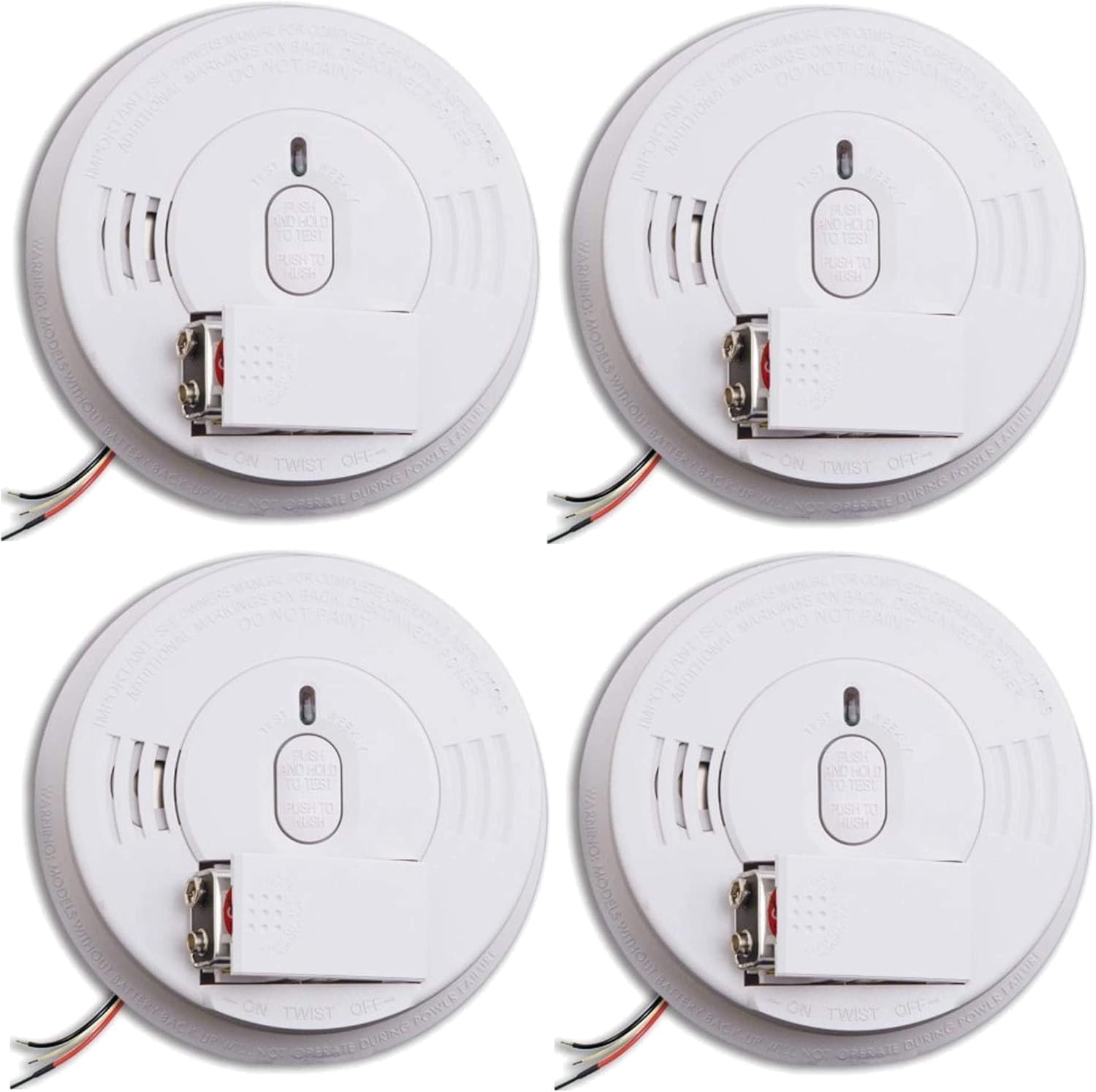
Introducing the Kidde Smoke Detector with a 10-Year Battery, model i9010. This smoke detector is designed to be your first line of defense in fire safety, utilizing advanced ionization sensor technology to detect invisible fire particles often associated with fast-flaming fires, far quicker than typical photoelectric alarms.

Equipped with an 85-decibel alarm, the Kidde Smoke Detector ensures that you’ll be alerted promptly in case of smoke or fire. Its long-lasting 10-year lithium battery means you won’t have to worry about frequent battery changes or the hassle of wiring. Plus, it provides continuous protection even during power outages.

With its intuitive LED indicators, the Kidde Smoke Detector keeps you informed at a glance: a solid green light confirms the unit is operational, while a red LED signifies the presence of smoke or fire.

The convenient test-hush button allows you to verify the battery’s functionality and easily silence any nuisance alarms triggered by everyday activities like cooking or showering.

Designed for ease of maintenance, this detector will chirp to let you know when it’s time for a replacement.

For optimal safety, it is recommended to install smoke and carbon monoxide detectors on every level of your home and near sleeping areas.

Certified by UL and backed by a 10-year limited manufacturer’s warranty, the Kidde Smoke Detector meets the rigorous standards of UL 217, NFPA72, NFPA101, and FHA guidelines.

Ensure your home is safeguarded with a product you can trust, Kidde, a leader in fire safety.

Key Features

  • Resin construction ensures durability and reliability.
  • Ionization sensor technology senses invisible fire particles associated with fast-flaming fires.
  • Easy installation operates on a 10-year lithium battery and eliminates the need for wiring and ensures detection during power failures.
  • Green LED indicator signals that the smoke detector is receiving power.
  • 85-decibel alarm and red LED alert you when smoke or fire is detected.
  • Tamper-resistant technology deters removal of the unit or battery.
  • Replacement Alert notifies you when the smoke alarm needs to be replaced.
  • Test-Hush button simplifies testing the smoke detector and silencing false alarms caused by cooking or shower steam.
  • UL Listed with a 10-Year limited warranty assures quality and compliance with safety standards beginning when the alarm is powered on.

Pros

  1. Customers appreciate how simple it is to install.
  2. Many find it cost-effective given its features.
  3. Users report that it is sturdier than cheaper alternatives.
  4. The product comes with easy-to-follow installation guides.
  5. The 10-year battery is a significant plus for many users.
  6. It does not frequently trigger false alarms, even in dusty environments.
  7. The alarm works well when smoke is detected.

Cons

  1. Some customers have experienced issues with the battery not lasting as long as advertised.
  2. The mounting plate may not fit all electrical boxes without modification.
  3. A few users reported malfunctioning units that needed replacement.

Kidde Hardwired Smoke Detector with AA Battery Backup, Interconnectable Features, and LED Warning Indicators

Imagine upgrading your home’s fire safety with the Kidde Hardwired Smoke Detector, model 20SAR.

This detector is all about taking safety up a notch with its cutting-edge sensing technology, which minimizes those pesky false alarms from cooking.

When it detects smoke or fire, it sends out a fast alert, giving you and your family precious extra time to act.

One of the standout features is its interconnectivity; when one alarm goes off, they all do. This means you’ll be aware of any emergency, no matter where you are in the house. It’s especially handy in larger homes, ensuring no alert goes unnoticed.

Design-wise, it’s sleek and modern with a 5-inch diameter that fits nicely in any space, whether it’s your living room, hallway, kitchen, or bedroom.

The device runs on 120V AC power but has two AA alkaline backup batteries, ensuring it keeps working even during power outages.

These batteries need replacing every six months, but they come included in the package, so you’re set from the start.

Keeping an eye on the detector’s status is easy with its intuitive LED indicators: green for power and red for smoke or fire detection.

Plus, the smoke alarm self-tests to ensure it’s always ready to protect you. Installation is straightforward, too, thanks to the twist-and-click mounting bracket.

Key Features

  • Detects smoke with a loud 85-decibel alarm and three long beeps with a red LED light flashing in time, repeating.
  • Operates on 120V AC wiring installed in the ceiling and includes a 2 AA battery backup to provide coverage during power outages.
  • Enhanced sensing technology reduces false alarms often caused by cooking, meeting the latest UL 217 9th Edition and FCC standards.
  • Self-testing alarm ensures that internal components are always operating as expected, although a manual push test should be performed weekly.
  • Interconnect capability allows all alarms to sound when one detects smoke, ensuring quicker evacuation.
  • Three LED notifications indicate alarm status with green for normal operation, amber for operating errors, and red for smoke detected.
  • Test and hush button makes it easy to test the smoke detector and silence false alarms from cooking or shower steam.
  • A 10-year limited warranty starts when the alarm is powered on, though if this date is unknown, it should be assumed alarms need replacement.

Pros

  1. Customers appreciate the loud 85-decibel alarm for clear smoke detection.
  2. The hardwired setup with AA battery backup ensures continuous operation during power outages.
  3. Enhanced sensing technology effectively reduces false alarms caused by cooking.
  4. Self-testing features provide assurance that the alarm is always functioning properly.
  5. Interconnect capability allows all alarms to sound simultaneously, enhancing safety.
  6. LED notifications clearly indicate the alarm’s status and any issues.
  7. The test and hush button makes it easy to verify functionality and silence nuisance alarms.

Cons

  1. Some users find the battery replacement frequency of every six months to be inconvenient.
  2. The mounting bracket may not fit all electrical boxes without modification.
  3. A few customers reported issues with malfunctioning units that required replacement.

Kidde Hardwired Smoke Detector with 10-Year Battery Backup, Interconnectable Features, and LED Warning Indicators

Think about the peace of mind you could have with a vigilant guardian in your home, silently ensuring your safety every single day.

The Kidde Hardwired Smoke Detector, model 20SA10, offers that kind of security. With advanced sensing technology, it reduces the likelihood of annoying false alarms from everyday cooking, while providing quick alerts in real emergencies, giving your family those crucial extra moments to react.

Imagine this: the moment one alarm senses danger, every connected detector in your home springs into action, so you’re always immediately aware, no matter where you are.

This interconnectivity makes it an excellent choice for comprehensive home safety. With its sleek, modern design, the detector fits seamlessly into any room, from your cozy living room to your bustling kitchen.

One of the standout features is the 10-year built-in lithium battery. This means no more climbing ladders twice a year to change batteries; you get uninterrupted protection for the entire life of the detector, even during power outages.

Installing it is a breeze with the twist-and-click mounting bracket, and the LED indicators are intuitive and clear: green for normal operation, amber for errors, and red for smoke or fire detection.

The detector also self-tests its components regularly, ensuring it’s always ready to protect you and your loved ones.

Meeting stringent safety standards like the 9th Edition UL 217, FCC, and CSFM, this model stands out as a reliable, high-quality choice.

So, when it comes to protecting your home, trust in the Kidde Hardwired Smoke Detector with a 10-Year Battery Backup to keep your sanctuary safe and sound.

Key Features

  • Sounds a loud 85-decibel alarm with three long beeps and a flashing red LED light when smoke is detected.
  • Operates on 120V AC wiring with a 10-year battery backup, eliminating the need for battery changes and saving up to $40 over the detector’s life.
  • Enhanced sensing technology significantly reduces false alarms caused by cooking and meets the latest UL standards.
  • The self-testing alarm ensures internal components are always operating correctly, but a manual push test is recommended weekly.
  • Interconnect capability means that when one alarm sounds, they all do, ensuring quicker evacuation.

Pros

  1. Customers appreciate the ease of installation.
  2. The 10-year battery backup offers peace of mind with no frequent battery changes.
  3. Enhanced sensing technology effectively reduces false alarms.
  4. The interconnectivity feature ensures all alarms sound during an emergency.
  5. The LED warning lights are clear and helpful for monitoring the alarm status.
  6. Users find the instructions clear and easy to follow.
  7. The hardwired setup provides reliable functionality as part of the house system.

Cons

  1. Some customers have encountered issues with the quality of certain units.
  2. Not all users are satisfied with the performance consistency of the detectors.
  3. The requirement to test the alarm weekly and accessibility issues for high installations can be inconvenient.

Kidde Hardwired Smoke Alarm with Safety Light and 9-Volt Battery Backup, Perfect for Hallways, Single Unit

The Kidde Hardwired Smoke Detector with Safety Light, model i12080, brings an extra layer of security to your home.

Using advanced ionization sensor technology, it detects invisible fire particles from fast-flaming fires faster than photoelectric alarms.

When it senses smoke, the 85-decibel alarm and built-in safety light activate, helping guide you and your family to safety.

Powered by a 120-volt AC system with a 9-volt battery backup, this detector ensures you’re always protected, even during power outages.

The red LED indicator alerts you to the presence of smoke or fire, and the test-hush button makes it easy to check the alarm’s operation or silence false alarms from cooking or steam.

This smoke detector also chirps to remind you when it’s time to replace the battery, ensuring continuous protection.

Ideal for every level of your home, especially hallways, the integrated safety light provides clear illumination during emergencies.

Certified by UL and backed by a 10-year limited warranty, the Kidde i12080 meets stringent safety standards.

Its tamper-resistant design prevents easy removal or damage, and it can interconnect with up to 24 Kidde devices, creating a comprehensive safety network.

Easy to install and designed to keep you safe, the Kidde i12080 is a reliable partner in home safety, offering peace of mind with its intelligent features and robust performance.

Key Features

  • Ionization sensor technology alerts to invisible fire particles to provide detection of dangerous smoke or fire.
  • Operating on a 120-volt power source with a 9-volt alkaline battery, providing reliable detection of smoke or fire, even during power outages.
  • Illumination of a safety light helps guide your way to safety when dense smoke is present.
  • An 85-decibel alarm sounds and a red LED indicates the smoke detector is sensing smoke or fire.
  • Test-Hush button makes it easy to test the smoke detector and silence false alarms that occur from cooking or shower steam.
  • UL Listed with a 10-year limited warranty which begins when the alarm is powered on; if that date is unknown it should be assumed the alarm should be replaced.

Pros

  1. Customers find the smoke detector easy to install.
  2. The 85-decibel alarm is loud and clear, ensuring you’ll hear it in an emergency.
  3. The integrated safety light is very helpful in guiding your way during a fire.
  4. The 9-volt battery backup ensures reliability even during power outages.
  5. The test-hush button is useful for easily testing the alarm and silencing false alarms.
  6. Users appreciate the clear and bright LED indicators for smoke or fire.
  7. Many customers highlight the excellent value for money.

Cons

  1. Some customers experienced issues with the backup battery life.
  2. The requirement for two 9-volt batteries can be seen as an additional cost.
  3. There have been instances of low-battery chirps even with new batteries, which can be inconvenient.

Kidde AC Hardwired Interconnect Smoke Alarms with Hush Feature, 4-Pack

Step up your home safety game with the Kidde AC Hardwired Interconnect Smoke Alarms with Hush Feature, model I12040, in this convenient 4-pack.

These smoke alarms are designed to seamlessly integrate into your home’s existing wiring system, providing reliable, continuous protection against fire hazards.

Each unit features photoelectric sensor technology, which excels in detecting slow, smoldering fires that can fill your home with dangerous smoke.

The built-in Hush feature allows you to quickly silence nuisance alarms with the push of a button, perfect for those moments when cooking smoke or steam sets it off unexpectedly.

The alarms are hardwired for dependable power and also include battery backups, ensuring they remain operational during power outages.

The white finish blends effortlessly with any interior decor, while the audible alarm is loud enough to alert everyone in your household, even in larger homes.

Installation is straightforward, and the units come with a pre-stripped wiring harness for easy setup.

The Kidde I12040 alarms are UL Listed and come with a 10-year limited warranty, providing long-term peace of mind.

This pack of four is perfect for replacing multiple units at once, ensuring comprehensive coverage throughout your home.

Make safety a priority with Kidde, a trusted name in fire prevention, and enjoy the confidence that comes with knowing you have reliable smoke detection in place.

Key Features

  • Ionization sensor technology alerts to invisible fire particles to provide detection of dangerous smoke or fire.
  • Operates on a 120-volt power source with a 9-volt alkaline battery, providing reliable detection of smoke or fire, even during power outages.
  • Illumination of a safety light helps guide your way to safety when dense smoke is present.
  • An 85-decibel alarm sounds and a red LED indicates the smoke detector is sensing smoke or fire.
  • Test-Hush button makes it easy to test the smoke detector and silence false alarms that occur from cooking or shower steam.
  • UL Listed with a 10-year limited warranty, which begins when the alarm is powered on; if that date is unknown, it should be assumed the alarm should be replaced.

Pros

  1. Easy to install with clear instructions.
  2. Reliable detection with ionization sensor technology.
  3. Loud 85-decibel alarm for effective alerting.
  4. Safety light helps guide your way in dense smoke.
  5. The test-hush button allows for easy testing and silencing of false alarms.
  6. Hardwired power source with a 9-volt battery backup ensures continuous operation.
  7. UL Listed and comes with a 10-year limited warranty.

Cons

  1. Requires two 9-volt batteries, which can add to maintenance costs.
  2. Some users report issues with battery life and chirping.
  3. Not always compatible with older models without additional adapters.

Kidde Hardwired Smoke and CO Detector with 10-Year Battery, Voice Alerts, and LED Indicators

Discover unparalleled safety for your home with the Kidde Hardwired Smoke & Carbon Monoxide Detector, model 30CUA10-V.

This advanced detector is engineered to keep you and your family safe with its dual functionality that combines smoke and carbon monoxide detection in one sleek device.

Featuring enhanced sensing technology, it minimizes false alarms from cooking while providing swift alerts to real dangers, giving you precious time to react.

Equipped with a state-of-the-art electrochemical sensor for detecting carbon monoxide, this alarm ensures comprehensive protection against invisible, deadly threats.

The 5-inch modern design fits perfectly into any living space, from the living room to the bedroom, blending seamlessly with your home decor.

Clear voice alerts announce specific hazards, stating “Fire!” or “Warning Carbon Monoxide!” so you can immediately understand the nature of the emergency.

Designed to the latest UL standards, this detector is powered by 120V AC wiring and includes a 10-year built-in lithium battery, eliminating the need for frequent battery replacements and providing continuous protection even during power outages.

The self-testing feature ensures that the detector is always functioning correctly, and the twist-and-click mounting bracket makes installation a breeze.

Certified to meet the requirements of UL 217 9th Edition, UL 2034 4th Edition, FCC, and CSFM, this smoke and CO alarm is your reliable partner in home safety, combining cutting-edge technology with user-friendly features to safeguard your family around the clock.

Key Features

  • Alerts you to both smoke and carbon monoxide (CO) using a single, cost-effective device.
  • Operates on 120V AC wiring installed in the ceiling and requires no battery changes for 10 years, saving up to $40 over the detector’s life.
  • Enhanced sensing technology reduces false smoke alarms often caused by cooking, meeting the latest UL standards.
  • Crystal-clear voice alerts will say “Fire!” when smoke is detected or “Warning! Carbon Monoxide!” if CO is detected, so you can react quickly.
  • When one alarm sounds, they all sound, ensuring you can get out faster.
  • Internal components ensure the alarm is always operating as expected, but perform a button test once per week to verify alarm operation.
  • LED lights indicate alarm status: green for normal operation, amber for operating error, and red for smoke or carbon monoxide detection, accompanied by a loud 85-decibel alarm.
  • Comes with a 10-year limited warranty that begins when the alarm is powered on; if the date is unknown, the alarm should be replaced.

Pros

  1. Very easy to install and integrate with existing systems.
  2. Provides clear and loud voice alerts for both smoke and carbon monoxide.
  3. Long-lasting with a 10-year battery backup.
  4. Enhanced sensing technology minimizes false alarms from cooking.
  5. Interconnect capability ensures all alarms sound during an emergency.
  6. LED warning lights clearly indicate the alarm status.
  7. Reliable performance as noted by multiple satisfied users.

Cons

  1. Some users experienced false alarms, which required disabling the unit.
  2. Installation may require replacing old wiring and mounting brackets.

Kidde White Photoelectric Smoke Detector with 10-Year Battery

The Kidde Smoke Detector, model P3010B, takes home safety to the next level with its advanced photoelectric sensor technology, which quickly detects visible fire particles from smoldering fires.

When smoke or fire is detected, it emits a powerful 85-decibel alarm to ensure you’re immediately alerted.

This smoke detector is equipped with a 10-year lithium battery, providing reliable protection even during power outages and eliminating the hassle of frequent battery replacements.

One of its standout features is its automatic activation once mounted, ensuring it’s always ready to protect.

The test-hush button allows you to easily check battery operation or silence false alarms caused by cooking or steam from showers. Plus, it will chirp to remind you when the battery needs replacing, so you’re never caught off guard.

Designed for comprehensive home safety, the Kidde Smoke Detector is perfect for installation on every level of your home and near bedrooms to guard against fire and carbon monoxide threats. UL Certified and backed by a 10-year limited warranty, it meets stringent safety standards, including UL 217, NFPA72, NFPA101, and FHA requirements.

With its sleek white design and robust safety features, the Kidde Smoke Detector, model p3010b, offers peace of mind and reliable protection for you and your loved ones, making it an essential addition to your home safety setup.

Key Features

  • Photoelectric sensor technology senses visible fire particles associated with smoldering fires.
  • Operates on a 10-year lithium battery, eliminating the need for battery replacement while providing reliable detection during a power failure.
  • End-of-life chirp notifies you when the alarm needs to be replaced.
  • Smoke alarm automatically activates when it is attached to the mounting bracket.
  • Test-Hush button makes it easy to test the smoke detector and silence false alarms that occur from cooking or shower steam.
  • UL listed with a 10-year limited manufacturer warranty on the alarm only; the warranty begins when the alarm is powered on, and if that date is unknown, it should be assumed that replacement is needed.

Pros

  1. Easy to install with a user-friendly design.
  2. Long-lasting 10-year battery eliminates frequent replacements.
  3. Clear and loud 85-decibel alarm ensures effective alerting.
  4. Reliable performance over time, with some users experiencing a full 10-year lifespan.
  5. Photoelectric sensor technology effectively detects smoldering fires.
  6. The test-hush button is convenient for silencing false alarms.
  7. Trusted brand with a strong reputation for safety products.

Cons

  1. Some users reported malfunctioning units that went off without cause.
  2. Issues with false alarms during the night can be disruptive.

Kidde 4-Pack Hardwired Smoke Detectors with AA Battery Backup, Interconnect Capability, and LED Indicators

Step up your home safety with the Kidde Hardwired Smoke Detector, model 20SAR. This set of four smoke detectors combines modern technology with a sleek design to keep your living spaces, from the kitchen to the bedroom, protected.

Equipped with enhanced sensing technology, these alarms significantly reduce false alerts from everyday activities like cooking, ensuring reliable performance when you need it most.

The interconnected feature ensures that if one alarm sounds, all connected alarms will alert you, making sure no emergency goes unnoticed.

Designed to be hardwired into your home’s electrical system, these detectors also come with AA battery backups, providing continuous protection even during power outages.

The built-in LED warning light indicators offer clear visual cues to the alarm status, enhancing your safety measures.

Installation is a breeze with the included twist-and-click mounting bracket, making setup quick and hassle-free.

Each unit meets the stringent safety standards of the 9th Edition UL 217, FCC, and CSFM, guaranteeing you top-notch reliability and peace of mind.

Ideal for any living area, these smoke detectors blend seamlessly into your home decor while providing robust protection.

Experience unparalleled fire safety with the Kidde Hardwired Smoke Detector 4 Pack, where advanced technology meets dependable design. Make a proactive choice for your family’s safety today.

Key Features

  • Sounds a loud 85-decibel alarm when smoke is detected, with 3 long beeps and a red LED light flashing in time, repeating.
  • Operates on 120V AC wiring installed in the ceiling with 2 AA alkaline batteries that provide battery backup coverage during power outages.
  • Reduces false alarms often caused by cooking, comprehensively tested to meet the latest UL standards, including UL 217 9th Edition and FCC standards.
  • Internal components ensure the alarm is always operating as expected, though a manual push test should be performed once per week to verify alarm operation.
  • When one alarm sounds, they all sound, so you can get out faster; different models offer different interconnection options and requirements.
  • LED lights indicate alarm status, with green for normal operation, amber for operating error, and red for smoke detection.
  • Makes it easy to test the 5-inch smoke detector and silence false alarms with the Test & Hush button.
  • Comes with a 10-year limited warranty that begins when the alarm is powered on; if that date is unknown, it should be assumed that the alarms should be replaced.

Pros

  1. Easy to install with clear instructions.
  2. Loud 85-decibel alarm effectively alerts users.
  3. Reduces false alarms caused by cooking.
  4. Reliable 2 AA battery backup during power outages.
  5. Interconnect capability ensures all alarms sound during an emergency.
  6. LED lights provide clear visual indicators of alarm status.
  7. Test & Hush button allows for easy testing and silencing of false alarms.

Cons

  1. Some users experienced issues with the included batteries.
  2. Interconnect capability may require compatibility checks with existing units.
  3. Some units may need wiring updates during installation.

Kidde 4-Pack Smoke and Carbon Monoxide Detectors with AA Battery Power and LED Indicators

Enhance your home’s safety and protect your loved ones with the Kidde Smoke & Carbon Monoxide Detector, model 30CUDR.

This 4-pack provides advanced protection with state-of-the-art sensing technology that reduces false alarms from common household activities like cooking, ensuring that alerts are both timely and accurate.

Equipped with a sophisticated electrochemical sensor, this alarm effectively detects dangerous levels of carbon monoxide.

Its modern 5-inch design is perfect for any room in the house, including living rooms, hallways, kitchens, and bedrooms.

Each unit operates on two replaceable AA alkaline batteries (included), which ensure continuous operation even during power outages.

Remember to replace the batteries every 6 months or when the low battery chirp sounds to maintain optimal performance.

This detector is easy to install with the included twist-and-click mounting bracket, and it features self-testing capabilities to ensure reliability.

Additionally, it includes end-of-life notifications that beep when it’s time to replace the unit, typically after 10 years of service.

Certified to meet the highest safety standards, this combination smoke and CO alarm complies with UL 217 9th Edition, UL 2034 4th Edition, and FCC requirements.

With the Kidde Smoke & Carbon Monoxide Detector, you can enjoy peace of mind knowing your home is equipped with top-tier safety features in a sleek and functional design.

Key Features

  • Alerts you to both smoke and carbon monoxide (CO) using a single, cost-effective detector.
  • Reduces false smoke alarms often caused by cooking; comprehensively tested to meet the latest UL standards, including UL 217 9th Edition, UL 2034 4th Edition, and FCC standards.
  • Operates on 2 AA alkaline batteries (included), providing easy installation; simply mount the bracket onto the ceiling and twist & click the 5-inch smoke and CO alarm into the bracket.
  • Internal components ensure the alarm is always operating as expected; not a substitute for a manual push test, perform a button test once per week to verify alarm operation.
  • LED lights indicate alarm status, with green for normal operation, amber for operating error, and red for smoke or carbon monoxide detection, with a loud 85-decibel alarm sounding.
  • Makes it easy to test the 5-inch combination detector and silence false alarms with the Test & Hush button.
  • Batteries should be replaced every 6 months; a low battery chirp alerts you when batteries need replacing.
  • Warranty begins when the alarm is powered on; if that date is unknown, it should be assumed that alarms should be replaced.

Pros

  1. Alerts to both smoke and carbon monoxide using a single, cost-effective detector.
  2. Reduces false alarms caused by cooking.
  3. Easy installation with no wiring needed, powered by 2 AA batteries.
  4. Self-testing alarm ensures it is always operating as expected.
  5. LED lights provide clear notifications of alarm status.
  6. Test & Hush button allows for easy testing and silencing of false alarms.
  7. The 10-year limited warranty provides long-term protection.

Cons

  1. Requires battery replacement every 6 months.
  2. Some users may find the frequent battery changes inconvenient.
  3. Not meeting CSFM requirements might be a drawback for some users.

Kidde Hardwired Carbon Monoxide Detector with 9-Volt Battery Backup and Digital LED Display, 5.75-Inch Diameter by 1.8-Inch Depth

Take home safety to the next level with the Kidde Hardwired Carbon Monoxide Detector, featuring a 9-Volt Battery Backup and a Digital LED Display.

This advanced detector uses cutting-edge electrochemical sensor technology to detect harmful CO gas, alerting you with a powerful 85-decibel alarm. Installation is simple: just plug it into a standard 120V AC power outlet, and the included 9-volt battery ensures continuous protection during power outages.

When carbon monoxide is detected, the digital display provides real-time updates of CO levels every 15 seconds, allowing you to monitor your home’s safety at a glance.

The peak level memory function records the highest level of CO detected and the time it was last tested.

For added convenience, the Smart-Hush button can silence the alarm for 8 minutes, ideal for minor irritations like cooking smoke or shower steam.

Ensure comprehensive protection by installing these detectors on every level of your home and near sleeping areas.

This unit is UL Certified and comes with a 10-year limited warranty, meeting the stringent safety standards of UL 2034, UL217, NFPA72, the State of California Fire Marshal, NFPA101, FHA, and HUD.

With its sleek design and reliable performance, the Kidde Hardwired Carbon Monoxide Detector is an essential addition to any home safety setup.

Key Features

  • The carbon monoxide alarm operates on a 120V wired power source with a 9-Volt alkaline battery included.
  • The digital LED display shows the level of carbon monoxide the CO alarm is sensing.
  • An 85-decibel alarm announces when carbon monoxide is detected.
  • Peak Level Memory records the last time carbon monoxide was detected or when the unit was last tested.
  • The Test-Hush Button makes testing the detector or silencing false alarms easy.
  • Electrochemical sensor technology detects poisonous carbon monoxide gas inside your home.
  • UL listed with a 10-Year limited manufacturer warranty on the alarm only; the warranty begins when the alarm is powered on, and if that date is unknown, it should be assumed that replacement is needed.

Pros

  1. Easy to install with clear instructions.
  2. Provides real-time CO level updates on the digital LED display.
  3. Loud 85-decibel alarm effectively alerts you to danger.
  4. Reliable electrochemical sensor technology.
  5. Peak Level Memory records the highest level of CO detected.
  6. Smart-Hush button silences false alarms for convenience.
  7. 9-Volt battery backup ensures continuous operation during power outages.

Cons

  1. Some users reported issues with false alarms and reliability.
  2. The design requires unplugging the wiring harness to change the battery.
  3. The initial battery provided might be of inconsistent quality, requiring replacement soon after purchase.

FAQ: Best Kidde Smoke Detectors

How do I get my Kidde smoke alarm to stop beeping?

To stop your Kidde smoke alarm from beeping, try the following steps:

  • If the alarm is chirping, it might be a sign that the battery is low. Replace the battery with a new one.
  • Turn off the power to the smoke alarm at the circuit breaker. Remove the smoke alarm from its mounting bracket and disconnect the power. Remove the battery, then press and hold the test button for at least 15 seconds. Reconnect the power and reinstall the battery.
  • Ensure there is no humidity, steam, or excess airflow near the alarm. Move the alarm away from cooling/heating registers, ceiling fans, or open windows.
  • Dust and debris can cause false alarms. Use compressed air to clean the alarm’s sensors.

Why does my Kidde smoke detector keep going off for no reason?

Your Kidde smoke detector might be going off for no reason due to dust, insects, or humidity in the sensing chamber.

It could also be triggered by cooking smoke or steam from bathrooms or kitchens. Try cleaning the alarm with compressed air, relocating it away from potential sources of interference, or using the Test-Hush button to temporarily silence it. If the issue persists, the detector might need to be replaced.

Should a Kidde smoke detector blink red?

Yes, a Kidde smoke detector can blink red for several reasons. A rapid red flash typically indicates the presence of smoke or fire, signaling you to take immediate action.

An intermittent red flash usually means the battery is low and needs replacement. If the red light is solid, it might indicate a malfunction or error with the detector.

What is the lifespan of a Kidde smoke detector?

The lifespan of a Kidde smoke detector is typically 10 years. After this period, it’s recommended to replace the unit to ensure it continues to provide reliable protection.

Many Kidde smoke detectors have built-in features that will alert you when it’s time for a replacement, such as an end-of-life chirp or an expiration notice.

Why is my Kidde smoke alarm beeping and flashing green?

A Kidde smoke alarm beeping and flashing green usually indicates a low battery. The green light shows that the detector is receiving power, but the beeping is a warning that the battery needs to be replaced. Try replacing the battery to see if that resolves the issue.

How do I turn off my Kidde smoke detector?

To turn off your Kidde smoke detector, you can first try pressing the Test-Hush button, which will temporarily silence the alarm for about 8 minutes.

If that doesn’t work, remove the battery to stop the beeping, and if your unit is hardwired, turn off the power at the circuit breaker as well. 

For a more permanent solution, you can twist the alarm counterclockwise to remove it from its mounting bracket and disconnect the power cable.

If you plan to continue using the detector, press and hold the test button for 15-20 seconds to reset the unit before reconnecting it and replacing the battery.

How to reset a Kidde smoke detector?

To reset your Kidde smoke detector, first turn off the power at the circuit breaker if it’s hardwired, then twist the detector counterclockwise to remove it from the mounting bracket and take out the battery.

Press and hold the test button for 15-20 seconds to discharge any remaining charge, then reinsert the battery. Finally, reattach the detector to the mounting bracket and turn the power back on.

This process should reset the alarm and clear any false alarms or errors. If issues persist, the unit may need to be replaced.

Key takeaway: Best Kidde Smoke Detectors

Ensuring your Kidde smoke detector operates correctly is crucial for home safety. Resetting the detector is a straightforward process that can resolve many common issues, such as false alarms or system errors.

Start by turning off the power at the circuit breaker if your unit is hardwired, to safely handle the device without the risk of electrical shock.

Removing the detector from the mounting bracket involves a simple counterclockwise twist, allowing you to access the battery compartment.

Discharging any residual charge by holding the test button for 15-20 seconds is a key step, as it clears the device’s memory and resets its functions.

Reinserting the battery and remounting the detector ensures it is ready to protect you once again. This step-by-step approach is designed to be user-friendly, minimizing the need for professional intervention.

However, if after performing these steps the smoke alarm continues to malfunction or issue false alerts, it may indicate a deeper issue that resetting cannot fix.

This could be a sign that the unit has reached the end of its operational life or has sustained damage that affects its performance. In such cases, replacing the smoke detector is the best course of action to maintain safety.

Kidde smoke detectors are built to last up to 10 years, after which their sensors may no longer function effectively.

Regular maintenance, including battery replacement and routine testing, is essential for ensuring these devices work as intended.

By following these guidelines, you can confidently manage your smoke detectors, ensuring they provide reliable protection for your home and family.

This proactive approach to safety not only addresses current issues but also helps prevent future ones, reinforcing the importance of functional smoke detectors in home safety protocols.

Smoke Detectors

When it comes to safeguarding our homes and loved ones, smoke detectors are unsung heroes that quietly stand guard against potential disasters.

These small devices pack a mighty punch, providing early warnings of fire and smoke to help save lives and property.

Unlike many other household gadgets, smoke detectors play a critical role in home safety; they can truly be the difference between life and death in the event of a fire.

Modern smoke detectors have come a long way from their humble beginnings. Today, they’re equipped with advanced features such as carbon monoxide detection, interconnectivity with other alarms, and integration with smart home systems.

Despite these technological advancements, their core mission remains unchanged: to alert us to the presence of smoke or fire as quickly as possible.

This early detection is crucial, giving people valuable time to evacuate or take action before a situation escalates.

The importance of smoke detectors cannot be overstated. Statistics consistently show that homes equipped with functioning smoke detectors have significantly higher survival rates in the event of a fire.

Building codes and safety regulations in many regions mandate the installation of these devices, underscoring their vital role in preventing fire-related injuries and fatalities.

Whether you’re a homeowner, renter, or property manager, understanding the different types of smoke detectors, their proper installation, and regular maintenance is key to ensuring a safe living environment.

In this article, we’ll explore everything you need to know about smoke detectors. From how they work and the various types available to best practices for installation and maintenance, we’ll provide you with the knowledge you need to keep your home and loved ones safe.

So, let’s dive into the world of smoke detectors and uncover why these essential devices are a cornerstone of home safety.

What is a smoke detector?

A smoke detector is an essential safety device designed to alert occupants of a building to the presence of smoke, which is often an indicator of fire.

These devices are crucial components of a comprehensive fire safety plan, providing early warnings that can save lives and minimize property damage. Here’s a detailed look at what smoke detectors are, how they work, and why they are so important.

Types of Smoke Detectors

There are primarily two types of smoke detectors based on their detection technology: ionization smoke detectors and photoelectric smoke detectors.

Ionization Smoke Detectors

How They Work

These detectors have a small amount of radioactive material placed between two electrically charged plates, which ionizes the air and causes a current to flow between the plates.

When smoke enters the chamber, it disrupts this flow of ions, reducing the current and triggering the alarm.

Best For

Ionization smoke detectors are particularly good at detecting fast-flaming fires that produce smaller smoke particles.

Photoelectric Smoke Detectors

How They Work

These detectors use a light source, typically a light-emitting diode (LED), and a light sensor positioned at an angle.

In normal conditions, light does not fall on the sensor. When smoke enters the chamber, it scatters the light, causing it to hit the sensor and trigger the alarm.

Best For

Photoelectric detectors are more responsive to smoldering fires that produce larger smoke particles.

    Combination Detectors

    Some smoke detectors combine both ionization and photoelectric technologies to provide a broader range of detection, ensuring better overall safety.

    Additional Features: Modern smoke detectors often come with additional features such as:

    Carbon Monoxide Detection

    Some smoke detectors also include sensors for carbon monoxide (CO), a dangerous, odorless gas.

    Interconnectivity

    Many smoke detectors can be interconnected so that when one detector senses smoke, all alarms in the network sound simultaneously.

    Smart Integration

    Advanced models can be integrated with smart home systems, allowing users to receive alerts and monitor their devices remotely via smartphones.

    Placement and Installation

    Proper placement and installation are crucial for the effective functioning of smoke detectors. General guidelines include:

    • Installing smoke detectors inside each bedroom, outside each sleeping area, and on every level of the home, including the basement.
    • Mounting detectors on the ceiling or high on the wall, as smoke rises.
    • Avoiding installation near windows, doors, or ducts where drafts might interfere with their operation.

    Maintenance

    Regular maintenance is vital to ensure smoke detectors are functioning correctly. This includes:

    • Testing smoke alarms monthly by pressing the test button.
    • Replacing batteries at least once a year or when the detector indicates a low battery.
    • Cleaning the detectors regularly to remove dust and debris.
    • Replacing smoke detectors every 10 years or as recommended by the manufacturer.

    Importance of Smoke Detectors

    Statistics show that homes with functioning smoke detectors have a significantly lower risk of fire-related injuries and deaths.

    They provide the early warning needed to evacuate safely and call for help, making them indispensable in every home and building.

    What is a smoke detector good for?

    The Benefits of Smoke Detectors

    Smoke detectors are indispensable safety devices designed to alert occupants of a building to the presence of smoke, often indicating a fire. Here’s why they’re so essential:

    Early Warning of Fire Hazards

    The primary function of smoke detectors is to provide an early warning of a potential fire, giving occupants valuable time to evacuate the premises and call for emergency services. This early detection is crucial in preventing injuries and fatalities.

    Protection of Property

    By detecting smoke early, smoke detectors help minimize property damage. The sooner a fire is detected, the quicker it can be addressed, reducing the potential for extensive damage to the building and its contents.

    Peace of Mind

    Knowing that your home or workplace is equipped with functioning smoke detectors provides peace of mind. These devices offer a sense of security, knowing that you will be alerted promptly in case of a fire.

    Compliance with Safety Regulations

    In many regions, the installation of smoke detectors is mandated by building codes and safety regulations. Having smoke detectors installed ensures compliance with these laws, avoiding potential legal issues and fines.

    Integration with Smart Home Systems

    Modern smoke detectors can be integrated with smart home systems, allowing for remote monitoring and control. This means you can receive alerts on your smartphone and take action even when you’re away from home.

    Reduction of False Alarms

    Advanced smoke detectors come with features that minimize false alarms, such as differentiating between smoke from cooking and actual fire hazards. This makes them more reliable and reduces unnecessary disruptions.

    What are the advantages and disadvantages of smoke detectors?

    Advantages and Disadvantages of Smoke Detectors

    Advantages

    Early Detection

    Lifesaving Alerts

    Smoke detectors provide early warnings of fire hazards, allowing occupants to evacuate promptly. This significantly reduces the risk of injury or death caused by fires.

    Fire Containment

    Early detection also helps in containing the fire quickly, potentially minimizing the damage to the property and preventing the fire from spreading.

    Property Protection

    Damage Reduction

    By alerting occupants early, smoke detectors can help reduce the extent of damage to a building and its contents. This can save homeowners significant repair and replacement costs.

    Insurance Benefits

    Many insurance companies offer discounts on homeowners’ insurance premiums for properties equipped with functioning smoke detectors, acknowledging their role in mitigating fire risks.

    Peace of Mind

    Security and Assurance

    Knowing that your home or workplace is equipped with smoke detectors provides peace of mind. Occupants can rest assured that they will be promptly alerted in case of a fire emergency.

    Night-Time Protection

    Smoke detectors are especially valuable at night when occupants are asleep and less likely to notice the signs of a fire.

    Regulatory Compliance

    Legal Requirements

    Many building codes and safety regulations mandate the installation of smoke detectors in residential and commercial properties. Compliance ensures that property owners meet legal safety standards.

    Fire Safety Standards

    Smoke detectors contribute to overall fire safety standards, making buildings safer for occupants and visitors.

    Advanced Features

    Carbon Monoxide Detection

    Some modern smoke detectors also include sensors for carbon monoxide (CO), an odorless and dangerous gas. This dual function enhances overall safety.

    Interconnectivity and Smart Integration

    Advanced smoke detectors can be interconnected, so if one alarm detects smoke, all alarms in the system sound simultaneously. Integration with smart home systems allows for remote monitoring and alerts via smartphones.

      Disadvantages

      False Alarms:

      Inconvenience and Anxiety

      Smoke detectors can sometimes trigger false alarms due to cooking fumes, steam, or dust. These false alarms can be inconvenient and cause unnecessary anxiety.

      Maintenance Issues

      Frequent false alarms may indicate that the smoke detector needs maintenance, such as cleaning or replacing the batteries.

      Regular Maintenance Required:

      Battery Replacement

      Smoke detectors require regular battery replacements to ensure they function correctly. Neglecting to replace batteries can result in the detector not working during an emergency.

      Device Replacement

      Smoke detectors have a limited lifespan, usually around 10 years. Property owners need to replace outdated detectors to maintain safety standards.

      Initial Cost

      Installation Expenses

      While smoke detectors are relatively affordable, the initial cost of purchasing and installing multiple detectors throughout a property can add up.

      Upgrading to Advanced Models

      Investing in advanced smoke detectors with additional features like CO detection or smart integration may involve higher costs.

        What are the functions of smoke detectors?

        Smoke detectors are critical safety devices with several essential functions designed to protect lives and property. Here are the key functions of smoke detectors:

        Early Fire Detection

        Smoke detectors’ primary function is to provide early warning of a potential fire by detecting smoke particles in the air.

        This early detection is crucial in giving occupants time to evacuate the premises safely before the fire spreads.

        Alerting Occupants

        When smoke detectors sense smoke, they emit a loud alarm sound to alert occupants of the danger.

        This immediate alert can wake people from sleep and provide them with the necessary time to escape, especially during nighttime fires when occupants are less likely to notice smoke.

        Monitoring Air Quality

        Some advanced smoke detectors can also monitor air quality for signs of harmful gases like carbon monoxide (CO).

        These combination detectors can simultaneously provide protection against both fire and carbon monoxide poisoning, enhancing overall safety.

        Interconnecting with Other Alarms

        Many smoke detectors have the capability to interconnect with other smoke alarms within the same system.

        When one detector senses smoke, it triggers all interconnected alarms to sound simultaneously, ensuring that the alert reaches all parts of the building, regardless of where the fire starts.

        Integrating with Smart Home Systems

        Modern smoke detectors can be integrated with smart home systems, enabling remote monitoring and control via smartphones or other smart devices.

        This integration allows homeowners to receive real-time alerts and status updates even when they are not at home.

        Minimizing False Alarms

        Advanced smoke detectors are equipped with features to reduce false alarms, such as distinguishing between smoke from cooking or steam and actual fire-related smoke. This function ensures that the alarms are reliable and minimizes unnecessary disruptions.

        Enhancing Compliance and Safety Standards

        Smoke detectors help property owners comply with local building codes and safety regulations. Their installation is often mandated to meet fire safety standards, ensuring that buildings provide a basic level of protection for occupants.

        Where are smoke detectors used?

        Smoke detectors are versatile safety devices employed in a wide range of settings to protect lives and property from fire hazards. Here are the primary locations where smoke detectors are commonly used:

        Residential Homes

        Bedrooms and Sleeping Areas

        Smoke detectors are essential in bedrooms and sleeping areas to alert occupants of a fire while they are asleep.

        Installing detectors inside each bedroom and outside each sleeping area ensures comprehensive coverage.

        Hallways and Stairways

        Placing smoke detectors in hallways and stairways helps detect smoke from any part of the house, providing early warnings to all occupants.

        Living Rooms and Common Areas

        Installing smoke detectors in living rooms and other common areas ensures that any fire starting in these spaces is quickly detected.

        Basements and Attics

        Smoke detectors in basements and attics provide protection for areas that are less frequently occupied but still susceptible to fire hazards.

        Apartment Buildings

        Individual Units

        Each apartment unit should have smoke detectors installed in bedrooms, hallways, and living areas to ensure the safety of residents.

        Common Areas

        Hallways, stairwells, laundry rooms, and other shared spaces should have smoke detectors to protect all occupants in the building.

        Commercial Buildings

        Offices

        Smoke detectors in office buildings provide early warnings to employees, allowing for prompt evacuation and minimizing business disruptions.

        Retail Stores

        Installing smoke detectors in retail environments protects customers and staff, ensuring quick detection of any fire-related incidents.

        Warehouses

        Smoke detectors in warehouses safeguard valuable inventory and equipment from fire damage by providing early alerts.

        Educational Institutions

        Classrooms and Dormitories

        Schools and universities require smoke detectors in classrooms, dormitories, and other student housing to ensure the safety of students and staff.

        Libraries and Laboratories

        Installing smoke detectors in libraries and laboratories protects sensitive materials and equipment from fire hazards.

        Healthcare Facilities

        Hospitals and Clinics

        Smoke detectors in hospitals and clinics ensure the safety of patients, staff, and visitors. They provide early warnings in patient rooms, corridors, and operating theaters.

        Nursing Homes

        Ensuring the safety of elderly residents in nursing homes requires smoke detectors in all rooms and common areas.

        Public Buildings

        Government Buildings

        Smoke detectors in government offices and public service buildings protect employees and visitors.

        Museums and Theaters

        Smoke detectors in museums and theaters safeguard priceless artifacts and ensure the safety of patrons.

        Industrial Facilities

        Factories and Manufacturing Plants

        Installing smoke detectors in factories and manufacturing plants provides early detection of fire hazards in high-risk environments.

        Power Plants and Refineries

        Smoke detectors in power plants and refineries protect critical infrastructure and ensure the safety of workers.

        What does the smoke detector indicate?

        A smoke detector indicates the presence of smoke, which is often an early sign of a fire. When smoke particles are detected by the sensor within the smoke detector, it triggers an alarm.

        This loud, persistent alarm alerts occupants to the potential danger, giving them time to evacuate the premises and take necessary action to address the fire.

        In some advanced models, smoke detectors can also indicate the presence of carbon monoxide if they are equipped with CO sensors.

        Additionally, interconnected smoke detectors can indicate an emergency by triggering alarms throughout the entire network, ensuring comprehensive coverage and alerting everyone in the building to the danger.

        How do you detect a smoke detector?

        Detecting a smoke detector involves several steps to ensure that it is properly installed, functioning correctly, and capable of providing reliable alerts in the event of smoke or fire. Here’s a detailed guide on how to detect and check a smoke detector:

        Visual Inspection

        Location

        Begin by visually inspecting the location of the smoke detector. It should be installed on the ceiling or high on the wall, as smoke rises. Ensure that it is placed in a central location within the room, hallway, or designated area, avoiding proximity to windows, doors, or air ducts, which can interfere with its operation.

        Condition

        Check the physical condition of the smoke detector. Look for any signs of damage, dust, or debris that might impair its function. A clean, intact smoke detector is more likely to work effectively.

        Testing the Alarm

        Test Button

        Most smoke detectors come with a test button. Press and hold this button to test the alarm. The detector should emit a loud, piercing sound, indicating that the alarm is functioning properly.

        If the sound is weak or absent, it may indicate a need for battery replacement or other maintenance.

        Use of Smoke Testers

        You can use commercially available smoke detector test aerosols to simulate smoke and test the detector’s response.

        Spray the aerosol near the detector and wait to see if it triggers the alarm. Follow the manufacturer’s instructions for best results.

        Battery Check and Replacement

        Battery Type

        Identify the type of batteries used in the smoke detector, commonly AA, 9V, or sealed lithium batteries.

        Check the manufacturer’s recommendations for replacement intervals, typically once a year for replaceable batteries, or every 10 years for sealed units.

        Replacement

        Open the smoke detector and replace the batteries if necessary. Ensure that the batteries are inserted correctly and secure the cover properly. Test the alarm again after replacing the batteries to confirm it is working.

        Interconnected Systems

        Interconnection Check

        For interconnected smoke detectors, ensure that all units are communicating properly. Test one detector and verify that all other interconnected detectors sound the alarm simultaneously. This ensures comprehensive coverage across the building.

        Regular Maintenance

        Cleaning

        Dust and debris can interfere with a smoke detector’s sensors. Regularly clean the detector with a vacuum cleaner attachment or a soft brush to remove any accumulated dust.

        Updates and Replacements

        Replace smoke detectors every 10 years or as recommended by the manufacturer. Modern detectors have a replace-by date printed on the back, making it easy to know when to replace them.

        Professional Inspection

        Expert Evaluation

        Consider having a professional evaluate your smoke detectors as part of a comprehensive fire safety inspection.

        Professionals can provide detailed assessments and ensure all aspects of your fire safety system are in optimal condition.

        Why are smoke detectors required?

        Life-Saving Alerts

        Smoke detectors are crucial for providing early warnings of fire hazards. When smoke is detected, these devices emit a loud alarm, alerting occupants to the potential danger. This early warning is vital as it gives people time to evacuate the premises safely before the fire spreads, significantly reducing the risk of injury or death.

        Property Protection

        By detecting smoke early, smoke detectors help minimize property damage. The sooner a fire is detected, the quicker it can be addressed, preventing extensive damage to the building and its contents. This early intervention can save homeowners significant repair and replacement costs.

        Compliance with Regulations

        Many building codes and safety regulations mandate the installation of smoke detectors in residential and commercial properties.

        Compliance with these regulations ensures that properties meet established safety standards, providing a safer environment for occupants and visitors. Non-compliance can result in legal issues and fines.

        Peace of Mind

        Having functioning smoke detectors in place provides peace of mind to occupants, knowing that they will be promptly alerted in case of a fire emergency.

        This sense of security is especially important for families, as it ensures that their loved ones are protected at all times, including during the night when they are most vulnerable.

        Insurance Benefits

        Many insurance companies recognize the importance of smoke detectors in mitigating fire risks.

        As a result, they often offer discounts on homeowner’s insurance premiums for properties equipped with functioning smoke detectors. This not only enhances safety but also provides financial benefits to homeowners.

        Advanced Features

        Modern smoke detectors come with advanced features such as carbon monoxide detection, interconnectivity with other alarms, and integration with smart home systems.

        These additional functionalities provide comprehensive protection against various hazards and enable remote monitoring and control, enhancing overall safety and convenience.

        Enhancing Safety Standards

        Smoke detectors contribute to overall fire safety standards by providing reliable and effective early warning systems.

        Their presence in homes, businesses, and public buildings helps to ensure that occupants have the necessary time to respond to fire emergencies, reducing the likelihood of injuries and fatalities.

        Can a smoke detector detect cigarettes?

        While smoke detectors are primarily designed to detect smoke from fires, they can also be triggered by cigarette smoke.

        The sensitivity of a smoke detector to cigarette smoke depends on the type of detector and the concentration of smoke.

        Ionization smoke detectors, which are more sensitive to smaller particles typically produced by fast-flaming fires, might not be as easily triggered by cigarette smoke as photoelectric smoke detectors, which are better at detecting larger smoke particles from smoldering fires.

        However, in environments where smoking is common, such as in designated smoking areas or places with poor ventilation, cigarette smoke can accumulate and trigger a smoke detector.

        To avoid false alarms, it’s important to place smoke detectors strategically and ensure proper ventilation in smoking areas.

        Additionally, some advanced smoke detectors have features to reduce false alarms, which can help in distinguishing between cigarette smoke and actual fire-related smoke.

        How long do smoke detectors last?

        Smoke detectors have a limited lifespan, typically around 10 years. After this period, the sensors in the detectors can become less sensitive, reducing their effectiveness in detecting smoke.

        How does a smoke detector work?

        Working a smoke detector involves proper installation, regular maintenance, and knowing how to respond to its alarms. Here’s a detailed guide to help you understand how to work a smoke detector effectively:

        Installation

        Choose the Right Locations:

        • Bedrooms and Sleeping Areas: Install smoke detectors inside each bedroom and outside each sleeping area.
        • Every Level: Place detectors on every level of your home, including the basement.
        • High Places: Mount detectors on the ceiling or high on the wall, as smoke rises.

        Avoid Certain Areas:

        • Avoid Kitchens and Bathrooms: To prevent false alarms, avoid installing smoke detectors too close to kitchens (cooking fumes) and bathrooms (steam).
        • Away from Drafts: Do not place detectors near windows, doors, or vents where drafts might interfere with their operation.

        Follow Manufacturer’s Instructions:

        • Mounting: Use the screws and brackets provided to securely mount the detector. Follow the specific instructions from the manufacturer for your model.

        Maintenance

        Test Regularly:

        • Monthly Tests: Press the test button on your smoke detector monthly to ensure the alarm sounds. This confirms the detector is working properly.

        Change Batteries:

        • Annually: Replace the batteries at least once a year, or immediately if the low-battery alert sounds (usually a chirping noise).

        Keep Clean:

        • Dust Removal: Regularly clean the detector to remove dust and debris that could block the sensor. Use a vacuum cleaner attachment or a soft brush.

        Replace Units:

        • Every 10 Years: Smoke detectors should be replaced every 10 years or as recommended by the manufacturer to ensure they remain effective.

        Responding to Alarms

        Evacuation Plan:

        • Create a Plan: Have an evacuation plan in place for your household. Make sure everyone knows the escape routes and a designated meeting point outside.
        • Practice Drills: Regularly practice fire drills to ensure everyone knows what to do when the alarm sounds.

        Check for Real Emergencies:

        • Investigate: When a smoke alarm sounds, quickly and safely check for signs of fire or smoke.
        • False Alarms: If it’s a false alarm, ventilate the area to clear any smoke or steam that may have triggered it.

        Stay Informed:

        • Updates: Keep up with any updates or recalls for your smoke detector model to ensure it’s operating safely.

        What are the four devices of fire detectors?

        Smoke Detectors:

        • Function: Detects smoke particles in the air, often indicating the presence of a fire.
        • Types: Includes ionization smoke detectors (best for detecting fast-flaming fires) and photoelectric smoke detectors (best for detecting smoldering fires).

        Heat Detectors:

        • Function: Responds to the increase in temperature caused by a fire. They can be either fixed temperature detectors or rate-of-rise detectors.
        • Best For: Suitable for environments where smoke detectors may not be ideal, such as kitchens or garages, where smoke is common but does not necessarily indicate a fire.

        Carbon Monoxide Detectors:

        • Function: Detects the presence of carbon monoxide (CO), a colorless, odorless, and potentially deadly gas produced by burning fuel.
        • Best For: Essential in areas with fuel-burning appliances, such as kitchens, garages, and near fireplaces.

        Flame Detectors:

        • Function: Senses the presence of flames through ultraviolet (UV) or infrared (IR) light emitted by the fire.
        • Best For: Used in high-risk areas where rapid fire detection is critical, such as industrial settings, fuel storage facilities, and aircraft hangars.

        What is the difference between a fire alarm and a smoke detector?

        Smoke Detector

        Function: A smoke detector is a device that senses smoke, typically as an indicator of fire. When smoke is detected, the smoke detector itself emits an audible alarm to alert occupants.

        Components: Smoke detectors consist of a sensor to detect smoke and a built-in alarm. They are often standalone units that can operate independently in each room.

        Types: The main types of smoke detectors are ionization (better at detecting fast-flaming fires) and photoelectric (better at detecting smoldering fires). Some smoke detectors also include carbon monoxide sensors.

        Placement: Smoke detectors are installed in various locations within a building, such as bedrooms, hallways, and common areas, to provide localized detection and alerts.

        Fire Alarm

        Function: A fire alarm system is a comprehensive network designed to detect fire and provide alerts to occupants. It integrates multiple devices, including smoke detectors, heat detectors, manual pull stations, and notification devices like bells, horns, and strobes.

        Components: A fire alarm system includes smoke detectors as part of its array of sensors, but also incorporates other elements such as a central control panel that monitors all connected devices and coordinates the alarm response.

        Types: Fire alarm systems can vary in complexity, from simple, conventional systems to sophisticated, addressable systems that identify the precise location of the triggered sensor.

        Coverage: Fire alarm systems provide building-wide coverage, ensuring that alarms sound throughout the entire structure, enabling a coordinated evacuation response.

        Integration: Fire alarm systems are typically integrated with other building systems, such as sprinklers, emergency lighting, and automatic door releases, enhancing overall fire safety and response measures.

        Why do people use smoke detectors?

        People use smoke detectors for several critical reasons:

        • Smoke detectors provide early warnings of fire hazards, giving occupants valuable time to evacuate safely before the fire spreads. This early detection can be the difference between life and death.
        • By detecting fires early, smoke detectors help minimize property damage. They allow for quicker response times, reducing the extent of damage and the costs associated with repairs and replacements.
        • Many building codes and safety regulations require the installation of smoke detectors in residential and commercial properties. Using smoke detectors ensures compliance with these laws, avoiding potential legal issues and fines.
        • Having smoke detectors in place provides peace of mind, knowing that there is a reliable system in place to alert occupants to fire hazards. This sense of security is especially important for families and individuals who want to ensure the safety of their loved ones.
        • Many insurance companies offer discounts on homeowner’s insurance premiums for properties equipped with functioning smoke detectors. This financial incentive encourages the use of these devices to mitigate fire risks.
        • Modern smoke detectors often come with additional features such as carbon monoxide detection, interconnectivity with other alarms, and integration with smart home systems. These features provide comprehensive protection and enhance overall home safety.
        • Smoke detectors not only protect individual homes but also contribute to the safety of the community. By detecting fires early, they can prevent the spread of fire to neighboring properties, reducing the risk to others.

        What is the difference between a heat detector and a smoke detector?

        Heat Detector

        Function

        • A heat detector senses changes in temperature. It is specifically designed to respond to an increase in the ambient temperature caused by a fire. There are two main types: fixed temperature heat detectors and rate-of-rise heat detectors.
        • Fixed Temperature: Activates when the temperature reaches a predetermined level.
        • Rate-of-Rise: Activates when the temperature increases rapidly over a short period.

        Applications

        • Typically used in environments where smoke detectors might cause false alarms due to the presence of dust, steam, or cooking fumes, such as kitchens, garages, and mechanical rooms.
        • Suitable for areas where a rapid increase in temperature would be a clear indication of a fire.

        Response Time

        • Generally slower to respond to a fire than smoke detectors because they require a significant temperature change before activation.

        Usage

        • Ideal for areas prone to false alarms from smoke, providing an effective fire detection method without frequent interruptions.

        Smoke Detector

        Function

        • A smoke detector senses the presence of smoke particles in the air, indicating a potential fire. There are two main types: ionization and photoelectric smoke detectors.
        • Ionization: Better at detecting fast-flaming fires that produce small smoke particles.
        • Photoelectric: Better at detecting smoldering fires that produce larger smoke particles.

        Applications

        • Widely used in residential, commercial, and public buildings, particularly in bedrooms, hallways, living areas, and common spaces.
        • Effective in providing early warnings of fire, allowing occupants to evacuate promptly.

        Response Time

        • Generally faster to respond to a fire compared to heat detectors, as they can detect smoke before it reaches high temperatures.

        Usage

        • Essential for areas where early detection of smoke is critical for safety, providing the first line of defense against fire hazards.

        What are the risks of smoke detectors?

        False Alarms

        • Annoyance and Disruption: False alarms can be incredibly annoying and disruptive, particularly if they happen frequently. This can lead to unnecessary panic, disturb sleep, and interrupt daily activities.
        • Desensitization: Over time, frequent false alarms can cause people to become desensitized to the alarm sound, potentially ignoring real alarms when they occur.

        Battery Issues

        • Low Battery Warnings: The chirping noise made by detectors with low batteries can be irritating and may go unnoticed if it happens during the night, leading to the detector being left without power.
        • Failure to Replace Batteries: If batteries are not replaced regularly, the smoke detector might fail to function during an emergency, defeating its purpose entirely.

        Improper Maintenance

        • Dust and Debris: Smoke detectors can become less effective if they are not cleaned regularly. Dust and debris can accumulate inside the unit, impairing its ability to detect smoke.
        • Neglect: Over time, people might forget to test their smoke detectors or replace them when needed, leading to reduced effectiveness.

        Placement Problems

        • Inadequate Coverage: If smoke detectors are not installed in the right places, such as near kitchens or bathrooms, they might not detect smoke early enough. Proper placement is crucial for optimal performance.
        • Installation Near Air Vents: Placing smoke detectors near windows, doors, or ventilation ducts can result in poor performance due to airflow reducing the concentration of smoke reaching the detector.

        Technology Limitations

        • Not Foolproof: No smoke detector technology is perfect. Factors such as the type of smoke produced by different fires and the speed at which a fire develops can affect detection.
        • Not Detecting Certain Fires: Different types of fires produce different kinds of smoke, and some detectors might not be sensitive enough to detect all types of fires equally well.

        Carbon Monoxide Detection

        • Misconception: Some people mistakenly believe that all smoke detectors can also detect carbon monoxide. Only combination detectors can do this, so it’s essential to understand the capabilities of your specific unit.

        How many smoke detectors do I need?

        The number of smoke detectors you need depends on the size and layout of your home, but you should have at least one detector inside each bedroom, outside each sleeping area, and on every level of your home, including the basement.

        For comprehensive coverage, you should also place detectors in living rooms, common areas, and near the kitchen (but not directly in it to avoid false alarms), ensuring proper placement in high-risk areas such as attics and basements.

        It’s also advisable to consider interconnected smoke detectors that can alert you throughout the entire house in case one detects smoke, and always comply with local building codes and regulations to ensure maximum safety.

        How many smoke detectors do you really need?

        The number of smoke detectors you need depends on the size and layout of your home, but you should have at least one detector inside each bedroom, outside each sleeping area, and on every level of your home, including the basement.

        For comprehensive coverage, you should also place detectors in living rooms, common areas, and near the kitchen (but not directly in it to avoid false alarms), ensuring proper placement in high-risk areas such as attics and basements.

        It’s also advisable to consider interconnected smoke detectors that can alert you throughout the entire house in case one detects smoke, and always comply with local building codes and regulations to ensure maximum safety.

        Should there be a smoke detector in every room?

        It’s not necessary to have a smoke detector in every single room, but there are key areas where you should definitely install them to ensure maximum safety.

        You should have a smoke detector inside each bedroom, outside each sleeping area, and on every level of your home, including the basement.

        Additionally, installing detectors in living rooms, common areas, and near the kitchen (but not directly in it to avoid false alarms) is essential.

        For areas like attics and basements, detectors can provide crucial early warnings. Proper placement is key to ensuring comprehensive coverage and complying with local building codes and regulations. This strategic setup will provide you with the best protection against fire hazards.

        How many smoke detectors do I need for 1000 square feet?

        The number of smoke detectors you need for a 1,000-square-foot home depends more on the layout than the size alone.

        Regardless of square footage, you should have a smoke detector inside each bedroom, outside each sleeping area, and on every level of your home, including the basement.

        Additionally, place detectors in living rooms, common areas, and near the kitchen (but not directly in it to avoid false alarms).

        Proper placement in attics and basements is also recommended. Ensuring strategic placement will help provide comprehensive coverage and enhance safety throughout your home.

        How do you calculate the number of smoke detectors?

        Calculating the number of smoke detectors you need involves considering the layout and specific areas of your home. Here’s a step-by-step approach:

        1. Bedrooms: Install one smoke detector inside each bedroom to ensure everyone is alerted, especially while sleeping.
        2. Sleeping Areas: Place one smoke detector outside each sleeping area in the hallway or common space to cover multiple bedrooms.
        3. Levels of the Home: Ensure there is at least one smoke detector on every level of the home, including the basement.
        4. Living Areas: Add detectors in living rooms, family rooms, and other common areas where fires are likely to start.
        5. Basements and Attics: Install smoke detectors in basements and attics, as these areas can be sources of electrical or structural fires.
        6. Near the Kitchen: Place a detector near the kitchen but not directly inside it to avoid false alarms from cooking fumes.
        7. Check Local Codes: Always comply with local building codes and regulations, which might have specific requirements for placement and number.

        Conclusion

        Smoke detectors are indispensable devices in safeguarding lives and property from fire hazards. By providing early warnings of potential fires, they offer critical time for occupants to evacuate safely and minimize property damage. 

        The strategic placement of smoke detectors in bedrooms, hallways, living areas, and every level of a home, including basements and attics, ensures comprehensive coverage and maximum protection. 

        Regular maintenance, proper installation, and adherence to local building codes are essential to ensure their effectiveness.

        Understanding the differences between smoke detectors, heat detectors, and fire alarm systems helps in making informed decisions about fire safety measures. 

        Overall, investing in and maintaining smoke detectors is a small but vital step towards enhancing safety and peace of mind for you and your loved ones.

        First Alert Smoke Detectors: Everything You Need to Know

        When it comes to safeguarding your home, few devices play a more vital role than smoke detectors.

        These essential gadgets serve as your first line of defense, alerting you to potential fire hazards and giving you the precious time needed to ensure the safety of your loved ones.

        Among the numerous brands available, First Alert has established itself as a leader, known for its commitment to safety, innovation, and reliability.

        This comprehensive review will dive deep into the best First Alert smoke detectors, providing you with detailed insights to help you make the best choice for your home.

        First Alert’s history in home security is extensive, marked by a relentless drive to enhance fire safety through cutting-edge technology.

        Over the years, First Alert has expanded its product lineup to meet the evolving needs of homeowners.

        From basic battery-operated units to advanced smart detectors that integrate seamlessly with modern home automation systems, First Alert offers a range of products designed to suit various requirements and preferences.

        In this thorough review, we’ll explore the top models that have earned high praise for their performance and dependability.

        We’ll analyze key aspects such as detection technology, ease of installation, maintenance needs, additional features, and overall value for money.

        Whether you’re looking to upgrade your current smoke alarms or are a first-time buyer seeking reliable protection, this guide aims to equip you with all the necessary information.

        Choosing the right smoke detector can significantly impact your home’s safety. Different models are equipped to handle specific types of fires, such as fast-flaming or slow-smoldering fires, each presenting unique challenges.

        Understanding these differences and how each model performs under various conditions is crucial.

        The integration of smart technology has brought a new dimension to smoke detectors. First Alert has embraced these advancements, offering smart detectors that provide real-time alerts to your smartphone, support voice commands, and connect with other smart home devices. These features not only enhance safety but also add convenience and peace of mind.

        Throughout this review, we will incorporate expert opinions, user feedback, and rigorous testing to present a balanced and thorough evaluation of First Alert’s top smoke detectors.

        Additionally, we will compare these models to other alternatives in the market, highlighting the unique advantages that make First Alert a trusted name in home safety.

        By the end of this article, you will have a comprehensive understanding of which First Alert smoke detector best suits your specific needs, ensuring that you can make a confident and informed decision.

        Your family’s safety is too important to leave to chance, and with First Alert, you are choosing a brand that stands at the forefront of fire safety technology.

        Join us as we embark on this detailed journey to discover the best First Alert smoke detectors available today.

        What Are Some Key Features to Consider When Purchasing First Alert Smoke Detectors?

        When purchasing First Alert smoke detectors, there are several key features to consider to ensure you choose the most appropriate and effective model for your home’s specific needs.

        These features span detection technology, power sources, installation requirements, added functionalities, and smart capabilities, among other aspects. Here’s a comprehensive look at what to keep in mind:

        Detection Technology

        First and foremost, consider the type of sensor used in the smoke detector. First Alert offers models with different types of detection technologies:

        Ionization Sensors

        These are more sensitive to fast-flaming fires, which are characterized by large flames and minimal smoke.

        Photoelectric Sensors

        These are better suited for detecting slow-smoldering fires that produce a lot of smoke but fewer flames.

        Dual-Sensor Technology

        Combining both ionization and photoelectric sensors, these models offer comprehensive protection against both types of fires, providing a more robust safety solution.

        Power Source

        The power source of a smoke detector is a crucial consideration.

        Battery-Powered

        These detectors are easy to install and can be placed anywhere. They typically come with either replaceable batteries or a sealed 10-year lithium battery, reducing the need for frequent maintenance.

        Hardwired

        These models are connected directly to your home’s electrical system and often come with a battery backup to ensure they work during power outages. They provide a reliable and permanent solution but may require professional installation.

        Interconnectivity

        Interconnected smoke detectors are highly recommended for larger homes. When one detector senses smoke, all interconnected alarms will sound, ensuring that the alert reaches every corner of your home promptly.

        First Alert offers both hardwired and wireless interconnected models, enhancing the safety net for your household.

        Additional Features

        Several additional features can enhance the functionality and usability of your smoke detector.

        Test and Silence Buttons

        These allow for easy testing of the alarm to ensure it’s working correctly and provide a way to silence false alarms temporarily.

        Voice Alerts

        Some models come with voice alerts that specify the type of danger (e.g., “Fire” or “Carbon Monoxide”), helping you respond more effectively.

        Escape Light

        An integrated escape light can help illuminate your path to safety during an emergency, which is especially useful in the dark or in smoky conditions.

        Smart Capabilities

        With the rise of smart home technology, many First Alert smoke detectors now come with smart features.

        App Connectivity

        Models like the First Alert Onelink Safe & Sound can be connected to your smartphone, allowing you to receive real-time alerts and monitor the status of your detectors remotely.

        Voice Assistance Integration

        Some smart detectors integrate with voice assistants like Amazon Alexa or Google Assistant, enabling voice commands and hands-free control.

        Carbon Monoxide Detection

        Many of First Alert’s smoke detectors also include carbon monoxide (CO) sensors. CO is a colorless, odorless gas that can be deadly, making it essential to have detectors that can alert you to its presence.

        Combination smoke and CO detectors provide dual protection in one unit, simplifying your safety setup.

        Ease of Installation and Maintenance

        Consider the ease of installation and ongoing maintenance requirements. Look for models that include mounting brackets and straightforward installation instructions.

        Regular maintenance, such as testing the alarm and replacing batteries, should also be simple and hassle-free.

        Compliance and Certifications

        Ensure that the smoke detector complies with local fire safety regulations and has the necessary certifications, such as those from Underwriters Laboratories (UL). This guarantees that the product meets rigorous safety standards.

        Price and Warranty

        Finally, consider your budget and the warranty offered. While higher-end models with advanced features may cost more, they often provide greater safety and convenience. A good warranty can offer peace of mind and protection for your investment.

        Best First Alert Smoke Detectors on the Market

        Triple Protection: First Alert SMI100 Battery-Operated Smoke Alarms (3-Pack) – B0CJLB54LS

        Here comes the First Alert SMI100 Battery-Operated Smoke Alarm, designed to deliver unparalleled home safety with advanced precision.

        This smoke alarm is equipped with First Alert’s cutting-edge Precision Detection technology, which not only meets but exceeds new industry standards, ensuring optimal performance and reliability.

        One of the standout features of the SMI100 is its battery-operated design, allowing for hassle-free installation and maintenance without the need for wiring.

        The alarm’s user-friendly front access battery compartment simplifies battery replacements, making it easy to keep your smoke detector functioning at peak performance.

        In addition, the SMI100 incorporates an end-of-life warning system that alerts you when it’s time to replace the alarm, ensuring continuous protection.

        The integrated test/silence button facilitates regular testing and quick silencing of false alarms, ensuring the device is always in working order.

        Key Features

        Precision Detection Technology

        Reduces cooking nuisance alarms while providing early warning in case of a home fire emergency.

        Battery-Operated Convenience

        Easy installation and maintenance without the need for hardwiring.

        Front Access Battery Compartment

        Allows for swift and hassle-free battery replacements.

        End-of-Life Warning

        Alerts you when the smoke alarm needs to be replaced, maintaining optimal safety.

        Test/Silence Button

        Enables efficient testing and silencing of the alarm, ensuring it functions correctly.

        Pros

        1. Inexpensive replacement
        2. Excellent value for money
        3. Easy to install
        4. Loud alarm sound
        5. Fresh, reliable detectors

        Cons

        1. A larger size may not fit old bases
        2. Misaligned screw holes may require drilling new ones

        First Alert PR710 Slim Photoelectric Smoke Alarm with 10-Year Sealed Battery, White – B00ON6M532

        The First Alert PR710 Slim Photoelectric Smoke Alarm is designed with a sleek, contemporary aesthetic that seamlessly blends with any decor while providing robust fire safety.

        This advanced smoke alarm offers all the protective benefits of a traditional smoke detector but in a significantly slimmer profile.

        One of the standout features is its built-in 10-year lithium-ion battery, delivering a decade of uninterrupted power without the need for frequent battery changes.

        This battery-operated unit eliminates the hassle of hardwiring, making it an excellent choice for those seeking an easy, electrician-free installation.

        At the heart of the PR710 is its ultra-reliable photoelectric sensor, which is specifically engineered to detect smoke from slow-burning, smoldering fires while minimizing false alarms.

        Enhancing its reliability, the patented smoke entry system ensures smoke has a direct path to the sensor, increasing the detector’s responsiveness and accuracy.

        Installation is straightforward thanks to the simple twist-lock mounting system, which easily attaches to walls or ceilings.

        The tamper-resistant locks add an extra layer of security by preventing unauthorized battery removal, ensuring the alarm remains active and functional.

        With its slim design, the PR710 is only half as thick as standard smoke alarms, allowing it to blend effortlessly into your home’s interior without being obtrusive.

        When smoke is detected, the alarm emits a powerful 85-decibel sound, loud enough to alert everyone in the home.

        Additionally, the convenient test/silence button allows you to quickly check the alarm’s functionality and mute any false alarms.

        Key Features

        Sleek, Slim Design

        Modern, low-profile look that fits seamlessly into any home decor.

        10-Year Lithium-Ion Battery

        Provides continuous power for up to a decade, eliminating the need for frequent battery changes.

        Advanced Photoelectric Sensor

        Detects slow-burning, smoldering fires with high accuracy while reducing false alarms.

        Patented Smoke Entry System

        Ensures smoke has a direct path to the sensor for reliable detection.

        Easy Installation

        Twist-lock mounting system and tamper-resistant locks for secure and simple setup.

        Loud 85-Decibel Alarm

        Alerts all household members promptly when smoke is detected.

        Convenient Test/Silence Button

        Facilitates easy testing and silencing of false alarms.

        Pros

        1. Sleek, modern design
        2. 10-year sealed battery
        3. Easy installation
        4. Reliable photoelectric sensor
        5. Minimizes false alarms
        6. Loud 85-decibel alarm
        7. Tamper-resistant locks

        Cons

        1. Occasional faulty units
        2. The battery may not last the full 10 years
        3. Screw holes may not align with older models

        First Alert BRK 9120Bff-6 Hardwired Smoke Detectors with Battery Backup, Pack of 6

        Experience unparalleled fire safety with the First Alert BRK 9120Bff-6 Hardwired Smoke Detectors.

        These state-of-the-art smoke alarms have been meticulously redesigned to provide quicker installation, improved performance, and advanced functionality, significantly reducing nuisance alarms and offering you substantial time and cost savings.

        The First Alert BRK 9120Bff-6 smoke detectors have undergone a comprehensive redesign to meet modern safety standards and enhance user experience.

        The result is a product that installs more rapidly, operates more efficiently, and utilizes intelligent technology to minimize false alarms.

        This redesign ensures that you spend less time worrying about installation and maintenance and more time enjoying peace of mind.

        These smoke alarms are engineered for ease of use, featuring a perfect mount system that includes a gasket-less base and a new mounting bracket.

        This system allows for quick and secure installation over a wide rotation range, ensuring perfect alignment without the need to redrill.

        The hardwired design ensures a constant power supply, while the battery backup guarantees functionality even during power outages. This combination offers years of virtually maintenance-free operation.

        The BRK 9120B model is equipped with an ionization sensor, designed to swiftly detect fast-flaming fires that consume combustible materials rapidly.

        This sensor is particularly effective in identifying fires that spread quickly, providing early warnings that are crucial for safeguarding your home and loved ones.

        The alarm’s 85-decibel sound ensures that everyone in the vicinity is alerted promptly in case of an emergency.

        One of the key features of the BRK 9120BFF-6 is its interconnectivity. You can link this smoke detector with up to 12 other smoke alarms and six additional devices such as bells, horns, repeaters, and door closers.

        If one unit detects smoke and triggers an alarm, all interconnected devices will sound, ensuring comprehensive coverage across your entire home.

        This feature is especially useful for larger homes or multi-story buildings, where hearing a single alarm may be challenging.

        This model incorporates smart technology to differentiate between non-threatening conditions and actual fire emergencies, thereby significantly reducing the occurrence of nuisance alarms.

        This feature ensures that you are alerted only when it is truly necessary, avoiding unnecessary disturbances while maintaining a high level of safety.

        The smoke detector comes with a single test/silence button, which allows you to easily test the unit’s functionality and silence false alarms.

        Additionally, the latching alarm indicator clearly identifies which unit triggered the alert, facilitating swift identification and response.

        Built with high-quality materials and designed for long-term durability, the First Alert BRK 9120Bff-6 is a reliable choice for safeguarding your home.

        The inclusion of a 10-year limited warranty further underscores the product’s longevity and reliability.

        Key Features

        Advanced Detection Technology

        Equipped with an ionization sensor, this alarm quickly identifies fast-flaming fires, ensuring rapid alerts.

        Interconnectivity

        Capable of connecting with up to 18 compatible devices, including 12 smoke alarms and six additional devices like bells, horns, repeaters, and door closers.

        When one unit triggers an alarm, all interconnected alarms will sound, providing comprehensive coverage.

        Intelligent Design

        The alarm features a latching indicator that pinpoints which unit triggered the alert and smart technology to minimize false alarms.

        Battery Backup

        A 9-volt battery backup ensures the alarm remains functional during power outages, offering continuous protection.

        User-Friendly Interface

        The single test/silence button allows you to easily test the alarm’s functionality and silence non-threatening alerts or low battery warnings.

        Secure Installation

        The perfect mount system, featuring a gasket-less base and a new mounting bracket, ensures easy, secure installation with a wide rotation range for perfect alignment.

        Tamper Resistance

        The mounting bracket lock prevents unauthorized removal, ensuring the alarm remains in place.

        Dust Protection

        A dust cover keeps the unit clean during construction, maintaining its effectiveness.

        Pros

        1. Easy installation
        2. Quick to set up
        3. Reliable replacements
        4. Affordable
        5. Comes with batteries
        6. Fits existing bases
        7. High-quality

        Cons

        1. Some units may be faulty
        2. Requires matching model numbers

        First Alert SMI105-AC Interconnected Hardwired Smoke Alarm with 10-Year Battery Backup, Single Pack

        Elevate your home’s safety with the First Alert SMI105-AC Interconnect Hardwire Smoke Alarm, a cutting-edge solution designed to provide unparalleled protection.

        This advanced smoke alarm leverages First Alert’s Precision Detection technology, which ensures it meets the latest industry standards for accuracy and reliability.

        This technology enhances the alarm’s ability to detect potential fires quickly and effectively, providing an essential early warning system that could be lifesaving.

        One of the key features of the SMI105-AC is its ability to interconnect multiple alarms. This means that if an alarm is triggered in one area of your home, all interconnected alarms will sound, ensuring that the warning is heard throughout the entire house.

        This feature is particularly valuable in larger homes or multi-story buildings, where the sound of a single alarm might not be sufficient to alert all occupants.

        By providing comprehensive early warning coverage, this interconnected system significantly increases your family’s safety by ensuring everyone is aware of the danger, no matter where they are in the house.

        A standout aspect of the SMI105-AC is its 10-year battery backup. This long-lasting battery ensures uninterrupted protection even in the event of a power outage.

        Power failures can occur unexpectedly, but with the SMI105-AC, you can rest assured that your home will remain protected.

        The 10-year battery eliminates the need for frequent replacements, making it a hassle-free option for long-term safety.

        The reliability of a decade-long battery life means you can install the alarm and have peace of mind for years to come, knowing it will perform when needed.

        Installation of the First Alert SMI105-AC is straightforward, thanks to its hardwired design. The alarm is simple to set up, with clear instructions provided, making it an ideal choice for homeowners looking to enhance their fire safety without the need for professional assistance.

        The inclusion of a user-friendly interface further simplifies maintenance and testing, ensuring that the alarm is always in optimal working condition.

        The alarm’s sophisticated detection capabilities are complemented by its robust construction and reliable performance.

        The SMI105-AC is designed to reduce false alarms, ensuring that you are only alerted when there is a genuine risk.

        This smart feature minimizes unnecessary disturbances while maintaining the highest level of protection.

        Choose the First Alert SMI105-AC Interconnect Hardwire Smoke Alarm with 10-Year Battery Backup for superior fire safety and peace of mind.

        Its advanced technology and reliable features make it an indispensable addition to any home, ensuring you and your loved ones are protected around the clock.

        Key Features

        Precision Detection Technology

        State-of-the-art sensing capabilities that meet new industry standards, providing reliable and accurate smoke detection.

        Interconnect Capability

        Connect up to multiple alarms to ensure that an alert in one area activates all alarms in the system, providing a comprehensive safety net across your home.

        10-Year Battery Backup

        Continuous protection with a long-lasting battery that ensures the alarm remains functional even during power outages.

        Easy Installation

        The hardwired design is simple to install, with clear instructions provided, making it a convenient choice for enhancing home safety.

        Early Warning System

        Advanced smoke detection that triggers all interconnected alarms, giving you and your family ample time to respond to potential fire hazards.

        Peace of Mind

        With its robust design and reliable performance, the SMI105-AC offers peace of mind, knowing that your home is protected by one of the best smoke alarms on the market.

        Pros

        1. Easy installation
        2. 10-year sealed battery
        3. Reliable performance
        4. Aesthetic design
        5. Compatible with older First Alert units
        6. Loud alarm sound
        7. Great value for money

        Cons

        1. Requires replacing base plates
        2. Needs the circuit breaker to be turned off during installation

        First Alert Battery Powered Z-Wave Smoke & Carbon Monoxide Alarm, 2nd Generation – B08FFB233Y

        Protect your home and loved ones with the First Alert Battery Powered Z-Wave Smoke & Carbon Monoxide Alarm, designed to deliver top-tier safety with minimal hassle.

        This wireless, battery-operated alarm provides seamless integration with certified Z-Wave systems, ensuring you stay informed via mobile alerts in case of an emergency.

        The innovative Z-Wave Plus Smart Start feature offers a quicker and more intuitive connection by using a QR code scan for easy onboarding.

        This 2-in-1 alarm is equipped with a photoelectric smoke-sensing chamber and an electrochemical carbon monoxide sensor, offering comprehensive protection from both fire and carbon monoxide hazards.

        With an 85-decibel horn, you can be sure the alarm will be heard throughout your home, providing a crucial early warning.

        The tamper-resistant battery door and single test/silence button add an extra layer of security and convenience, making this alarm an ideal choice for various residential and institutional settings, such as hospitals, hotels, dormitories, and multifamily dwellings.

        The First Alert Z-Wave Smoke & Carbon Monoxide Alarm complies with multiple standards, including UL217, UL2034, CSFM, NFPA 720, and NFPA 101, ensuring that it meets the highest safety regulations.

        Additionally, this alarm adheres to building codes that mandate battery-operated Z-Wave wireless smoke and carbon monoxide detectors.

        Key Features

        Seamless Compatibility

        Designed for improved integration with the Ring Alarm Security System and other certified Z-Wave systems, enabling real-time notifications through the Ring App when smoke or carbon monoxide is detected.

        Z-Wave Plus Smart Start

        Provides a faster, more intuitive connection of the device to the hub using a QR code scan for easy setup.

        Dual Detection

        Includes a photoelectric smoke sensor to reduce false alarms from cooking or shower steam and an electrochemical carbon monoxide sensor for comprehensive safety.

        Powerful Alarm

        Features an 85-decibel horn, ensuring that the alarm is heard throughout your home.

        Tamper-Resistant Design

        Equipped with a tamper-resistant battery door to prevent unauthorized access and ensure continuous protection.

        User-Friendly

        It comes with a single test/silence button for easy maintenance and testing.

        Wide Compatibility

        Works with smart home systems such as Ring Alarm Base Station, Samsung SmartThings, and Nexia Home Intelligence when connected to a Z-Wave Plus gateway hub (sold separately; not compatible with Wink or Onelink).

        Battery-Powered

        Includes 2 AA batteries, providing reliable power without the need for hardwiring.

        Pros

        1. Easy installation
        2. Seamless integration with Alexa/Ring
        3. Extremely loud alarm
        4. Provides real-time alerts
        5. Reliable performance
        6. Dual protection for smoke and CO
        7. Long battery life

        Cons

        1. False alarms reported by some users
        2. Silence button not always effective
        3. Initial setup can be tricky for some systems

        First Alert SCO5CN Battery-Operated Combination Smoke and Carbon Monoxide Detector, Single Pack, White – B000MXJ498

        Get this innovative combination smoke and carbon monoxide alarm designed to offer dual protection in a single, compact device.

        This alarm is equipped with advanced sensing technologies to detect both smoke and carbon monoxide, ensuring comprehensive safety for your home and family.

        The SCO5CN features a state-of-the-art photoelectric sensor, which is highly effective at detecting the smoke produced by smoldering fires.

        This sensor is specifically designed to minimize false alarms caused by everyday activities such as cooking or shower steam, providing reliable protection without unnecessary disruptions.

        In addition, the alarm includes an advanced electrochemical CO sensor that accurately detects carbon monoxide leaks from various sources, including faulty fuel-burning appliances, blocked chimneys, and generators operating too close to the home.

        When danger is detected, a powerful 85-decibel siren alerts you to the threat, ensuring that the alarm is heard throughout your home.

        The alarm’s face features unique sounds and indicator lights that differentiate between a smoke warning and a carbon monoxide warning, allowing you to respond appropriately to the specific hazard.

        The First Alert SCO5CN is designed for easy, do-it-yourself installation, making it a convenient option for enhancing home safety without the need for professional assistance.

        The battery-operated unit requires just two AA batteries, and the easy-access battery compartment allows for quick and hassle-free replacements.

        The alarm also features a single test/silence button, which simplifies maintenance by allowing you to test the unit’s functionality and silence false alarms with ease.

        Key Features

        Dual Sensors

        Combines a photoelectric smoke sensor and an advanced electrochemical CO sensor to detect both smoke and carbon monoxide in one unit.

        Minimized False Alarms

        A photoelectric sensor reduces false alarms caused by cooking smoke or shower steam.

        Loud 85-Decibel Siren

        Provides a clear, loud warning to alert you to danger.

        Unique Indicator Lights and Sounds

        Differentiate between smoke and carbon monoxide warnings, aiding in appropriate responses.

        Battery-Operated

        Installs quickly and easily without the need for an electrician, ensuring continuous monitoring even during power outages.

        Easy-Access Battery Compartment

        Allows for quick and straightforward battery changes.

        Single Test/Silence Button

        Facilitates easy testing and silencing of false alarms.

        Pros

        1. Dual protection for smoke and carbon monoxide
        2. Reliable performance
        3. Battery-operated for continuous protection
        4. Easy installation
        5. Sleek, unobtrusive design
        6. Clear indicator lights and sounds
        7. Single test/silence button

        Cons

        1. No hardwired power supply
        2. Small and hard-to-notice power lights

        First Alert BRK SC7010B Hardwired Smoke and Carbon Monoxide Detector with Battery Backup, White – B0080I9TJ2

        Give your home the safety it deserves with the FIRST ALERT SC7010B, a state-of-the-art combination smoke and carbon monoxide alarm that delivers advanced protection in a single, efficient unit.

        This alarm utilizes dual sensing technologies to provide comprehensive monitoring, ensuring your home is safeguarded against multiple types of hazards.

        Equipped with a cutting-edge photoelectric sensor and OptiPath 360 technology, the SC7010B is highly effective at detecting smoke from smoldering fires while minimizing false alarms caused by everyday activities like cooking or shower steam.

        This patented technology ensures 360-degree access to the smoke sensor, allowing for enhanced detection capabilities.

        Additionally, the advanced electrochemical sensor accurately detects carbon monoxide leaks from various sources, including faulty fuel-burning appliances and blocked chimneys, providing robust protection against this invisible, odorless gas.

        When a threat is detected, the alarm emits a powerful spread-spectrum horn tone designed to be easily heard, even by individuals with age-related hearing loss.

        This loud, variable frequency alarm ensures that everyone in the home is promptly alerted to danger.

        The SC7010B is designed for seamless integration into your home’s electrical system, featuring a 120-volt hardwired connection that guarantees continuous operation.

        In the event of a power outage, the included battery backup ensures that the alarm remains functional, providing uninterrupted protection.

        The low battery latch offers a visual indication when the battery needs replacing, enhancing maintenance convenience.

        Installing the SC7010B is straightforward thanks to the perfect mount system, which simplifies alignment and secures the unit effectively.

        The easy-access battery drawer allows for quick and hassle-free battery changes, while the test/silence button facilitates regular testing and temporary silencing of false alarms.

        Specifically designed for residential and institutional applications, the BRK SC7010B complies with rigorous safety standards, including UL 217 and UL 2034, CSFM, NFPA 72, NFPA 720, HUD, and FHA.

        This makes it suitable for use in homes, hospitals, hotels, motels, dormitories, and other multi-family dwellings.

        The alarm also features two latching indicators to identify initiating alarms and low battery conditions, and two silence features to mute alarms and low battery chirps temporarily.

        The SC7010B’s spread spectrum horn tone, with its lower and varying frequency, is particularly beneficial for the elderly, ensuring they can hear the alarm clearly.

        Other notable features include an 85-decibel horn, a single-button test/silence, a dust cover, and two locking features to prevent tampering and theft.

        Key Features

        Dual Sensors

        Combines a photoelectric smoke sensor with Optipath 360 technology and an advanced electrochemical CO sensor for comprehensive detection.

        Spread Spectrum Horn Tone

        Emits a loud, variable frequency alarm designed to be heard by individuals with age-related hearing loss.

        Battery Backup

        Ensures continuous protection even during power outages.

        Perfect Mount System

        Simplifies installation and ensures secure alignment.

        Low Battery Latch

        Provides a visual indication when the battery is low.

        Test/Silence Button

        Facilitates easy testing and silencing of false alarms.

        Compliance

        Meets UL217 and UL2034, CSFM, NFPA 72, NFPA 720, HUD, and FHA standards.

        Quick-Connect Wiring Harness

        Allows for quick, easy, and cost-effective installation.

        Latching Indicators

        Identify initiating alarms and low-battery conditions.

        Tamper-Resistant

        Two locking features prevent theft and unauthorized battery removal.

        Pros

        1. Reliable dual protection for smoke and carbon monoxide
        2. Easy installation
        3. Reduces false alarms
        4. Designed for individuals with hearing impairments
        5. Effective 360-degree detection with Optipath 360 technology
        6. Battery backup for power outages
        7. Complies with multiple safety standards

        Cons

        1. May need to change the hardwire and interconnect pigtails if replacing a different brand
        2. Higher price compared to basic models
        3. Must check the manufacturing date to ensure maximum lifespan

        First Alert SCO7CN Battery-Operated Combination Smoke and Carbon Monoxide Detector with Voice Alerts and Location, White – B0002CWXZG

        This sleek, ultra-thin alarm is less than an inch thick, offering a stylish yet highly effective safety solution for your home.

        Despite its compact design, the PC900V provides comprehensive protection against both smoke and carbon monoxide, ensuring your family and property are safe and secure.

        The PC900V is equipped with dual alarm systems that operate independently to detect both fire and carbon monoxide hazards.

        Its electrochemical carbon monoxide sensor accurately detects CO leaks from various sources, such as faulty fuel-burning appliances and blocked chimneys.

        Meanwhile, the patented smoke entry system provides a direct path to the photoelectric sensor, which is adept at detecting both regular and slow-smoldering fires.

        This combination of sensors, coupled with First Alert’s Nuisance-Free Technology, effectively reduces false alarms caused by common household activities such as cooking or shower steam.

        One of the standout features of the PC900V is its voice and location alert function. Studies have shown that children are more responsive to voice alerts than traditional beeping alarms.

        The voice alert not only notifies residents of smoke or CO danger but also specifies the location of the threat, allowing for a more organized and efficient evacuation plan.

        Installation is a breeze with the versatile wall and ceiling mount options and the easy slide-in mounting bracket.

        This alarm comes with a white finish that seamlessly blends with any decor and is powered by two included AA batteries, eliminating the need for hardwiring.

        The unit also features a power LED and alarm indicator, an end-of-life signal, a mute function, and a single test/silence button for regular maintenance.

        Key Features

        Sleek, Ultra-Thin Design

        Modern, thin square design that is less than an inch thick, adding a stylish element to safety.

        Dual Sensors

        Features an electrochemical carbon monoxide sensor and a photoelectric smoke sensor for comprehensive detection of both CO and smoke.

        Nuisance-Free Technology

        Reduces false alarms caused by cooking and shower steam.

        Voice and Location Alerts

        Provides clear voice alerts with the specific location of the danger, enhancing response time.

        Easy Installation

        Simple wall and ceiling mount with an easy slide-in bracket.

        Power LED and Alarm Indicator

        Keeps you informed of the alarm’s status and functionality.

        Battery-Operated

        Powered by two AA batteries, ensuring continuous protection without the need for hardwiring.

        End-of-Life Signal and Mute Function

        Alerts when it’s time to replace the unit and allows temporary silencing of alarms for convenience.

        10-Year Limited Warranty

        Covers defects in material and workmanship, ensuring long-term reliability.

        Pros

        1. Dual protection for smoke and carbon monoxide
        2. Reliable performance
        3. Battery-operated for continuous protection
        4. Easy installation
        5. Sleek and unobtrusive design
        6. Clear voice alerts and location identification
        7. Nuisance-free technology reducing false alarms

        Cons

        1. No hardwired power supply
        2. Small and barely noticeable power lights

        First Alert SMI100-AC Hardwired Interconnect Smoke Alarms with Battery Backup, Pack of 3 – B0CJLMM1TQ

        Ensure your home’s safety with the First Alert SMI100-AC Hardwired Interconnect Smoke Alarm with Battery Backup.

        This state-of-the-art smoke alarm is engineered to meet the latest industry standards, incorporating First Alert’s Precision Detection technology.

        This advanced sensing technology is specifically designed to provide early warnings in the event of a fire and significantly reduce false alarms caused by common household activities such as cooking or shower steam.

        With fewer unnecessary alerts, you can enjoy the peace of mind that comes with knowing your alarm will only sound when it truly matters.

        Installation of the SMI100-AC is remarkably straightforward. The hardwired design allows for a seamless replacement of existing alarms without the need for complex rewiring, making it an ideal choice for both new installations and upgrades.

        Additionally, this smoke alarm offers interconnectivity with other compatible First Alert alarms.

        This means that when one alarm detects a threat, all interconnected alarms will be activated simultaneously.

        This feature ensures that the alarm is heard throughout the entire house, providing a comprehensive and robust early warning system that enhances the safety of your entire household.

        The SMI100-AC also comes equipped with a battery backup, ensuring that your home remains protected even during power outages.

        This continuous protection is crucial for maintaining safety in all situations. The alarm indicator is another key feature, visually identifying the specific unit that initiated the alarm.

        This helps in quickly pinpointing the source of danger, allowing for a more efficient and effective response.

        Moreover, the Quick Connect Plug included with the SMI100-AC simplifies the installation process. This feature allows for easy and hassle-free setup, further emphasizing the user-friendly nature of this smoke alarm.

        With its combination of advanced technology, ease of installation, and reliable performance, the First Alert SMI100-AC is an excellent choice for enhancing the safety of your home and ensuring the well-being of your loved ones.

        Key Features

        Precision Detection Technology

        Meets new industry standards, reduces nuisance alarms, and provides early warning in case of fire.

        Interconnect Capability

        When one alarm sounds, all compatible alarms will activate, providing comprehensive home coverage.

        Battery Backup

        Offers continuous protection during power outages.

        Alarm Indicator

        Visually identifies the unit that initiated the alarm for easy troubleshooting.

        Quick Connect Plug

        Allows for easy installation with no need to rewire.

        Pros

        1. Great value for money
        2. Easy installation
        3. Reliable performance
        4. Compatible with older models
        5. Battery backup included
        6. Fast shipping
        7. Clear instructions

        Cons

        1. Occasional early battery drain
        2. Not suitable for people uncomfortable with ladders

        First Alert SMCO210 10-Year Sealed Battery Combination Smoke and Carbon Monoxide Alarm with Slim Profile, Single Pack – B0CJMMVST2

        Enhance your home’s safety with the First Alert SMCO210, a top-tier combination smoke & carbon monoxide alarm that sets the bar for reliable protection.

        Utilizing First Alert’s Precision Detection advanced sensing technology, this cutting-edge alarm meets the latest industry standards, ensuring early warning and reducing false alarms triggered by everyday activities like cooking.

        This dual-function device provides comprehensive protection against both fire and carbon monoxide (CO) hazards, making it an essential addition to any household.

        The SMCO210 is equipped with a 10-year sealed battery that eliminates the need for frequent battery replacements and the annoyance of low battery chirps, offering continuous peace of mind for a full decade.

        When it’s time to replace the unit, an end-of-life warning will alert you, ensuring uninterrupted safety.

        The sleek, slim profile design of this alarm is half the depth of a standard model, allowing it to blend seamlessly with your home’s decor while maintaining a discreet yet vigilant presence.

        Installation is straightforward, with no hardwiring required, making it an ideal choice for both new installations and replacements.

        Key Features

        Precision Detection Technology

        Advanced sensing capabilities meet new industry standards, providing early warnings and reducing nuisance alarms.

        2-in-1 Protection

        Combines smoke and carbon monoxide detection in a single, easy-to-install unit.

        10-Year Sealed Battery

        Offers long-term reliability without the need for battery replacements or dealing with low battery chirps.

        End-of-Life Warning

        Alerts you when it’s time to replace the alarm, ensuring continuous protection.

        Slim Profile Design

        Sleek and modern design that is half the depth of standard alarms, allowing it to blend seamlessly with your home decor.

        Easy Installation

        No hardwiring required, making setup quick and hassle-free.

        FAQs 

        What type of smoke detector is best? 

        The best type of smoke detector depends on your specific needs. Photoelectric smoke detectors are generally better at detecting slow, smoldering fires, while ionization smoke detectors are better at detecting fast, flaming fires.

        For comprehensive protection, consider a dual-sensor smoke detector that combines both technologies.

        What is the best recommended smoke alarm? 

        The First Alert SA511CN2-3ST Interconnected Wireless Smoke Alarm with Voice Location is highly recommended. It offers voice alerts to indicate the location of the fire and can interconnect with other alarms in your home.

        Which is better, First Alert or Kidde? 

        Both First Alert and Kidde are reputable brands, and the best choice depends on your preferences. First Alert is known for its reliability and affordability, while Kidde offers a range of options, including combination smoke and carbon monoxide detectors.

        What is the best technology for smoke detectors? 

        The best technology for smoke detectors includes photoelectric sensors for detecting smoldering fires and ionization sensors for detecting flaming fires. Dual-sensor smoke detectors that combine both technologies provide the most comprehensive protection.

        Conclusion

        Choosing the right smoke and carbon monoxide detector is crucial for ensuring the safety and security of your home and loved ones.

        With advancements in technology, modern alarms like the First Alert SMCO210 offer comprehensive protection with features that reduce false alarms and provide reliable alerts.

        This specific model combines the best of both worlds by offering dual detection capabilities for both smoke and carbon monoxide, making it an essential addition to any household.

        The convenience of a 10-year sealed battery not only ensures continuous operation without the hassle of frequent battery replacements but also eliminates the common annoyance of low battery chirps.

        This feature is particularly beneficial during power outages, as it provides uninterrupted protection, giving homeowners peace of mind.

        The slim profile design of the SMCO210 makes it an aesthetically pleasing option that can easily blend into any home decor while still delivering top-notch safety performance.

        Moreover, the advanced Precision Detection technology used in the First Alert SMCO210 meets new industry standards, offering early warnings in case of fire and significantly reducing the chances of nuisance alarms.

        This is particularly important for maintaining a safe living environment, as frequent false alarms can lead to complacency and potentially dangerous situations.

        When considering the best smoke and carbon monoxide detectors, it is also essential to compare leading brands like First Alert and Kidde.

        Both companies offer high-quality products with unique features tailored to different needs. Ultimately, the choice between these brands should be based on individual preferences, specific safety requirements, and ease of installation.

        Best Gas Detector for Confined Spaces in 2026: Expert Reviews and Complete Buying Guide

        Confined spaces kill workers every year, not because of falls or equipment failures, but because of invisible atmospheric hazards.

        Oxygen deficiency, toxic gas accumulation, and explosive vapors claim lives in tanks, silos, manholes, and vaults with little or no warning.

        The right gas detector is not optional equipment. It is the difference between a worker walking out and one who does not.

        With seven years of hands-on experience in industrial safety, specifying, commissioning, and auditing gas detection systems across manufacturing and process industries, I have evaluated dozens of portable gas monitors in real-world confined space scenarios.

        This guide covers everything you need to know: the hazards, the regulations, the technology, and the specific units I recommend based on performance, reliability, and value.

        What Is the Best Gas Detector for Confined Spaces?

        The best gas detector for confined spaces is a 4-gas portable monitor that simultaneously measures oxygen (O₂), combustible gases (LEL), carbon monoxide (CO), and hydrogen sulfide (H₂S).

        For most industrial applications, the MSA ALTAIR 4XR is the top overall choice due to its IP68 waterproofing, 24-hour battery, XCell® rapid-response sensors, and proven durability in the harshest field conditions.

        For teams with complex multi-gas requirements, the Industrial Scientific Ventis Pro5 is the superior option.

        Why Confined Space Gas Monitoring Is Non-Negotiable

        A confined space is any enclosed area large enough for a worker to enter and perform work; has limited means of entry or exit, and is not designed for continuous occupancy. Tanks, silos, vaults, sewers, hoppers, utility tunnels, and large pipes all qualify.

        What makes these spaces deadly is that atmospheric hazards are often invisible, odorless, and fast-acting.

        A worker can lose consciousness from oxygen deficiency within seconds and be unable to self-rescue.

        Even experienced workers have died because they could not smell hydrogen sulfide at high concentrations. The gas paralyzes the olfactory nerve, giving a false sense of safety.

        Gas detection is not just a best practice. Under OSHA’s Permit-Required Confined Spaces standard (29 CFR 1910.146), it is a legal requirement for any permit space with atmospheric hazards.

        Failure to comply has resulted in serious OSHA citations — and more importantly, in preventable deaths.

        OSHA Requirements for Confined Space Gas Monitoring

        Understanding the regulatory baseline helps you make a defensible equipment choice. Here is what 29 CFR 1910.146 requires.

        Pre-entry atmospheric testing

        The permit space atmosphere must be tested before any worker enters. OSHA specifies the testing order: oxygen first, then combustible gases, then toxic gases.

        Continuous monitoring

        Atmospheric conditions must be monitored throughout the entry operation, not just at the start. OSHA guidelines recommend atmospheric monitoring at least every 15 minutes during active work inside the space.

        Acceptable entry conditions

        OSHA defines the threshold that triggers evacuation as oxygen below 19.5% or above 23.5% by volume, combustible gas at or above 10% of the Lower Explosive Limit (LEL), and hydrogen sulfide at or above 10 ppm as an 8-hour TWA.

        Calibrated equipment

        The monitoring equipment must be calibrated in accordance with the manufacturer’s specifications.

        Bump testing before each use is considered industry best practice and is required by many safety programs.

        Your gas detector must be capable of measuring all three categories, oxygen, combustibles, and toxic gases, to satisfy these requirements in a single instrument. This is why a 4-gas monitor is the standard for confined space entry.

        The Four Gases Every Confined Space Detector Must Monitor

        Oxygen (O₂)

        Normal atmospheric oxygen concentration is 20.9%. Below 19.5%, a space is classified as oxygen-deficient and poses an immediate risk of impaired judgment, unconsciousness, and death.

        Above 23.5%, the atmosphere becomes oxygen-enriched, dramatically increasing the risk of fire and explosion.

        Oxygen depletion in confined spaces is commonly caused by rust, biological decomposition, or displacement from inert gases like nitrogen or carbon dioxide.

        Combustible Gases / LEL

        The lower explosive limit (LEL) is the minimum concentration of a combustible gas in air at which ignition can occur.

        Gas detectors display readings as a percentage of LEL. OSHA requires evacuation at 10% LEL or above.

        Methane, propane, hydrogen, and solvent vapors are among the most common combustibles found in industrial confined spaces.

        Carbon Monoxide (CO)

        Carbon monoxide is produced by incomplete combustion from engines, generators, welding equipment, and heating systems.

        It is colorless and odorless, making detection impossible without instrumentation. OSHA’s permissible exposure limit (PEL) is 50 ppm as an 8-hour TWA, and confined space detectors typically alarm at both low-level (25–35 ppm) and high-level (100–200 ppm) thresholds.

        Hydrogen Sulfide (H₂S)

        Hydrogen sulfide is produced by the decomposition of organic material and is extremely common in wastewater, oil and gas, and agricultural confined spaces.

        At low concentrations, it smells like rotten eggs, but at high concentrations, it deadens the sense of smell entirely.

        OSHA’s PEL is 20 ppm ceiling, and H₂S is immediately dangerous to life or health (IDLH) at just 100 ppm. Many 4-gas detectors offer alarm set points at 10 ppm (low) and 20 ppm (high).

        Buying Guide: 8 Factors That Determine the Best Gas Detector for Confined Spaces

        Before we get to the individual reviews, here is a structured breakdown of the criteria that matter most in a confined space gas monitor.

        FactorWhat to Look ForWhy It Matters
        Gases DetectedAt minimum: LEL, O₂, CO, H₂SIt covers the 4 most common confined space killers
        Sensor TechnologyElectrochemical for toxic gases; catalytic bead or IR for LELAffects accuracy, response time, and maintenance needs
        Battery LifeMinimum 12 hours; 24 hours preferredMust last a full shift without recharging
        IP RatingIP65 minimum; IP67/IP68 for wet environmentsProtects against dust, moisture, and washdowns
        Alarm SystemsAudible (>85 dB), visual LEDs, and vibrationMulti-sense alerts critical in noisy, dark spaces
        ConnectivityBluetooth/cloud for fleet operations; optional for solo useEnables real-time supervisor visibility of worker safety
        CalibrationEasy bump-test process; docking station compatibleCompliance requires regular calibration records
        CertificationsATEX, IECEx, or CSA for the local classificationMandatory for use in explosive atmospheres

        Reviews: The 6 Best Gas Detectors for Confined Spaces in 2026

        These are the instruments I have personally evaluated or extensively researched based on manufacturer specifications, field reports, safety distributor data, and user feedback from industrial practitioners.

        MSA ALTAIR 4XR: Best Overall Gas Detector for Confined Spaces

        Best for: Industrial teams, fleet deployment, permit-required confined space entry programs

        Gases monitored: LEL, O₂, CO, H₂S (additional toxic options: SO₂, NO₂, CO/H₂-resistant, H₂S-LC)

        Battery life: 24 hours rechargeable

        IP rating: IP68 (submersion in 2 m of water for up to 1 hour)

        Certifications: ATEX, IECEx, CSA, UL

        The MSA ALTAIR 4XR earns the top spot on this list for several reasons that go beyond marketing claims.

        Its XCell® sensor technology delivers response times up to twice as fast as industry-average detectors, a critical advantage when every second matters in a permit-required space.

        It is rated IP68, meaning it handles complete submersion, not just rain or splashing. Workers have field-tested units by dropping them over 25 feet onto concrete, and the instruments continued functioning.

        The MotionAlert feature is particularly valuable for confined space entry: if a worker becomes immobile for 30 seconds, a sign of incapacitation, the device activates an escalating alarm automatically.

        The companion InstantAlert button lets a worker manually trigger an emergency notification with a single press.

        These are not gimmicks; they are life-saving redundancies when the attendant outside the space needs to know something has gone wrong inside.

        Calibration is significantly more efficient than most competitors. The 4XR is compatible with the MSA GALAXY® GX2 automated docking station system, allowing bump tests and calibration at a specified time of day, with logs automatically stored for compliance reporting.

        For fleet operations running multiple units across multiple permits, this capability alone justifies the investment.

        What I like: IP68 rating, fastest sensor response time in class, MotionAlert life-safety feature, 24-hour battery, excellent calibration ecosystem, 4-year sensor life.

        What to consider: Higher upfront cost than budget options; Bluetooth connectivity requires the optional 4XR model variant.

        Industrial Scientific Ventis Pro5: Best for Complex Multi-Gas Environments

        Best for: Chemical plants, oil refineries, multi-hazard environments requiring more than 4 gases

        Gases monitored: Up to 5 simultaneously: LEL, O₂, CO, H₂S, plus one additional (SO₂, NH₃, Cl₂, NO₂, HCN, PH₃, and others)

        Battery life: 20 hours

        IP rating: IP65

        The Ventis Pro5 is the go-to instrument when a fourth toxic gas must be monitored alongside the standard four-gas package.

        In chemical processing environments, ammonia (NH₃), chlorine (Cl₂), or hydrogen cyanide (HCN) may be present alongside LEL, CO, O₂, and H₂S, and monitoring all five simultaneously prevents the need to carry two separate instruments into a confined space.

        Industrial Scientific’s iNet® cloud platform provides real-time visibility of instrument status, alarm events, and compliance data across an entire fleet.

        For large safety programs, this level of data management is invaluable. The device is also exceptionally compact for a 5-gas instrument, and its man-down alarm activates when the unit senses no motion for 30 seconds, comparable to MSA’s MotionAlert.

        What I like: 5-gas capability in a compact body, strong connectivity platform, configurable sensor slots, and solid man-down alarm.

        What to consider: IP65 only (less water-resistant than the ALTAIR 4XR); higher cost per unit for the additional sensor configurations.

        BW Honeywell GasAlert Max XT II: Best Value for Confined Space Teams

        Best for: Teams needing reliable 4-gas monitoring on a tighter budget

        Gases monitored: LEL, O₂, CO, H₂S

        Battery life: 13 hours

        IP rating: IP66/67

        The GasAlert Max XT II is arguably the most widely deployed 4-gas monitor in the world, and for good reason.

        Honeywell (formerly BW Technologies) has built an instrument that balances reliable sensor performance, a concussion-proof housing rated IP66/67, and a price point accessible to smaller contractors and maintenance teams.

        The unit’s audible alarm reaches 95 dB, the display is easy to read in low light, and its three-button interface reduces operator error in stressful situations.

        The Auto-Calibration feature and compatibility with the Intellidox docking station simplify fleet calibration management. At 13 hours of battery life, it covers a standard shift with margin.

        What I like: Proven reliability, wide industry adoption, concussion-proof housing, competitive price point, strong calibration station ecosystem.

        What to consider: Shorter battery life than premium options; less advanced connectivity features compared to the ALTAIR 4XR or Ventis Pro5.

        Blackline Safety G7c: Best for Lone Workers and Remote Site Monitoring

        Best for: Lone workers, remote operations, sites requiring real-time two-way communication, and location tracking

        Gases monitored: LEL, O₂, CO, H₂S (configurable)

        Battery life: 24 hours

        IP rating: IP67

        The Blackline G7c is a fundamentally different kind of gas detector. Yes, it monitors the standard four gases, but its defining capability is always-on cellular connectivity: GPS location tracking, two-way voice calling, and live safety monitoring through Blackline’s cloud platform.

        When a lone worker enters a confined space in a remote location with no direct attendant supervision, the G7c becomes a critical safety system rather than just an instrument.

        In jurisdictions where lone worker regulations require remote monitoring, the G7c is the most complete solution on the market.

        The platform allows a safety monitoring center to see real-time gas readings, worker location, and alarm status across an entire fleet, with escalation protocols when a worker becomes unreachable.

        What I like: Cellular connectivity, GPS tracking, two-way communication, a cloud monitoring platform, and a 24-hour battery.

        What to consider: Requires an active cellular subscription; more expensive than traditional 4-gas monitors; dependent on cellular coverage in remote areas.

        RKI Instruments GX-3R Pro: Best Compact 4-Gas Monitor for Daily Use

        Best for: Individual workers who need a reliable, lightweight everyday 4-gas monitor

        Gases monitored: LEL, O₂, CO, H₂S

        Battery life: 16 hours rechargeable

        IP rating: IP67

        The RKI GX-3R Pro is one of the smallest 4-gas detectors on the market that does not compromise on core functionality.

        It fits comfortably in a shirt pocket, weighs under 5 ounces, and delivers the same fundamental protection as instruments twice its size.

        RKI’s sensors are well-regarded for accuracy and stability, and the IP67 rating handles most industrial environments comfortably.

        The GX-3R Pro is particularly popular among maintenance technicians, utility workers, and contractors who need a personal 4-gas monitor that does not feel like a burden to carry all day.

        Its alarm system, audible, visual, and vibrating, is compliant with OSHA requirements and easy to perceive in field conditions.

        What I like: Extremely compact, IP67 rated, solid sensor quality, 16-hour battery, lightweight for all-day wear.

        What to consider: Less advanced data logging than premium models; no wireless connectivity options.

        Dräger X-am 2500: Best for Chemical and Hazmat Environments

        Best for: chemical processing, pharmaceutical, and hazmat response applications

        Gases monitored: Up to 4 gases; highly configurable sensor options for specialty gases

        Battery life: 12 hours

        IP rating: IP67

        Dräger is one of the most trusted names in industrial safety instrumentation, and the X-am 2500 reflects the company’s engineering rigor.

        Its real differentiator is the breadth of available sensor options: beyond the standard four-gas configuration, the X-am 2500 can be specified for phosphine (PH₃), ethylene oxide (EtO), ammonia, chlorine dioxide, and dozens of other specialty gases that appear in chemical and pharmaceutical confined space entries.

        The instrument’s robust construction handles chemically aggressive environments better than most competitors, and its clear display with configurable alarm thresholds suits experienced safety professionals who need fine control over their monitoring parameters.

        What I like: exceptional sensor configuration range, Dräger’s reliability reputation, suitable for the most chemically complex environments.

        What to consider: Higher price; shorter battery life at 12 hours; the interface is less intuitive for non-specialist users.

        Side-by-Side Comparison: Best Gas Detectors for Confined Spaces

        DetectorGases MonitoredBattery LifeIP RatingBest For
        MSA ALTAIR 4XRLEL, O₂, CO, H₂S24 hoursIP68Overall best / fleet use
        Industrial Scientific Ventis Pro5Up to 5 gases20 hoursIP65Complex multi-gas sites
        BW Honeywell GasAlert Max XT IILEL, O₂, CO, H₂S13 hoursIP66/67Budget-conscious teams
        Blackline Safety G7cLEL, O₂, CO, H₂S24 hoursIP67Remote / lone worker
        RKI Instruments GX-3R ProLEL, O₂, CO, H₂S16 hoursIP67Compact everyday use
        Dräger X-am 2500Up to 4 gases12 hoursIP67Chemical / harsh environments

        Sensor Technology: What’s Inside Your Gas Detector

        Understanding the sensor technology inside your gas detector helps you make a more informed buying decision and maintain the instrument correctly.

        Electrochemical Sensors (Toxic Gases and O₂)

        Electrochemical sensors are the standard for measuring CO, H₂S, oxygen, and most other toxic gases.

        They work by passing target gas molecules through a permeable membrane to an electrolyte solution, generating a current proportional to the gas concentration.

        They are accurate, relatively inexpensive, and have sensor lives of 2–4 years under normal conditions.

        Key maintenance consideration: electrochemical sensors can be affected by very high humidity, extreme temperatures, and some cross-sensitizing chemicals.

        Catalytic Bead (Pellistor) Sensors for LEL

        The traditional technology for combustible gas detection. Two ceramic beads coated in a platinum catalyst, one active and one reference, measure the heat of combustion when a flammable gas contacts the active bead.

        They are proven, reliable, and work with virtually all combustible gases. Important limitation: they require oxygen to function (cannot detect LEL in oxygen-deficient atmospheres), and they can be permanently damaged by silicone compounds, lead, and sulfur-bearing gases that poison the catalyst.

        Infrared (IR) Sensors for LEL

        Infrared sensors detect combustible gases by measuring the absorption of infrared light at specific wavelengths characteristic of each gas type.

        They are immune to catalytic poisoning, continue to function in low-oxygen environments, and require less frequent calibration than catalytic bead sensors.

        The MSA ALTAIR 4XR uses an optional IR sensor for LEL detection. Trade-off: IR sensors have a higher upfront cost and work best with hydrocarbon gases (methane, propane, butane); they are not ideal for hydrogen detection.

        Which Gas Detector Is Right for Your Industry?

        Wastewater and Municipal Utilities

        The primary hazards are H₂S (from decomposing sewage), methane (from anaerobic digestion), CO (from nearby combustion sources), and oxygen displacement. Any 4-gas monitor from this list will serve these environments.

        The MSA ALTAIR 4XR or BW GasAlert Max XT II are the most commonly specified units for water and wastewater utilities. An IP67 or IP68 rating is essential given the wet working conditions.

        Oil and Gas

        Highly variable gas profiles depending on the specific operation. Upstream wellsite entry may involve H⊂S at high concentrations, requiring detectors with H⊂S-LC (low concentration) sensors for more granular readings at trace levels.

        Downstream refinery work may require SO₂ monitoring in addition to the standard four-gas package. The Ventis Pro5 or Dräger X-am 2500 is well-suited to complex hydrocarbon processing environments.

        Chemical Manufacturing

        Often requires gas-specific monitoring beyond the standard 4-gas package. Chlorine, ammonia, hydrogen cyanide, ethylene oxide, and other process chemicals may require dedicated sensor slots.

        The Dräger X-am 2500 excels here due to its wide sensor library. In environments with hydrogen interference (which cross-sensitizes standard CO sensors), the CO/H₂-resistant sensor option on the MSA ALTAIR 4XR is a practical solution.

        Construction and General Maintenance

        Confined space entries in construction manholes, utility vaults, culverts, and storage tanks typically involve the standard four-gas hazard profile.

        Budget is often more constrained on construction sites, making the BW Honeywell GasAlert Max XT II or RKI GX-3R Pro practical choices without sacrificing essential protection.

        Gas Detector Calibration: What You Need to Know for Confined Space Compliance

        Calibration is not optional. It is a regulatory requirement and a matter of life safety. Here is the terminology and what it means in practice:

        Bump test (functional test)

        A quick check that exposes the detector to a known concentration of gas to confirm that the sensors respond and alarms activate.

        Should be performed before every confined space entry shift. Takes 30–60 seconds with a modern docking station.

        Full calibration (span calibration)

        A more thorough adjustment using certified calibration gas of known concentration to reset sensor response curves.

        Frequency depends on the manufacturer’s recommendation, regulatory requirements, and site conditions, typically monthly for most industrial programs.

        Calibration gas

        Use certified gas cylinders with traceable accuracy. A standard 4-gas calibration mixture contains 2.5% methane (50% LEL), 18% O₂, 100 ppm CO, and 25 ppm H₂S in nitrogen. Verify the certificate of analysis before use.

        Calibration records

        OSHA 1910.146 requires that equipment used for atmospheric testing be calibrated per the manufacturer’s instructions. Maintain written calibration records for each unit, especially under permit-space programs.

        Frequently Asked Questions

        What is the best gas detector for confined spaces overall?

        The MSA ALTAIR 4XR is the best overall gas detector for confined spaces for most industrial applications. It combines the fastest sensor response time in its class, IP68 waterproofing, a 24-hour battery, MotionAlert incapacitation detection, and a well-developed calibration management ecosystem.

        For environments requiring more than 4 gases, the Industrial Scientific Ventis Pro5 is the top choice.

        Do I need a 4-gas monitor for confined space entry?

        Yes. A 4-gas monitor that measures LEL, O₂, CO, and H₂S simultaneously is the industry standard and the minimum recommended equipment for permit-required confined space entry under OSHA 29 CFR 1910.146.

        Single-gas detectors are not sufficient because confined spaces present multiple simultaneous atmospheric hazards that cannot be predicted in advance.

        How often should I calibrate my confined-space gas detector?

        Industry best practice is to bump test before every shift and perform a full calibration at least monthly or more frequently if the instrument is used in harsh conditions.

        Always follow the manufacturer’s specific calibration schedule, which is the legally defensible baseline under OSHA requirements.

        What are the OSHA oxygen limits for confined space entry?

        OSHA requires that oxygen concentration be between 19.5% and 23.5% by volume for safe confined space entry.

        Below 19.5% is classified as oxygen-deficient; above 23.5% is oxygen-enriched. Both conditions require immediate evacuation.

        Can I use a single-gas H₂S detector for confined space entry?

        No. A single-gas H₂S detector alone does not satisfy confined space monitoring requirements. You must also monitor for oxygen, LEL, and CO. A 4-gas multi-gas detector is the appropriate instrument.

        Single-gas monitors may be used as supplementary personal protection in specific scenarios, but never as the primary pre-entry or continuous monitoring instrument.

        What is the difference between a gas detector and a gas monitor?

        The terms are used interchangeably in most industrial safety contexts. Technically, a gas detector identifies the presence of gas, while a gas monitor provides a continuous quantitative reading.

        All of the instruments reviewed in this article provide continuous quantitative monitoring and are certified for confined space atmospheric testing.

        How long does a gas detector battery last in a confined space?

        Battery life varies significantly by model. Budget-friendly units like the BW GasAlert Max XT II offer 13 hours, which covers a standard 8-hour shift with margin.

        Premium units like the MSA ALTAIR 4XR and Blackline G7c offer 24 hours, covering extended shifts, overtime, or multi-entry days without recharging. Always verify battery status before a permit-space entry.

        What IP rating do I need for confined space gas detectors?

        For most industrial confined spaces, IP65 or higher is the minimum practical requirement. IP65 protects against water jets.

        IP67 adds temporary immersion protection. IP68 (as found on the MSA ALTAIR 4XR) offers sustained submersion protection important for sewer, wastewater, and wet process environments where instruments may be dropped or submerged.

        Final Verdict: Choosing the Best Gas Detector for Your Confined Space Application

        The best gas detector for confined spaces is the one that matches your specific hazard profile, operational environment, regulatory requirements, and budget while providing reliable, calibrated protection for every worker who enters a permit-required space.

        Based on seven years of industrial safety engineering experience, here is my final recommendation matrix:

        • Best overall for industrial use: MSA ALTAIR 4XR
        • Best for multi-gas chemical environments: Industrial Scientific Ventis Pro5
        • Best value for budget-conscious teams: BW Honeywell GasAlert Max XT II
        • Best for lone workers and remote sites: Blackline Safety G7c
        • Best compact everyday monitor: RKI Instruments GX-3R Pro
        • Best for chemical and hazmat applications: Dräger X-am 2500

        Regardless of which unit you choose, establish a rigorous bump test and calibration protocol before it goes anywhere near a confined space.

        The instrument is only as reliable as the maintenance program supporting it. A well-maintained budget detector is always safer than a poorly maintained premium one.

        If you found this guide useful, explore our other resources on gas detection technology, sensor selection, and OSHA compliance at SafeguardSense.com. Stay safe.

        How Often Should Your Gas Detectors Be Calibrated?

        If you manage a facility where flammable gases, toxic vapors, or oxygen-deficient atmospheres are a risk, you already know that your gas detectors are one of your most critical lines of defense.

        But knowing you need them is only half the battle. The other half is making sure they actually work when it matters, and that comes down to calibration.

        So, how often should gas detectors be calibrated? The short answer is: at minimum annually, often more frequently, and always according to the manufacturer’s specifications and applicable standards. But that answer leaves a lot of important details on the table.

        In this guide, we’ll break down the calibration intervals recommended by major safety standards, the factors that can push your schedule shorter, the difference between a bump test and a full calibration, and what happens if you skip calibration altogether.

        What Is Gas Detector Calibration?

        Before we get into frequency, it’s worth being precise about what calibration actually means.

        Calibration is the process of exposing a gas detector to a known concentration of target gas, called a calibration gas or span gas, and adjusting the instrument’s response until its reading matches the known concentration. This ensures the sensor is reading accurately across its detection range.

        Most fixed and portable gas detectors have two key calibration points:

        • Zero calibration: exposing the sensor to a clean, gas-free air source and setting that as the baseline reading.
        • Span calibration: exposing the sensor to a known concentration of the target gas and confirming (or correcting) the reading at that point.

        Both steps are required for a complete calibration. Skipping either one means you’re not fully calibrated, even if the instrument shows no error code.

        Read more about gas detector calibration

        Bump Testing vs. Full Calibration: What’s the Difference?

        This is one of the most frequently misunderstood areas in gas detection maintenance, and confusing the two can create serious safety gaps.

        A bump test (also called a functional test or challenge test) is a quick check to confirm the sensor responds to gas and triggers the alarm at the correct threshold.

        You expose the instrument to a concentration of gas above its alarm setpoint and verify that the alarm activates. A bump test does not verify the accuracy of the reading, only that the sensor reacts.

        A full calibration actually verifies and corrects the accuracy of the reading by comparing the instrument’s output against a traceable reference gas concentration.

        Which one do you need, and when?

        Test TypeWhat It ConfirmsHow Often
        Bump TestSensor responds, alarms triggerBefore each use (portable detectors)
        Full CalibrationReading accuracy is within specPer manufacturer / standard (typically every 6–12 months)

        Many safety standards allow bump testing to substitute for daily full calibrations, but only if the instrument passes the bump test. If it fails, you must perform a full calibration before the instrument returns to service.

        How Often Should Gas Detectors Be Calibrated? Industry Standards Explained

        There is no single universal law that dictates a calibration interval for all gas detectors in all applications. Instead, the required frequency depends on:

        • The applicable regulatory standard or industry code
        • The manufacturer’s recommendations
        • The type of detector (portable vs. fixed)
        • The operating environment
        • Your company’s internal safety management system

        Here’s how the major standards and authorities address calibration frequency.

        OSHA Requirements

        OSHA does not publish a universal, specific calibration interval for gas detectors. Instead, OSHA generally defers to the instrument manufacturer’s recommendations and requires that equipment be maintained in proper working condition. Key OSHA standards that reference gas detection include:

        • 29 CFR 1910.146 (Permit-Required Confined Spaces) requires atmospheric testing with properly maintained equipment.
        • 29 CFR 1926.103 (Respiratory Protection in Construction) requires equipment inspection and maintenance per the manufacturer’s specifications.

        In practice, OSHA compliance means following the manufacturer’s calibration schedule as a minimum and documenting that you’ve done so.

        NIOSH and CDC Guidance

        NIOSH recommends that portable direct-reading instruments used in industrial hygiene and confined space entry be bump tested before each use and calibrated at intervals specified by the manufacturer, which for most sensors means every 3 to 6 months at a minimum for high-risk environments.

        ISA-92.0.01 and ISA Standards

        ISA (the International Society of Automation) standards for toxic gas detector installations generally recommend calibration at least every 6 months for fixed detectors, with more frequent intervals in challenging environments.

        CSA Z94.4 (Canada)

        For environments governed by Canadian standards, CSA Z94.4 recommends that portable gas detectors be bump tested before each use and calibrated according to manufacturer specifications, typically at least every 6 months.

        The Manufacturer Recommendation Rule

        Whatever standard governs your facility, the manufacturer’s recommendation is always the floor, never the ceiling. Some manufacturers specify:

        • Monthly calibration for sensors in high-humidity or chemically aggressive environments
        • Quarterly calibration is the standard interval for most applications
        • Annual calibration is acceptable for low-exposure, controlled indoor environments

        Always check your specific instrument’s manual. If the manufacturer says calibrate every 6 months and OSHA says follow the manufacturer, then 6 months is your regulatory minimum.

        Factors That Require More Frequent Calibration

        A 6- or 12-month calibration schedule is a starting point, not a ceiling. Several real-world conditions can cause sensor drift between scheduled calibrations and should push your interval shorter.

        Sensor Exposure to High Gas Concentrations

        If your detector has been exposed to a high-concentration gas event, a spill, a leak, or an alarm condition, the sensor may be saturated or partially poisoned. Calibrate before returning it to service.

        Harsh Environmental Conditions

        Sensors used in.

        • High humidity or condensation environments
        • Extreme heat or cold
        • Environments with airborne contaminants (dust, oil mist, silicone vapors)

        …will drift faster than sensors in controlled indoor environments. If your detector lives in a boiler room, a chemical processing unit, or an outdoor compressor station, calibrate more often.

        Sensor-Poisoning Substances

        Certain compounds can permanently or temporarily impair electrochemical and catalytic bead sensors.

        Silicones, sulfur compounds, and halogenated hydrocarbons are common offenders for LEL (lower explosive limit) catalytic sensors.

        If your environment contains any known sensor poisons, increase calibration frequency and budget for earlier sensor replacement.

        After Storage or Inactivity

        A gas detector that has been in storage or not used for an extended period should be calibrated before returning to service. Sensors can drift during inactivity, and battery charge levels affect some sensor types.

        After Physical Impact or Damage

        Any time an instrument has been dropped, submerged, or physically stressed, perform a full calibration before returning it to service, regardless of when the last calibration was.

        Change in Application or Target Gas

        If a detector originally calibrated for methane is now being used near a hydrogen source, it needs to be recalibrated with the appropriate span gas. Cross-sensitivity and correction factors must be accounted for.

        Calibration Frequency by Detector Type

        Portable Gas Detectors

        Portable detectors used for confined space entry, personal protection, or area monitoring should be:

        • Bump tested before every use. This is the industry standard expectation and cannot be skipped in regulated environments
        • Fully calibrated at least every 3–6 months, or more frequently per manufacturer specification or environmental conditions

        Many safety programs require portable detector calibration to be documented for each individual unit by serial number.

        Fixed Gas Detectors

        Fixed detector calibration intervals are often set in the facility’s Process Safety Management (PSM) plan, mechanical integrity program, or preventive maintenance schedule. Typical intervals.

        • Bump test: Monthly or quarterly
        • Full calibration: Every 3–6 months for high-risk environments; every 6–12 months for lower risk applications

        Fixed detector calibration typically requires a technician to apply a test gas directly to the sensor head in place, or to remove the sensor and test it in a calibration station. In some facilities, remote calibration capabilities are built into the system.

        What Happens If You Skip Calibration?

        Skipping calibration doesn’t just mean your paperwork is incomplete. It means your detection system may be providing false confidence. The consequences fall into three categories.

        Safety Risk

        A sensor that has drifted will either:

        • Under-read, failing to alarm at a dangerous concentration, potentially allowing a toxic or explosive atmosphere to develop undetected
        • Over-read, nuisance alarming in clean air, which leads workers to distrust the equipment and bypass alarms

        Both outcomes are dangerous. Under-reading is an obvious hazard. Over-reading creates alarm fatigue, which is one of the leading contributors to workers ignoring alarms in genuine emergencies.

        Regulatory and Liability Exposure

        If an incident occurs and your gas detectors have not been calibrated per manufacturer or regulatory requirements, you are exposed to:

        • OSHA citations and fines
        • Liability in civil litigation
        • Loss of insurance coverage in some jurisdictions
        • Potential criminal liability under egregious violation standards

        Calibration records are discoverable in any investigation or lawsuit. The absence of records is as damaging as a bad reading.

        Financial Risk

        Sensor drift, if undetected, can also cause false negatives that lead to process upsets, equipment damage from undetected gas exposure, or false positives that trigger unnecessary plant shutdowns.

        The cost of an emergency shutdown or an incident response dwarfs the cost of a calibration program by orders of magnitude.

        How to Build a Gas Detector Calibration Schedule

        If your facility doesn’t have a documented calibration program yet, here’s a straightforward framework:

        Step 1: Inventory Your Detectors
        List every gas detector by type (portable/fixed), model, serial number, sensor type, and target gas.

        Step 2: Pull Manufacturer Specifications
        For each instrument, record the manufacturer’s recommended calibration interval and the required calibration gas type and concentration.

        Step 3: Apply the More Stringent Requirement
        If the manufacturer recommends 6 months and your internal safety standard says quarterly, use quarterly. Never use the less stringent of two applicable requirements.

        Step 4: Document and Schedule
        Enter calibration due dates into your CMMS (Computerized Maintenance Management System) or a dedicated calibration management tool. Each calibration record should include:

        • Date and time of calibration
        • Instrument serial number
        • Technician name
        • Zero and span gas concentrations were used
        • Pre-calibration reading
        • Post-calibration reading
        • Pass/fail result
        • Any corrective action taken

        Step 5: Review Annually
        Review your calibration program annually. If instruments are consistently drifting between calibrations, shorten the interval.

        If sensors are failing calibration repeatedly, investigate the root cause. Sensor age, environment, or a process change may be the driver.

        Calibration Gas: Using the Right Reference

        The calibration is only as good as the reference gas you use. Calibration gas cylinders should be:

        • NIST-traceable (or equivalent national standard traceable) with a certificate of analysis
        • Within the expiration date, gas concentrations change over time, especially reactive gases like hydrogen sulfide
        • Appropriate concentration, typically 40–60% of full scale for span calibration, or as specified by the manufacturer
        • Stored properly, away from heat, direct sunlight, and ignition sources

        Never use field gas drawn from the process itself as a calibration reference. You cannot confirm its concentration, and cross-contamination can damage the sensor.

        FAQ: How Often Should Your Gas Detectors Be Calibrated?

        Can I calibrate my own gas detector, or do I need a certified technician?

        Most portable gas detectors are designed to be calibrated by a trained user, not necessarily a third-party technician.

        Fixed detector calibration often requires a technician with system access. Your company should have a trained, documented procedure for whoever performs calibrations.

        How long does a gas detector calibration take?

        A full calibration for a portable 4-gas monitor typically takes 5–15 minutes. Fixed detector calibration may take longer depending on access requirements and the complexity of the detector system.

        Does calibration reset the sensor lifespan?

        No. Calibration corrects the sensor’s output but does not restore a degraded sensor. Electrochemical sensors typically have a 2–3 year lifespan; catalytic bead (pellistor) sensors can last 3–5 years under good conditions. Sensors that fail to calibrate or drift rapidly are approaching the end of their life.

        What is a calibration certificate?

        A calibration certificate is a document confirming that an instrument was tested against a known reference standard on a specific date and time, and the results were within acceptable tolerances. Some regulatory environments require certified calibrations performed by accredited laboratories.

        The Bottom Line

        Gas detector calibration frequency depends on the instrument, the environment, the regulatory standard, and the risk level of your application.

        But the guiding principle is simple: calibrate at the interval that ensures your sensors are reading accurately, and document every step.

        At a minimum

        • Bump test portable detectors before every use
        • Fully calibrate every 3–6 months, or per your manufacturer’s specification
        • Calibrate any detector that has been exposed to high gas concentrations, physical shock, or adverse conditions before returning it to service
        • Keep traceable records for every calibration event

        A gas detector that isn’t calibrated isn’t a safety device. It’s a false sense of security. Build your calibration program before you need it, not after.

        How to Select the Right Gas Detection Solution: A Complete Buyer’s Guide

        Selecting the right gas detection solution is one of the most consequential safety decisions a facility manager, safety engineer, or plant operator can make.

        Get it right, and your team works inside a well-protected environment with reliable early warning against invisible, potentially fatal hazards.

        Get it wrong, and you risk false alarms that erode trust in the system, missed detections that lead to tragedy, or costly over-engineering that drains your safety budget.

        This guide walks you through every factor that matters, from understanding the hazards you face to matching sensor technology to your specific gases to deciding between fixed and portable instruments so you can make a confident, defensible selection.

        Start With a Hazard Identification Assessment

        Before you compare datasheets, you need to clearly define what you are protecting against. A gas detection solution is only as good as your understanding of the hazards it must detect.

        Ask these questions at the outset

        What gases are present or could be present?

        List all gases associated with your process, feedstock, stored chemicals, combustion equipment, and maintenance activities.

        Common industrial hazards include methane (CH₄), hydrogen sulfide (H₂S), carbon monoxide (CO), ammonia (NH₃), chlorine (Cl₂), oxygen (O₂ deficiency and enrichment), and volatile organic compounds (VOCs).

        What are the credible release scenarios?

        A slow flange leak behaves very differently from a catastrophic pipe rupture. Your detection strategy must cover both low-level chronic exposure and acute emergency scenarios.

        What are the regulatory and code requirements?

        Depending on your industry and jurisdiction, specific standards may govern your detection system. In the United States, relevant frameworks include NFPA 72 (fire and gas alarm systems), NFPA 101 (life safety), OSHA permissible exposure limits (PELs), and industry-specific standards such as API RP 505 for the petroleum industry.

        In Mexico, NOM-029-STPS governs maintenance of electrical equipment in hazardous areas, while NOM-022-STPS covers static electricity in workplaces with flammable atmospheres.

        A formal hazard identification, whether a simplified risk assessment or a full HAZOP study, should be your starting point.

        Understand the Two Core Categories: Fixed vs. Portable Gas Detection

        Every gas detection solution falls into one of two broad categories, and many facilities require both working together.

        Fixed Gas Detection Systems

        Fixed detectors are permanently installed at strategic locations throughout a facility. They are hardwired to a control panel or safety controller, providing continuous, 24/7 monitoring even when no personnel are present.

        Best suited for

        • High-hazard process areas such as compressor rooms, pump stations, boiler rooms, and chemical storage
        • Confined spaces with permanent equipment
        • Locations where a gas release could affect multiple workers or ignite before being detected by portable instruments
        • Facilities that must comply with codes requiring continuous monitoring (e.g., NFPA 72 for carbon monoxide in commercial buildings)

        Key advantages

        • Continuous monitoring with no human action required
        • Integration with alarm systems, ventilation interlocks, and emergency shutdown (ESD) systems
        • Permanent record of gas concentrations over time
        • Cost-effective per-point coverage for large facilities

        Limitations:

        • Cannot move with workers to changing locations
        • Require periodic calibration and maintenance schedules
        • Higher upfront installation cost

        Portable Gas Detectors

        Portable instruments are carried by workers into areas where gas hazards may exist. They provide personal protection and are essential for confined space entry, maintenance activities, and inspection rounds.

        Best suited for

        • Pre-entry atmosphere testing in confined spaces (OSHA 29 CFR 1910.146 requirement)
        • Workers who move between multiple locations
        • Facilities where the hazard location is not fixed
        • Supplementing fixed systems during maintenance, when fixed sensors may be bypassed

        Key advantages

        • Personal protection that moves with the worker
        • Flexibility for changing hazard scenarios
        • Immediate visual, audible, and vibration alarms for the person at risk
        • Essential for confined space entry procedures

        Limitations

        • Dependent on worker compliance (must be worn/carried and calibrated)
        • Battery-dependent with finite operating time
        • Does not provide area-wide continuous monitoring

        Match Sensor Technology to Your Target Gas

        Not all gas sensors are created equal, and no single technology detects every gas optimally. Choosing the wrong sensor technology is one of the most common and expensive mistakes in gas detector selection.

        Catalytic Bead (Pellistor) Sensors

        The most widely used technology for combustible gas detection, catalytic bead sensors oxidize flammable gases on a heated catalyst, measuring the temperature rise as a proxy for gas concentration.

        • Best for: Methane, propane, butane, hydrogen, and most hydrocarbons
        • Output: Percentage of Lower Explosive Limit (% LEL)
        • Limitations: Can be poisoned by silicones, lead compounds, and chlorinated solvents; require oxygen to function (minimum ~10% O₂); do not work in oxygen-deficient atmospheres

        Infrared (IR) Sensors

        Infrared sensors measure the absorption of IR light at wavelengths specific to a target gas. They are inherently more robust than catalytic bead sensors for many applications.

        • Best for: Carbon dioxide (CO₂), methane, hydrocarbons, refrigerants
        • Output: % LEL for combustibles or % volume for CO₂
        • Key advantage: Not poisoned by catalyst poisons; can operate in oxygen-deficient and oxygen-enriched atmospheres
        • Limitations: Generally higher cost; cannot detect hydrogen (H₂) or other non-IR-active gases

        Electrochemical Sensors

        Electrochemical sensors pass the target gas through an electrolyte where an oxidation-reduction reaction generates a current proportional to concentration. They are the standard for toxic gas and oxygen detection.

        • Best for: Carbon monoxide (CO), hydrogen sulfide (H₂S), oxygen (O₂), nitrogen dioxide (NO₂), ammonia (NH₃), chlorine (Cl₂)
        • Output: Parts per million (ppm) for toxics; % volume for O₂
        • Limitations: Cross-sensitivity to interfering gases; finite sensor life (typically 1–3 years); performance degrades at temperature extremes

        Photoionization Detectors (PID)

        PID sensors use a UV lamp to ionize gas molecules, enabling detection of VOCs and many other gases at very low concentrations.

        • Best for: Volatile organic compounds (benzene, toluene, xylene), aromatics, solvents
        • Output: Parts per million (ppm) or parts per billion (ppb)
        • Key advantage: Extremely sensitive, capable of sub-ppm detection
        • Limitations: Cannot detect methane or other simple hydrocarbons with high ionization potentials; lamp requires cleaning and replacement

        Semiconductor (Metal Oxide) Sensors

        Semiconductor sensors change electrical resistance in the presence of target gases. They are common in low-cost consumer devices.

        • Best for: General-purpose leak detection in residential settings (smoke alarms, consumer CO detectors)
        • Limitations: Poor selectivity, high cross-sensitivity, not suitable for most industrial applications requiring accurate quantitative measurement

        Define Your Detection Range and Alarm Setpoints

        Once you know your target gas and sensor technology, you need to define what concentration levels are meaningful in your application.

        For combustible gases, detection is expressed as a percentage of the Lower Explosive Limit (% LEL). The LEL is the lowest concentration of a gas in air that can ignite. Best practice alarm setpoints are.

        Alarm LevelTypical SetpointRequired Action
        Low Alarm (A1)10% LELEvacuate the area, shut down ignition sources
        High Alarm (A2)20–25% LELEvacuate area, shut down ignition sources
        Shutdown (A3)40–60% LELEmergency shutdown, emergency response

        For toxic gases and oxygen, detection is expressed in ppm (parts per million) or % volume, benchmarked against occupational exposure limits:

        • TWA (Time-Weighted Average): The concentration a worker can be exposed to over an 8-hour workday
        • STEL (Short-Term Exposure Limit): The maximum concentration for a 15-minute exposure
        • IDLH (Immediately Dangerous to Life or Health): NIOSH-defined concentration above which escape is impaired

        Your low alarm should typically be set at or below the TWA, and your high alarm at or below the STEL. Always verify setpoints against the applicable regulatory standard for your jurisdiction.

        Evaluate the Installation Environment

        The environment where your gas detection solution will operate is just as important as the gas it must detect. A detector that performs perfectly in a lab may fail within weeks in a harsh industrial environment.

        Hazardous Area Classification

        If your facility contains flammable gases or vapors, the installation area is likely classified under a hazardous area standard.

        In the US, the NEC uses a Class/Division system (Class I, Division 1 or 2 for flammable gases). Internationally and increasingly in the Americas, the IEC Zone system (Zone 0, 1, 2) is also used.

        All gas detectors installed in classified areas must carry the appropriate certification — ATEX in Europe, IECEx internationally, or FM/CSA/UL listings in North America. Using an uncertified detector in a classified area is both a safety violation and a liability risk.

        Environmental Conditions

        Consider the following when selecting a detector for your specific location.

        Temperature range

        Standard detectors typically operate between -20°C and +55°C. Extreme cold (compressor inlet piping, outdoor arctic installations) or high heat (near furnaces, boilers) requires temperature-rated instruments.

        Humidity and water ingress

        Outdoor and wash-down environments require a minimum IP65 or IP66 enclosure rating.

        Corrosive atmospheres

        Salt spray, acidic environments, or chemical exposure may require stainless steel housings or special coatings.

        EMI/RFI interference

        High-EMI environments near large motors or radio transmitters can affect sensor electronics. Look for instruments that meet EMC standards.

        Vibration

        Rotating equipment platforms require vibration-rated enclosures and sensor heads.

        Choose the Right Output and Integration Architecture

        How your gas detection solution communicates with the rest of your safety system is a critical design decision, especially for fixed systems.

        Analog (4–20 mA) Outputs

        The 4–20 mA signal is the traditional workhorse of industrial process control. It provides a continuous, linear representation of gas concentration from 0% (4 mA) to full scale (20 mA), with the live current indicating a healthy loop (a broken wire reads 0 mA, clearly indicating a fault).

        Most safety controllers, DCS systems, and standalone gas alarm controllers accept 4–20 mA inputs directly. It remains the most universally compatible output for fixed gas detectors.

        Digital Protocols (Modbus, HART, FOUNDATION Fieldbus)

        Modern gas detectors increasingly support digital communication protocols that transmit not just the measured value, but also diagnostics, calibration data, alarm status, and device health information over the same wiring.

        • HART (Highway Addressable Remote Transducer): Can be overlaid on a standard 4–20 mA loop, providing digital access to advanced diagnostics without rewiring
        • Modbus RTU/TCP: Common in industrial automation and SCADA systems
        • FOUNDATION Fieldbus / Profibus: Used in large DCS-integrated installations

        Wireless Gas Detection

        Wireless gas detectors eliminate cable runs, making them practical for temporary hazard monitoring, remote locations, or facilities where running conduit is cost-prohibitive.

        Most use ISA100.11a or WirelessHART protocols. Consider battery life (typically 2–5 years), communication reliability, and latency requirements, wireless is generally not suitable for safety-critical applications requiring sub-second response unless the system is specifically designed and validated for functional safety.

        Safety Integrity Level (SIL) Requirements

        If your gas detection solution is part of a Safety Instrumented System (SIS), for example, triggering an emergency shutdown on high gas concentration, it must meet the SIL requirements of that function as defined by IEC 61511.

        SIL-rated detectors carry additional requirements for proof-test intervals, diagnostic coverage, and spurious trip rate. Always consult your functional safety engineer when a detector forms part of a safety loop.

        Plan for Maintenance, Calibration, and Lifecycle Costs

        The purchase price of a gas detector is only a fraction of its total cost of ownership. A well-selected system should be maintainable in your environment, with readily available calibration gases, replacement sensors, and local service support.

        Calibration frequency

        Most gas detectors require bump testing (functional verification with a known concentration of target gas) before each use for portable instruments, and span calibration every 3–6 months for fixed detectors.

        Some modern instruments with auto-calibration or reference cell technology can extend calibration intervals.

        Sensor replacement

        Electrochemical sensors typically last 1–3 years. Catalytic bead sensors last 3–5 years under normal conditions, but can fail prematurely if poisoned. Budget for sensor replacement as an ongoing operating cost.

        Calibration gas

        Ensure calibration gas mixtures are commercially available for your target gas(es) and at the appropriate concentration. Some exotic or highly toxic calibration gases require special handling procedures.

        Cross-calibration and interference

        If your environment contains multiple gases, verify that your selected sensors do not produce false readings from common interferents. Request cross-sensitivity data from the manufacturer.

        A Practical Selection Framework

        Bring it all together with this step-by-step selection framework.

        Identify hazards

        What gases? What are the credible release scenarios? What are the applicable standards?

        Determine monitoring strategy

        Fixed, portable, or both? Where are the detection points?

        Select sensor technology

        Match the technology to the target gas based on accuracy, robustness, and environmental compatibility.

        Define alarm setpoints

        Based on LEL percentages or occupational exposure limits, aligned with regulatory requirements.

        Evaluate the installation environment

        Area classification, IP rating, temperature range, and EMC requirements.

        Choose integration architecture

        4–20 mA, digital protocol, or wireless? Does any part of the system require SIL certification?

        Plan for lifecycle costs

        Calibration, sensor replacement, training, and service support.

        Document and review

        Create a written basis of design. Review your selections with your safety team, insurance carrier, and any applicable AHJ (Authority Having Jurisdiction).

        Frequently Asked Questions

        What is the most important factor when selecting a gas detection solution?

        Hazard identification comes first. No amount of sophisticated technology compensates for detecting the wrong gas or missing a release because detection points were placed incorrectly.

        Start with a thorough understanding of what gases can be present, at what concentrations, and where releases are most likely to occur.

        Can I use a single detector to monitor multiple gases?

        Yes. Multi-gas detectors, particularly portable instruments, routinely monitor four or more gases simultaneously (typically O₂, LEL, CO, and H₂S as a minimum in confined space entry).

        Fixed multi-channel controllers can also monitor multiple detection points. However, ensure each sensor channel is calibrated and appropriate for its specific target gas.

        How do I know if my area requires a certified (ATEX/IECEx/FM) detector?

        If your area has been classified as a hazardous location under the NEC Class/Division system or the IEC Zone system, you are legally required to use instruments rated for that classification.

        Consult the electrical area classification drawings for your facility. If no drawings exist, work with a qualified electrical engineer to conduct an area classification study.

        What is the difference between LEL and ppm measurement?

        LEL (Lower Explosive Limit) is a percentage-based scale used for combustible gas measurement, where 100% LEL represents the lowest concentration that can ignite.

        PPM (parts per million) is used for toxic gas measurement, where the hazard is that physiological exposure to even very small concentrations can cause harm before explosive concentrations are reached.

        A gas can be both combustible and toxic (H₂S is a classic example), and may require measurement in both units.

        How often should fixed gas detectors be calibrated?

        Most manufacturers and standards recommend span calibration every three to six months for fixed detectors, with more frequent bump testing in critical applications.

        Always follow the manufacturer’s recommendations and any applicable regulatory requirements.

        Facilities with functional safety requirements under IEC 61511 will have calibration intervals determined by their SIL verification calculations.

        Conclusion

        Selecting the right gas detection solution requires a systematic approach that begins with hazard identification and works through sensor technology, installation environment, integration architecture, and lifecycle costs.

        There is no universal “best” detector; the right choice is always the one properly matched to your specific hazard, environment, and operational requirements.

        At SafeguardSense, we cover gas and flame detection in depth from the fundamentals of sensor technology to the latest industry standards and product comparisons.

        If you found this guide useful, explore our other resources on fixed gas detection system design, confined space monitoring, and NFPA 72 compliance.

        7 Best Portable Gas Detectors in 2026

        If you work in oil and gas, construction, mining, water treatment, or any environment where invisible hazards can kill, you already know that the wrong gas detector or no gas detector is not an option.

        After seven years specifying and commissioning gas detection systems for industrial facilities, I have tested and evaluated dozens of portable monitors.

        In this guide, I break down the best portable gas detectors available today so you can make a confident, informed choice.

        Whether you need a simple single-gas clip-on for a utility technician or a rugged multi-gas monitor for confined space entry, there is an instrument in this list for your application.

        Quick Answer

        The MSA Altair 4XR is the best overall portable gas detector for most industrial applications, offering four-gas detection, unmatched durability, and real-time wireless connectivity. Read on for the full breakdown.

        What to Look for in a Portable Gas Detector

        Before comparing individual models, it is worth understanding the key specifications that separate a great portable gas detector from a mediocre one. Here is what I evaluate on every unit I recommend:

        Number of Gases Detected

        Single-gas detectors are cheaper and simpler, but most industrial environments require monitoring for at least four gases simultaneously: oxygen (O2) depletion, combustible gases (LEL), carbon monoxide (CO), and hydrogen sulfide (H2S).

        For petrochemical or wastewater applications, volatile organic compound (VOC) detection via a photoionization detector (PID) sensor may also be required.

        Sensor Technology

        Electrochemical sensors are the standard for toxic gas detection (CO, H2S). Catalytic bead sensors handle combustible gas detection at a lower cost, though they can be poisoned by silicone compounds.

        PID sensors detect a broad range of VOCs at very low concentrations. Understanding sensor limitations is critical for accurate hazard assessment.

        Battery Life and Charging

        For a full work shift, look for a minimum of 12 hours of runtime. Many top-tier models offer 18–24 hours.

        Fast charging and hot-swap battery options are a significant advantage on continuous-operation sites.

        Durability and Ingress Protection Rating

        Industrial environments are harsh. Look for an IP65 rating or higher (dustproof and protected against water jets) and drop ratings tested to at least 1 meter. Some models are rated for ATEX or Class I Division 1 hazardous locations.

        Alarm Types and Notifications

        A good portable gas detector should have audible, visual (LED), and vibration alarms. Man-down and panic alarms are essential for lone workers. Wireless connectivity allows supervisors to monitor readings remotely in real time.

        Calibration Requirements

        All gas detectors require regular bump testing and calibration. Look for models with auto-calibration docking stations, and confirm the availability of calibration gas locally in your region.

        Best Portable Gas Detectors: At-a-Glance Comparison

        DetectorGas DetectedSensor TypeBattery LifeBest For
        MSA Altair 4XR4-Gas (O2, LEL, CO, H2S)Electrochemical + Catalytic~24 hrsOil & gas, confined space
        Industrial Scientific MX6 iBridUp to 6 gasesMultiple~14 hrsComplex multi-hazard sites
        BW Technologies GasAlertMax XT II4-GasElectrochemical + Catalytic~20 hrsConstruction, utilities
        RAE Systems MultiRAEUp to 6 gasesMultiple~12 hrsVOC + multi-gas, petrochemical
        Dräger X-am 51001–5 gases (configurable)Various~10 hrsChemical processing
        Honeywell BW SoloSingle gas (CO or H2S)Electrochemical~2 yearsSingle-hazard personal protection
        RKI Instruments Eagle 2Up to 6 gasesCatalytic + electrochemical~12 hrsHazmat, emergency response

        The 7 Best Portable Gas Detectors: Detailed Reviews

        MSA Altair 4XR: Best Overall

        Version 1.0.0

        The MSA Altair 4XR is the instrument I recommend first to anyone entering the portable gas detection market.

        It detects the four standard industrial gases (O2, LEL, CO, H2S) and is built to the same standard as MSA’s full safety portfolio, a brand with a century-long reputation in personal protective equipment.

        What sets the Altair 4XR apart is the XCell sensor technology, which MSA claims provides the fastest response times in its class and enables a two-year sensor warranty.

        The built-in pump allows for pre-entry confined space atmosphere testing at a distance, a genuine safety advantage.

        The instrument is rated IP68, survived a six-foot drop in my field evaluations, and the MotionAlert and InstantAlert features meet lone worker monitoring requirements under most regulatory frameworks, including OSHA 1910.146.

        Best for

        Oil and gas, confined space entry, utilities, and construction.

        Key specs

        • Gases: O2, LEL, CO, H2S
        • Battery life: ~24 hours
        • IP68 / 20-foot drop rated
        • ATEX, IECEx, CSA certified
        • Optional wireless connectivity via MSA Grid

        Industrial Scientific MX6 iBrid: Best for Complex Multi-Hazard Sites

        When a site has more than four gases to monitor, the Industrial Scientific MX6 iBrid is the instrument of choice.

        It accepts up to six sensor slots, including infrared, catalytic bead, electrochemical, and PID sensors, making it one of the most configurable portable monitors on the market.

        The iNet connectivity platform allows real-time data streaming and remote alarm management, which is invaluable for safety managers overseeing large crews.

        The instrument’s modular design means sensors can be swapped or upgraded without returning the unit to the manufacturer.

        Best for

        Refineries, chemical plants, and complex confined space work.

        • Up to 6 simultaneous gases
        • Multiple sensor technology types in one unit
        • iNet cloud connectivity for fleet management
        • ~14 hour battery; fast charging dock available

        BW Technologies GasAlertMax XT II: Best Budget Four-Gas Monitor

        Not every application requires premium pricing. The BW Technologies GasAlertMax XT II (now a Honeywell brand) delivers reliable four-gas detection at a significantly lower price point than MSA or Industrial Scientific, making it the instrument of choice for budget-conscious procurement teams in construction and general industry.

        The intuitive interface and simple calibration procedure reduce training time for non-technical workers.

        It lacks wireless connectivity, but for applications where that is not a requirement, it is a dependable workhorse.

        Best for

        Construction, utilities, facilities management on a budget

        • Standard 4-gas (O2, LEL, CO, H2S)
        • ~20-hour battery life
        • Competitively priced
        • Simple bump test and calibration workflow

        RAE Systems MultiRAE: Best for VOC Detection

        Applications involving organic solvents, fuels, or chemical processing require PID sensor capability alongside standard multi-gas detection.

        The RAE Systems MultiRAE is purpose-built for exactly this use case. It integrates a photoionization detector (PID) for broad-range VOC monitoring directly alongside standard electrochemical and catalytic bead sensors, all in a single handheld unit.

        The MultiRAE supports Wi-Fi and cellular connectivity via RAE Systems’ ProRAE Guardian software, enabling real-time remote monitoring and data logging for compliance reporting.

        It is rated IP65 and certified ATEX and CSA for use in hazardous classified areas, a critical requirement for petrochemical and refinery applications.

        Best for

        Petrochemical, fuel handling, solvent-heavy environments.

        • Built-in PID sensor for broad-range VOC detection
        • Wi-Fi / cellular connectivity with ProRAE Guardian software
        • IP65, ATEX, UL, CSA certified
        • Data logging for compliance reporting

        Dräger X-am 5100: Best for Configurability

        Dräger has been manufacturing gas detection equipment since 1889, and the X-am 5100 reflects that depth of engineering experience.

        The unit is highly configurable, accepting one to five sensors from Dräger’s extensive XXS sensor range.

        This allows the same hardware platform to be adapted for very different applications, from simple single-gas monitoring to complex multi-hazard scenarios.

        The instrument’s build quality is exceptional, and Dräger’s calibration ecosystem, including the X-dock automated test and calibration station, reduces the ongoing cost of compliance.

        Best for

        Chemical processing industries require highly configurable platforms.

        • 1 of 5 configurable gas sensors
        • Extensive sensor library (100+ gases detectable)
        • X-dock automated calibration station available
        • IP68 rated, ATEX certified

        Honeywell BW Solo: Best Single-Gas Personal Monitor

        Not every worker needs to monitor four gases. Technicians in CO-specific environments, boiler rooms, parking structures, and fleet maintenance benefit from a dedicated, simple, ultra-compact single-gas monitor.

        The Honeywell BW Solo is a disposable two-year monitor that requires no charging and no calibration, making it the lowest total cost of ownership option for single-gas applications.

        Its IntelliFlash visual indicator provides a continuous “all-clear” green flash, giving workers and supervisors immediate visual confirmation that the instrument is active and functioning, a feature often overlooked but highly valued in fast-paced work environments.

        Best for

        Single-gas personal protection

        • Single gas: CO or H2S versions
        • IntelliFlash continuous all-clear indicator
        • Compact, lightweight, designed for all-day wear

        RKI Instruments Eagle 2: Best for Emergency Response

        Emergency responders and hazmat teams need an instrument that can be rapidly configured on-scene for unknown gas hazards.

        The RKI Instruments Eagle 2 is designed exactly for this use case. It supports up to six sensors simultaneously, including a wide range of exotic sensors, and can be configured in the field by swapping sensors from RKI’s extensive library.

        The large, backlit display is readable in all light conditions, and the instrument’s rugged case is built for the demands of emergency response. It is also a popular choice in industrial hygiene and environmental monitoring applications.

        Best for

        Hazmat teams, emergency response, and industrial hygiene.

        • Up to 6 sensors wide exotic gas library
        • Field-interchangeable sensors
        • Large backlit display for outdoor use
        • ~12 hour battery; AC/DC charging

        Regulatory Standards to Know Before You Buy

        Purchasing a portable gas detector is not only about features, but it is also about compliance. Depending on your jurisdiction and industry, the following standards may apply.

        OSHA 29 CFR 1910.146

        Requires atmospheric testing before and during confined space entry using calibrated instruments. A continuous monitoring portable detector is required for permit-required confined spaces.

        NFPA 72

        While primarily governing fixed fire alarm systems, NFPA 72 principles on alarm notification and system integrity apply to gas detection integration in larger facility safety systems.

        ATEX / IECEx

        Required for instruments used in explosive atmospheres in the EU and many international markets. Always verify hazardous area certification requirements before deployment.

        UL 2075 / CSA C22.2 No. 152

        North American certifications for combustible and toxic gas detectors. Required for many insurance and safety program compliance requirements.

        Maintaining Your Portable Gas Detector

        A gas detector that is not properly maintained is not a safety device; it is a false sense of security. Here are the non-negotiables:

        • Bump test before every use: expose the sensors to a known concentration of test gas to verify that the alarms activate. This takes 30 seconds and catches sensor failures before they cost lives.
        • Full calibration on a schedule: typically monthly or quarterly, per the manufacturer’s recommendation and your safety management system requirements.
        • Sensor replacement per manufacturer’s service life: electrochemical sensors typically last two to three years; catalytic bead sensors can last three to five years with proper care.
        • Battery inspection: check terminals for corrosion, particularly in humid environments. Replace rechargeable batteries every 18–24 months as a standard practice.
        • Firmware updates: modern connected instruments receive firmware updates that can improve sensor algorithms and add features. Keep instruments updated through manufacturer portals.

        Frequently Asked Questions

        What is the best portable gas detector for confined space entry?

        The MSA Altair 4XR with the built-in sampling pump is the best choice for confined space entry. It detects the four gases required under OSHA 1910.146, the pump allows remote atmosphere testing before entry, and the man-down alarm meets lone worker monitoring requirements.

        How often do portable gas detectors need to be calibrated?

        Most manufacturers recommend a bump test before every use and full calibration at least monthly or per the facility’s safety management system. Some automated docking stations perform this automatically overnight.

        What is the difference between a single-gas and a multi-gas detector?

        A single-gas detector monitors for one specific gas, typically CO or H2S, and is best suited to environments with a single, well-defined hazard.

        A multi-gas detector monitors two to six gases simultaneously and is required wherever there are multiple potential hazards, such as in confined spaces, where OSHA requires monitoring for oxygen, combustible gases, CO, and H2S simultaneously.

        Can I use a portable gas detector in an explosive atmosphere?

        Only if the instrument carries the appropriate hazardous area certification ATEX, IECEx, or the North American Class I Division 1 rating. Using a non-certified instrument in an explosive atmosphere is both illegal and extremely dangerous.

        How long do portable gas detector sensors last?

        Electrochemical sensors for toxic gases typically have a service life of two to three years. Catalytic bead combustible gas sensors last three to five years under normal conditions, but can be prematurely poisoned by silicone compounds or hydrogen sulfide. Always replace sensors per the manufacturer’s recommended service intervals.

        Final Recommendation: Choosing the Right Portable Gas Detector

        Here is how I summarize the choices.

        • For most industrial applications, start with the MSA Altair 4XR. It does everything well.
        • For complex multi-gas environments with six or more hazards, the Industrial Scientific MX6 iBrid is unmatched in flexibility.
        • For VOC-heavy environments, specify the RAE Systems Multirae with the PID sensor option.
        • For single-gas personal protection where simplicity and low total cost of ownership matter, the Honeywell BW Solo is hard to beat.
        • For emergency response and hazmat operations, the RKI Eagle 2 provides the field-configurable versatility that those teams require.

        Gas detection is not an area where cost-cutting makes sense. The difference between a properly specified instrument and an inadequate one can be measured in human lives.

        Choose your instrument based on your specific hazards, your regulatory environment, and your operational requirements, and ensure your team receives proper training on how to use and maintain it.

        Have questions about specifying gas detection equipment for a specific application? Leave a comment below or reach out. This is exactly the kind of problem I enjoy helping teams solve.

        How to Detect a Natural Gas Leak: Signs, Symptoms, and Safety Steps

        Natural gas powers millions of homes across North America, from furnaces and water heaters to stoves and dryers.

        It’s efficient, affordable, and generally very safe when appliances and pipelines are well-maintained.

        But when a leak occurs, the consequences can be catastrophic: fires, explosions, and deadly asphyxiation.

        The good news is that detecting a natural gas leak early is entirely possible if you know exactly what to look for.

        In this guide, you’ll learn how to detect a natural gas leak using your senses, electronic detectors, and environmental clues. You’ll also learn the precise steps to take the moment you suspect a leak in your home or workplace.

        What Is Natural Gas and Why Does It Leak?

        Natural gas is primarily composed of methane (CH₄), a colorless, odorless hydrocarbon. Suppliers add a chemical called mercaptan (ethanethiol) to give it its distinctive rotten-egg smell — a deliberate safety measure.

        Leaks occur for several reasons.

        • Aging or corroded pipelines inside or beneath your home
        • Loose fittings or connections on appliances
        • Damaged gas lines from excavation or construction
        • Faulty appliances, including stoves, dryers, or water heaters
        • Seismic activity or ground shifting that stresses buried pipes
        • Improper installation of gas appliances

        Understanding the causes helps you know where to focus your detection efforts and why regular appliance maintenance is non-negotiable.

        The Four Ways to Detect a Natural Gas Leak

        Gas leak detection relies on four methods: smell, sound, sight, and electronic sensors. Using all four together gives you the most complete picture of safety in your home.

        Smell: The Most Common Detection Method

        The most immediate way most people detect a natural gas leak is through smell. Because pure methane is odorless, gas companies add mercaptan, which produces a smell most commonly described as:

        • Rotten eggs
        • Sulfur
        • Skunk spray

        Even a faint whiff of this odor inside your home, especially near appliances, the gas meter, or along baseboards, should be taken seriously.

        The smell can range from a barely perceptible trace to an overwhelming stench, depending on the severity and location of the leak.

        Important caveats about smell

        • Some people have a reduced ability to smell mercaptan, particularly the elderly or those with nasal conditions.
        • In very large leaks, the smell can become so intense that it may temporarily overwhelm your sense of smell.
        • Outdoor leaks near the foundation or gas meter may be harder to smell from inside the home.
        • Never rely on smell alone as your only detection method.

        Sound: Listen for the Hiss

        A significant gas leak often produces an audible sound. Listen for.

        • A hissing or whistling noise near gas lines, meters, or appliances.
        • A roaring sound in the case of a larger rupture.
        • An unusual bubbling or gurgling sound near water or wet soil outside (a sign of an underground leak).

        To use sound effectively, turn off all noise sources, the TV, HVAC system, fans, and stand quietly in areas where gas lines run. Pay close attention to:

        • The back of the stove or oven
        • Behind the dryer
        • Near the water heater
        • Along exposed gas piping in the basement or utility room
        • At the gas meter outside

        Sight: Visual Clues to a Gas Leak

        Natural gas itself is invisible, but several visual indicators can point to a leak.

        Indoors

        • A yellow or orange pilot light flame instead of the expected blue flame (indicating incomplete combustion).
        • Soot or black scorch marks near gas appliances.
        • Dead or dying houseplants in areas where gas may be accumulating.
        • Frost or ice forming on gas lines (caused by pressure drops in underground pipes).

        Outdoors

        • Dead grass or vegetation in a localized patch, particularly in an otherwise green yard a classic sign of an underground gas leak, starving roots of oxygen.
        • Dirt or water is being blown into the air from the ground.
        • Persistent bubbles in standing water or a puddle near buried gas lines.
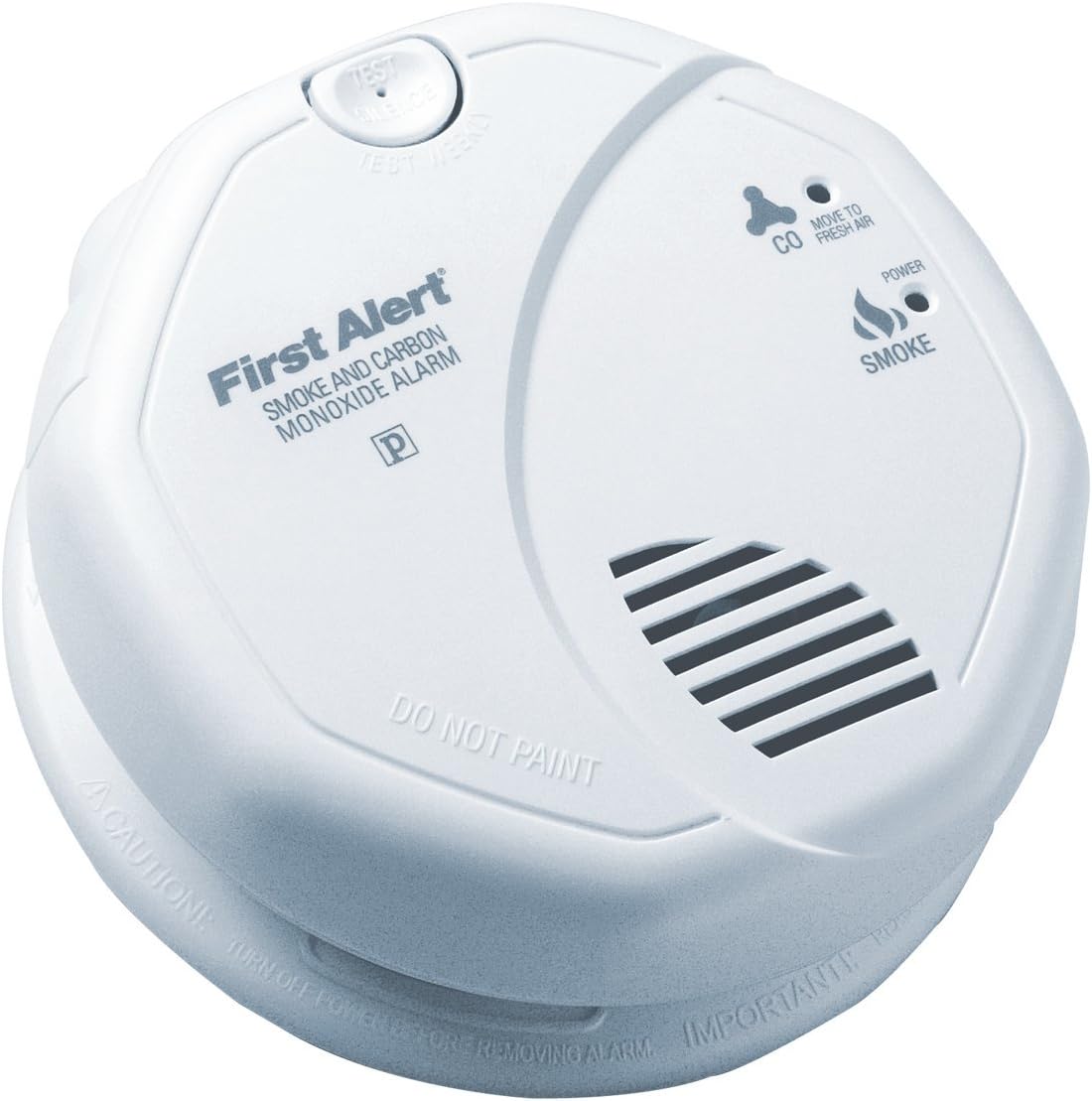
        • Visible damage to gas lines after digging, landscaping, or construction.

        If you notice an unusual patch of dead vegetation in your yard near a gas line, call your gas utility company immediately, even if you detect no smell.

        Electronic Detection: Gas Detectors and Alarms

        The most reliable way to detect a natural gas leak, especially small, slow leaks below your ability to smell, is with an electronic gas detector or alarm.

        Types of gas detectors for home use.

        Combustible Gas Detectors (Natural Gas Alarms)

        These devices are specifically designed to detect methane (CH₄) and other combustible gases. They use catalytic bead or semiconductor sensors and will trigger an audible alarm when gas concentrations rise above a safe threshold.

        Look for units that detect gas levels at or below 10–25% of the Lower Explosive Limit (LEL) — the concentration at which gas can ignite. Quality brands include Kidde, First Alert, and UEi Test Instruments.
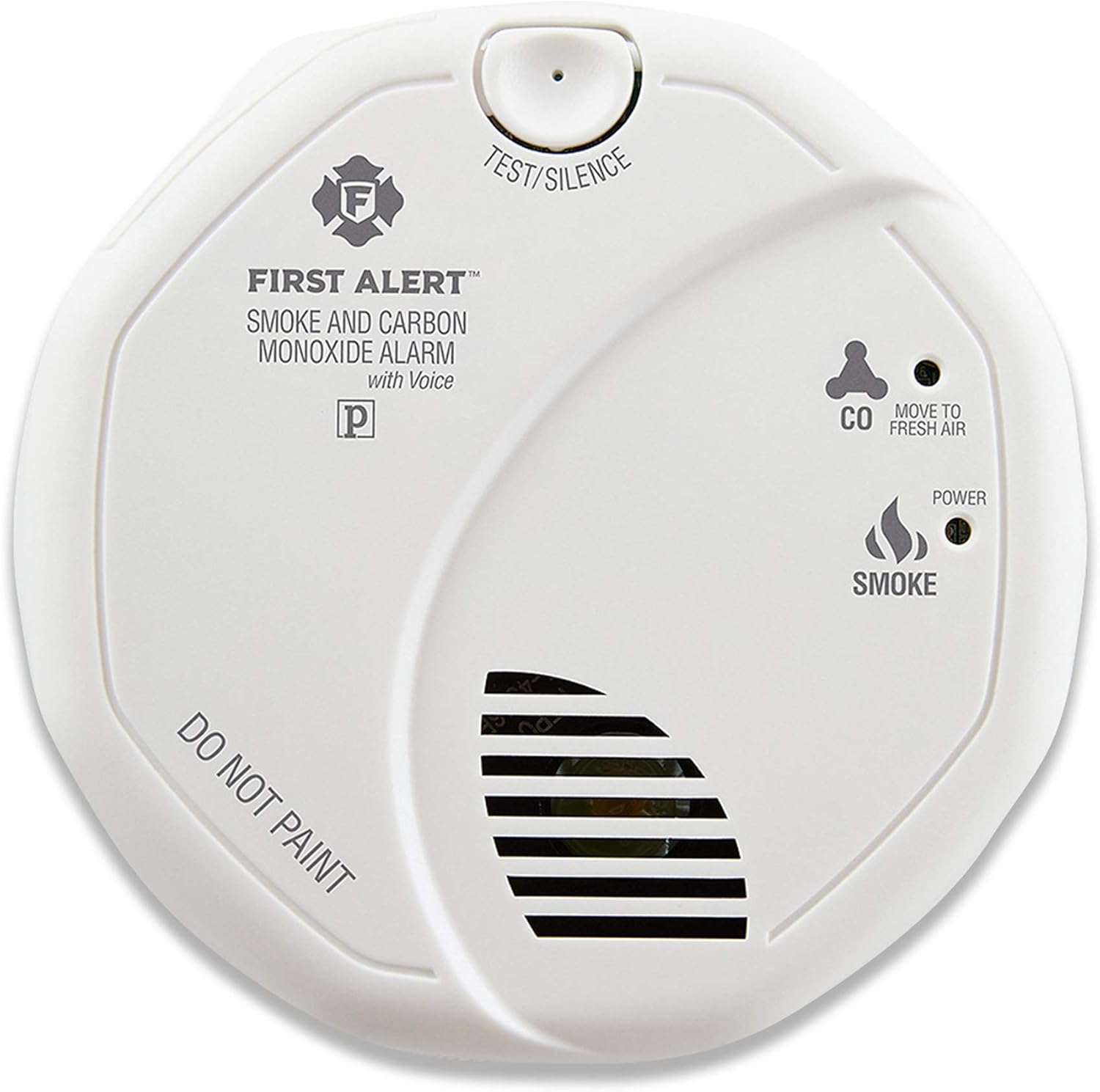
        Combination CO/Gas Detectors

        Many modern detectors combine natural gas detection with carbon monoxide (CO) detection. These are a smart investment since both hazards can occur from faulty gas appliances.

        Where to install natural gas detectors

        • Near gas appliances (stove, dryer, water heater, furnace)
        • In the basement or utility room
        • Within 12 inches of the ceiling (since methane is lighter than air and rises)
        • In any room with a gas fireplace

        Portable/handheld gas detectors

        For homeowners or safety professionals who want to actively probe for leaks, handheld combustible gas detectors allow you to sweep along pipes, fittings, and appliance connections to pinpoint a leak source. This is the same type of tool HVAC technicians and gas engineers use in the field.

        Physical Symptoms of Natural Gas Exposure

        If a slow leak goes undetected, occupants may begin experiencing physical symptoms from breathing displaced air with elevated methane concentrations (methane itself is non-toxic but displaces oxygen).

        More dangerous is if you’re exposed to combustion byproducts or a gas leak combined with carbon monoxide.

        Watch for these symptoms, especially if they improve when you leave the home:

        • Headache: often the first and most common symptom
        • Dizziness or lightheadedness
        • Nausea or vomiting
        • Fatigue or unusual tiredness
        • Difficulty breathing
        • Eye, throat, or nose irritation
        • Pale skin or a bluish tint around the lips (severe oxygen displacement)

        If multiple people in a household experience these symptoms simultaneously, treat it as a serious emergency. Exit the building immediately and call emergency services.

        The Bubble Test: A Simple DIY Check

        For minor concerns about a specific connection or fitting (not for emergencies), the bubble test is a time-tested method:

        1. Mix dish soap with water to create a soapy solution.
        2. Using a brush or cloth, apply the solution to the suspected joint or fitting.
        3. Watch for bubbles forming at the connection point.
        4. Bubbles = escaping gas = a confirmed leak at that location.

        Only perform this test when you have no strong smell of gas in the area, when there is no possibility of ignition nearby, and ideally after the gas supply has been confirmed off at the appliance valve.

        This method is commonly used by plumbers and gas technicians to verify the integrity of connections after repairs or new appliance installation.

        Natural Gas vs. Carbon Monoxide: Know the Difference

        These are two distinct hazards that are often confused:

        Natural Gas LeakCarbon Monoxide Leak
        SourceUnburned gas escaping from pipes or appliancesIncomplete combustion byproduct from gas appliances
        SmellRotten eggs / sulfur (due to added mercaptan)Odorless and colorless
        Detector neededCombustible gas / methane detectorCarbon monoxide detector
        Primary riskFire, explosion, asphyxiationPoisoning, death
        SymptomsHeadache, nausea, dizzinessHeadache, confusion, cherry-red skin, death

        Because CO is completely odorless, it is arguably more insidious than a natural gas leak. Every home with gas appliances should have both a natural gas detector and a carbon monoxide detector installed.

        What to Do If You Detect a Natural Gas Leak

        Speed and correct action are everything in a gas leak scenario. Follow these steps precisely.

        Step 1: Don’t Operate Any Electrical Switches or Devices

        Do not turn lights on or off, use your phone inside the building, trigger a doorbell, or operate any electrical device. A single spark from a light switch can ignite accumulated gas.

        Step 2: Extinguish All Flames Immediately

        If it is safe to do so without creating sparks, extinguish candles, fireplaces, or any open flames. Do not use a lighter or a match to see in a dark area.

        Step 3: Leave the Building Immediately

        Do not stop to gather belongings. Get everyone, including pets, out of the building as quickly as possible.

        Leave doors and windows open as you exit if it takes no extra time, but do not delay your exit to open them.

        Step 4: Do Not Use Your Phone Until You Are Outside

        Once you are at a safe distance from the building (at least 100 feet away), call your gas utility company’s emergency line or 911.

        Step 5: Do Not Re-Enter the Building

        Wait for emergency responders or a certified gas technician to inspect and clear the building. Do not re-enter under any circumstances until given the all-clear.

        Step 6: Shut Off the Gas Meter (Only If Trained and Safe to Do So)

        If you know how to shut off the gas at the main shutoff valve and can do so safely from outside without going back in, turn the valve perpendicular to the pipe to close it.

        Only do this if you have received instructions on how to do this properly. After shutting off the meter, only a licensed gas technician should turn it back on.

        How to Prevent Natural Gas Leaks

        Detection is critical, but prevention is even better. These habits significantly reduce your risk.

        • Schedule annual appliance inspections with a licensed HVAC or gas technician, covering your furnace, water heater, stove, and any other gas-powered equipment.
        • Never DIY gas line repairs; always hire a licensed plumber or gas engineer.
        • Call 811 before digging in your yard to locate underground utility lines.
        • Replace aging gas appliances before they fail. Most have a service life of 10–20 years.
        • Keep gas appliance areas well-ventilated and never block vents or flues.
        • Inspect flexible gas connectors (the corrugated metal hoses behind stoves and dryers) every few years. These can crack or corrode.
        • Install and test gas detectors annually and replace them according to manufacturer guidance (typically every 5–7 years).
        • Know where your gas shutoff valve is and ensure all adults in the household know how to use it.

        When to Call a Professional

        Even if the smell is faint and you’re unsure, it’s always better to call your gas utility company. Most utility companies will send a technician at no charge to inspect for leaks. Call a professional when:

        • You detect any smell of rotten eggs inside or near your home
        • Your gas detector alarm has triggered
        • You have unexplained physical symptoms consistent with gas exposure
        • You notice dead patches of vegetation over a buried gas line
        • After any significant seismic activity in your area
        • Any time a gas appliance has been moved, replaced, or repaired

        Remember: natural gas emergencies are never situations to “wait and see.” The cost of a false alarm is zero. The cost of ignoring a real leak can be your life.

        Frequently Asked Questions

        What does a natural gas leak smell like?

        Natural gas leaks smell like rotten eggs or sulfur. This odor comes from mercaptan, a chemical added by gas companies specifically so leaks can be detected by smell.

        Can you detect a natural gas leak without smell?

        Yes. Small leaks may not produce a detectable odor. Electronic combustible gas detectors can identify methane at very low concentrations.

        Visual signs (dead vegetation, bubbles in standing water) and sounds (hissing) can also indicate a leak without a detectable smell.

        How dangerous is a small natural gas leak?

        Even a small leak is dangerous. Natural gas is highly flammable, and concentrations between 5% and 15% in air can ignite and explode with a spark. Small leaks can also displace oxygen in enclosed spaces over time.

        Does natural gas rise or fall?

        Natural gas (methane) is lighter than air and rises. This is why gas detectors should be installed near the ceiling, and why leaks can accumulate in upper areas of a room or beneath a roof.

        What should I NOT do if I smell gas?

        Do not flip any light switches, use any electrical devices, use your phone inside the building, smoke or light anything, or use the elevator. Exit immediately and call for help from outside.

        How long does natural gas linger after a leak?

        Natural gas dissipates relatively quickly in ventilated spaces, but in enclosed areas it can persist for hours or longer. Always have a professional verify the space is safe before re-entering.

        Conclusion: How to detect a natural gas leak

        Knowing how to detect a natural gas leak could be the difference between a close call and a catastrophe.

        By training yourself to recognize the smell of rotten eggs, listening for hissing sounds near appliances, watching for visual environmental clues, and investing in a quality gas detector, you dramatically increase the safety margin in your home.

        Safety is not passive; it’s a set of habits and tools you build deliberately. Install your detectors, know your shutoff valve, schedule your annual inspections, and make sure every person in your household knows what to do if they ever suspect a gas leak.

        For more home and industrial safety guides, explore the rest of SafeguardSense.com.

        Disclaimer

        This article is for informational purposes only. In any suspected gas emergency, always contact your local gas utility or emergency services immediately. Do not attempt repairs yourself.