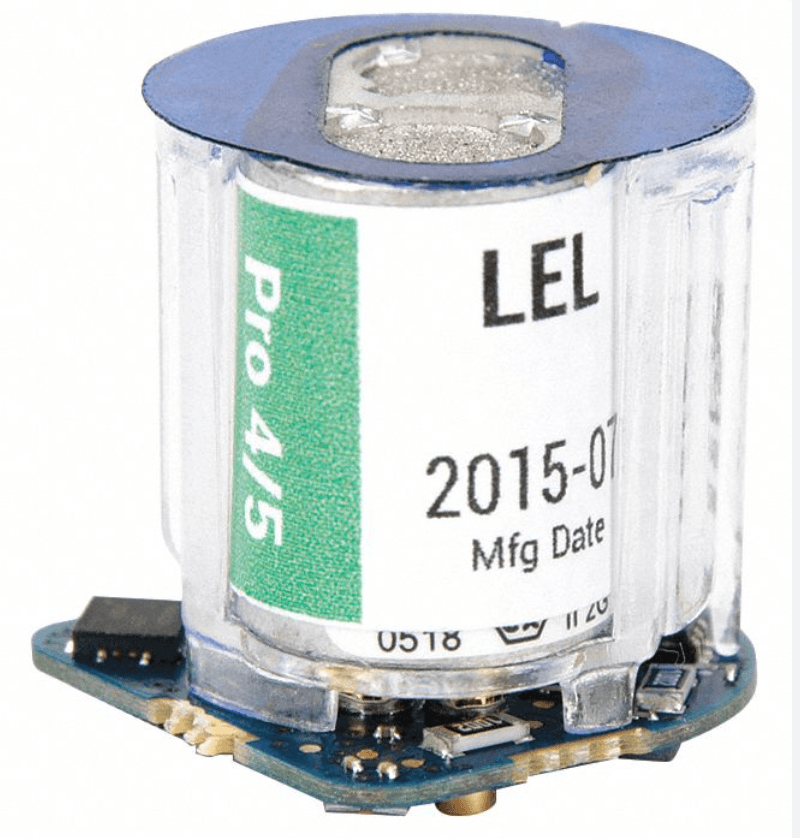
If you work with combustible gas detection long enough, you will eventually run into a detector that looks perfectly healthy, powers up normally, passes a visual inspection, and yet completely fails to respond to gas.
In my experience commissioning and servicing gas detection systems in industrial plants, the most common culprit behind this silent failure is catalytic gas sensor poisoning.
Catalytic gas sensors become poisoned when certain airborne compounds most notoriously silicones, sulfur compounds, lead, and phosphorus-based chemicals react with or coat the sensor’s catalytic bead, permanently destroying or blocking the active sites where combustible gas is supposed to oxidize.
The sensor gradually and invisibly loses sensitivity, which is exactly what makes poisoning one of the most dangerous failure modes in gas detection.
In this article, I’ll break down how catalytic (pellistor) sensors actually work, the specific chemicals that poison them, the difference between poisoning and inhibition, and the field practices that protect both your sensors and your people.
How Catalytic Bead (Pellistor) Sensors Work
To understand poisoning, you first need to understand what’s happening inside the sensor.
A catalytic bead sensor, often called a pellistor, contains two small ceramic beads, each wound around a platinum coil and wired into a Wheatstone bridge circuit:
- The active bead is coated with a catalyst (typically palladium or platinum-based) that allows combustible gas to oxidize on its surface at a much lower temperature than open-flame combustion.
- The reference (compensator) bead is chemically identical but has no catalyst or is treated to be inert. Its job is to compensate for changes in ambient temperature, humidity, and pressure.
Both beads are heated to roughly 400–500°C. When a combustible gas such as methane, propane, or hydrogen reaches the active bead, it oxidizes (“burns”) on the catalytic surface.
That combustion releases heat, raising the bead’s temperature and therefore the electrical resistance of its platinum coil.
The Wheatstone bridge measures the resistance imbalance between the active and reference beads, and that imbalance is converted into a gas concentration reading usually expressed as a percentage of the Lower Explosive Limit (%LEL).
The entire measurement principle depends on one thing: the catalyst surface must stay chemically active and physically accessible. Poisoning attacks exactly that.
What Sensor Poisoning Actually Is
Sensor poisoning is the permanent, irreversible loss of catalytic activity caused by chemical compounds that either coat the catalyst surface or react with the catalyst material itself.
The word “permanent” matters. A poisoned pellistor cannot be recovered by recalibration, cleaning, or bake-out. Once the active sites are destroyed or buried, the sensor element must be replaced.
This is distinct from inhibition, which we’ll cover below, a temporary loss of sensitivity that can partially or fully recover once the contaminant is removed.
Why Poisoning Is So Dangerous: The “Fail-Dangerous” Problem
Most electronic failures announce themselves. A broken coil, an open circuit, or a dead sensor typically triggers a fault alarm on the controller or instrument.
Poisoning does not.
A poisoned catalytic sensor keeps producing a stable, believable output, usually a clean 0% LEL because electrically, nothing is wrong.
The Wheatstone bridge is balanced, the beads are heated, and the circuit is happy. The sensor simply no longer responds to gas or responds at a fraction of its calibrated sensitivity.
This is what safety engineers call a fail-dangerous or fail-to-danger condition: the instrument fails in a way that hides the hazard instead of revealing it.
I’ve pulled sensors from the field that read a perfect zero in a functional test atmosphere of 50% LEL methane.
On the control room display, that detector had looked “fine” for months. That is the core reason regular bump testing is non-negotiable, and we’ll come back to it.
The Main Causes of Catalytic Gas Sensor Poisoning
Not all contaminants are equal. Here are the compound families that engineers in the field worry about most, roughly in order of how often they cause real-world problems.
Silicones: The #1 Poison in Industrial Environments
Silicone compounds are by far the most common and most aggressive pellistor poison, and they’re everywhere.
- Silicone sealants, caulks, and RTV adhesives
- Silicone-based lubricants, greases, and mold-release sprays
- Polishes and cleaning products (including many aerosol furniture and dashboard polishes)
- Hand creams and some personal care products
- Silicone hoses and gaskets that off-gas when heated
- HMDS (hexamethyldisiloxane) and other siloxanes used in industrial processes
The mechanism is brutal in its simplicity: silicone vapors reach the hot active bead and combust just like a fuel gas would, but the combustion product is silicon dioxide (SiO₂), essentially a microscopic layer of glass.
That glassy deposit physically encapsulates the catalytic sites. Even a few parts per million of siloxane vapor over a short exposure can measurably degrade sensitivity, and heavier exposures can kill a sensor outright.
This is why experienced technicians never use silicone sprays or sealants anywhere near a gas detector and why maintenance procedures around fixed detectors should explicitly prohibit them.
I’ve seen sensors poisoned simply because a contractor sealed a nearby junction box with RTV silicone on a hot day.
Lead Compounds
Tetraethyl lead, historically from leaded gasoline, deposits metallic lead and lead oxides on the catalyst, deactivating it.
This is less common today thanks to unleaded fuels, but it still appears around aviation gasoline (avgas), some racing fuels, and legacy contamination in older facilities.
Sulfur Compounds
Hydrogen sulfide (H₂S), sulfur dioxide (SO₂), mercaptans, and other sulfur species react with the catalyst metals to form sulfides, which reduce catalytic activity.
Depending on the concentration and duration, sulfur exposure behaves as a poison or a strong inhibitor.
This matters enormously in oil and gas, wastewater treatment, and pulp and paper, where H₂S is often present in the very atmosphere the LEL sensor is monitoring.
Many modern multi-gas instruments pair a catalytic LEL sensor with an H₂S sensor for exactly this reason; the H₂S channel also serves as a warning that your LEL sensor is being degraded.
Phosphorus Compounds
Phosphine (PH₃, common in fumigation and semiconductor processes), phosphate esters found in fire-resistant hydraulic fluids, and organophosphates all attack the catalyst. Hydraulic fluid mist in machinery spaces is an underappreciated source.
Heavy Metal Vapors
Vapors from lead, tin soldering, and certain metal-organic compounds can deposit on the bead and degrade the response. Nearby hot work and soldering operations are the typical sources.
Poisoning vs. Inhibition: Know the Difference
Technicians often lump these together, but the distinction changes how you respond in the field.
| Characteristic | Poisoning | Inhibition |
|---|---|---|
| Effect on sensitivity | Permanent loss | Temporary loss |
| Recovery | None, sensor replacement required | Partial or full recovery in clean air (hours to days) |
| Typical culprits | Silicones, lead, phosphorus compounds, sulfur (high dose) | Halogenated hydrocarbons (chlorinated solvents, refrigerants/freons), H₂S (low dose) |
| Mechanism | Catalyst destroyed or permanently coated | Compounds temporarily adsorb onto active sites |
| Field response | Replace the sensor and investigate the source. | Remove from exposure, re-bump after recovery, recalibrate |
| Detection | Bump test failure | Bump test failure, but repeat test later may pass |
One important caution on halogenated compounds: while their sensitivity effect is often reversible, their combustion on the bead can produce corrosive byproducts like hydrogen chloride (HCl), which attack the sensor internals and surrounding components. Repeated exposure to “merely inhibiting” compounds still shortens sensor life.
Warning Signs Your Catalytic Sensor May Be Poisoned
Because poisoning is invisible on the display, you have to look for indirect evidence:
- Failed or sluggish bump tests are the definitive indicator. The sensor responds low, slow, or not at all to a known test gas concentration.
- Progressively larger span adjustments at calibration: if you’re cranking the span up more every calibration cycle, the catalyst is losing activity.
- Slow response and recovery times (T90 drift): a healthy pellistor responds to test gas within seconds; a degraded one creeps.
- Sensor drift toward zero or below zero after exposure events.
- A known exposure event: a silicone sealing job, a solvent spill, an H₂S excursion near the detector. Treat any such event as a mandatory trigger for a bump test.
How to Prevent Catalytic Sensor Poisoning
You can’t always eliminate poisons from an industrial atmosphere, but you can dramatically reduce their impact:
Bump test before every use (portables) and on a defined schedule (fixed systems)
A bump test is the only reliable way to prove the sensor still responds to gas. This is the single most important defense against fatal poisoning, and it’s why bodies like ISEA and virtually every manufacturer recommend a functional test before each day’s use for portable instruments.
Control silicone products around detectors
Write it into your maintenance procedures: no silicone sprays, sealants, greases, or polishes near sensor heads. Train contractors, not just your own technicians; in my experience, they’re the more common source.
Use poison-resistant pellistors where appropriate
Several manufacturers offer poison-resistant catalytic elements with modified catalyst formulations and internal filtering that tolerate significantly higher silicone and H₂S doses. They cost more but far less than repeated sensor replacements.
Fit external filters when the application allows
Charcoal and specialized inline filters can strip sulfur and silicone species before they reach the bead.
Be aware that filters also slow response time and block some target gases (charcoal absorbs heavier hydrocarbons), so verify compatibility with your target gas.
Shorten calibration intervals in dirty environments
If the atmosphere contains known inhibitors or low-level poisons, calibrate more frequently and trend your span adjustments; the trend line tells you how fast the sensor is dying.
Consider infrared (NDIR) sensors for poison-heavy environments
IR combustible gas sensors measure light absorption rather than catalytic combustion, so they are immune to poisoning entirely.
They have their own limitations; most notably, standard NDIR sensors cannot detect hydrogen, but in silicone or sulfur-rich atmospheres, they are often the better engineering choice.
Catalytic vs. Infrared for Poison-Prone Applications
| Factor | Catalytic (Pellistor) | Infrared (NDIR) |
|---|---|---|
| Poisoning susceptibility | High (silicones, lead, sulfur, phosphorus) | Immune |
| Detects hydrogen | Yes | No (standard NDIR) |
| Requires oxygen to operate | Yes (needs O₂ for combustion) | No,works in inert atmospheres |
| Failure mode | Can fail dangerously (undetected) | Generally fail-safe (optical faults are self-revealing) |
| Initial cost | Lower | Higher |
| Typical lifespan | 2–5 years (less in dirty service) | 5–10+ years |
| Best fit | Clean atmospheres, hydrogen service, broad flammables | Poison-prone, low-oxygen, or high-uptime applications |
NDIR vs. Catalytic Bead Sensor: Which Combustible Gas Detection Technology Is Right for You?
What to Do If You Suspect a Poisoned Sensor
- Bump test immediately with certified calibration gas at a known concentration.
- If response is low or absent, attempt a full calibration. If the instrument can’t reach the span, or the required adjustment is at the limit, the sensor is done.
- Replace the sensor element; poisoning is irreversible; don’t waste time on repeated recalibrations.
- Investigate and document the exposure source. A poisoned sensor is evidence that a poisoning compound is present in your process area, and it will kill the replacement sensor too if you don’t address it.
- Review sibling detectors. Whatever poisoned one sensor likely reached others nearby.
Frequently Asked Questions
What is the most common cause of catalytic gas sensor poisoning?
Silicone compounds are the most common cause by a wide margin. Vapors from silicone sealants, lubricants, sprays, and polishes combust on the hot catalytic bead and deposit a glass-like layer of silicon dioxide that permanently blocks the catalyst’s active sites. Even brief, low-concentration exposures can measurably reduce sensitivity.
Can a poisoned catalytic sensor be repaired or recalibrated?
No. Poisoning permanently destroys or coats the catalytic sites on the active bead, and no amount of recalibration, cleaning, or clean-air purging restores them.
The only remedy is replacing the sensor element. If a sensor’s sensitivity partially recovers after time in clean air, it was inhibited rather than poisoned.
How do I know if my LEL sensor is poisoned?
The only reliable way is a bump test: expose the sensor to a certified concentration of test gas and confirm it responds accurately and quickly.
Warning signs include failed bump tests, increasingly large span adjustments at each calibration, slow response times, and any recent exposure to silicones, sulfur compounds, or leaded fuels near the detector.
Does hydrogen sulfide poison catalytic sensors?
Yes, H₂S and other sulfur compounds react with the catalyst metals to form sulfides that degrade activity.
At low doses, the effect may be partially reversible (inhibition), but sustained or high-concentration exposure causes permanent damage.
In H₂S-rich industries such as oil and gas and wastewater treatment, poison-resistant pellistors or infrared sensors are strongly recommended.
Are infrared gas sensors immune to poisoning?
Yes. NDIR (non-dispersive infrared) sensors detect gas by measuring infrared light absorption rather than catalytic combustion, so there is no catalyst to poison.
Their main limitations are higher upfront cost and the inability of standard NDIR sensors to detect hydrogen, which has no infrared absorption signature in the usable band.
How often should catalytic sensors be bump-tested?
For portable instruments, industry best practice (including ISEA guidance and most manufacturer recommendations) is a bump test before each day’s use.
For fixed systems, follow the manufacturer’s schedule and your site’s safety case and always bump test after any known exposure to potential poisons or inhibitors.
5 thoughts on “Why Do Catalytic Gas Sensors Become Poisoned?”