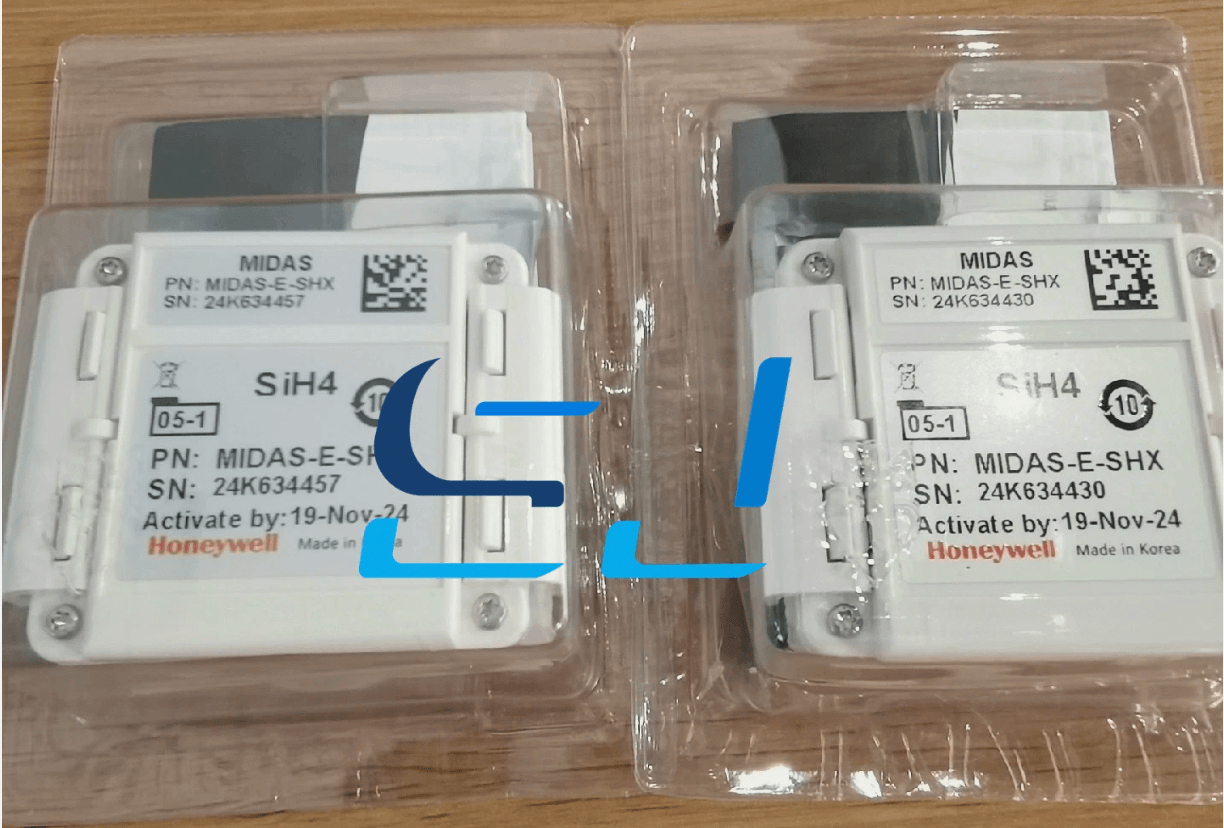
If you’ve spent any time around fixed or portable gas detection, it’s tempting to treat every gas as a variation on the same theme: pick a sensor, set an alarm point, calibrate on a schedule, move on. Silane (SiH4) breaks that pattern.
It’s one of the few gases in industrial use where the toxic-gas playbook is not just incomplete. It can actively get someone hurt if it’s the only playbook you’re using.
I’ve worked with gas detection systems across semiconductor, solar-panel manufacturing, and specialty chemical environments, and silane consistently trips up teams that are otherwise very competent at industrial safety.
This article breaks down exactly why silane behaves differently, where standard toxic-gas monitoring falls short, and what a correct detection strategy actually looks like.
Silane Isn’t Just Toxic: It’s Pyrophoric
The core issue is that silane carries two independent hazard profiles at once, and most detection programs are only built for one of them.
Toxicity
Silane has an OSHA PEL of 5 ppm as an 8-hour TWA. At elevated concentrations, it’s an irritant and asphyxiant, and it can cause serious respiratory harm.
On paper, this looks like a fairly ordinary toxic-gas problem, similar in scale to something like arsine or phosphine.
Pyrophoricity
This is where silane leaves the ordinary toxic-gas category entirely. Silane spontaneously ignites on contact with air at room temperature, with no ignition source required.
No spark, no hot surface, no static discharge needed. It just burns. This is fundamentally different from flammable gases like methane or propane, which need an ignition source and enough oxygen within their flammable range before they’ll combust.
Because of that pyrophoric behavior, a silane leak doesn’t sit around waiting to accumulate to its Lower Flammable Limit (LFL) of roughly 1.37% before becoming dangerous.
It’s dangerous the moment it contacts air, at concentrations far below LFL. That single fact reshapes almost every design decision in a silane detection system.
Where Toxic-Gas Monitoring Logic Falls Apart
A conventional toxic-gas monitoring program is built around a specific hazard model: gas accumulates, concentration rises past a PEL-based threshold, and the alarm gives people time to evacuate or don PPE before harm occurs. That model assumes you have a meaningful buffer between “detectable” and “dangerous.”
Silane collapses that buffer in three specific ways.
Alarm Setpoints Can’t Be Based on Toxicity Alone
If you set silane alarms purely against the 5 ppm PEL, you’re treating it like a chronic-exposure hazard.
But the acute hazard of ignition happens at concentrations that have nothing to do with the PEL.
A well-designed silane system typically uses a low-level alarm well below PEL for toxic exposure control, plus a separate, more aggressive response tied to leak detection and shutdown logic, because by the time you’re thinking about LFL percentages, silane has often already ignited.
Response Time Requirements Are Tighter
With most toxic gases, a sensor response time of 30-60 seconds to reach a stable reading is workable, because the hazard develops over minutes.
With silane, the entire hazard sequence, leak, ignition, and fire, can happen in seconds. Detection systems built for silane service are typically specified for faster response, tighter sensor placement near known leak points (valve manifolds, gas cabinets, purge panels), and direct interlocks to automatic shutoff valves rather than relying on manual response to an alarm.
Sensor Technology Choice Changes
This is the part that catches people off guard. The two most common toxic-gas sensor technologies, electrochemical and standard catalytic bead, both have real limitations with silane.
- Electrochemical sensors can work for silane, but they’re often not fast enough or sensitive enough at the low-ppm range needed to catch a leak before it becomes an ignition event, and cross-sensitivity to other process gases in semiconductor fabs (like phosphine or diborane) can produce false readings.
- Standard catalytic bead sensors, which are the default for flammable-gas LFL monitoring, are poorly suited to silane specifically because silane’s spontaneous combustion at the sensor surface can damage the bead over time, and catalytic sensors aren’t calibrated to catch the sub-LFL concentrations where silane is already hazardous.
Most well-designed silane systems instead lean on specialty electrochemical sensors tuned specifically for silane or infrared/point-IR technology in some installations, paired with conservative placement and redundancy, not because the underlying detection principle changes, but because the acceptable margin for error shrinks dramatically.
Comparison: Silane vs. a Typical Toxic Gas (H₂S)
| Factor | Hydrogen Sulfide (H₂S) | Silane (SiH₄) |
|---|---|---|
| Primary hazard | Toxicity | Toxicity + pyrophoric ignition |
| Reacts with air at room temp | No | Yes, spontaneously |
| Alarm basis | PEL / STEL thresholds | Low-ppm toxicity alarm + leak/shutdown logic |
| Acceptable response time | Tens of seconds | Seconds |
| Consequence of undetected leak | Chronic/acute exposure | Fire, potential explosion |
| Typical sensor technology | Electrochemical | Silane-specific electrochemical or IR tighter placement |
| Redundancy expectations | Standard | Higher, often paired with automatic shutdown |
What a Sound Silane Detection Strategy Actually Looks Like
In practice, the sites that handle silane well share a few common traits.
They treat it as two hazards, not one
Toxic exposure control and pyrophoric leak/fire prevention get separate alarm logic, not a single blended setpoint.
Sensors sit close to the source
Gas cabinets, valve manifold boxes, and purge points get dedicated point detection rather than relying on area monitors alone.
Detection ties directly into automatic shutoff
Given how fast silane can ignite, waiting on a human response to a control room alarm isn’t fast enough for the highest-risk points.
Excess flow valves and automatic shutoffs are common companions to the detection system itself.
Sensor selection accounts for cross-sensitivity
In fabs running multiple specialty gases, cross-sensitivity between silane sensors and other process gases gets evaluated explicitly, not assumed away.
Calibration schedules reflect the consequence of failure, not just manufacturer defaults
Because a false negative on silane has a much worse outcome than a false negative on most toxic gases, bump testing and calibration intervals tend to run tighter than the standard 6-month/annual cycle common elsewhere.
FAQ
Is silane more dangerous than other toxic gases?
It carries a real toxic exposure hazard, but what sets it apart is the added pyrophoric risk. It ignites spontaneously in air, which most toxic gases don’t do. That combination is what demands a different detection approach.
Can I use a standard flammable-gas (LFL) sensor for silane?
Standard catalytic LFL sensors aren’t well suited to silane. They’re built to catch percentage-of-LFL concentrations, while silane becomes hazardous through ignition well below that threshold, and the combustion event itself can damage a catalytic bead over time.
What alarm setpoint should silane systems use?
This depends on the facility’s process safety documentation and applicable codes, but the key principle is that toxicity-based PEL alarms and pyrophoric leak-detection alarms are typically treated as separate layers, not one combined number.
Does silane detection require automatic shutdown, or is an audible alarm enough?
Given how quickly silane can ignite after a leak, many facilities pair detection with automatic excess-flow valves or shutoff systems at the highest-risk points, rather than relying solely on personnel response to an alarm.
Where should silane sensors be placed?
Close to known leak sources such as gas cabinets, valve manifold boxes, and purge panels rather than only at the room or area level, since the hazard develops too fast for area-level detection alone to catch it in time.
This article reflects general industry practice for silane detection and is not a substitute for a site-specific process hazard analysis or the requirements of your local fire and safety code. Always coordinate detection system design with a qualified process safety engineer.