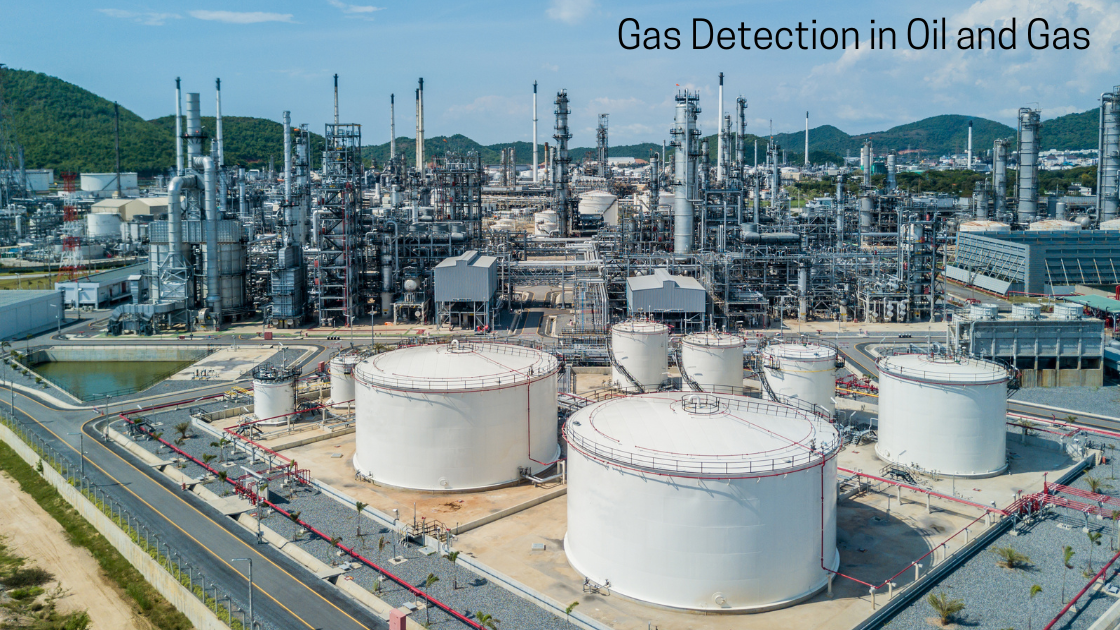
In oil and gas, the atmosphere is part of your work environment, and it can change in seconds. A flange weeps, a tank hatch opens, a pig launcher is vented, and a safe area becomes a dangerous one.
You cannot see most of the gases involved, and some of them (like hydrogen sulfide) will switch off your sense of smell exactly when you need it most.
This guide covers what every technician needs to know about gas detection in upstream, midstream and downstream operations: the gases that matter, the sensor technologies behind your detector, how to use portable and fixed systems correctly, and the mistakes that cause most real-world failures.
Why Gas Detection Is Non-Negotiable in Oil and Gas
Hydrocarbons are flammable, many process streams contain toxic gases, and confined or poorly ventilated spaces can lose oxygen without any warning. A gas detector is often the only thing between a routine task and a serious incident.
Three hazards drive almost every gas detection requirement on a site
Flammable gas and vapor
Methane, propane, butane and vapors from crude, condensate and solvents can form explosive mixtures with air.
Toxic gas
Hydrogen sulfide (H2S), carbon monoxide (CO), sulfur dioxide (SO2) and benzene can cause harm at very low concentrations.
Oxygen deficiency or enrichment
Nitrogen purging, rust, and inerting displace oxygen, while leaks of oxygen or oxidizers can enrich it and make materials burn far more aggressively.
A technician who understands these three categories, and which sensor covers which, already has the foundation for safe work.
The Gases Every Oil and Gas Technician Should Know
Hydrogen sulfide (H2S)
H2S is the signature toxic gas of the industry, found in sour crude, sour gas, produced water, sludge, and anywhere sulfur compounds are processed.
It smells like rotten eggs at very low concentrations, but at higher levels it deadens the sense of smell (olfactory fatigue), so you cannot rely on your nose. It is heavier than air, so it collects in low areas, pits, trenches and tank bottoms.
Typical figures to know: the OSHA ceiling limit is 20 ppm, NIOSH recommends 10 ppm as a ceiling, and 100 ppm is considered Immediately Dangerous to Life or Health (IDLH). Many sites set alarms at 10 ppm (low) and 15 ppm (high), but always follow your site procedure and local regulation.
Methane and other combustible gases
Methane is the main component of natural gas. Combustible gas is measured as a percentage of the Lower Explosive Limit (%LEL), which is the minimum concentration that can ignite.
For methane, 100% LEL equals about 5% by volume in air. Common alarm set points are 10% LEL (low) and 20% LEL (high), though sites differ.
Methane is lighter than air and rises, while propane, butane and many hydrocarbon vapors are heavier and settle low. That difference matters for detector placement and for where you sample.
Oxygen (O2)
Normal air contains 20.9% oxygen. A common low alarm is 19.5%, and a common high alarm is 23.5%.
Oxygen deficiency is silent and can incapacitate a person very quickly, which is why oxygen is always the first reading you check when entering any enclosed space.
Carbon monoxide (CO), sulfur dioxide (SO2) and VOCs
CO comes from incomplete combustion (engines, heaters, flares, compressors). SO2 appears around flaring and sulfur recovery.
Volatile organic compounds, including benzene, require dedicated sensors such as photoionization detectors (PID) because ordinary combustible sensors are not sensitive enough at the low concentrations that matter for health.
Quick reference table
| Gas | Typical hazard | Behavior in air | Common sensor type |
|---|---|---|---|
| Methane (CH4) | Flammable | Lighter than air | Infrared (NDIR) or catalytic bead |
| Propane / butane | Flammable | Heavier than air | Infrared or catalytic bead |
| Hydrogen sulfide (H2S) | Toxic | Heavier than air | Electrochemical |
| Carbon monoxide (CO) | Toxic | Close to air density | Electrochemical |
| Sulfur dioxide (SO2) | Toxic | Heavier than air | Electrochemical |
| Oxygen (O2) | Deficiency or enrichment | Reference gas | Electrochemical |
| VOCs (e.g., benzene) | Toxic, some flammable | Varies | Photoionization (PID) |
Alarm values vary by company, jurisdiction and application. Treat the numbers in this article as common examples, not as your site’s set points.
How Gas Detector Sensors Work
Every technician should know what is inside the instrument, because the sensor technology decides what the detector can and cannot do.
Electrochemical sensors
Used for toxic gases and oxygen. The target gas reacts at an electrode and produces a current proportional to concentration.
They are accurate at low ppm levels but have a limited life (often two to three years, depending on gas and conditions), and they can be affected by temperature, humidity and cross-interference from other gases.
Catalytic bead (pellistor) sensors
Used for combustible gas. A heated bead oxidizes the gas, and the resulting temperature change is measured.
They are proven and low cost, but they need oxygen to work, can be poisoned by silicones, lead compounds and sulfur compounds, and will not tell you if they have silently lost sensitivity unless you test them.
Infrared (NDIR) sensors
Also used for combustible gas, and for CO2. They measure how much infrared light the gas absorbs.
They are not poisoned by silicones or sulfur, work without oxygen (useful in inerted atmospheres), and fail in a more self-revealing way. Their trade-offs are higher cost and sensitivity to heavy condensation or dirty optics.
Photoionization detectors (PID)
Used for VOCs at ppm and ppb levels. A UV lamp ionizes the gas and the resulting current is measured.
They detect a broad range of compounds but are not selective, so you need to know your correction factors and keep the lamp clean.
Open-path and ultrasonic technologies
Open-path infrared detectors watch a beam across a wide area and suit pipelines, perimeters and large process areas.
Ultrasonic gas leak detectors listen for the sound of a pressurized leak rather than measuring gas concentration, and they work well in windy outdoor areas where gas disperses before reaching a point detector.
Portable vs Fixed Gas Detection
Oil and gas sites normally use both, and they do different jobs.
| Portable (personal) detectors | Fixed detectors | |
|---|---|---|
| Protects | The individual worker | A process area or asset |
| Typical use | Confined space entry, hot work, tank gauging, daily walkdowns | Wellheads, compressors, separators, pump areas, turbines, control rooms |
| Strength | Goes wherever the worker goes | Continuous monitoring and connection to alarms and shutdown logic |
| Weakness | Depends on correct use and daily checks | Only detects gas that reaches it |
| Maintenance focus | Daily bump test, scheduled calibration, battery and sensor health | Scheduled calibration, sensor replacement, cleaning, wiring and signal checks |
If you are deciding between them for a given task, our article on fixed vs portable gas detectors goes deeper.
In practice, the answer is rarely one or the other. Fixed detectors protect the plant, and portable detectors protect the person.
Using a Portable Gas Detector Correctly
Most incidents involving gas detectors are not caused by the instrument itself. They come from how it was used. These habits prevent the majority of problems.
Inspect before every shift
Check the housing, sensor inlets, filters, battery, and make sure the correct sensors are installed for the hazards on the job. A dirty or blocked inlet filter can make a detector read low or respond slowly.
Bump test before each day’s use
A bump test exposes the detector to a known gas concentration and confirms that the sensors respond and the alarms activate.
Industry guidance (including from the International Safety Equipment Association) is to bump test before each day’s use. If the detector fails, calibrate it or take it out of service.
Calibrate on schedule
Calibration adjusts the detector so its readings match a known gas concentration. Follow the manufacturer’s interval and your company policy, and always use in-date calibration gas with the right mix and a proper regulator.
Zero in clean air
Turn the detector on and zero it in fresh air, away from the work area. Zeroing in contaminated air will make the detector read low when it matters.
Wear it in the breathing zone
Clip it near your collar or chest, where you actually breathe, and never cover it with a coverall or bag.
Never ignore or silence an alarm
Treat every alarm as real until you have left the area and confirmed otherwise. Do not reset it and carry on.
Gas Testing for Confined Space Entry
Confined spaces such as tanks, vessels, pits and sumps are among the highest-risk locations on any oil and gas facility.
Under OSHA’s permit-required confined space rule (29 CFR 1910.146) and equivalent rules elsewhere, the atmosphere must be tested before entry and monitored while workers are inside.
A practical sequence that most procedures follow:
Test from outside
Sample through the opening, using a pump and sampling hose or probe, before anyone enters.
Test in order: oxygen, then combustible gas, then toxics
Oxygen first, because the combustible reading from a catalytic sensor is unreliable in an oxygen-deficient atmosphere.
Sample at multiple levels
Test the top, middle and bottom of the space, because gases stratify by density. H2S and heavy hydrocarbons settle low, methane rises.
Allow time for the sample to travel
Hose and probe lengths add delay, so wait for the reading to stabilize before recording it. A long hose can mean a delay of tens of seconds.
Monitor continuously during entry
Conditions can change when sludge is disturbed, valves leak, or ventilation fails. Test results from an hour ago are not protection now.
Record the results, your instrument ID and calibration status on the entry permit, as your procedure requires.
Fixed Gas Detection Systems: Placement, Alarms and Safety Functions
Fixed systems turn gas detection into automatic protection. A detector sends a signal (commonly 4-20 mA, often with HART or Modbus communication) to a controller or fire and gas (F&G) system, which triggers alarms, ventilation, and, where designed to, shutdown actions.
What technicians should know
Placement follows gas behavior and airflow
Detectors for heavy gases are placed low, for light gases high, and near likely leak sources such as seals, flanges, valves and compressor packing. Wind direction, ventilation and obstructions all change where gas actually travels.
Alarm levels trigger different actions
A low alarm typically warns operators, and a high alarm may initiate ventilation, isolation or shutdown. Know what yours do on your site.
Detectors can be part of a Safety Instrumented Function
Where they are, they are designed to a Safety Integrity Level (SIL) under IEC 61508 and IEC 61511, and testing intervals and bypass rules become stricter.
Hazardous area certification matters
Detectors in classified areas must be certified for the zone or division where they are installed (for example under ATEX, IECEx or North American Class and Division schemes).
Never bypass or inhibit without authorization
Inhibits should be controlled by a permit, time-limited and visible to operators.
Common Mistakes That Put Technicians at Risk
- Skipping the bump test because the detector “worked yesterday.”
- Trusting your nose for H2S instead of the instrument.
- Using the wrong detector for the job, such as a combustible-only meter in a sour gas area.
- Ignoring sensor poisoning and inhibition. A catalytic sensor exposed to silicones or high H2S can lose sensitivity and still show a normal-looking zero.
- Using expired or wrong calibration gas. The result is a detector that is “calibrated” to the wrong value.
- Sampling only at the top of a space, where heavy gases are not.
- Treating calibration as paperwork. Calibration records are only valuable if the work behind them was done correctly.
- Overlooking environmental effects. Extreme heat, cold, humidity, condensation and pressure changes can all affect readings.
- Normalizing nuisance alarms. Repeated false alarms teach people to ignore the real one. Find the cause and fix it.
Maintenance, Calibration and Sensor Life
Gas detectors are safety instruments, and they degrade with time and exposure. A good maintenance routine includes:
- Daily bump tests for portable detectors.
- Calibration at the intervals set by the manufacturer and your safety procedures, plus after any failed bump test, sensor replacement or exposure to a high gas concentration.
- Tracking sensor life, because electrochemical sensors dry out and lose sensitivity, and catalytic sensors can slowly poison.
- Keeping detailed records of tests, calibration, repairs and alarm events.
- Replacing a sensor when it can no longer be calibrated or its response becomes slow or unstable, not when it fails completely.
Your Pre-Job Gas Detection Checklist
Before you start work in a potentially hazardous atmosphere, confirm:
- ☐ I know the hazards: flammable, toxic, and oxygen risk for this job.
- ☐ My detector has the right sensors for those hazards.
- ☐ It passed a bump test today, and its calibration is in date.
- ☐ I zeroed it in clean air.
- ☐ I know the alarm set points and what I must do when they sound.
- ☐ I tested the atmosphere in the right order and at multiple levels.
- ☐ I know the escape route and who to notify.
- ☐ I am prepared to stop work and leave if conditions change.
Frequently Asked Questions
What gases should be monitored in oil and gas operations?
At minimum, oxygen, combustible gases (as %LEL) and the toxic gases specific to your process, most commonly hydrogen sulfide and carbon monoxide.
Sites may also monitor SO2, VOCs such as benzene, and CO2, depending on the hazards identified in the risk assessment.
How often should a portable gas detector be calibrated?
Follow the manufacturer’s recommendation and your company procedure. Calibration is also needed whenever the detector fails a bump test.
Many organizations calibrate at fixed intervals (for example every few months), but the right interval depends on the instrument, sensors and conditions.
What is the difference between a bump test and a calibration?
A bump test verifies that the sensors respond and the alarms work when exposed to gas. A calibration adjusts the instrument’s readings so they match a known gas concentration. A bump test checks, and a calibration corrects.
Why do you check oxygen first when testing a confined space?
Because low oxygen is immediately life-threatening, and because catalytic combustible sensors need oxygen to give reliable readings. Testing oxygen first tells you whether the other readings can be trusted.
Can I rely on smell to detect H2S?
No. H2S has a distinctive rotten egg odor at low levels, but at higher concentrations it causes olfactory fatigue and you can stop smelling it, even as the concentration becomes more dangerous. Only a working detector can tell you the real level.
What does %LEL mean on a gas detector?
It stands for percent of the Lower Explosive Limit. 100% LEL is the lowest concentration of a gas in air that can ignite, so 10% LEL means one tenth of that level. For methane, 100% LEL is roughly 5% by volume.
Key Takeaways
- Know your three hazard types: flammable, toxic, and oxygen.
- Match the sensor technology to the gas and the environment.
- Bump test every day, calibrate on schedule, and zero in clean air.
- Test confined spaces in the right order and at multiple heights.
- Never trust your nose, never silence an alarm, and never bypass a fixed system without authorization.
Gas detection only works when the technician understands the instrument and respects what it is telling them.
Build these habits into every job, and the detector does what it was designed to do: give you the information to go home safe.
Disclaimer
This article is educational and general in nature. Always follow your employer’s procedures, the manufacturer’s instructions, and the regulations that apply to your site and jurisdiction.