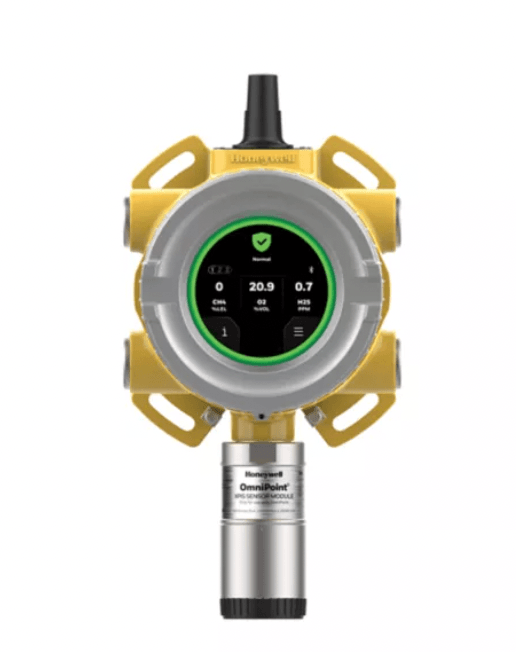
Choosing the right LEL gas detector isn’t a decision you can afford to get wrong. In environments where flammable gases or vapors are present, such as oil refineries, chemical plants, wastewater facilities, mines, or any confined space, a reliable combustible gas detector is the difference between a safe workday and a catastrophic explosion.
But with dozens of models on the market, each boasting different sensor technologies, detection ranges, certifications, and form factors, knowing where to start can feel overwhelming.
This guide walks you through everything you need to know to choose the right LEL gas detector for your specific application so you can protect your team with confidence.
What Is an LEL Gas Detector?
LEL stands for Lower Explosive Limit, the minimum concentration of a flammable gas or vapor in air required for ignition.
Below the LEL, there isn’t enough fuel to sustain combustion. Above the UEL (Upper Explosive Limit), there’s too little oxygen. The dangerous zone is everything in between.
An LEL gas detector continuously measures the concentration of combustible gases in the air and alerts workers when levels approach that dangerous threshold. Most detectors display readings as a percentage of LEL (e.g., 10% LEL, 50% LEL) rather than in raw parts per million (ppm).
Common LEL thresholds for workplace alarm settings:
- 10% LEL: Low alarm (early warning)
- 25% LEL: High alarm (evacuate area)
Why it matters
OSHA and most safety standards require action well before a gas reaches 100% LEL. Detecting gas early gives workers time to evacuate and prevents ignition.
5 Key Factors to Consider When Choosing an LEL Gas Detector
Identify the Target Gas (or Gases)
The single most important question: What gas or vapor are you trying to detect?
Different gases have vastly different LEL values, molecular weights, and chemical properties. A detector calibrated for methane may not accurately measure propane or hydrogen at the same concentration. Common gases requiring LEL monitoring include:
- Methane (CH₄): natural gas, landfills, wastewater.
- Propane / Butane: LPG storage, construction.
- Hydrogen (H₂): battery rooms, chemical processing.
- Gasoline / Petroleum vapors: fuel storage, automotive.
- Acetylene: welding operations.
- Ammonia: refrigeration, agriculture.
Key takeaway
Always choose a detector that is specifically calibrated, or at a minimum, cross-referenced, for your target gas. If you’re monitoring multiple gases, consider a multi-gas detector.
Choose the Right Sensor Technology
The sensor type is the heart of any LEL gas detector. Each technology has strengths and limitations:
Catalytic Bead (Pellistor) Sensors
The most widely used sensor technology for LEL detection. A heated wire element (bead) oxidizes combustible gas, creating a measurable change in electrical resistance.
Pros
- Proven, reliable technology with decades of field use.
- Works for a wide range of combustible gases.
- Relatively low cost.
Cons
- Can be “poisoned” by silicones, lead compounds, and halogenated hydrocarbons.
- Requires oxygen to function (won’t detect in oxygen-deficient environments).
- Gradual sensor drift requires regular calibration.
Best for
General industrial use, oil and gas, confined space entry.
Infrared (IR) Sensors
Uses infrared light absorption to detect specific gas molecules. Because hydrocarbons absorb IR light at characteristic wavelengths, the detector can identify and quantify them without a catalytic reaction.
Pros
- Immune to sensor poisoning.
- Functions in oxygen-deficient or oxygen-enriched environments.
- Longer sensor life (often 5+ years).
- Lower long-term maintenance costs.
Cons
- Higher upfront cost.
- Does not detect hydrogen (H₂ doesn’t absorb IR light).
- Less effective for some polar gases.
Best for
Environments with silicone compounds, high-value assets where sensor poisoning is a risk, offshore and subsea applications
Photoionization Detection (PID) Sensors
Uses UV light to ionize gas molecules. While primarily used for VOC (volatile organic compound) detection, some PID sensors measure the LEL of certain gases.
Pros
- Extremely sensitive (can detect sub-ppm concentrations).
- Good for aromatic hydrocarbons and many VOCs.
Cons
- Not suitable for methane or other simple alkanes.
- The lamp requires periodic replacement.
- Affected by humidity.
Best for
Petrochemical sites, environmental remediation, hazmat response
Sensor Comparison Table
| Sensor Type | Best For | Oxygen Required | Poison-Resistant | Detects H₂ |
|---|---|---|---|---|
| Catalytic Bead | General combustibles | Yes | No | Yes |
| Infrared (IR) | Hydrocarbons, harsh environments | No | Yes | No |
| PID | VOCs, aromatics | No | Yes | No |
Decide Between Portable and Fixed Gas Detectors
Portable LEL Gas Detectors
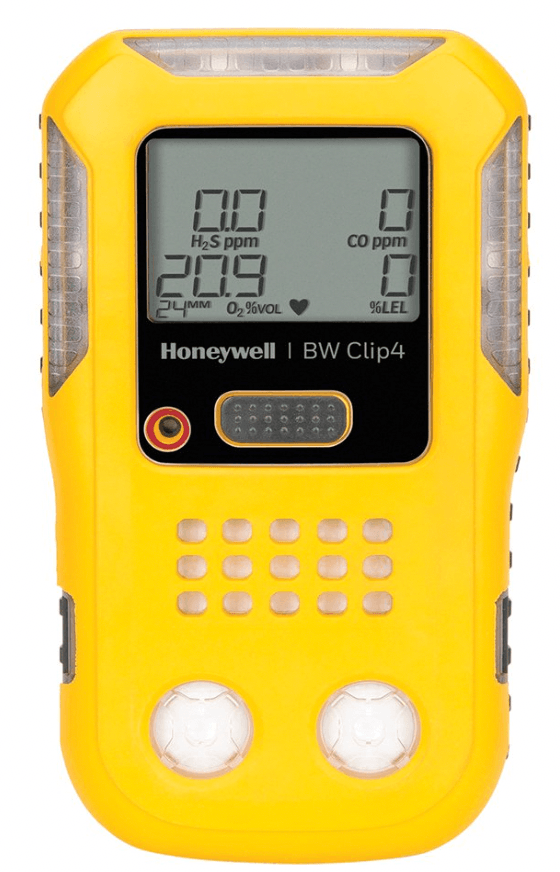
Portable, wearable, or handheld devices designed for workers who move through different areas. They clip to a shirt collar or belt and sound an alarm when gas is detected.
When to choose a portable
- Confined space entry (OSHA 1910.146 compliance).
- Maintenance workers who move between areas.
- Emergency response and hazmat teams.
- Bump testing before entering unknown environments.
Types of portable detectors
- Single-gas detectors: Compact, low-cost, dedicated to one gas
- Multi-gas detectors: Monitor LEL plus O₂, CO, H₂S simultaneously (ideal for confined space work).
Fixed LEL Gas Detection Systems
Permanently installed sensors wired to a central control panel that monitors multiple zones continuously 24/7, even when no workers are present.
When to choose fixed.
- Unmanned equipment rooms, pump stations, compressor buildings.
- Facilities requiring continuous monitoring per code (IFC, NFPA 72).
- Areas with high gas-release risk (valve manifolds, storage tanks).
- Integration with facility alarm and shutdown systems.
Key advantage of fixed systems
They can trigger automated responses that shut down ventilation, activate suppression systems, or lock out ignition sources faster than any human response.
Verify Certifications and Ratings
A gas detector used in a hazardous environment must be intrinsically safe, meaning it cannot itself become an ignition source. Look for these certifications:
Intrinsic Safety / Explosion-Proof Ratings
- UL/cUL Listed (United States/Canada): Underwriters Laboratories certification.
- ATEX (Europe): Atmosphères Explosibles certification.
- IECEx (International): Globally recognized intrinsic safety standard.
- FM Approved: Factory Mutual certification is common in industrial settings.
IP (Ingress Protection) Rating
The IP rating tells you how well the detector is protected from dust and water.
- IP54: Dust protected, splash resistant (light industrial).
- IP65: Dust-tight, low-pressure water jets (outdoor use).
- IP67: Submersion up to 1 meter (harsh environments).
- IP68: Continuous submersion (extreme conditions).
Gas Group Classifications
Different gases require different levels of containment. Ensure the detector is rated for your gas group.
- Group IIA: Propane, acetylene reference.
- Group IIB: Ethylene.
- Group IIC: Hydrogen (the most demanding requires the highest protection).
Pro tip
Always check that the detector’s certification matches your facility’s hazardous area classification (Class I, Division 1 or 2 in the U.S.; Zone 0, 1, or 2 under IEC standards).
Evaluate Maintenance, Calibration, and Total Cost of Ownership
The purchase price is just the beginning. The real cost of a gas detector includes calibration gas, replacement sensors, training, and downtime.
Bump Testing
A bump test (functional test) exposes the sensor to a known concentration of gas to verify it responds correctly.
Most safety standards, including OSHA, ANSI/ISA, and manufacturer recommendations, require bump testing before each use for portable detectors.
Calibration
Full calibration adjusts the detector’s output to match a certified reference gas. Calibration frequency depends on.
- Manufacturer recommendation (typically every 3–6 months).
- Regulatory requirements.
- Environmental conditions (harsh environments need more frequent calibration).
Sensor Lifespan
| Sensor Type | Typical Lifespan |
|---|---|
| Catalytic Bead | 2–3 years (standard conditions) |
| Infrared | 5–10 years |
| Electrochemical | 1–3 years |
Questions to ask before you buy
- How easy is it to replace the sensor in the field?
- Is calibration gas available locally?
- Does the manufacturer offer a calibration docking station?
- What is the warranty period?
- Are data logging and PC connectivity available for compliance records?
Additional Features to Look For
Beyond the core specifications, these features can significantly improve usability and safety:
- Datalogging: Stores gas readings over time for compliance reporting and incident investigation.
- Man-down / Panic alarm: Alerts if the worker becomes incapacitated (accelerometer-based).
- Wireless connectivity — Allows real-time monitoring from a control room (Bluetooth, Wi-Fi, or mesh radio)
- TWA/STEL tracking — Calculates time-weighted average and short-term exposure limits automatically
- Audible, visual, and vibrating alarms: Critical in loud environments where audible alarms alone may not be heard.
- Large, backlit display: Essential for low-light conditions.
- Long battery life: Full shift capability (8–12+ hours) without recharging.
Industry-Specific Recommendations
| Industry | Recommended Detector Type | Priority Features |
|---|---|---|
| Oil & Gas | Multi-gas portable + fixed IR | ATEX/IECEx cert, wireless monitoring |
| Confined Space Entry | Multi-gas portable (LEL + O₂ + CO + H₂S) | Man-down alarm, datalogging |
| Wastewater / Utilities | Multi-gas portable | H₂S detection, robust IP rating |
| Battery Rooms | H₂-specific detector | IR or catalytic bead rated for Group IIC |
| Chemical Plants | Fixed IR system + portable backup | Sensor poison immunity, fast response time |
| Mining | Intrinsically safe portable | Rugged housing, extended battery life |
Top Mistakes to Avoid
Using the wrong calibration gas
Always calibrate with a gas mixture that matches your target gas. Using methane calibration for a propane environment produces inaccurate readings.
Skipping bump tests
A detector that passed calibration last month can fail today due to sensor poisoning or physical damage. Bump test before every entry.
Ignoring sensor poisoning
If your environment contains silicones (common in many industrial products), catalytic bead sensors will degrade rapidly. Switch to IR sensors.
Buying based on price alone
A $50 difference in purchase price means nothing if the sensor fails prematurely or requires expensive proprietary calibration gas.
Neglecting fixed detection in unmanned spaces
Portable detectors only protect workers who are present. Compressor rooms and equipment buildings need continuous fixed monitoring.
Quick-Reference Checklist: How to Choose the Right LEL Gas Detector
Before making your decision, work through this checklist.
- Identified the target gas(es) and their LEL values.
- Determined the appropriate sensor technology (catalytic, IR, or PID).
- Chosen between portable and fixed (or both).
- Verified intrinsic safety certification (ATEX, UL, IECEx, FM).
- Confirmed IP rating matches the environment.
- Evaluated sensor lifespan and replacement cost.
- Confirmed availability of calibration gas.
- Assessed alarm types (audible, visual, vibration) for the environment.
- Reviewed datalogging and connectivity needs.
- Checked compliance with applicable standards (OSHA, NFPA, local codes).
Final Thoughts
Choosing the right LEL gas detector comes down to understanding your specific hazards, environment, and compliance requirements, then matching those needs to the right sensor technology, form factor, and certifications. There’s no one-size-fits-all answer, but there is always a right answer for your situation.
At SafeguardSense, we’re committed to helping safety professionals and facility managers make informed decisions about gas detection equipment. Browse our gas detector guides and product reviews to find the solution that fits your operation because the right detector isn’t just a purchase, it’s a promise to your team.
Have questions about LEL gas detection for your specific industry? Drop a comment below or contact our team. We’re here to help.
1 thought on “How to Choose the Right LEL Gas Detector”