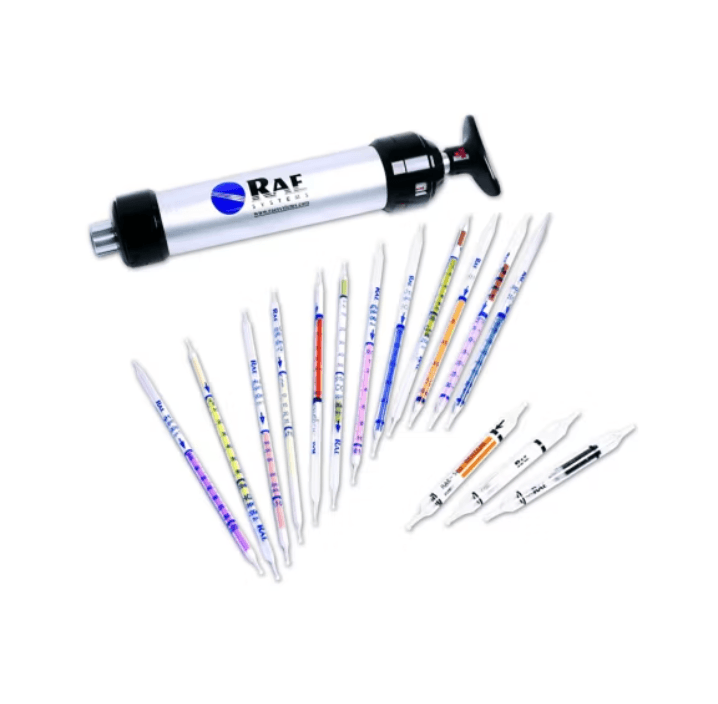
If you do any kind of gas detection on the job, you’ve probably come across colorimetric gas detection tubes.
They go by several names: stain tube detectors, chemical detector tubes, or simply by their brand names like Draeger tubes or Gastec tubes.
Whatever you call them, they all do the same job: on-the-spot measurement of contaminated air, with no batteries, no calibration, and no electronics.
As an industrial safety engineer who has worked with gas detection systems for over a decade, I still reach for colorimetric tubes in situations where electronic detectors fall short.
In this guide, I’ll explain exactly what these tubes are, how they work, when they outperform electronic gas detectors, and the critical limitations you need to understand before relying on them.
What Are Colorimetric Gas Detection Tubes?
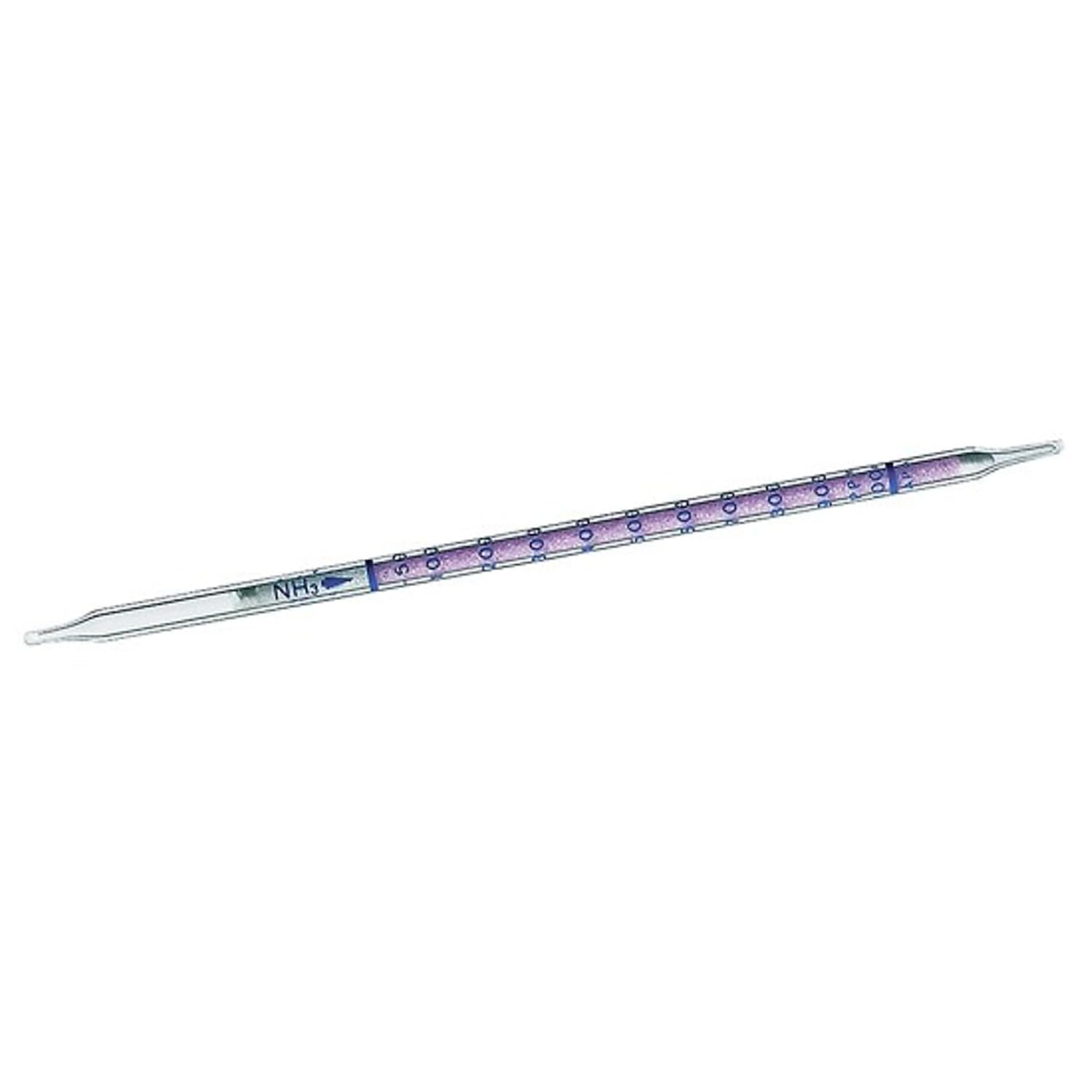
Colorimetric detector tubes are graduated glass tubes filled with chemical reagents that change color when exposed to a specific target gas.
Each tube is designed for one gas or gas family: carbon monoxide, hydrogen sulfide, ammonia, benzene, and hundreds of others.
The tubes come hermetically sealed at both ends to protect the reagent from ambient air. When it’s time to take a measurement, you snap off both tips, insert the tube into a dedicated hand pump, and draw a fixed volume of air through it.
The pump is just as important as the tube. Two main types exist.
- Bellows pumps: squeezed by hand, drawing a calibrated volume of air per stroke (Draeger’s Accuro is the classic example)
- Piston pumps: pulled like a syringe to draw a fixed sample volume (Gastec and Kitagawa systems use this design)
Both accomplish the same thing: pulling a precise, repeatable air sample through the reagent bed inside the tube.
How Do Colorimetric Tubes Work?
The principle is elegantly simple. As the sampled air travels through the tube, the target gas reacts with the chemical reagent inside, producing a visible color change, the “stain.” The length of the stain is proportional to the concentration of the gas in the sample.
You read the result directly off the graduated scale printed on the tube, at the point where the color change stops. No display, no data logging, no interpretation software, just chemistry you can see.
If you’ve ever used pH paper to test acids and bases, you already understand the concept. It’s the same colorimetric principle applied to airborne contaminants, refined to give you a quantitative reading in parts per million (ppm) or percent by volume.
A typical measurement takes anywhere from 30 seconds to a few minutes, depending on the gas and the number of pump strokes required.
The tube instructions specify exactly how many strokes to use. Follow them precisely because the reading is only valid for the specified sample volume.
Benefits of Colorimetric Gas Detection Tubes
No Calibration Required
This is the big one. Electronic gas detectors need regular bump testing and periodic calibration with certified calibration gas, which means cylinders, regulators, docking stations, and documentation. Colorimetric tubes need none of that. Each tube is factory-calibrated through its printed scale.
For field technicians working far from a supporting facility, this eliminates an entire logistics chain. You can keep a pump and a box of tubes in a truck for months and be ready to measure at any moment.
Enormous Range of Detectable Gases
Electronic sensors exist for perhaps a few dozen common gases. Colorimetric tube manufacturers offer tubes for hundreds of substances, including exotic compounds like phosgene, hydrazine, mercury vapor, and specific organic solvents that have no commercially available electronic sensor.
When you suspect a hazard that your multi-gas monitor simply can’t see, tubes expand your measuring capability dramatically.
Verifying Electronic Detector Readings
Here’s a use case many safety professionals overlook: colorimetric tubes make an excellent independent cross-check for electronic gas detectors.
If your fixed or portable detector shows an unexpected reading, a detector tube can confirm whether the sensor is responding to the correct gas or to a cross-interfering compound.
I’ve used this approach personally when troubleshooting suspicious readings on electrochemical sensors.
The tube either confirms the hazard is real or tells you the sensor needs attention. Once verified, the electronic detector goes back to doing what it does best: continuous monitoring.
Low Cost of Entry
A quality hand pump costs a fraction of a multi-gas monitor, and individual tubes typically run just a few dollars each. For teams that only need occasional spot measurements, the economics are hard to beat.
Colorimetric Tubes vs. Electronic Gas Detectors
| Feature | Colorimetric Tubes | Electronic Gas Detectors |
|---|---|---|
| Measurement type | Spot check (single reading) | Continuous, real-time |
| Calibration | None required | Regular bump test + calibration |
| Gas coverage | Hundreds of substances | Limited by available sensors |
| Alarms | None | Audible, visual, vibration |
| Cost per measurement | Low upfront, per-tube cost | High upfront, low per-use |
| Data logging | Manual only | Automatic |
| Shelf life concern | Yes, tubes expire | Sensors degrade over years |
| Best for | Spot surveys, unusual gases, verification | Personal protection, confined space entry |
The takeaway: these tools complement each other. Tubes are for investigation and verification; electronic detectors are for protection and continuous monitoring. Neither replaces the other.
Limitations and Things to Keep in Mind
You Cannot Mix Brands
Pumps and tubes are tested and certified as complete systems by each manufacturer. A Draeger tube in a Gastec pump (or vice versa) will draw the wrong sample volume and produce an invalid reading. Stick with one system pump and tubes from the same manufacturer, always.
Tubes Expire
The chemical reagents inside detector tubes have a limited, clearly defined shelf life, typically one to three years.
An expired tube may under-respond, over-respond, or not respond at all. Check the expiration date printed on every box before use, and store tubes according to the manufacturer’s instructions (many require refrigeration to reach their full shelf life).
Accuracy Is Moderate
Colorimetric tubes generally deliver accuracy in the range of ±15–25%. That’s perfectly adequate for screening and hazard identification, but it’s not laboratory-grade analysis.
If you need precise exposure data for compliance documentation, consider tubes a first-pass screening tool.
Cross-Sensitivity Exists
Some reagents react to chemically similar gases, which can bias readings. The instruction sheet included with each tube lists known interferences. Read it before you sample, not after.
They Provide No Warning Function
A tube tells you what was in the air at the moment you sampled. It will never alarm, never log, and never protect a worker from a hazard that develops five minutes later.
Never use detector tubes as a substitute for continuous monitoring in confined spaces or high-risk atmospheres.
Common Applications
- Confined space pre-entry surveys for gases outside your monitor’s sensor set
- Leak investigation around valves, flanges, and process equipment
- Industrial hygiene spot checks for solvent vapors and specific toxics
- Emergency response hazard categorization
- Sensor verification for fixed and portable gas detection systems
- Remote field work where calibration infrastructure isn’t practical
Frequently Asked Questions
What is the difference between Draeger tubes and Gastec tubes?
Both are colorimetric detector tube systems that work on the same principle. Draeger (Germany) uses a bellows-style pump, while Gastec (Japan) uses a piston-style pump.
The performance of both systems is comparable. The critical rule is that tubes and pumps from different manufacturers must never be mixed.
Do colorimetric gas detection tubes need calibration?
No. The tubes are factory-calibrated, with the measurement scale printed directly on the glass. The hand pump should be periodically leak-tested per the manufacturer’s instructions, but no calibration gas is required.
How long do detector tubes last?
Most colorimetric tubes have a shelf life of one to three years from the date of manufacture, printed on the packaging.
Proper storage in cool, dark conditions and refrigeration where specified is essential for reaching that full shelf life. Never use expired tubes.
Can colorimetric tubes replace an electronic gas detector?
No, tubes provide single-spot measurements with no alarm function. They complement electronic detectors, ideal for verification, investigation, and detecting gases without available electronic sensors, but they cannot provide the continuous monitoring and real-time alarms required for personal protection.
How accurate are colorimetric detector tubes?
Typical accuracy is within ±15–25% of the true concentration, which is suitable for screening and hazard identification but not for precision laboratory analysis.
Final Thoughts
Colorimetric gas detection tubes have survived a century of technological change for a simple reason: they solve problems electronic detectors can’t.
No calibration burden, an unmatched library of detectable gases, and readings you can trust as an independent cross-check make them a permanent fixture in any well-equipped safety toolkit.
Use them for what they’re built for: spot measurements, unusual gases, and verification, and pair them with continuous electronic monitoring for personal protection. Together, they give you complete confidence in what’s actually in the air.
Best multi-gas monitors for continuous protection: see our full review