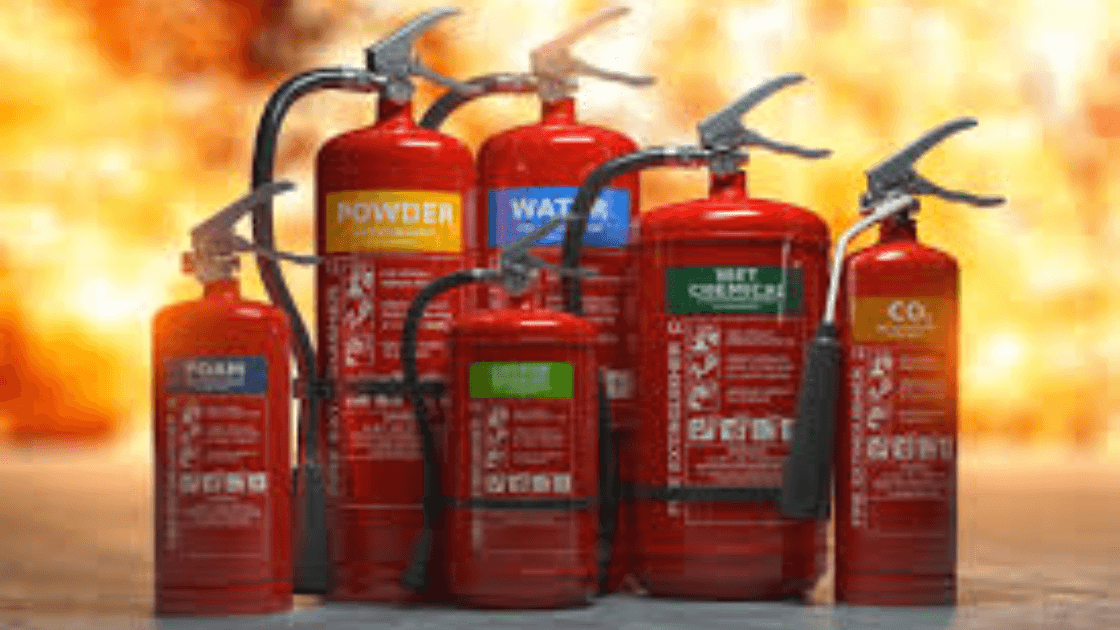
Fire suppression systems are one of the most critical layers of protection in any industrial, commercial, or residential safety plan.
Yet for many facility managers, safety officers, and even seasoned engineers stepping outside their specialty, the world of suppression systems can feel overwhelming fast.
This guide breaks it all down plainly, practically, and with enough technical depth to actually be useful.
What Is a Fire Suppression System?
A fire suppression system is an engineered assembly of components designed to detect, control, or extinguish a fire automatically, manually, or both before it causes catastrophic damage.
Unlike a fire alarm system, which only detects and alerts, a fire suppression system actively intervenes.
It delivers a suppression agent (water, gas, foam, dry chemical, or other media) directly to the fire or to the protected space, either cutting off the heat, the oxygen, or the fuel needed for combustion to continue.
Fire suppression systems are governed by a web of standards and codes, including NFPA 13, NFPA 72, NFPA 2001, and local building and fire codes, depending on the system type and jurisdiction.
Why Fire Suppression Systems Matter
Every year, uncontrolled fires cause billions of dollars in property damage, significant production downtime, and, most critically, loss of life. In industrial environments, the stakes are especially high: flammable gases, combustible dust, high-value electrical equipment, and large open areas all create conditions where a fire can escalate within seconds.
A properly designed and maintained fire suppression system.
- Limits fire spread by acting faster than a human response can.
- Protects assets, including equipment, inventory, and structures.
- Supports safe evacuation by buying time for occupants to exit.
- Reduces insurance liability and may lower premiums.
- Ensures regulatory compliance with fire safety codes.
How Fire Suppression Systems Work
Most fire suppression systems operate on the same fundamental principle: detect the fire, trigger the suppression agent delivery, and suppress or extinguish the fire.
The three core phases are
Detection
Detection triggers the suppression response. This can come from.
- Heat detectors (fixed-temperature or rate-of-rise).
- Smoke detectors (ionization or photoelectric).
- Flame detectors (UV, IR, or multi-spectrum).
- Manual pull stations.
- Sprinkler head activation (in the case of wet pipe systems, the detector and delivery mechanism are the same component).
Actuation
Once detection occurs, the system actuates opening valves, releasing pressurized agent, or triggering a pump to pressurize a distribution network.
Actuation can be
- Automatically triggered by the detector without human intervention.
- Manual triggered by an operator at a local or remote panel.
- Deluge-type all nozzles open simultaneously on command.
Agent Delivery
The suppression agent is delivered through a network of pipes, nozzles, or discharge heads engineered for coverage density, flow rate, and the specific hazard class of the protected area.
Types of Fire Suppression Systems
This is where most people need the most clarity. Here is a breakdown of the major system types, what they use, and where they are typically applied.
Water-Based Systems
Water is the most widely used suppression agent in the world. It works primarily by cooling the burning material below its ignition temperature and, to a lesser degree, by smothering through steam generation.
Wet Pipe Sprinkler Systems
The most common type. Pipes are always filled with pressurized water. When a sprinkler head reaches its activation temperature, it opens and water discharges immediately.
Best for
Office buildings, warehouses, hotels, retail spaces, and any area where pipes won’t freeze.
Pros
Simple, reliable, low maintenance, cost-effective.
Cons
Not suitable for freezing environments or areas where accidental discharge would cause significant water damage (data centers, archives, museums).
Dry Pipe Sprinkler Systems
Pipes are filled with pressurized air or nitrogen, not water. When a sprinkler head activates, the air escapes first, which allows water to rush in and discharge.
Best for
Unheated warehouses, parking garages, cold-storage facilities, anywhere pipes could freeze.
Pros
Freeze-resistant.
Cons
Slightly slower response than wet pipe; more complex; requires more maintenance.
Pre-Action Systems
A two-step system: a detection event must occur before water is allowed into the pipes, and then a sprinkler head must also activate before water discharges. This “double interlock” virtually eliminates accidental discharge.
Best for
Data centers, server rooms, libraries, and museums are high-value spaces where accidental water discharge would be catastrophic.
Pros
Extremely low risk of accidental discharge.
Cons
More complex design and maintenance; higher cost.
Deluge Systems
All sprinkler heads are open at all times. There are no individual heat-sensitive elements. Water fills the entire system when a detection signal is received, soaking the entire protected area simultaneously.
Best for
High-hazard industrial areas, such as aircraft hangars, chemical plants, power generation facilities, and warehouses with highly flammable materials.
Pros
Extremely fast, simultaneous coverage of a large area.
Cons
Large water consumption; significant water damage to non-fire areas.
Water Mist Systems
Uses very fine water droplets (mist) at high pressure to suppress fire. The tiny droplets absorb heat rapidly, create a cooling steam layer, and displace oxygen using far less water than conventional sprinkler systems.
Best for
Marine vessels, turbine enclosures, hotel corridors, and areas where water damage is a concern.
Pros
Water-efficient; less secondary damage; effective on Class A, B, and C fires.
Cons
Higher installation cost; sensitive to draft conditions in some configurations.
Gaseous Suppression Systems
Gaseous systems discharge a suppression agent in gas form to reduce the oxygen concentration in the protected space or to chemically interrupt the combustion reaction.
They are clean, they leave no residue, making them ideal for sensitive equipment.
Clean Agent Systems (HFCs, FKs, and Inert Gas Blends)
Common agents include.
- FM-200 (HFC-227ea): A hydrofluorocarbon that works by heat absorption (chemical mechanism). Fast-acting and widely used.
- Novec 1230 (FK-5-1-12): A fluoroketone with a very low global warming potential; popular as an environmentally preferable alternative to FM-200.
- Inert gas blends (e.g., Inergen, Argonite): Mixtures of argon, nitrogen, and sometimes CO₂ that reduce oxygen concentration to below the level that supports combustion but above the level dangerous to humans (typically 12–15%).
Best for
Server rooms, data centers, control rooms, telecom facilities, archives, museums, switch rooms.
Pros
No residue; safe for electronics; does not damage the protected space; safe for occupied areas (with proper design).
Cons
High agent cost; room must be sealed to maintain concentration; requires enclosure integrity testing.
Carbon Dioxide (CO₂) Systems
CO₂ suppresses fire by displacing oxygen. It is highly effective and leaves zero residue.
Best for
Unoccupied or normally unoccupied spaces, printing presses, engine rooms, spray booths, and flammable liquid storage.
Pros
Inexpensive agent; electrically non-conductive; leaves no residue.
Cons
Lethal to humans at suppression concentrations. Must not be used in normally occupied spaces without strict safety lockouts, pre-discharge alarms, and evacuation protocols.
Foam Suppression Systems
Foam systems discharge a mixture of water, foam concentrate, and air. The resulting foam blanket smothers the fire by sealing the fuel surface from oxygen and also cools and suppresses vapors from flammable liquids.
Types include:
- AFFF (Aqueous Film-Forming Foam): Highly effective on hydrocarbon fuels; historically the industry standard, though PFAS concerns are driving transitions to alternatives.
- FFFP (Film-Forming Fluoroprotein): Similar to AFFF with added protein base.
- Protein-based foams: Longer burnback resistance; used on fuel storage tanks.
- AR-AFFF (Alcohol-Resistant): Effective on polar solvents and alcohols.
Best for
Flammable and combustible liquid hazards include fuel storage tanks, aircraft hangars, refineries, loading terminals, and fuel spill areas.
Pros
Excellent on Class B (flammable liquid) fires; seals vapor to prevent re-ignition.
Cons
Messy cleanup; environmental and regulatory concerns around PFAS-based foams.
Dry Chemical and Dry Powder Systems
These systems discharge a fine chemical powder that interrupts the chemical chain reaction of combustion. They are not to be confused with each other:
- Dry chemical: Effective on Class A, B, and C fires (ordinary combustibles, flammable liquids, energized electrical equipment). Common agents: monoammonium phosphate (ABC powder), sodium bicarbonate.
- Dry powder: Specifically for Class D fires (combustible metals like magnesium, titanium, sodium, lithium).
Best for
Industrial kitchens, vehicle suppression systems, chemical storage, metalworking facilities (Class D).
Pros
Fast knockdown; effective on multiple fire classes.
Cons
Messy; corrosive to equipment; limited cooling effect (fire can reignite if not fully controlled); not suitable for sensitive electronics.
Kitchen Hood Suppression Systems (Wet Chemical)
A specialized category designed specifically for commercial cooking operations. Wet chemical agents (typically potassium-based solutions) react with cooking oils to form a soapy layer through saponification, sealing the fuel surface and preventing re-ignition.
Best for
Commercial restaurant hoods, fryers, griddles, and broilers.
Required by
NFPA 96 for commercial cooking operations in most jurisdictions.
Pros
Highly effective on cooking oil fires (Class K); automatic and manual actuation; integrated with gas shutoff.
Cons
Limited to cooking hazards; requires annual inspection and semi-annual cleaning.
Fire Suppression System Classes: A Quick Reference
Understanding fire classes helps you match the right system to the right hazard.
| Fire Class | Fuel Type | Suitable Suppression |
|---|---|---|
| Class A | Ordinary combustibles (wood, paper, fabric) | Water, clean agent, dry chemical |
| Class B | Flammable and combustible liquids | Foam, CO₂, dry chemical, clean agent |
| Class C | Energized electrical equipment | CO₂, clean agent, dry chemical |
| Class D | Combustible metals | Dry powder only |
| Class K | Cooking oils and greases | Wet chemical |
Key Components of a Fire Suppression System
Regardless of the agent type, most fire suppression systems share similar core components.
- Detection devices: Heat, smoke, or flame detectors that initiate the response.
- Control panel: The “brain” that receives detection signals and commands for actuation.
- Suppression agent storage: Tanks, cylinders, or reservoirs holding the agent.
- Piping and distribution network: Delivers the agent from storage to the hazard area.
- Discharge nozzles or sprinkler heads: Release the agent into the protected space.
- Actuators and valves: Mechanical or electrical components that open flow paths on command.
- Pressure gauges and supervisory devices: Confirm the system is pressurized and ready.
- Manual release stations: Allow human-initiated discharge.
- Annunciation and alarm outputs: Alert occupants and connect to building fire alarm systems.
Choosing the Right Fire Suppression System
Selecting the appropriate system depends on several factors
Hazard Classification
What is actually burning, or what could burn? Ordinary combustibles, flammable liquids, sensitive electronics, and cooking oils each demand different suppression strategies.
Occupancy and Human Safety
Is the space normally occupied? CO₂ systems, for example, are lethal at suppression concentrations and must not be the primary protection method in occupied spaces.
Asset Sensitivity
Water is cheap and effective, but it destroys servers and archival documents. A pre-action or clean agent system may cost more upfront, but far less in secondary losses.
Environmental and Regulatory Considerations
PFAS regulations are actively reshaping foam system specifications globally. FM-200 and CO₂ both carry environmental or climate concerns. Local codes and NFPA standards must be reviewed.
Facility Size and Layout
Large open areas with rapid fire growth potential (hangars, warehouses) may need deluge or high-expansion foam. Small enclosed rooms may be ideal candidates for clean agent total flooding.
Maintenance and Inspection Requirements
Every system type carries its own inspection, testing, and maintenance schedule per NFPA standards. Factor this into the total cost of ownership.
Inspection, Testing, and Maintenance
A fire suppression system that isn’t properly maintained is a liability, not an asset. NFPA standards prescribe minimum inspection and testing frequencies.
- Weekly/Monthly: Visual inspection of gauges, tamper switches, and control panel status.
- Quarterly: Inspection of sprinkler heads, hangers, and piping.
- Annually: Full system functional testing, agent weight checks (for gaseous systems), flow tests.
- 5-Year: Internal inspection of select sprinkler heads, obstruction investigation.
Always work with a licensed fire protection contractor for testing and maintenance. Document everything. Your records are your compliance proof.
Common Misconceptions About Fire Suppression Systems
Sprinklers go off everywhere when one head activates
Not in standard wet or dry pipe systems. Each sprinkler head activates independently when it reaches its activation temperature. Only deluge systems discharge all heads simultaneously.
A fire suppression system replaces the need for a fire alarm
No. Suppression and detection/alarm systems are complementary. Most jurisdictions require both. The suppression system extinguishes the fire; the alarm system notifies occupants and emergency services.
Clean agent systems are completely safe for people
Generally, yes, if designed correctly, with proper room integrity, pre-discharge alarms, and agent selection for occupied spaces. CO₂, however, is a different story entirely and must be treated as a life-safety hazard.
Once installed, suppression systems are set and forget.
Far from it. Sprinkler heads degrade over decades, agent cylinders lose pressure, nozzles clog, and detection components drift. Regular inspection is non-negotiable.
Final Thoughts
Fire suppression systems are not a one-size-fits-all product. They are engineered solutions, and the right system for a data center is entirely different from the right system for a paint booth or a commercial kitchen.
As a safety engineer or facility professional, your job starts with understanding the hazard — what’s burning, where, under what conditions, and who might be present. From there, the standards and system types will guide the design conversation.
This guide is your starting point. Dive deeper into specific system types using the resources below, and always consult a licensed fire protection engineer for design and compliance work.
Further Reading and Standards
- NFPA 13: Standard for the Installation of Sprinkler Systems
- NFPA 72: National Fire Alarm and Signaling Code
- NFPA 2001: Standard on Clean Agent Fire Extinguishing Systems
- NFPA 11: Standard for Low-, Medium-, and High-Expansion Foam
- NFPA 12: Standard on Carbon Dioxide Extinguishing Systems
- NFPA 17: Standard for Dry Chemical Extinguishing Systems
- NFPA 96: Standard for Ventilation Control and Fire Protection of Commercial Cooking Operations