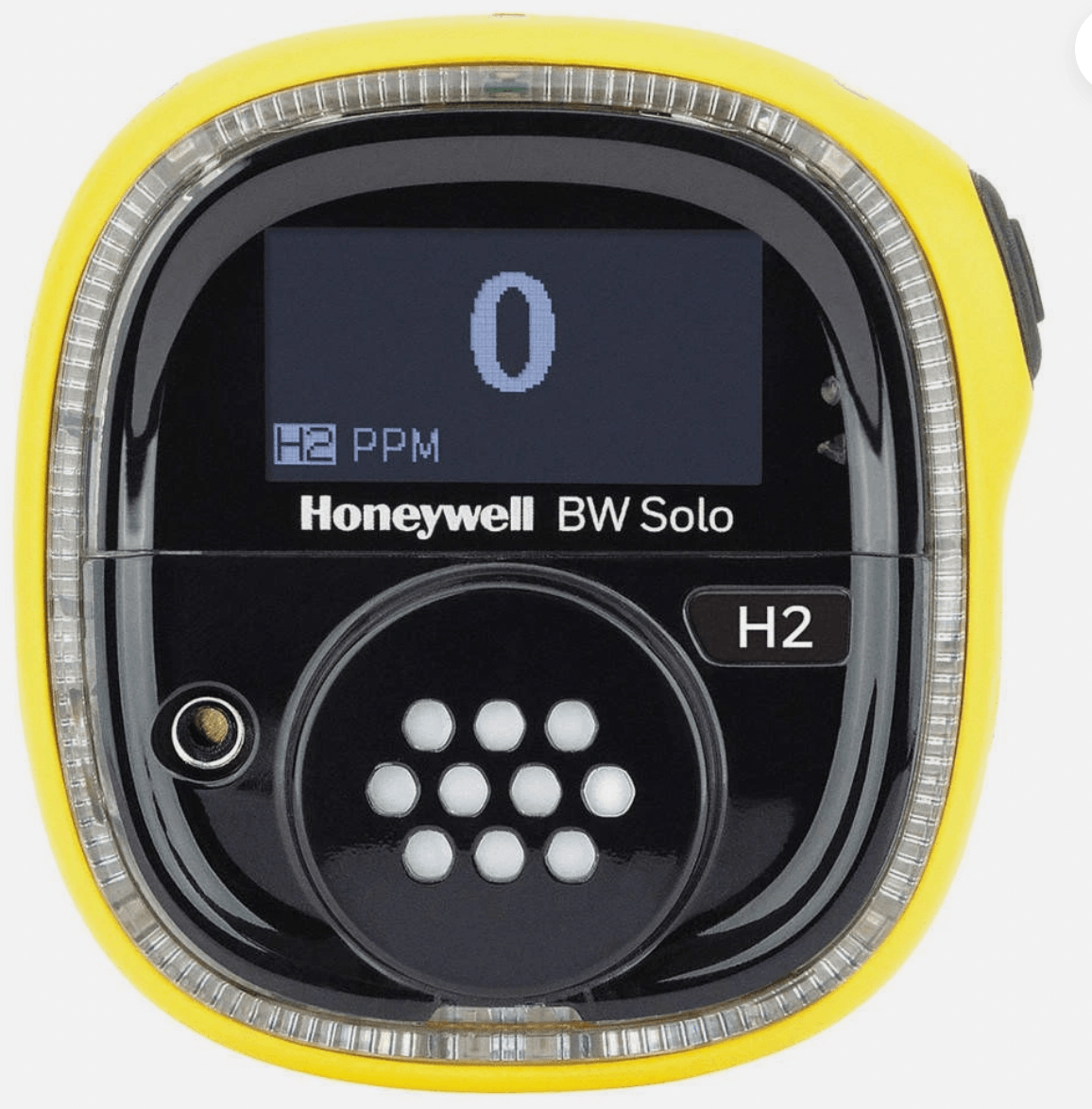
If you’re searching for a reliable, low-maintenance single gas detector for your team, the Honeywell BW Solo keeps coming up, and for good reason. In this hands-on review, we break down everything you need to know before you buy.
What Is the Honeywell BW Solo?
The Honeywell BW Solo is a next-generation portable single gas detector designed for workers operating in hazardous environments where toxic or oxygen-deficient atmospheres may be present.
Manufactured by Honeywell Analytics, one of the most trusted names in gas and flame detection, the BW Solo is engineered to be the easiest-to-service single-gas detector on the market.
Unlike older gas detectors that require tools and technical expertise to service, the BW Solo is built around a philosophy of simplicity, reliability, and low total cost of ownership.
Whether you’re working in oil and gas, petrochemicals, confined spaces, wastewater treatment, or general industrial environments, this detector is designed to keep up with you.
The device is compact, lightweight, and can be worn on a shirt collar or vest clip throughout a full workday without fatigue.
But what sets it apart from the crowd goes much deeper than form factor; it’s the combination of sensor flexibility, wireless connectivity, intelligent compliance signaling, and ecosystem integration that makes the BW Solo a standout product.
BW Solo Model Variants
Honeywell offers the BW Solo in three main configurations, allowing buyers to match the unit to their specific operational needs and budget.
BW Solo Standard
The baseline model includes data logging, IntelliFlash compliance indicators, and full serviceability. It communicates with Honeywell’s IntelliDoX docking station via direct connection for data download and instrument configuration. This is the workhorse version for teams that already use a docking station-based workflow.
BW Solo Wireless
The wireless version adds Bluetooth Low Energy (BLE) connectivity, allowing the detector to pair with a smartphone running Honeywell’s Safety Communicator app.
Gas readings are transmitted in real time to Honeywell’s cloud-based Safety Suite platform, providing supervisors with remote visibility into worker safety status and location.
This is the recommended version for teams that want live monitoring without relying solely on a fixed docking infrastructure.
BW Solo Lite
A simplified, cost-effective entry point. The Solo Lite retains the same robust sensor options and IP68 protection but removes data logging and Bluetooth functionality.
This makes it a great option for smaller operations that want dependable detection without the added cost of connectivity features.
Note: As of this writing, the original BW Solo Standard has been discontinued by Honeywell. The BW Solo Wireless is now the primary serviceable model available, with the BW Solo Lite serving budget-conscious buyers and only available in some regions.
Key Features
One-Button Operation
The BW Solo is designed to be operated with a single button, even while wearing heavy work gloves.
Power on, navigate readings, and access TWA/STEL values all from one control point. Language selection is prompted on first power-on and supports English, French, Spanish, German, Italian, Russian, Japanese, Chinese, Korean, and Portuguese.
Field-Swappable Sensors
One of the BW Solo’s most valuable engineering decisions is the ability to swap sensors in the field without tools. Simply pop off the front cover to replace the sensor or filter.
Battery replacement requires only a single Phillips-head screw. This dramatically reduces downtime and eliminates the need to send units back to a service center for routine maintenance.
Sensor Options
The BW Solo supports detection of 14 different gases, covering both common industrial hazards and more exotic chemical exposures.
This sensor flexibility means a single detector platform can serve multiple departments or applications within the same facility.
Triple Alarm System
When a gas event is detected, the BW Solo triggers a simultaneous audible, visual, and vibrating alarm.
The audible alarm reaches 95 dB, loud enough to be heard over significant industrial background noise.
Alarm types include: Low, High, TWA (time-weighted average), STEL (short-term exposure limit), and non-compliance.
IntelliFlash™ Compliance Indicator
Honeywell’s patented IntelliFlash technology provides an instant visual compliance status check at a glance:
- Flashing green = detector has been bump tested and is actively monitoring.
- Flashing red = bump test is due, gas event detected, calibration needed, or battery low.
This feature is invaluable for safety supervisors who need to quickly visually confirm that workers’ detectors are in compliance without stopping workflow.
IP66/68 Ingress Protection
The BW Solo is rated IP66/68, meaning it is protected against powerful water jets and can be submerged to 1.2 meters for up to 45 minutes.
This level of protection makes it suitable for outdoor use in rain, high-humidity environments, or areas with frequent wash-downs.
Data Logging
The standard and wireless models log data for six months at 5-second intervals, providing a comprehensive record of gas exposure events that supports regulatory compliance reporting and incident investigation.
Technical Specifications
| Specification | Detail |
|---|---|
| Dimensions | 2.7 × 2.6 × 1.4 in (7.0 × 6.7 × 3.6 cm) |
| Weight | 103–116 g (3.6–4.1 oz), depending on sensor |
| Ingress Protection | IP66/68 (1.2 m for 45 min) |
| Operating Temperature | -40°C to +60°C (-40°F to +140°F) |
| Humidity Range | 0%–95% RH (non-condensing) |
| Battery Life | Up to 12 months (6 months for 1-Series O2 sensor) |
| Alarm Sound Level | 95 dB |
| Alarm Types | Audible, Visual, Vibrating; Low, High, TWA, STEL, non-compliance |
| Wireless Technology | Bluetooth Low Energy (BLE) — Wireless model only |
| Data Logging | 6 months at 5-second intervals |
| Self-Test | Sensor integrity, circuitry, battery, audible/visual on activation; battery continuous |
| Hazardous Area Rating | Class I, Division 1, Groups A, B, C, D, T4 |
| Warranty | 3 years for 1-Series sensors and detectors (excl. battery); 2 years for 4-Series; 1 year for select sensors |
Supported Gases
The Honeywell BW Solo can be configured to detect any one of the following 14 gases.
| Gas | Symbol | Measurement Range |
|---|---|---|
| Hydrogen Sulfide | H₂S | 0–200 ppm |
| Carbon Monoxide | CO | 0–2,000 ppm |
| Oxygen | O₂ | 0–30% vol |
| Chlorine | Cl₂ | 0–50 ppm |
| Chlorine Dioxide | ClO₂ | 0–1 ppm |
| Ethylene Oxide | ETO | 0–100 ppm |
| Hydrogen | H₂ | 0–1,000 ppm |
| Hydrogen Cyanide | HCN | 0–100 ppm |
| Ammonia | NH₃ | 0–1,000 ppm |
| Nitric Oxide | NO | 0–250 ppm |
| Nitrogen Dioxide | NO₂ | 0–100 ppm |
| Ozone | O₃ | 0–1 ppm |
| Phosphine | PH₃ | 0–5 ppm |
| Sulfur Dioxide | SO₂ | 0–100 ppm |
The BW Solo also supports CO₂ detection (0–50,000 ppm) in a dedicated model variant using the 1-Series sensor platform.
From a professional standpoint, coverage of gases like HCN, PH₃, ETO, and ClO₂, which are typically considered “exotic” hazards, is a significant advantage that many competing single-gas detectors at this price point don’t offer.
IntelliFlash and Compliance Monitoring
One of the BW Solo’s most underappreciated features is how it fundamentally changes the compliance management workflow on a job site.
In traditional gas monitoring programs, a safety officer has to physically check each detector or rely on paper records to confirm that bump tests and calibrations are current. With IntelliFlash enabled, compliance status is visible in real time, passively, just by observing the unit clipped to a worker’s lapel.
You can configure.
- Calibration and bump test reminder intervals
- Latching alarms (alarm remains active until manually acknowledged)
- High and low alarm setpoints
- Worker and location assignment tags
- TWA/STEL reset options
These configurations can be done via the IntelliDoX docking station or through Honeywell’s SafetySuite Device Configurator software.
IntelliDoX and Safety Suite Integration
For teams managing multiple detectors across a fleet, the IntelliDoX docking station is a game-changer.
Simply place the BW Solo into an IntelliDoX dock, and it will automatically.
- Perform a bump test
- Update firmware
- Transfer alarm and peak reading data to connected software
- Recalibrate if configured to do so
Each IntelliDoX module has its own LCD screen, keypad, and pump for independent operation, but modules can share power and calibration gas supply when daisy-chained.
Data flows to a connected PC via Ethernet or USB, where Honeywell’s Safety Suite platform aggregates records, automates regulatory reporting, and flags non-compliant units.
For wireless model users, detector data can also be pushed directly to SafetySuite via BLE — no dock required, making it a strong option for remote or distributed worksites where a docked infrastructure isn’t practical.
The wireless BW Solo also pairs with the Safety Communicator mobile app, which sends real-time gas readings to Honeywell Safety Suite Real Time, a cloud platform that gives supervisors remote visibility into worker status and location from any internet-connected device.
Serviceability and Maintenance
This is where the BW Solo genuinely earns its reputation.
Most single-gas detectors are designed as sealed units. When a sensor fails or a battery dies, the unit either goes back to the factory or gets replaced entirely. The BW Solo takes the opposite approach:
- Sensor filter replacement: Pop off the front door, no screwdriver needed
- Sensor replacement: Field-swappable, no disassembly required
- Battery replacement: Single Phillips-head screw removal
The 1-Series sensor (used for CO, H₂S, O₂, and CO₂) is Honeywell’s premium sensor platform, engineered for high accuracy, fast response time, and reliable performance across temperature extremes from -40°C to +60°C. It also tolerates transient pressure, humidity, and other environmental stresses that would degrade lesser sensors.
The typical battery life of up to 12 months means most users will only change batteries once per year, a significant operational advantage compared to rechargeable units that must be managed daily.
Total cost of ownership for the BW Solo is genuinely lower than most competitors in this class when you factor in reduced service labor, longer sensor and battery life, and fleet management automation through IntelliDoX.
Pros and Cons
✅ Pros
- Outstanding serviceability sensors, filters, and battery, all user-replaceable without tools (or with just one screw).
- Up to 12 months of battery life reduces operational overhead significantly.
- IP66/68 rated tough enough for outdoor and wet industrial environments.
- 14 gas options, including exotic hazards, most competitors don’t cover.
- IntelliFlash makes real-time compliance status visible at a glance.
- BLE wireless model enables remote monitoring via smartphone and cloud platform.
- IntelliDoX compatibility automates bump testing, calibration, and fleet management.
- Wide operating temperature range (-40°C to +60°C) handles extreme environments.
- Three-year warranty on 1-Series sensors and detectors.
- Single-button operation works even with gloved hands.
- Multi-language support, including Spanish ideal for Latin American operations.
❌ Cons
- Single-gas detection is not suitable as a standalone solution where multi-gas monitoring is required by regulation or site safety plans.
- BLE wireless is model-specific. The Lite version does not include Bluetooth.
- IntelliDoX is a separate purchase; the full fleet management benefits require investment in docking infrastructure.
- Standard model discontinued buyers are now pushed toward the Wireless version, which carries a higher price point
- CO₂ sensor battery life drops to only 2 months, which is a significant limitation for facilities monitoring carbon dioxide.
Who Should Buy the Honeywell BW Solo?
The BW Solo is an excellent fit for.
Industrial safety managers overseeing teams in oil and gas, petrochemicals, mining, utilities, or confined space entry, particularly those who want to reduce maintenance costs and automate compliance documentation.
Safety officers in facilities where a single primary hazard exists, such as H₂S in oil and gas, CO in boiler rooms, O₂ deficiency in confined spaces, or Cl₂ in water treatment. The sensor swap capability means one SKU can serve multiple environments.
Operations running 14+ detectors who want to leverage IntelliDoX for automated fleet management and eliminate manual logbooks.
International operations that need multi-language support, robust environmental ratings, and a well-established supply chain for calibration gas and accessories.
Budget-conscious buyers who value total cost of ownership, the long battery life, replaceable sensors, and automated compliance tools make the BW Solo less expensive to run over time than many cheaper alternatives.
It is not the right tool if.
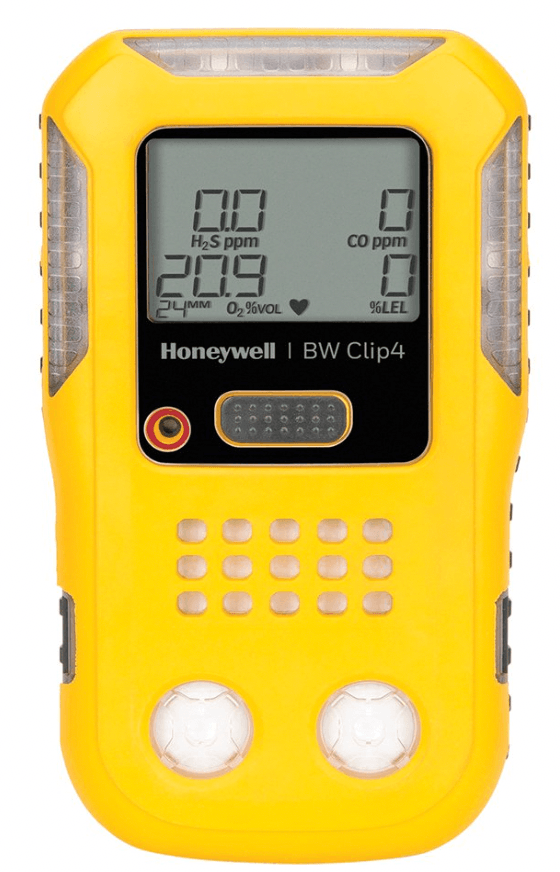
- Your site requires simultaneous detection of multiple gases (consider a multi-gas unit like the BW Clip4 or BW Ultra instead).
- You need a CO₂-primary detector with long battery life (the CO₂ variant’s 2-month battery is a real limitation).
- Your operation has no bump testing or calibration infrastructure and is not willing to invest in it.
Final Verdict
The Honeywell BW Solo is one of the best-engineered single gas detectors on the market in its class.
It earns that distinction not through one exceptional feature but through a consistently thoughtful approach to every aspect of real-world industrial use: serviceability, compliance management, sensor accuracy, environmental durability, and fleet scalability.
For any safety program that takes personal gas monitoring seriously, and most regulatory frameworks require that you do so, the BW Solo offers a compelling combination of reliability and low maintenance burden that will be felt in both your safety records and your maintenance budget.
SafeguardSense Rating: 4.7 / 5
If you’re building or upgrading a gas monitoring program, the BW Solo Wireless is the version to specify.
Add IntelliDoX docking stations as your fleet grows, and you’ll have a compliance-ready gas detection infrastructure that practically manages itself.
Frequently Asked Questions
What gases can the Honeywell BW Solo detect?
The BW Solo supports 14 gas types: H₂S, CO, O₂, Cl₂, ClO₂, ETO, H₂, HCN, NH₃, NO, NO₂, O₃, PH₃, and SO₂. A dedicated CO₂ variant is also available.
Is the Honeywell BW Solo waterproof?
Yes. It carries an IP66/68 rating, meaning it is protected against strong water jets and can withstand submersion to 1.2 meters for up to 45 minutes.
How long does the BW Solo battery last?
Up to 12 months for most sensor configurations (6 months for the 1-Series O₂ sensor, and 2 months for the CO₂ variant). Battery replacement requires removing a single screw.
Can I replace the sensor myself?
Yes. The BW Solo is designed for field serviceability. Sensor and filter replacement requires no tools, just removing the front door cover.
Does the BW Solo have Bluetooth?
Yes, the Wireless model includes Bluetooth Low Energy (BLE). The Standard and Lite versions do not.
The wireless model pairs with Honeywell’s Safety Communicator app and Safety Suite Real Time cloud platform.
What is IntelliFlash?
IntelliFlash is Honeywell’s patented compliance indicator. A flashing green LED means the detector complies (bump tested and actively monitoring); a flashing red LED signals a non-compliance condition, such as a missed bump test, gas alarm, or low battery.
What is the warranty on the BW Solo?
Three years for 1-Series detectors and sensors (excluding battery); two years for 4-Series units; one year for NH₃, Cl₂, O₃, ETO, ClO₂, HCl, and HF sensors.
Can the BW Solo be used for confined space entry?
Yes. It is widely used for confined space entry monitoring, particularly in H₂S, CO, and O₂ configurations.
However, confined space regulations in many jurisdictions require multi-gas detection; verify your local regulatory requirements before specifying a single-gas unit for confined space entry alone.
What is the difference between the BW Solo and the BW Solo Lite?
The Lite version removes data logging and Bluetooth connectivity for a lower price point. It retains the same sensor options, IP68 protection, IntelliFlash indicator, and triple alarm system.