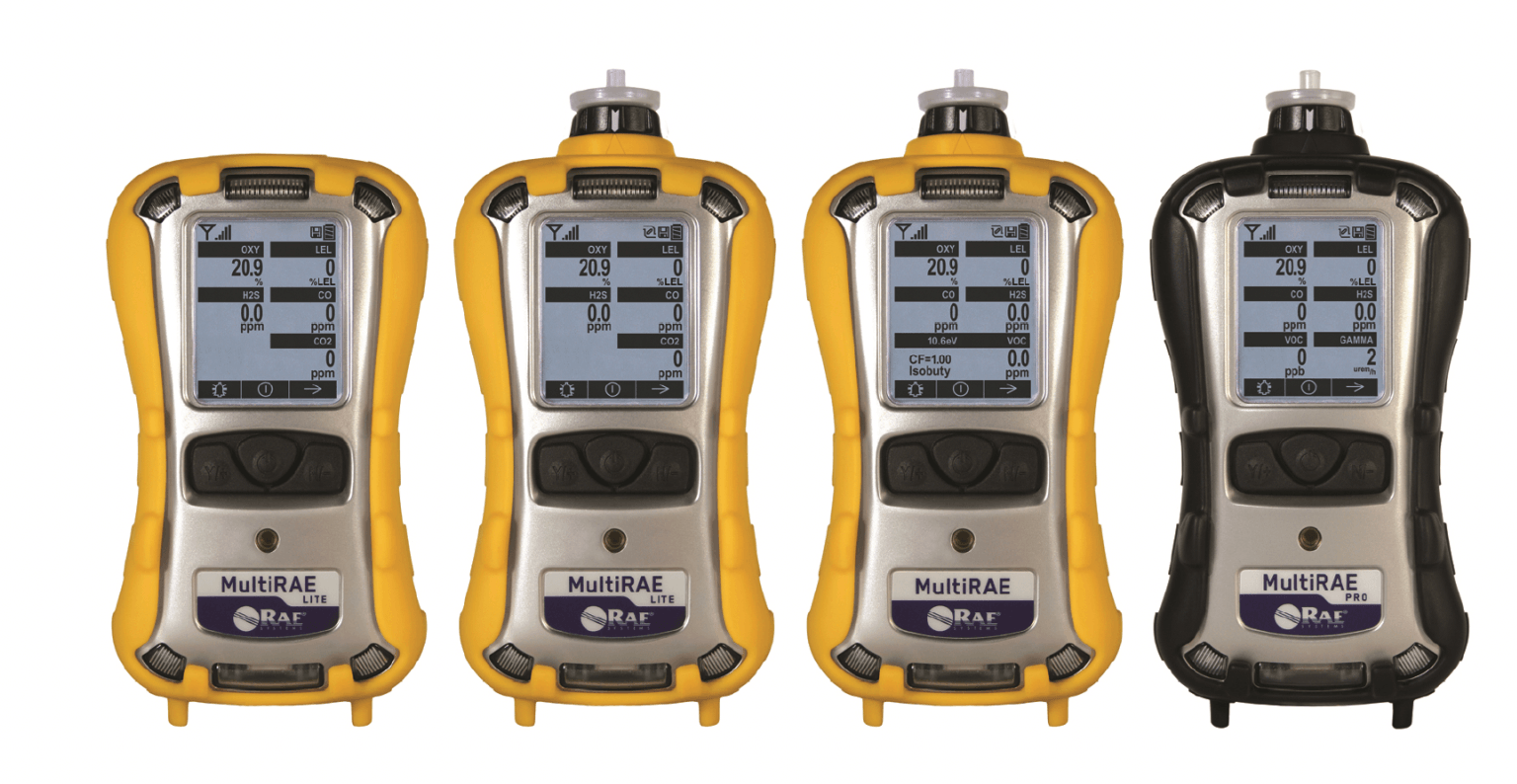
If you’ve ever stood in front of a gas detection catalog trying to figure out which sensors your multi-gas monitor actually needs, you’re not alone.
The options can feel overwhelming: LEL, PID, H2S, CO, SO₂, NH₃, O₂, and the wrong choice can mean either a false sense of security or an unnecessary equipment bill.
The truth is, there is no universal sensor combination that fits every job. The right configuration depends on your industry, your specific work environment, and the hazards that are realistically present.
Get it right, and a multi-gas detector is one of the most powerful tools in your safety program. Get it wrong, and you could be walking into a dangerous atmosphere with blind spots you don’t even know about.
This guide cuts through the confusion. We’ll explain what multi-gas monitors are, how the most common sensor types work, and most importantly, how to decide which sensors you actually need for your specific situation.
What Is a Multi-Gas Monitor?
A multi-gas monitor (also called a multi-gas detector) is a portable or fixed instrument that simultaneously measures the concentration of two or more hazardous gases in the atmosphere.
Unlike single-gas detectors, which are dedicated to one specific target gas, a multi-gas monitor gives you a real-time snapshot of multiple atmospheric hazards at the same time.
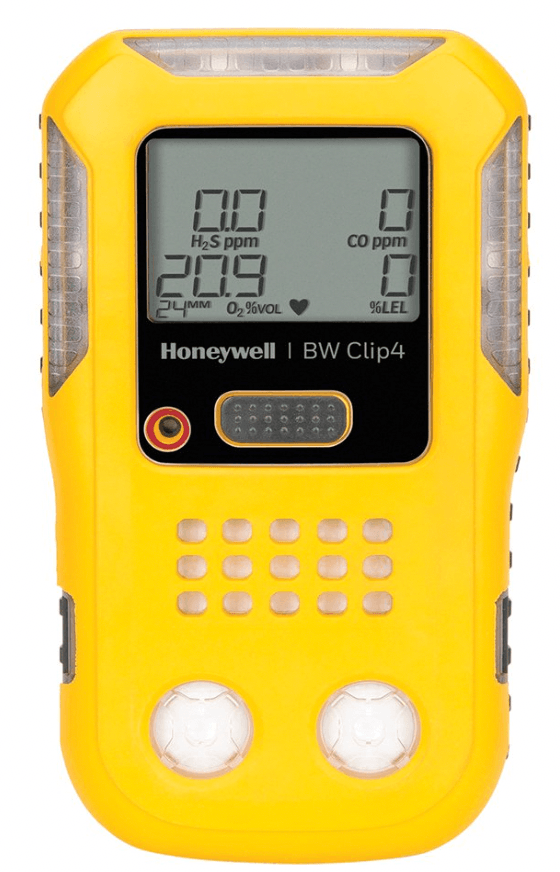
Most industrial multi-gas monitors come in a 4-gas configuration as the baseline standard. That classic 4-gas combination, LEL, O₂, H2S, and CO, was designed around the most common hazards found in confined spaces, refineries, and general industrial work.
But modern instruments can carry five, six, or even more sensors, and many are field-upgradeable, meaning you can add sensors as your job requirements change.
Understanding what each sensor detects and why is the first step toward building the right configuration for your team.
The Core Four: The Standard Starting Point
LEL Sensor (Lower Explosive Limit): Combustible Gas
What it detects
Flammable gases and vapors, including methane, propane, hydrogen, butane, and many others.
How it works
Most LEL sensors use catalytic bead (pellistor) technology. A target gas oxidizes on a heated bead, generating a temperature change that corresponds to gas concentration.
The reading is expressed as a percentage of the Lower Explosive Limit, the minimum concentration at which a gas can ignite.
A reading of 100% LEL means the atmosphere has reached ignition territory. Most monitors are set to alarm at 10% LEL (warning) and 25% LEL (danger).
When you need it
Almost always. Any environment where flammable gases or vapors may be present, such as oil and gas, chemical processing, utilities, wastewater, confined spaces, and storage tanks, requires LEL monitoring.
Key limitations
Catalytic bead LEL sensors can be poisoned by silicones and high concentrations of halogenated compounds (like certain refrigerants).
In environments where poisoning is a risk, some instruments use infrared (IR) LEL sensors instead, which are immune to poisoning but generally cost more.
Pro tip
If you’re working in an environment with a high concentration of a known gas like methane on a pipeline inspection make sure your LEL sensor is calibrated to that specific gas. Correction factors matter when accuracy is critical.
O₂ Sensor (Oxygen): Oxygen Deficiency and Enrichment
What it detects
Atmospheric oxygen concentration. Normal air is 20.9% O₂.
How it works
Electrochemical cell technology. Oxygen diffuses through a membrane and reacts with an electrode, generating a current proportional to concentration. Alarms are typically set at 19.5% O₂ (deficiency) and 23.5% O₂ (enrichment).
When you need it
Every time you enter or work in a confined space, full stop. Oxygen deficiency is one of the leading causes of confined space fatalities.
Oxygen can be displaced by inert gases (nitrogen purging), consumed by biological processes (decomposition in sewers), or absorbed by rusting metal. Oxygen enrichment, too much O₂, dramatically increases the risk of fire and explosion.
Key limitations
O₂ sensors have a finite lifespan (typically 2 years) and are sensitive to temperature and humidity extremes.
They also consume themselves over time through normal use. Keep track of sensor age and replace them on schedule.
H2S Sensor (Hydrogen Sulfide): Toxic Gas
What it detects
Hydrogen sulfide is a colorless, highly toxic gas with a characteristic rotten egg odor at low concentrations.
At high concentrations, H2S paralyzes the olfactory nerve, meaning you lose your sense of smell precisely when concentrations are most dangerous.
How it works
Electrochemical sensor. H2S reacts at an electrode, generating a current proportional to concentration.
Alarms are typically set at 10 ppm (warning) and 15 ppm (danger), per NIOSH and OSHA guidelines. The IDLH (Immediately Dangerous to Life and Health) is 50 ppm.
When you need it
Oil and gas exploration and production, refineries, wastewater and sewage treatment, paper and pulp mills, agricultural manure handling, landfills, and any confined space where organic matter may be decomposing.
H2S is one of the most common industrial killers if there’s any chance of it being present, there’s no good reason not to monitor for it.
Key limitations
H2S sensors can be cross-sensitive to other gases, including SO₂. High concentrations can temporarily saturate or damage the sensor. After an exceedance event, allow the sensor to recover fully before trusting its readings again.
CO Sensor (Carbon Monoxide): Toxic Gas
What it detects
Carbon monoxide, an odorless, colorless gas produced by incomplete combustion. CO is often called the “silent killer” because it gives no sensory warning.
How it works
Electrochemical sensor. CO is oxidized at the sensing electrode, generating a measurable current. Alarm levels are commonly set at 25 ppm (TWA), 35 ppm (STEL), and 200 ppm (danger).
When you need it
Any environment where combustion equipment operates, such as generators, engines, compressors, furnaces, and boilers.
CO is especially dangerous in enclosed or semi-enclosed areas where exhaust can accumulate. It is also produced during certain chemical processes and fires.
Key limitations
CO sensors can cross-react with hydrogen (H₂). In environments where hydrogen is present, such as battery charging rooms and some chemical plants, you may see falsely elevated CO readings. Some manufacturers offer CO sensors with H₂ compensation to address this.
Is a 4-gas monitor a necessity?
Beyond the Core Four: When You Need More
The 4-gas combo handles many industrial situations well, but it won’t catch everything. Here are the additional sensors to consider based on your specific hazard profile.
PID Sensor (Photoionization Detector): Volatile Organic Compounds (VOCs)
What it detects
A broad range of volatile organic compounds (VOCs), including benzene, toluene, xylene, styrene, and hundreds of other chemical vapors.
PID sensors are expressed in parts per million (ppm) and are extremely sensitive, capable of detecting VOCs at sub-ppm levels.
How it works
A UV lamp ionizes gas molecules. Ionized molecules generate a current proportional to concentration.
Different lamps (10.6 eV is most common; 9.8 eV and 11.7 eV are also used) ionize different ranges of compounds.
When you need it
Chemical plants, refineries, hazmat response, industrial hygiene surveys, remediation sites, laboratories, and any environment where exposure to organic solvents or hydrocarbons is a concern.
If your LEL sensor tells you there’s something combustible in the air, but you need to know what it is and at what level workers are being chemically exposed, a PID is the right tool.
Key limitations
PIDs cannot detect methane (the ionization energy is too high). They are also affected by humidity; high moisture can decrease sensitivity.
The lamp requires periodic cleaning and replacement. PIDs are not gas-specific; they give a total VOC reading unless the instrument is programmed with correction factors for specific gases.
SO₂ Sensor (Sulfur Dioxide): Toxic Gas
What it detects
Sulfur dioxide is a sharp-smelling, toxic gas produced by burning sulfur-containing fuels and during certain industrial chemical processes.
When you need it
Refineries (especially near sulfur recovery units), pulp and paper mills, power plants burning sulfur-rich coal or oil, smelters, and chemical plants. SO₂ is also present wherever H2S is combusted, including flares and thermal oxidizers.
Alarm levels
NIOSH REL is 0.5 ppm (ceiling). OSHA PEL is 5 ppm (8-hour TWA). IDLH is 100 ppm.
NH₃ Sensor (Ammonia): Toxic Gas
What it detects
Ammonia is a pungent, corrosive gas used widely as a refrigerant and in agricultural and chemical applications.
When you need it
Cold storage facilities and food processing plants using ammonia refrigeration, fertilizer production and storage, wastewater treatment (ammonia is a byproduct of biological decomposition), and chemical manufacturing.
Alarm levels
NIOSH REL is 25 ppm (TWA) and 35 ppm (STEL). IDLH is 300 ppm.
Key note
Ammonia refrigeration leak scenarios can escalate rapidly. In facilities where NH₃ refrigeration is the primary system, fixed detection supplemented by portable multi-gas monitors with NH₃ sensors is standard best practice.
Cl₂ Sensor (Chlorine): Toxic Gas
What it detects
Chlorine gas is a highly toxic yellow-green gas used in water treatment, chemical manufacturing, and paper production.
When you need it
Water and wastewater treatment plants, chemical plants, pulp mills, and any facility that stores or handles chlorine gas or hypochlorite compounds that can off-gas chlorine.
Alarm levels
NIOSH REL ceiling is 0.5 ppm. IDLH is 10 ppm. Even low concentrations cause significant respiratory irritation and damage.
HCN Sensor (Hydrogen Cyanide): Toxic Gas
What it detects
Hydrogen cyanide is an extremely toxic gas produced during the combustion of nitrogen-containing materials such as plastics, wool, and nylon.
When you need it
Firefighting and fire investigation, chemical manufacturing, electroplating and metal finishing, and fumigation operations. HCN is a particular concern in structural fires involving modern synthetic materials.
Alarm levels
NIOSH REL is 4.7 ppm (ceiling). IDLH is 50 ppm.
NO₂ Sensor (Nitrogen Dioxide): Toxic Gas
What it detects
Nitrogen dioxide, a reddish-brown toxic gas produced during combustion at high temperatures, particularly from diesel engines.
When you need it
Tunneling and underground construction, mines, enclosed parking structures, and any confined or semi-enclosed environment where diesel-powered equipment operates. NO₂ is also generated during welding operations.
Alarm levels
NIOSH REL is 1 ppm (ceiling). IDLH is 20 ppm.
How to Choose the Right Sensor Configuration
Here is a practical framework to determine which sensors belong in your multi-gas monitor.
Step 1: Define Your Environment
Ask these questions:
- Is it a confined space entry (permit-required or non-permit)?
- What processes occur in or near this space?
- What materials, chemicals, or fuels are stored, used, or produced nearby?
- What type of equipment operates in the area (diesel, gas, electric)?
- What has historical monitoring or incident data shown?
Step 2: Identify Hazards from Safety Data Sheets (SDS)
Review the SDS for every chemical and substance present in the work area. The SDS lists the physical and chemical properties, including flammability limits, vapor pressure, and exposure limits.
This tells you which gases could realistically be present and at what concentrations they become dangerous.
Step 3: Consult Regulatory Requirements
OSHA, NIOSH, and industry-specific standards (NFPA, API, ATEX) may mandate specific monitoring for certain industries and processes. Confined space entry under OSHA 29 CFR 1910.146 requires monitoring for oxygen, flammable gases, and toxic air contaminants. Know your regulatory baseline before making equipment decisions.
Step 4: Consider the Sensor Combination Practically
| Work Environment | Recommended Sensor Combination |
|---|---|
| General confined space entry | LEL + O₂ + H2S + CO |
| Oil and gas upstream | LEL + O₂ + H2S + CO + PID (optional) |
| Refinery / downstream | LEL + O₂ + H2S + CO + SO₂ |
| Wastewater / sewage | LEL + O₂ + H2S + CO + NH₃ |
| Chemical plant (VOC processes) | LEL + O₂ + CO + PID |
| Ammonia refrigeration | LEL + O₂ + CO + NH₃ |
| Tunneling / underground construction | LEL + O₂ + CO + NO₂ |
| Fire investigation / hazmat | LEL + O₂ + CO + HCN + PID |
| Water treatment | LEL + O₂ + CO + Cl₂ |
Step 5: Don’t Over-Configure
More sensors are not always better. Each additional sensor adds weight, cost, battery drain, maintenance requirements, and potential for nuisance alarms.
If a gas is genuinely not present in your environment, adding its sensor creates complexity without improving safety.
A well-chosen 4-gas configuration that workers trust and maintain properly is safer in practice than a 7-gas instrument that generates alarms nobody understands.
Sensor Maintenance: The Factor Most People Overlook
Owning the right sensors is only half the equation. Sensors that aren’t maintained correctly are as dangerous as having no sensors at all.
Bump testing
Before every use, perform a bump test by briefly exposing the sensor to a known concentration of target gas and confirm it responds and alarms.
This is different from calibration. A bump test confirms the sensor is working. Calibration confirms it is measuring accurately.
Calibration
Calibrate your instrument with certified calibration gas at the frequency recommended by the manufacturer, typically every 30 to 180 days, depending on the sensor type and use conditions. Never skip calibration on O₂ sensors or toxic gas sensors used for confined space entry.
Sensor replacement
Every sensor has a rated lifespan. Electrochemical sensors (O₂, CO, H2S) typically last 2–3 years. Catalytic bead LEL sensors can last 3–5 years under normal conditions.
PID lamps need periodic replacement. Track sensor age and follow manufacturer replacement schedules.
Environmental effects
Extreme heat, cold, and humidity all affect sensor accuracy and lifespan. Store instruments in appropriate conditions, and allow them to acclimate to the work environment before use in temperature extremes.
Common Mistakes to Avoid
Relying on the “standard” 4-gas without evaluating the actual hazards
The 4-gas combination is a starting point, not a universal solution. If SO₂ is present at your site and you’re only running LEL/O₂/H2S/CO, you have a real gap.
Skipping bump tests because “it worked yesterday
Sensors can fail overnight. Temperature swings, humidity, accidental exposure to sensor-damaging compounds, any of these can render a sensor inactive without any visible sign of malfunction. Bump test every shift.
Confusing LEL and PID readings
An LEL sensor at 0% doesn’t mean there are no VOCs present. LEL sensors have detection thresholds. A PID can detect VOCs at concentrations orders of magnitude below what an LEL sensor can register.
Ignoring cross-sensitivity
Many sensors respond to gases other than their target gas. Know your instrument’s cross-sensitivity table and factor it into your interpretation of readings, especially in complex chemical environments.
Not training workers on alarm response
A monitor is only useful if the person wearing it knows what to do when it alarms. Alarm response procedures should be written, trained, and drilled, not improvised in the moment.
Final Thoughts
A multi-gas monitor is one of the most important tools in an industrial safety professional’s kit, but it only protects people when it’s properly configured for the actual hazards present.
The 4-gas standard LEL, O₂, H2S, and CO covers a wide range of common scenarios and is the right foundation for most industrial applications.
From there, the specific gases you add should be driven by a clear-eyed assessment of your environment, your processes, your materials, and your regulatory requirements.
Take the time to do that assessment properly. Review your SDS documentation. Talk to your industrial hygienist.
Consult the manufacturer’s application guides. And once you’ve chosen your sensor configuration, build the maintenance and calibration discipline to back it up.
The right multi-gas monitor, properly configured and properly maintained, is one of the most effective ways to protect the people doing the work that keeps industry running.
Frequently Asked Questions
What is the standard sensor configuration for a multi-gas monitor?
The standard baseline is a 4-gas configuration: LEL (combustible gas), O₂ (oxygen), H2S (hydrogen sulfide), and CO (carbon monoxide).
This combination addresses the most common hazards in confined space entry and general industrial work.
Do I need a PID sensor in my multi-gas monitor?
You need a PID sensor if you work in environments where exposure to volatile organic compounds (VOCs) is a concern, such as chemical plants, refineries, remediation sites, or laboratories.
A PID detects a broad range of organic vapors at very low concentrations that LEL sensors cannot register.
How often should I calibrate my multi-gas monitor?
Manufacturer recommendations vary, but most multi-gas monitors should be calibrated every 30 to 180 days, and bump tested before every use.
O₂ and toxic gas sensors used for confined space entry should never go into service without a current bump test.
Can one multi-gas monitor detect all gases?
No single instrument can detect every possible gas hazard. Multi-gas monitors are configured for specific gases based on the expected hazards.
Choosing sensors based on a thorough hazard assessment of your work environment is essential.
What is the difference between bump testing and calibration?
A bump test confirms the sensor responds to gas and alarms properly. Calibration verifies that the sensor is measuring concentration accurately against a known standard gas. Both are necessary bump tests before every use, and calibrations on a scheduled cycle.
Written by a certified industrial safety engineer with hands-on experience in gas and flame detection systems.