Working in confined spaces is one of the most hazardous tasks in any industry. Whether you’re managing pipelines, storage tanks, manholes, or industrial vessels, the invisible threat of toxic and combustible gases makes a reliable gas monitor not just a legal requirement; it’s a lifesaver.
But with dozens of devices on the market, how do you choose the right confined space gas monitor for your team?
This guide breaks down everything you need to know: from the types of gases you need to detect, to sensor technology, certification standards, and real-world buying considerations.
What Is a Confined Space Gas Monitor?
A confined space gas monitor (also called a confined space gas detector) is a portable or fixed instrument that continuously measures the concentration of hazardous gases in the air.
It alerts workers via an audible alarm, a visual indicator, or vibration when gas levels reach dangerous thresholds.
According to OSHA, a permit-required confined space contains or has the potential to contain a serious atmospheric hazard, including oxygen deficiency, flammable gases, or toxic vapors.
A calibrated, properly selected gas monitor is mandatory for entry into these environments.
How to Choose a Confined Space Gas Monitor in 6 Steps
Here are the 6 steps you need to follow when choosing a confined space monitor.
Step 1: Identify the Gases You Need to Detect
The most important factor in choosing a confined space gas monitor is understanding what hazards you’re likely to encounter. The most common threats in confined spaces include:
Oxygen (O₂)
Normal atmospheric oxygen is 20.9%. Levels below 19.5% are considered oxygen-deficient; levels above 23.5% are oxygen-enriched (fire hazard). All confined space monitors should include O₂ detection.
Combustible Gases (LEL)
The Lower Explosive Limit (LEL) sensor detects flammable gases like methane, propane, and hydrogen. Alarms typically trigger at 10–25% LEL, well before explosive concentrations are reached.
Carbon Monoxide (CO)
CO is a colorless, odorless gas produced by combustion. It’s a leading cause of confined space fatalities. OSHA’s permissible exposure limit (PEL) is 50 ppm as an 8-hour TWA.
Hydrogen Sulfide (H₂S)
H₂S is common in sewers, oil and gas facilities, and wastewater treatment plants. It smells like rotten eggs at low concentrations but deadens the sense of smell at higher levels, making it especially dangerous. OSHA’s PEL is 20 ppm.
Other Gases to Consider
Depending on your industry, you may also need detection for:
- Ammonia (NH₃): refrigeration facilities, agriculture
- Chlorine (Cl₂): water treatment, chemical plants
- Sulfur Dioxide (SO₂): power generation, industrial processes
- Volatile Organic Compounds (VOCs): petrochemical, pharmaceutical industries
Pro Tip: Start with a 4-gas monitor (O₂, LEL, CO, H₂S) as your baseline. This covers the vast majority of confined space hazards across industries.
Step 2: Choose the Right Type of Gas Monitor
Single-Gas Detectors
These monitor one specific gas and are best when you have a well-defined, singular hazard. They’re compact, affordable, and easy to use, ideal as a supplement to a multi-gas detector.
Multi-Gas Detectors (Most Common for Confined Spaces)
Multi-gas detectors simultaneously measure 4 or more gases. They are the industry standard for confined space entry because atmospheric hazards rarely involve a single gas.
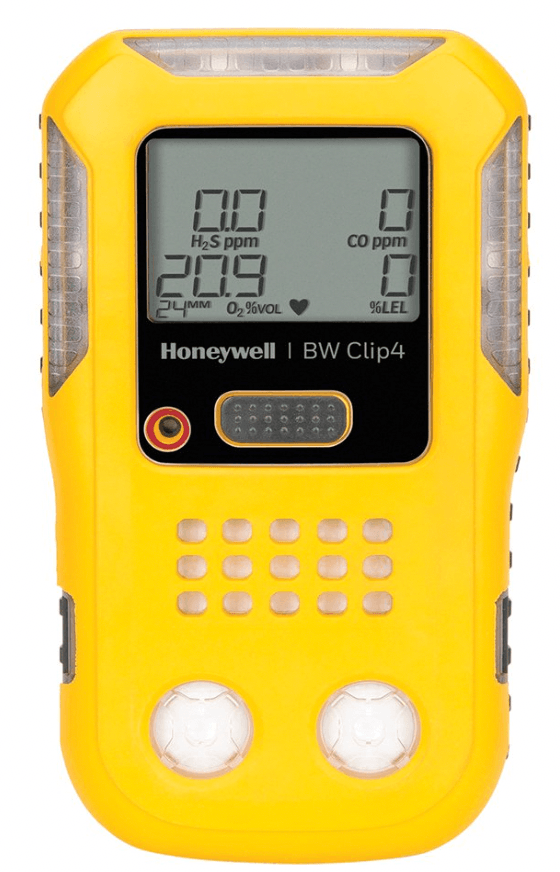
Leading models include the MSA Altair 4XR, Industrial Scientific MX6 iBrid, and Honeywell BW Clip4.
Pumped vs. Diffusion Monitors
| Feature | Diffusion (Passive) | Pumped (Active) |
|---|---|---|
| How it works | Gas reaches sensors naturally | Internal pump draws air to sensors |
| Best use | Personal monitoring during work | Pre-entry atmospheric testing |
| Response time | Slower | Faster |
| Range | Limited to immediate vicinity | Can test from a distance |
| Cost | Lower | Higher |
For confined space pre-entry testing, a pumped monitor is strongly recommended it allows you to sample the atmosphere before anyone enters the space.
Step 3: Understand Sensor Technology
Electrochemical Sensors
Used for toxic gases (CO, H₂S, O₂). They are accurate, relatively inexpensive, and widely available. Sensor lifespan is typically 2–3 years.
Catalytic Bead (Pellistor) Sensors
The standard for LEL/combustible gas detection. They are reliable across a wide range of flammable gases but can be poisoned by silicone or lead compounds, reducing accuracy over time.
Infrared (IR) Sensors
More expensive but immune to sensor poisoning. They are ideal for environments where catalytic sensors degrade quickly and are commonly used for hydrocarbon-rich atmospheres.
Photoionization Detectors (PID)
Used specifically for detecting VOCs at very low concentrations. A PID is often added as a fifth sensor in specialized multi-gas units.
Step 4: Check Certifications and Compliance Standards
A confined space gas monitor must meet regulatory and safety standards relevant to your region and industry. Key certifications to look for include:
- OSHA 29 CFR 1910.146: U.S. standard for permit-required confined spaces
- UL (Underwriters Laboratories): safety certification for electrical equipment
- CSA (Canadian Standards Association): required for use in Canada
- ATEX / IECEx: required for use in explosive atmospheres (common in oil & gas in Europe and internationally)
- IP Rating (Ingress Protection): look for IP65 or higher to ensure dust and water resistance
Never purchase a gas monitor for confined space work that lacks the appropriate safety certifications for your jurisdiction.
Step 5: Evaluate Key Features
Once you’ve identified the gases and sensor types you need, compare monitors based on these practical features.
✅ Alarm Types
Look for monitors with audible (≥85 dB), visual (flashing LED), and vibrating alarms. In loud industrial environments, a single alarm type is often insufficient.
✅ Battery Life
A full shift can last 10–12 hours. Choose a monitor with at least 12 hours of battery life on a single charge. Some models offer hot-swappable batteries for continuous operation.
✅ Datalogging and Connectivity
Modern monitors can log gas readings with timestamps, which is critical for incident reporting and compliance documentation.
Bluetooth and wireless connectivity allow real-time monitoring from a remote location or safety management platform.
✅ Bump Testing and Calibration
Regular bump testing (exposing the sensor to a known gas concentration) and full calibration are required by OSHA and most safety standards. Look for monitors that are easy to calibrate and compatible with calibration docking stations.
✅ Durability and Build Quality
Confined spaces can be dirty, wet, and physically demanding environments. Prioritize monitors with rugged, drop-tested housings and high IP ratings.
✅ Display Readability
Can readings be seen clearly in low-light or bright-sun conditions? A backlit display with large, clear digits is essential.
✅ Man-Down and Lone Worker Alerts
Some monitors include motion/tilt sensors that trigger an alert if the worker becomes immobile or falls, a critical feature for solo confined space work.
Step 6: Consider Total Cost of Ownership
The purchase price is just one part of the cost. When budgeting for confined space gas monitors, factor in:
- Replacement sensors (typically needed every 2–3 years)
- Calibration gas cylinders and regulators
- Docking/charging stations
- Service and warranty costs
- Software subscriptions for fleet management platforms
A cheaper monitor that requires frequent sensor replacement or has no calibration dock support can cost more in the long run than a premium unit with a robust ecosystem.
Top Confined Space Gas Monitors
Here are some of the most trusted models used by safety professionals:
| Model | Gases Detected | Best For |
|---|---|---|
| MSA Altair 4XR | O₂, LEL, CO, H₂S | General confined space entry |
| Industrial Scientific MX6 iBrid | Up to 6 gases | Versatile industrial use |
| Honeywell BW Clip4 | O₂, LEL, CO, H₂S | Cost-effective, disposable option |
| RKI Eagle 2 | Up to 6 gases + PID | Petrochemical, VOC environments |
| Draeger X-am 5000 | Up to 5 gases | ATEX-rated, European compliance |
Always verify current specifications with the manufacturer before purchasing.
Common Mistakes to Avoid
Skipping pre-entry atmospheric testing
Never rely solely on visual inspection. Always test with a pumped monitor before entry.
Neglecting regular calibration and bump testing
An uncalibrated monitor may give false readings or, worse, no alarm at all. Follow a documented calibration schedule.
Choosing a monitor based on price alone
Reliability and sensor accuracy in life-safety applications outweigh cost savings. A failed monitor in a confined space can be fatal.
Ignoring the specific hazards of your environment
A standard 4-gas monitor may not be sufficient if your site has ammonia, chlorine, or high VOC concentrations. Know your hazards.
Failing to train workers on the use
A gas monitor is only effective if workers know how to interpret readings, respond to alarms, and perform basic maintenance.
Final Checklist: How to Choose a Confined Space Gas Monitor
Before purchasing, run through this checklist.
- I have identified all potential atmospheric hazards in my confined spaces
- I’ve chosen a monitor that detects all relevant gases (at minimum: O₂, LEL, CO, H₂S)
- The monitor is pumped for pre-entry testing capability
- It carries the appropriate certifications (OSHA, ATEX, UL, CSA)
- Battery life exceeds my longest work shift
- The unit is rated IP65 or higher
- It includes audible, visual, and vibrating alarms
- Calibration and bump testing are straightforward
- I’ve budgeted for sensors, calibration gas, and accessories
- Workers are trained on proper use and alarm response
Conclusion
Choosing the right confined space gas monitor is a critical decision that directly impacts the safety of your workers and your compliance with OSHA regulations.
By understanding the gases present in your environment, selecting the appropriate sensor technology, verifying certifications, and evaluating practical features like battery life and alarm types, you can invest in a monitor that provides reliable protection every time.
At SafeguardSense.com, we’re committed to helping safety professionals make informed decisions about gas detection and personal protective equipment.
Explore our reviews, comparison guides, and industry resources to find the best solution for your team.
Have questions about a specific confined space gas monitor? Leave a comment below or contact us; we’re here to help.