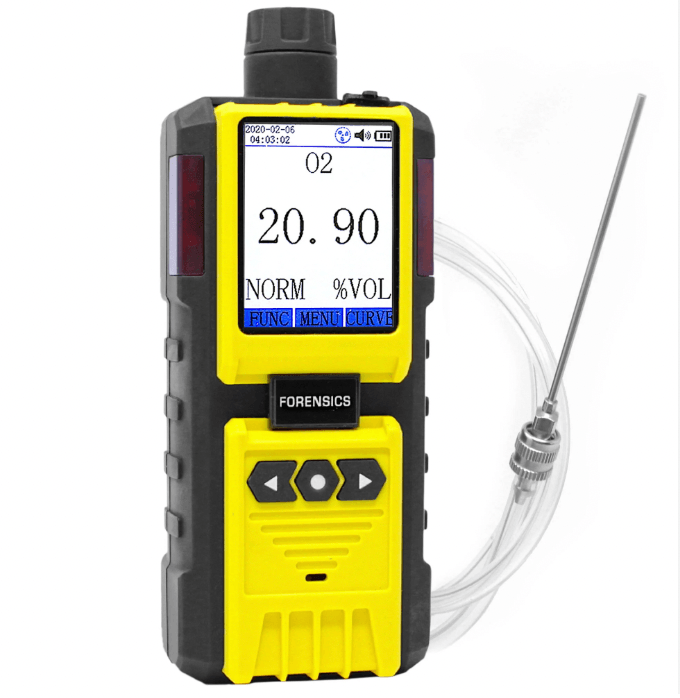
Nitrogen gas is all around us. It makes up roughly 78% of the air we breathe. But in industrial, laboratory, and commercial settings, an uncontrolled buildup of nitrogen can be silently deadly.
Because nitrogen is colorless, odorless, and tasteless, you cannot rely on your senses to detect it.
That makes knowing how to detect nitrogen gas one of the most important safety skills for workers, facility managers, and safety officers alike.
In this guide, we’ll walk you through the science of nitrogen detection, the tools and methods used by professionals, and the warning signs you need to watch for so you can protect yourself and those around you.
Why Detecting Nitrogen Gas Is So Difficult
Before diving into detection methods, it’s important to understand why nitrogen presents such a unique challenge compared to other hazardous gases.
Nitrogen is invisible and has no odor
Unlike ammonia, which has a sharp, pungent smell, or chlorine, which is immediately irritating to the eyes and nose, nitrogen gives you no sensory warning whatsoever.
By the time symptoms of oxygen deficiency begin, such as dizziness, confusion, or loss of consciousness, it may already be too late to react safely.
Nitrogen displaces oxygen rather than reacting with it
When nitrogen accumulates in an enclosed or poorly ventilated space, it pushes oxygen out of the breathable zone.
This is known as oxygen displacement or oxygen deficiency, and it is the primary danger associated with nitrogen leaks.
The human body cannot detect the drop in oxygen until cognitive impairment has already begun.
Measuring absolute nitrogen concentration is impractical
Since nitrogen is already present at 78% in normal air, detecting an increase in nitrogen directly is not a feasible approach for most monitoring systems.
Instead, professional detection relies on monitoring oxygen levels because a drop in oxygen is the direct result of nitrogen accumulation.
Signs of a Nitrogen Gas Leak
Even though nitrogen itself cannot be smelled or seen, there are environmental and physical signs that may indicate a leak is occurring.
Frost or ice forming on nitrogen pipes, valves, or storage vessels a common indicator with liquid nitrogen (LN₂) systems.
Hissing sounds from pressurized nitrogen lines may indicate a crack, loose fitting, or damaged valve.
Unexplained pressure drops in nitrogen pipelines or storage tanks are detected via pressure gauges.
Physical symptoms in personnel, including dizziness, headache, shortness of breath, rapid breathing, or sudden loss of coordination, are all signs of oxygen deficiency.
Dead or wilting plants near a suspected leak area, as plants also require oxygen.
If any of these signs are observed, personnel should immediately evacuate the area and follow your facility’s emergency gas leak protocol.
How to Detect Nitrogen Gas: The Most Effective Methods
Oxygen Deficiency Monitoring (The Primary Safety Method)
The most reliable and widely used method for detecting dangerous nitrogen concentrations is oxygen depletion monitoring.
Rather than measuring nitrogen directly, these instruments measure the percentage of oxygen in the surrounding air.
OSHA defines the safe minimum oxygen level as 19.5% by volume. Any reading below this threshold indicates oxygen deficiency, which may be caused by nitrogen accumulation (or other inert gases).
Readings below 16% can cause rapid incapacitation, and readings below 6% are immediately life-threatening.
Types of oxygen deficiency monitors
Portable oxygen detectors
Handheld devices that safety personnel carry into confined spaces or suspected leak areas. Before entering any enclosed space where nitrogen is stored or used, a portable oxygen detector should be used to confirm oxygen levels are at or above 19.5%.
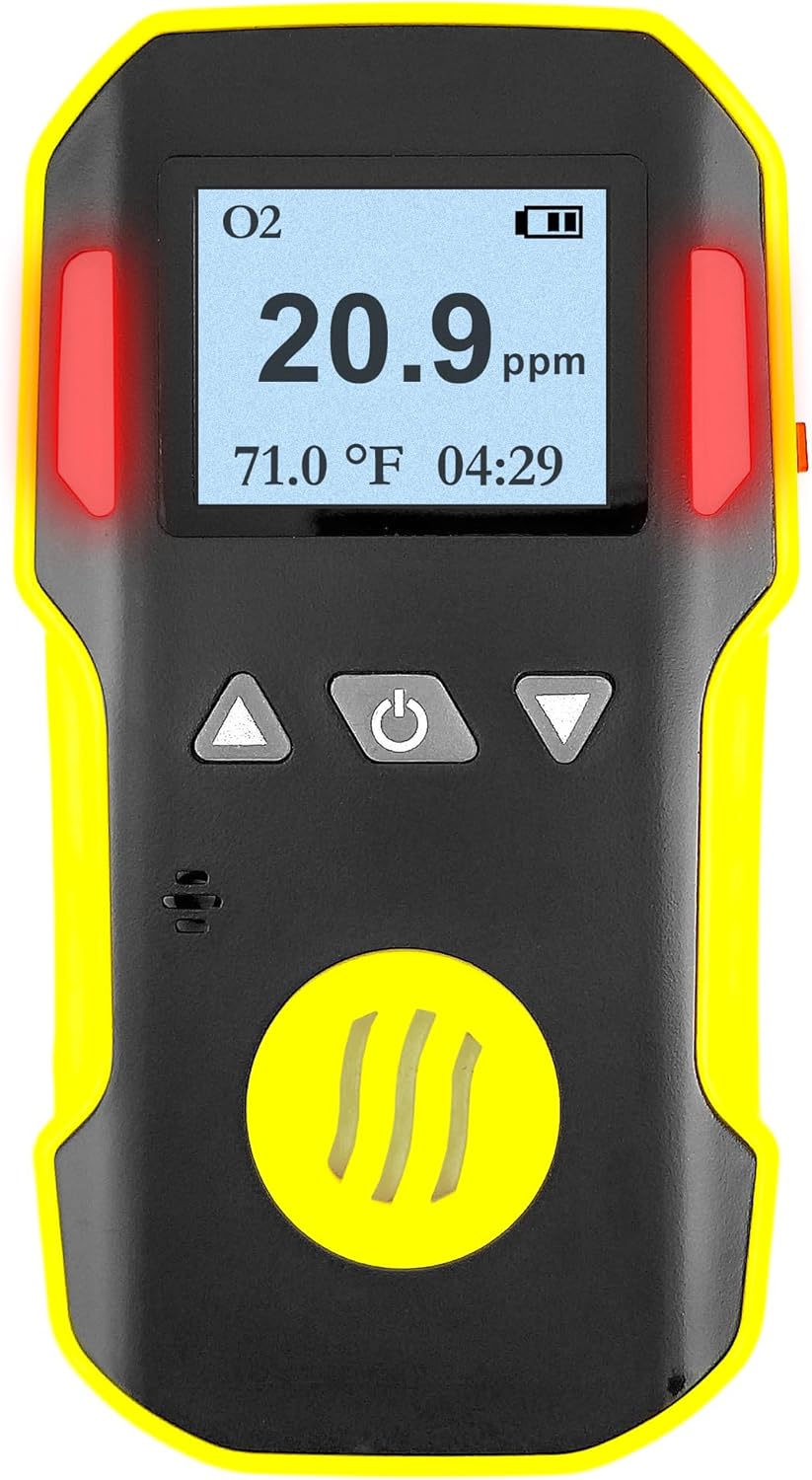
Fixed oxygen monitors
Permanently installed sensors are placed in rooms, storage areas, or near nitrogen equipment. These provide continuous 24/7 monitoring and are configured to trigger audible and visual alarms when oxygen levels drop below the safe threshold.
Fixed monitors are strongly recommended for facilities that store large quantities of nitrogen in liquid or gaseous form.
These instruments should be calibrated regularly according to the manufacturer’s specifications to ensure accuracy.
Thermal Conductivity Detection (Katharometer Method)
For laboratory and research applications, a katharometer (also called a thermal conductivity detector, or TCD) can be used to detect the presence of nitrogen by comparing the thermal conductivity of the test gas to that of a known reference gas, such as hydrogen.
The katharometer works by exposing one cell to the reference gas and a second cell to the gas being tested.
Different gases conduct heat at different rates, and the instrument measures the difference, allowing it to identify the composition of the test gas.
While this method is precise and useful in controlled settings, it is better suited for laboratory analysis and gas purity testing than for everyday workplace safety monitoring.
Nitrogen Purity Testing with Oxygen Sensors
In industrial applications such as food packaging, laser cutting, and electronics manufacturing, nitrogen purity is critical. The most common method for checking nitrogen purity is the use of residual oxygen sensors.
Rather than directly measuring nitrogen content, these sensors detect the small amount of oxygen remaining after gas separation.
A higher residual oxygen reading means lower nitrogen purity. This approach is standard in nitrogen generators and inline purity analyzers used throughout manufacturing.
The Flame Extinguishing Test (Basic Field Method)
In basic laboratory or field conditions where electronic instruments are unavailable, a simple flame test can indicate the presence of an inert gas like nitrogen.
- Fill a flask or large container with the gas to be tested.
- Light a match or splint and carefully introduce the flame into the container.
- If the flame is immediately extinguished and there is no explosive reaction, this indicates the gas is non-reactive, consistent with nitrogen.
Important
This test only confirms the absence of oxygen and flammable gases; it does not specifically identify nitrogen.
It should never be used as a substitute for proper gas monitoring equipment in safety-critical environments.
Always use appropriate personal protective equipment (PPE) when conducting any flame-based test.
Litmus Paper Testing (Chemical Method)
Another basic method for ruling out certain gases is the use of litmus paper.
- Red litmus paper turns blue in the presence of a basic (alkaline) gas.
- Blue litmus paper turns red in the presence of an acidic gas.
- If neither red nor blue litmus paper changes color, this is consistent with a neutral, elemental gas such as nitrogen.
Again, this is a process of elimination, not direct identification. It can help confirm that a gas is neither acidic nor basic, pointing toward an inert gas like nitrogen, but it cannot definitively identify nitrogen on its own.
Leak Localization Techniques
Once an oxygen monitor has confirmed that nitrogen levels are elevated in a given area, the next step is pinpointing the source of the leak. Several methods are used for leak localization.
Ultrasonic Leak Detectors
Pressurized gas escaping through a crack or loose fitting produces ultrasonic sound waves that are inaudible to the human ear.
Ultrasonic detectors convert these signals into audible tones, allowing technicians to locate the precise source of a nitrogen leak. These devices should be calibrated annually by the manufacturer.
Pressure Monitoring
For nitrogen pipelines, unexpected drops in pressure readings from installed gauges or flow meters can signal a leak in the system.
Soap Bubble Testing
A simple, low-tech method in which a soapy solution is applied to connections, fittings, and joints. Bubbles forming at a specific point indicate a leak.
This method is effective for low-pressure systems but should not be used in hazardous environments without first confirming safe oxygen levels.
Infrared (IR) Cameras
Thermal imaging cameras can detect temperature anomalies associated with liquid nitrogen leaks, such as the cold zones created when LN₂ escapes and rapidly vaporizes.
Where Nitrogen Gas Leaks Are Most Likely to Occur
Nitrogen leaks are most dangerous in enclosed or poorly ventilated spaces. High-risk environments include:
- Cryogenic storage rooms and liquid nitrogen freezer banks
- Laboratory fume hoods and confined laboratory spaces
- Industrial nitrogen generator rooms
- Underground utility vaults and storage tanks
- Cryotherapy spas and wellness facilities that use liquid nitrogen
- Food packaging and cold storage facilities
- Breweries and winemaking operations using nitrogen blanketing
In all of these settings, both portable and fixed oxygen monitoring equipment is strongly recommended and in many jurisdictions, required by local regulations or OSHA.
Personal Protective Equipment (PPE) for Nitrogen Environments
Because nitrogen displaces oxygen rather than reacting chemically, standard air-purifying respirators (APRs) are not effective in nitrogen-enriched environments. Air-purifying devices filter contaminants but do not add oxygen, making them useless where oxygen is already depleted.
In environments with a confirmed or suspected risk of oxygen deficiency, workers should use:
- Self-Contained Breathing Apparatus (SCBA), which supplies its own air source.
- Supplied-Air Respirators (SAR) connected to a remote, uncontaminated air supply.
- Cryogenic gloves and face shields when working with liquid nitrogen.
- Insulated boots and protective clothing to prevent contact with LN₂.
Never enter a space where oxygen levels are below 19.5% without the appropriate respiratory protection.
Best Practices for Nitrogen Gas Detection and Safety
Following a consistent safety protocol reduces the risk of nitrogen-related incidents significantly:
- Install fixed oxygen monitors in all areas where nitrogen is stored or used in significant quantities.
- Conduct pre-entry checks with a portable oxygen detector before anyone enters a confined space associated with nitrogen systems.
- Inspect equipment regularly, check hoses, valves, connections, and fittings for wear, cracks, or damage on a scheduled basis.
- Respond to alarms immediately. Never assume an alarm is a false positive. Evacuate the area and investigate.
- Repair leaks promptly; do not delay repairs. Nitrogen can accumulate quickly in enclosed spaces.
- Train all personnel on the hazards of nitrogen, the location of monitors, and emergency response procedures.
- Review monitoring logs quarterly to identify recurring patterns, such as repeated alarms in a specific area, which may indicate a chronic leak issue.
- Calibrate and maintain detection equipment on schedule. A detector that hasn’t been calibrated is no detector at all.
Frequently Asked Questions
Can you smell a nitrogen gas leak?
No. Nitrogen is completely odorless. You cannot detect it by smell, sight, or taste. Only proper monitoring equipment can detect dangerous nitrogen concentrations.
What are the symptoms of nitrogen exposure?
Symptoms of oxygen deficiency caused by nitrogen accumulation include dizziness, headache, fatigue, rapid breathing, confusion, and loss of consciousness. In severe cases, it can be fatal within minutes.
What is the safe level of oxygen in a workspace?
OSHA requires a minimum of 19.5% oxygen by volume for safe working conditions. Any environment below this threshold is considered oxygen-deficient.
Is a nitrogen leak the same as nitrogen gas poisoning?
Nitrogen itself is non-toxic. The danger comes from oxygen displacement. When nitrogen fills a space, it reduces the available oxygen, leading to asphyxiation, not chemical poisoning.
How often should nitrogen gas detectors be calibrated?
Follow the manufacturer’s recommendations. Most portable detectors require calibration every 3 to 6 months, while fixed systems may have different intervals. Ultrasonic leak detectors should be calibrated annually.
Final Thoughts
Detecting nitrogen gas is not a matter of sniffing the air or looking for a cloud. It requires the right equipment, the right protocols, and a well-trained team.
Because nitrogen is invisible and odorless, oxygen deficiency monitors are the cornerstone of any effective nitrogen safety program.
Whether you’re managing a laboratory, an industrial facility, a brewery, or a cryotherapy spa, investing in quality gas detection equipment and following established safety practices can be the difference between a close call and a tragedy.
Stay informed. Stay equipped. Stay safe.
For more guides on gas detection, workplace safety, and protective equipment, explore the full resource library at SafeguardSense.com.