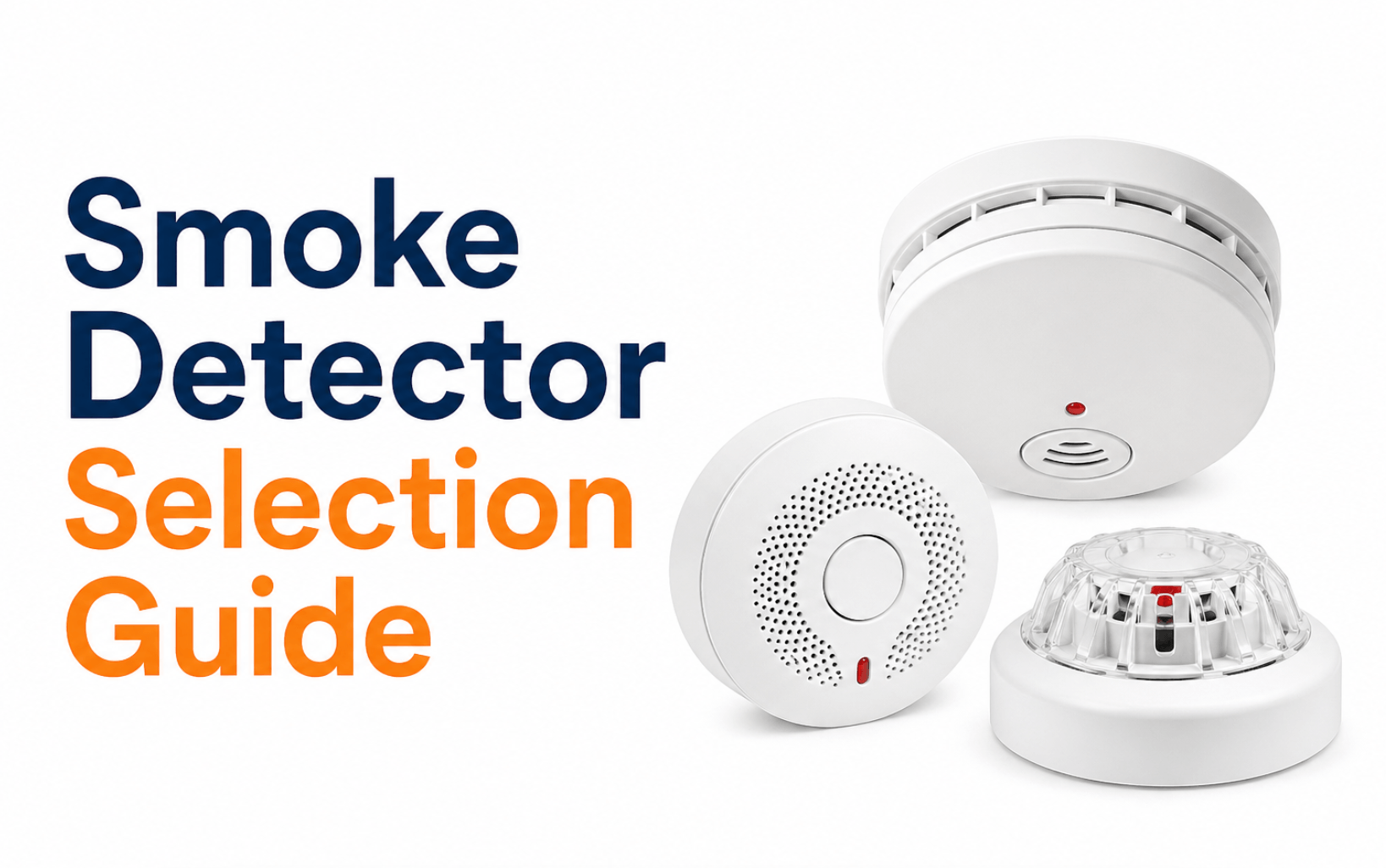
When was the last time you thought seriously about your smoke detectors? Most people install them, test the battery once a year (if that), and never think twice about whether they have the right type for their home.
But here’s the thing: not all smoke detectors respond to the same kind of fire the same way, and choosing the wrong type could cost you critical minutes in an emergency.
This guide breaks down the three main smoke detector technologies: ionization, photoelectric, and combination, so you can make an informed decision about protecting your home, family, or facility.
Why the Type of Smoke Detector Matters?
There are two fundamentally different types of fires you need to protect against.
Fast-flaming fires
These ignite and spread rapidly, producing intense heat and large combustion particles. Think of grease fires, paper fires ignited by a candle, or electrical sparks that catch on dry material.
Slow-smoldering fires
These can burn for hours before breaking into flames, producing dense, fine smoke particles and toxic gases long before visible fire appears. A smoldering couch cushion or overheated wiring inside a wall are classic examples.
The critical problem: no single sensor technology detects both equally well.
That’s not a minor technicality. A 2004 NIST (National Institute of Standards and Technology) study found that ionization detectors responded to fast-flaming fires faster, while photoelectric detectors were significantly quicker to alert during slow-smoldering fires, sometimes by 30 to 50 minutes. In a residential fire, that time gap can be the difference between evacuation and tragedy.
This is why understanding the technology behind your detector isn’t just an interesting engineering detail; it’s a life-safety decision.
How Ionization Smoke Detectors Work
The Technology
Ionization detectors contain a small amount of Americium-241 (Am-241), a mildly radioactive element.
This material continuously ionizes the air between two electrically charged plates inside the detector, creating a small, steady current.
When smoke enters the sensing chamber, the combustion particles disrupt this ionized current. The detector’s electronics register the drop in current and trigger the alarm.
What Ionization Detectors Detect Best
Ionization detectors excel at detecting large combustion particles produced by fast-flaming fires. Because these particles are physically large enough to significantly disrupt the ion current, the detector responds quickly.
Best applications.
- Kitchens (though placement matters, see common mistakes below)
- Living rooms where fast-igniting materials are present
- Garages with flammable liquids or materials
Limitations of Ionization Detectors
- Slower response to smoldering fires that produce fine, dense smoke.
- More prone to nuisance alarms from cooking vapors, steam, and humidity.
- Contain a small radioactive source (safe in normal use, but requires proper disposal; do not throw in regular trash).
Cost
Ionization detectors are generally the least expensive option, often available for $8–$20 per unit. They are the most widely deployed type in North American homes, largely due to their lower cost.
How Photoelectric Smoke Detectors Work
The Technology
Photoelectric detectors use a light source (typically an LED) and a light sensor positioned at a 90-degree angle inside a sensing chamber. Under normal conditions, the beam travels straight across the chamber without reaching the sensor.
When smoke enters the chamber, particles scatter the light beam, deflecting some of it toward the sensor. The detector interprets this light scattering as smoke and triggers the alarm.
This principle is known as the Tyndall effect, the same physics behind why sunlight appears to scatter through dusty or foggy air.
What Photoelectric Detectors Detect Best
Photoelectric detectors excel at detecting fine smoke particles from slow-smoldering fires. Because smoldering combustion produces dense, fine aerosol particles that scatter light very effectively, photoelectric technology responds to these fires significantly faster than ionization technology.
Best applications
- Bedrooms
- Hallways
- Living rooms with upholstered furniture
- Offices and areas with electronics that might smolder before flaming
Limitations of Photoelectric Detectors
- Slightly slower response to fast-flaming fires compared to ionization detectors.
- Generally cost more than basic ionization units ($15–$35 per unit).
- May be triggered by heavy steam or dusty environments if poorly positioned.
Why Safety Organizations Increasingly Favor Photoelectric
The U.S. Fire Administration, several state fire marshals, and fire safety advocacy groups have increasingly recommended photoelectric detectors for residential bedrooms and sleeping areas.
The reasoning: smoldering fires are particularly dangerous at night because occupants are asleep, and the slow buildup of toxic gases (particularly carbon monoxide) can incapacitate people before a full flaming fire develops.
How Combination (Dual-Sensor) Smoke Detectors Work
The Technology
Combination detectors integrate both ionization and photoelectric sensing technologies into a single unit.
Some models process both sensor inputs independently and alarm when either threshold is exceeded.
More advanced models use signal processing algorithms to reduce nuisance alarms while maintaining fast response across both fire types.
What Combination Detectors Detect Best
The straightforward answer: both types of fires.
Combination detectors are engineered to close the detection gap. They offer.
- Fast response to flaming fires (via the ionization sensor).
- Early warning for smoldering fires (via the photoelectric sensor).
- Reduced the need for installing two separate detector types in some locations.
Are Combination Detectors Always the Best Choice?
Not necessarily, and this is a nuance that often gets overlooked in simple buying guides.
A few considerations.
Cost
Combination units cost more ($25–$60+), and if you’re equipping a large home or facility, that cost multiplies.
Nuisance alarm management
Combining two technologies doesn’t automatically reduce false alarms. In fact, without smart signal processing, a combination unit could alarm more frequently than a single-technology unit.
Look for models that specifically address nuisance alarm performance (discussed in the recommendations section below).
Not a substitute for strategic placement
Even a combination detector positioned incorrectly provides suboptimal protection.
Ionization vs. Photoelectric vs. Combination: Key Differences at a Glance
| Feature | Ionization | Photoelectric | Combination |
|---|---|---|---|
| Best for | Fast-flaming fires | Slow-smoldering fires | Both fire types |
| Response to smoldering fires | Slower | Faster | Fast |
| Response to flaming fires | Faster | Slightly slower | Fast |
| Nuisance alarm tendency | Higher (kitchen fumes) | Lower | Varies by model |
| Cost range | $8–$20 | $15–$35 | $25–$60+ |
| Contains a radioactive source | Yes (Am-241) | No | Yes (if ionization sensor included) |
| Recommended for bedrooms | Less ideal | Yes | Yes |
| Recommended for kitchens | With caution | Preferred | Preferred |
Which Smoke Detector Type Is Best for Which Room?
Bedrooms and Sleeping Areas
Recommended: Photoelectric or Combination
The most common deadly residential fires, smoldering fires from upholstered furniture, bedding, and electronics, produce the fine smoke particles that photoelectric technology detects earliest. Since occupants are asleep and may not notice the smoke odor, early warning is critical.
Hallways and Corridors
Recommended: Photoelectric or Combination
Hallways serve as escape routes. Smoke from either fire type can fill these spaces, and early detection here buys evacuation time. Photoelectric technology generally performs well in these locations.
Kitchen
Recommended: Photoelectric, but placement is everything
Kitchens are the leading source of nuisance alarms. Ionization detectors are particularly prone to false alarms from cooking vapors, which frustrates users and, more dangerously, trains them to ignore or disable detectors.
Photoelectric units perform better in kitchens, but placement matters enormously.
- Keep detectors at least 10 feet from cooking appliances.
- Avoid positioning directly above or adjacent to stoves, toasters, and ovens.
- Consider a heat detector (not a smoke detector) directly over a cooking area as a supplementary device.
Living Rooms
Recommended: Combination
Living rooms contain a mix of fuel types, upholstered furniture (smoldering risk), curtains, paper materials, and electronics. A combination detector provides the broadest coverage.
Garage
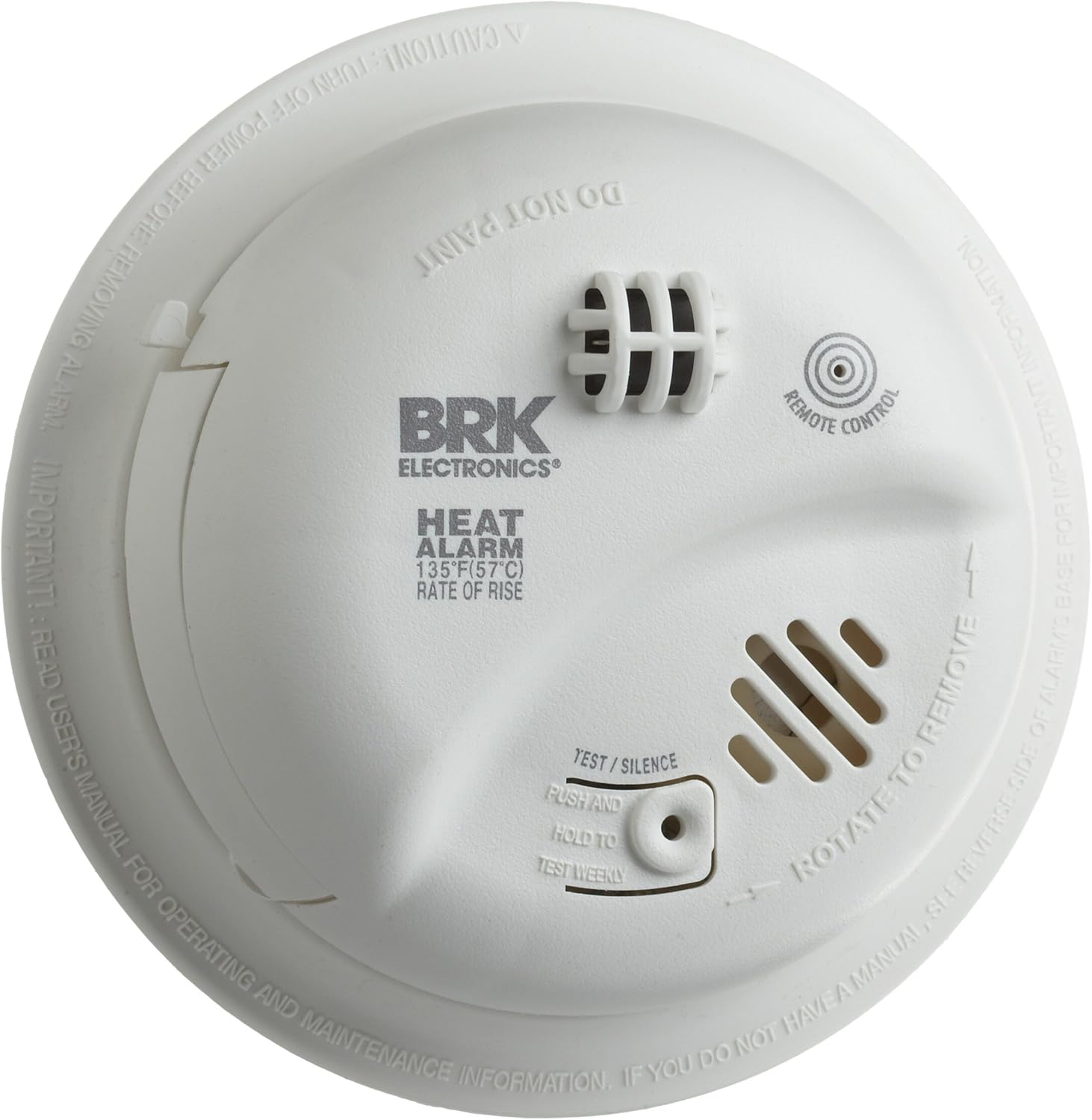
Recommended: Heat detector (not smoke detector) or dedicated garage model
Standard smoke detectors in garages are highly susceptible to false alarms from exhaust fumes, dust, and humidity. A rate-of-rise heat detector is often better suited for garage applications.
Basement
Recommended: Combination or Photoelectric
Basement fires often smolder from electrical or stored material ignition. Photoelectric or combination units are well-suited here.
What Fire Codes and Standards Say
NFPA 72 (National Fire Alarm and Signaling Code)
NFPA 72 is the primary standard governing smoke detector installation in the United States. It specifies placement requirements (floor coverage, ceiling mounting rules, distance from walls and HVAC vents) but does not mandate a specific smoke detector technology for residential applications. It does, however, include performance testing criteria that detectors must meet.
Key placement requirements from NFPA 72
- Install on every level of the home, including the basement.
- Install inside every bedroom and outside each sleeping area.
- Mount on the ceiling or high on walls (4–12 inches from the ceiling for wall-mounted units).
- Keep at least 3 feet from HVAC supply registers.
- Test monthly and replace units every 10 years.
UL 217 (Standard for Smoke Alarms)
Underwriters Laboratories UL 217 is the testing standard that smoke detectors sold in the U.S. must meet.
An important update to UL 217 (the 9th edition, effective in 2021) added new smoldering fire performance requirements, making it harder for ionization-only detectors to pass without smoldering sensitivity improvements.
This has gradually pushed manufacturers toward improving ionization detector performance on smoldering fires or adopting combination/photoelectric designs.
When purchasing, look for the UL 217 listing on the packaging.
International Building Code (IBC) and International Residential Code (IRC)
These model codes, adopted with local variations across most U.S. jurisdictions, follow NFPA 72 placement requirements for residential applications.
Commercial and industrial applications are subject to more detailed requirements based on occupancy classification.
Local Jurisdiction Requirements
Always verify local requirements. Some states and municipalities have adopted specific language recommending or requiring photoelectric detectors in certain occupancy types.
California, for example, has enacted legislation (SB 1394) requiring photoelectric-only smoke alarms in certain residential applications for new construction.
Common Mistakes When Choosing and Installing Smoke Detectors
Installing Only One Technology Type Throughout the Home
Given the detection differences between ionization and photoelectric technologies, relying on a single technology in every location leaves coverage gaps.
If the budget allows only one type, photoelectric detectors in bedrooms and sleeping areas are the higher-priority choice.
Installing Detectors Too Close to Kitchens
One of the most common nuisance alarm scenarios, and the one most likely to cause homeowners to remove batteries or permanently disable detectors.
Follow manufacturer clearance recommendations (typically 10+ feet from cooking appliances).
Neglecting to Replace Units Every 10 Years
Smoke detector sensors degrade over time. A 15-year-old detector may appear functional (indicator light is on, test button sounds alarm) but have a significantly degraded sensing capability.
The alarm circuit and the smoke sensing chamber are separate systems. Replace detectors every 10 years from the manufacture date printed on the back of the unit.
Not Interconnecting Detectors
Modern best practice and increasingly a code requirement in new construction is interconnected smoke detectors. When one alarm sounds, all sound.
This is particularly important in larger homes where a basement fire may not be audible in an upstairs bedroom.
Interconnection can be done via hardwired systems or, increasingly, via wireless/RF interconnection in battery-powered units.
Ignoring Combination CO/Smoke Detectors
Combination smoke and carbon monoxide detectors are worth serious consideration, particularly for bedrooms near attached garages, homes with gas appliances, or any sleeping area. CO is colorless and odorless. Only a dedicated sensor can detect it.
Skipping Monthly Testing
The test button only verifies that the alarm circuit (horn and electronics) functions. It does not test the actual smoke-sensing chamber.
While there’s no practical way to test smoke sensing without exposing the unit to smoke or aerosol, regular testing at least confirms the alarm will sound if the sensor triggers.
Top Smoke Detector Recommendations by Category
Note: These recommendations are based on widely recognized performance and feature characteristics. Always verify current availability and confirm UL 217 listing at purchase.
Best Photoelectric Detector
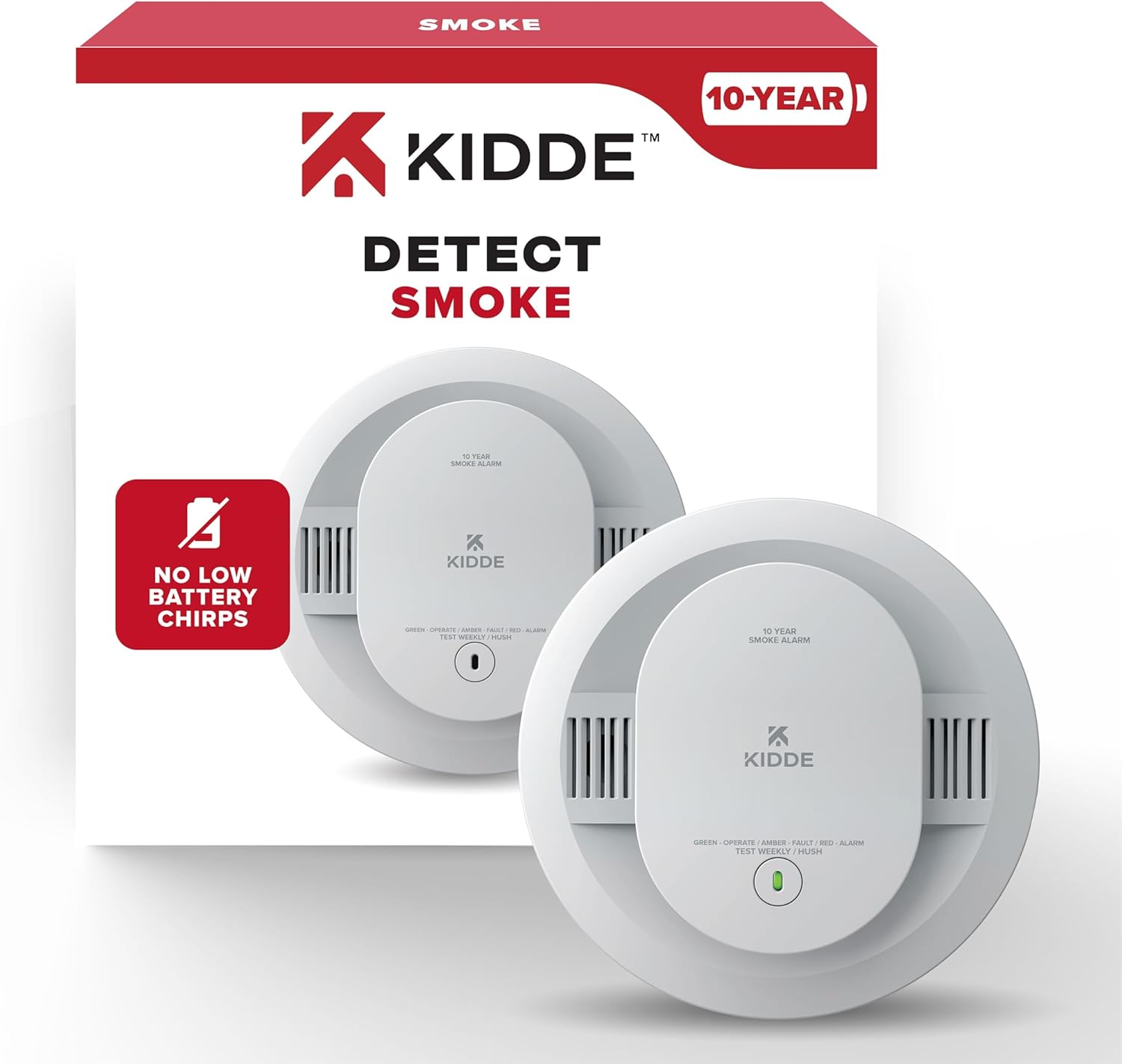
Kidde 10-Year Sealed Battery Photoelectric Smoke Detector
- 10-year sealed lithium battery eliminates battery replacement for the life of the unit
- Photoelectric sensing ideal for bedrooms and hallways
- Meets UL 217 standards
- Straightforward installation, large Test/Hush button
First Alert BRK PF1911 Photoelectric Detector
- Well-regarded photoelectric unit from an established manufacturer
- Affordable entry point for photoelectric coverage
- Available in interconnectable versions
Best Combination (Dual-Sensor) Detector
Kidde KN-COSM-IBA (Combination Smoke + CO)
- Integrates ionization smoke detection with photoelectric and CO sensing
- Hardwired with battery backup
- Interconnectable up to 18 units
Nest Protect (2nd Generation)
- Photoelectric sensor with split-spectrum sensing technology
- Smart home integration (Wi-Fi, app alerts, voice alarm with location announcement)
- Self-testing, interconnectable, combination smoke + CO
- Premium price point; well-suited for tech-forward households
Best for Interconnected Systems
First Alert Z-Wave Smoke Detector (ZSMOKE)
- Z-Wave wireless interconnection for smart home integration
- Works with most Z-Wave hubs (SmartThings, Wink, etc.)
- Allows retrofit of interconnection in existing homes without rewiring
Frequently Asked Questions
Do I need both ionization and photoelectric detectors in my home?
The safest approach recommended by many fire safety authorities is to have both technologies represented either as separate units or through combination detectors. At a minimum, ensure photoelectric detectors are in bedrooms and sleeping areas.
Are photoelectric smoke detectors safer than ionization detectors?
Neither type is universally “safer”; they detect different fire signatures with different effectiveness. Photoelectric detectors have an advantage in detecting the smoldering fires that most commonly cause overnight residential fatalities, which is why they’re increasingly recommended for sleeping areas.
Is the radioactive material in ionization detectors dangerous?
The amount of Americium-241 in a residential ionization smoke detector is extremely small and poses no radiation health risk during normal use.
The material is safely enclosed in the sensing chamber. The primary concern is proper disposal. Do not discard ionization detectors in regular household trash. Contact your local waste management authority for hazardous materials disposal options.
How often should I replace smoke detector batteries?
For detectors with replaceable batteries, replace annually or when the low-battery chirp activates.
Many modern units use 10-year sealed lithium batteries that eliminate the annual replacement burden. Regardless of battery status, replace the entire detector unit every 10 years.
Can I install smoke detectors myself, or do I need an electrician?
Battery-powered and plug-in smoke detectors are DIY-installable. Hardwired smoke detectors, particularly in new construction or systems being connected to an existing wired circuit, should be installed by a licensed electrician to comply with electrical codes and ensure proper interconnection.
What is the difference between a smoke detector and a smoke alarm?
A smoke detector is technically a sensing device that is part of a larger fire alarm system it detects smoke and sends a signal to a central control panel.
A smoke alarm is a self-contained unit with its own sensor and audible alert. Most residential products are smoke alarms, though the terms are commonly used interchangeably.
Should I get a combination smoke and CO detector?
For most residential applications, yes, particularly in bedrooms and any area near gas appliances or an attached garage.
Carbon monoxide is an invisible, odorless gas that causes hundreds of deaths annually in the U.S. A single combination unit covers both hazards in one installation.
The Bottom Line
Choosing the right smoke detector comes down to understanding two realities: fires behave differently, and no single sensor technology is perfect for every scenario.
For most homes, the practical answer is this.
- Photoelectric detectors in all bedrooms and sleeping areas
- Combination detectors in living rooms and common areas, where the budget allows
- Interconnect everything so the whole house knows when any detector activates
- Replace every 10 years without exception
If you’re outfitting a single-family home on a budget and can only choose one technology, lean photoelectric particularly if there are sleeping occupants who may not wake at the first sign of smoldering smoke.
For industrial and commercial applications, the selection criteria expand significantly, factoring in environmental conditions, required detection standards (NFPA 72, FM, UL), duct detection requirements, and system integration with suppression and evacuation systems topics we cover in dedicated guides on SafeguardSense.